
On a bright late summer morning, Nimba is feeling frisky. She gambols across her enclosure and plunges into a pool of murky water, where she will trudge along the bottom for a good minute or so before reemerging in the sunlight. Walking, not swimming, take note, because Nimba is a hippopotamus – in fact, a pygmy hippo, and one of Antwerp Zoo’s latest arrivals.
She will be joined this autumn by a male companion, Dabou from France, as the Swamp Biotype zone continues to undergo major renovation ahead of his arrival. Pygmy hippos, unlike their larger cousins, are solitary in nature and will only come together to mate, Patrick Immens, one of four head keepers (or “animal care coordinators”) at the zoo, tells me. The enclosure, which was formerly home to the larger animals, is being divided into two in preparation.
Undeniably cute, a fully grown pygmy hippo nevertheless weighs between 180kg and 275kg. Nimba has the makings of a star but has big hooves to fill: the zoo’s beloved last full-size hippo, Hermien, was put to sleep last autumn, and her daughter relocated to a new home in Ireland. Hermien was nearly 44 years old and suffered from many age-related ailments, having already lived around 10 years longer than the average hippo in the wild. Immens assures me that animals in captivity nowadays commonly live longer due to access to veterinary care. Four vets work at the zoo, ensuring that supervision is around the clock.
Enrichment
Although enlarged in recent years, Patrick says that the zoo’s historic Hippo House, which dates from 1885, is no longer able to accommodate the large species under today’s strict Flemish regulations. Indeed, Immens, who joined the zoo in the late 1980s after completing a biology degree, has seen many changes during his working life. At the start, the zoo would train new recruits in-house, but today many of the new additions to his team of 25 people – half of whom are part-time – arrive already qualified to assist vets in administering required injections or the taking of blood samples. In fact, due to the improved knowledge of staff, animals are far less likely to require sedation for this kind of activity.
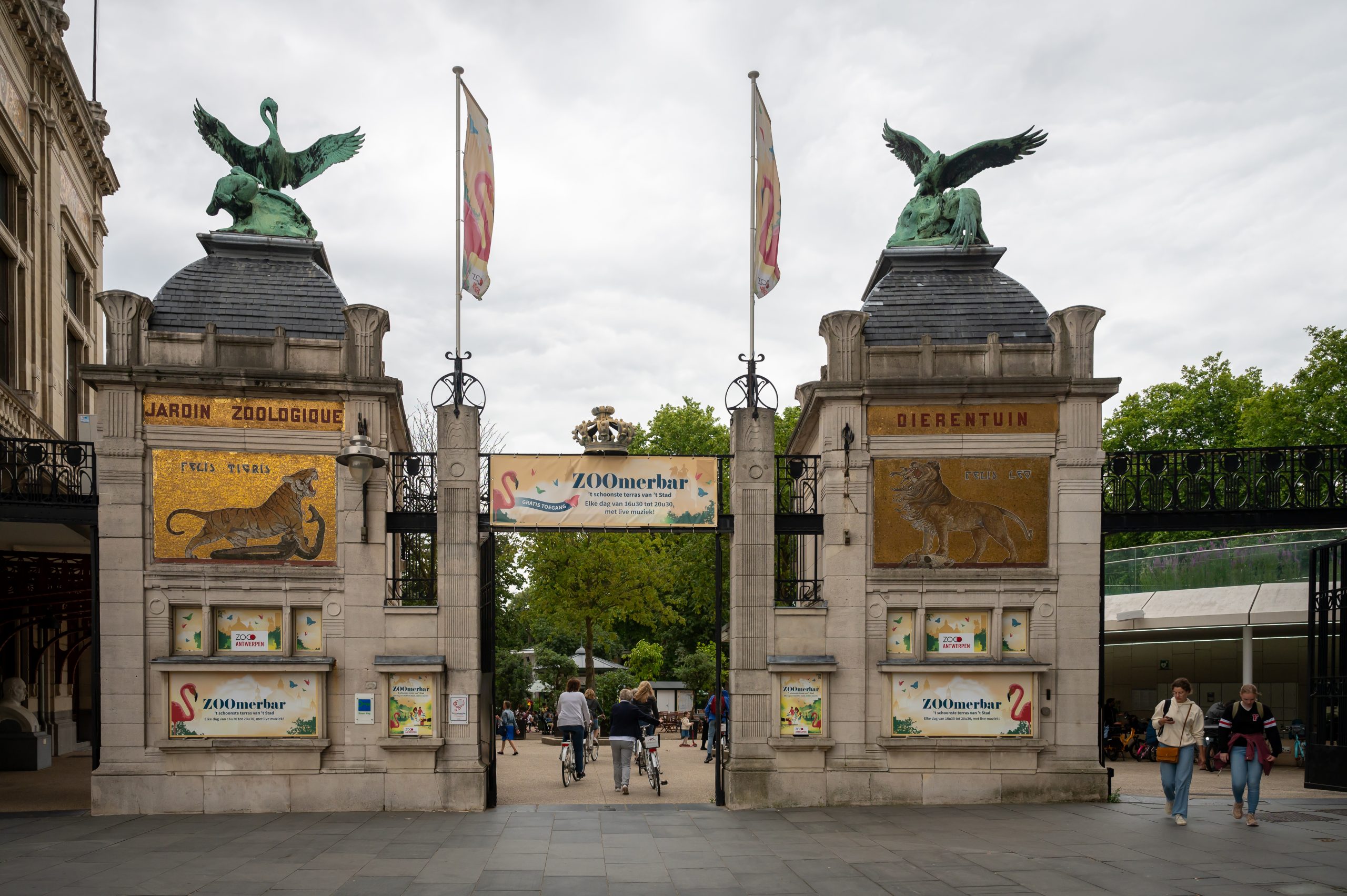
Gates of Antwerp Zoos
He also says that 95% of his job at the beginning entailed hygiene-related tasks, a proportion that has lowered to around 60% as staff members have increased their engagement with the animals. The watchword is ‘enrichment’. Where possible, animals are presented with challenges to finding food – I observe elephants scooping up grass from under tyres – a practice that extends feeding periods, keeping animals occupied and “improving their mental well-being”.
“It also creates a greater bond with the animals,” he says, admitting that keepers can develop attachments to certain individuals. Are tears shed when they pass away, I ask. “Yes. Some say that they don’t want to be around on the day that something must happen, and they take the day off.”
Another key aspect of the enrichment policy is to house certain animals together with species that they might encounter in their native habitat. For instance, our pygmy hippo Nimba, a native of West Africa, is sharing her enclosure with African straw-faced fruit bats, a new addition to a zoo in Belgium. The zoo’s rhinos can be seen in close proximity with zebras, a cohabitation that was met initially with a degree of uncertainty by the latter, according to guide Danny Braem. However, he says the zebra quickly adapted and can always pass through a narrow gate to spend some time away from the large pachyderms if they feel the need.
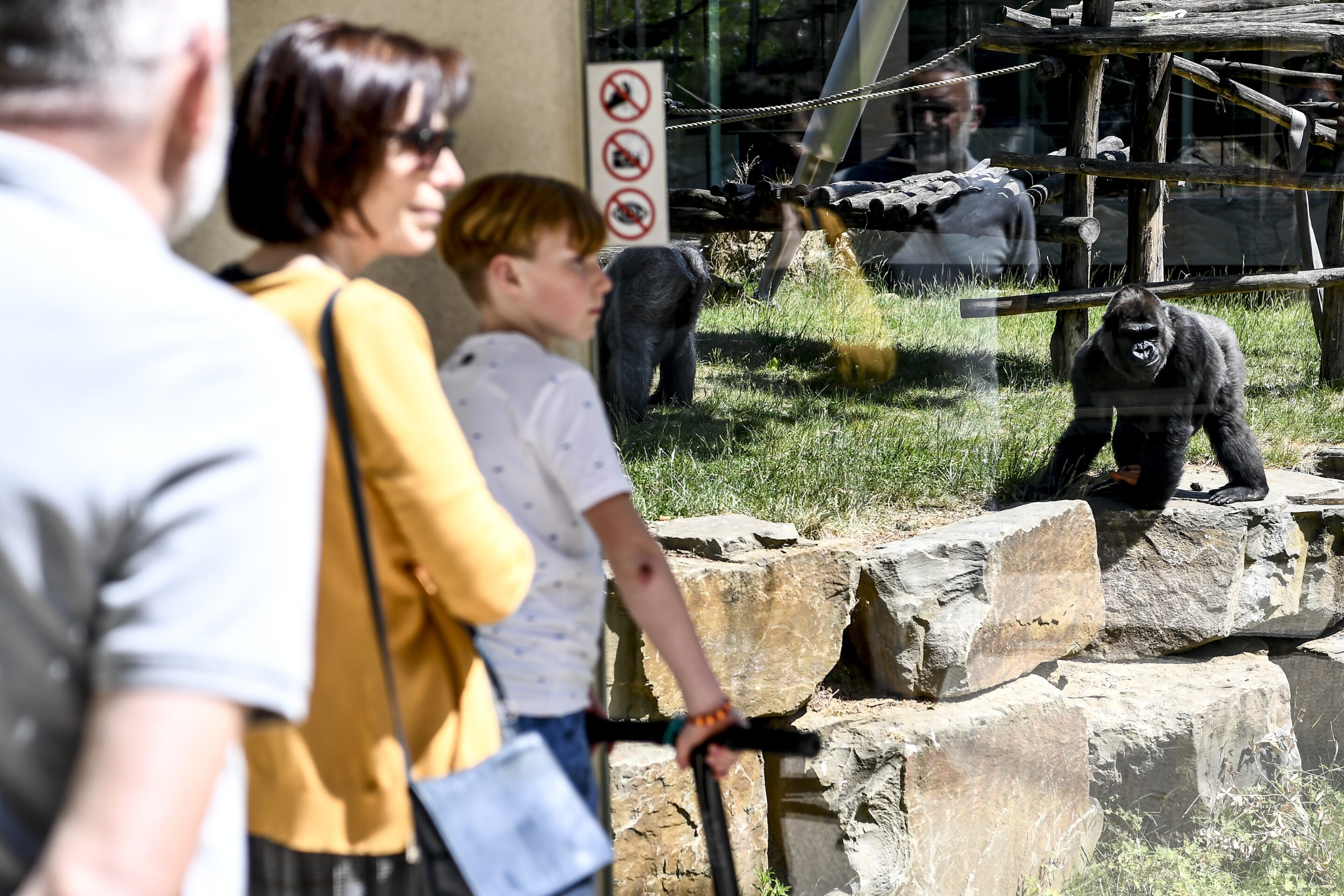
Greater engagement and observation of the animals is also informing adjustments to their living spaces and diets. For example, research into apes’ dietary requirements led to a radical mealtime reform: out went sugar-rich bananas and pineapples, and in came a diet of around 28 different vegetables a week.
Okapi ambassador
Immens began his career working with okapi, one of Antwerp’s ‘ambassador animals’ and a good illustration of the extensive conservation work being carried out by the zoo. The species has been emblematic for the zoo since the first individual, a nine-month calf from Congo, arrived in 1919. Named Buta after the capital of the Province of Bas-Uélé in the now Democratic Republic of Congo, the herbivore, whose closest living relative is the giraffe, was the first to be displayed to the world.
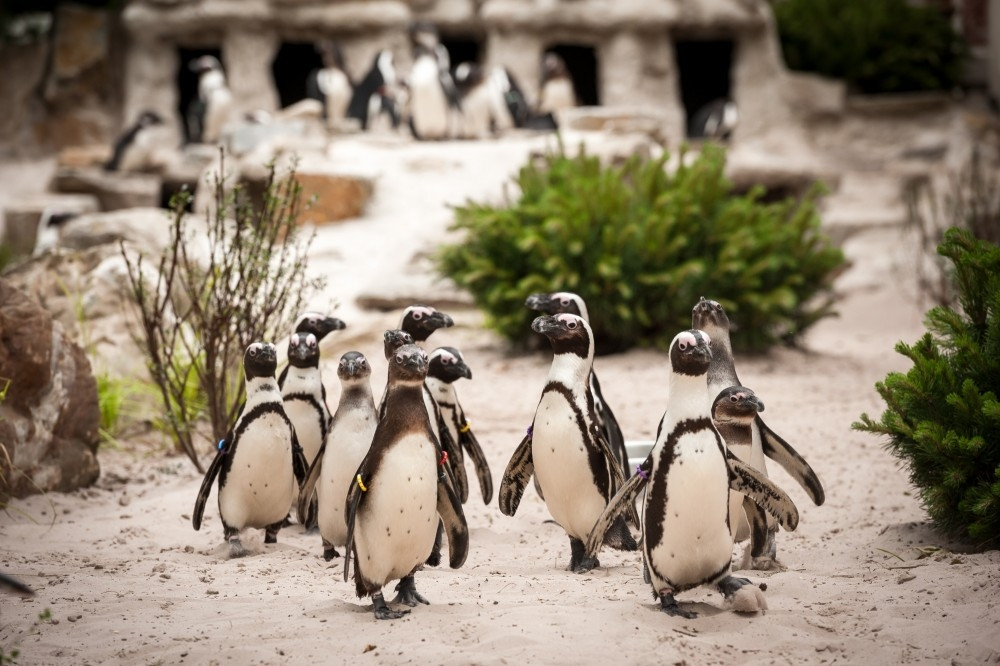
Penguins at Antwerp Zoo
Sadly, the curious-looking creature with striped legs died after several weeks due in part to a poor understanding of its nutritional requirements. But the zoo is now heavily involved in conservation of the okapi’s densely-vegetated, native, forestry habitat in the north of the country. The Antwerp Zoo Foundation’s Back to Buta project helps track populations in the wild and supports local farmers with sustainable land use and management.
Since the 1970s, the zoo has moreover been responsible for maintaining an international genetic record of every okapi that has lived in a zoo, including Buta. Such a record helps optimise breeding; the zoo provides individuals to other parks and, of course, no longer exports animals from Africa. Nevertheless, the population of the species in Congo has declined by two-thirds over the past decade, and the zoo’s breeding programme aims to maintain genetic diversity ahead of any potential reintroductions.
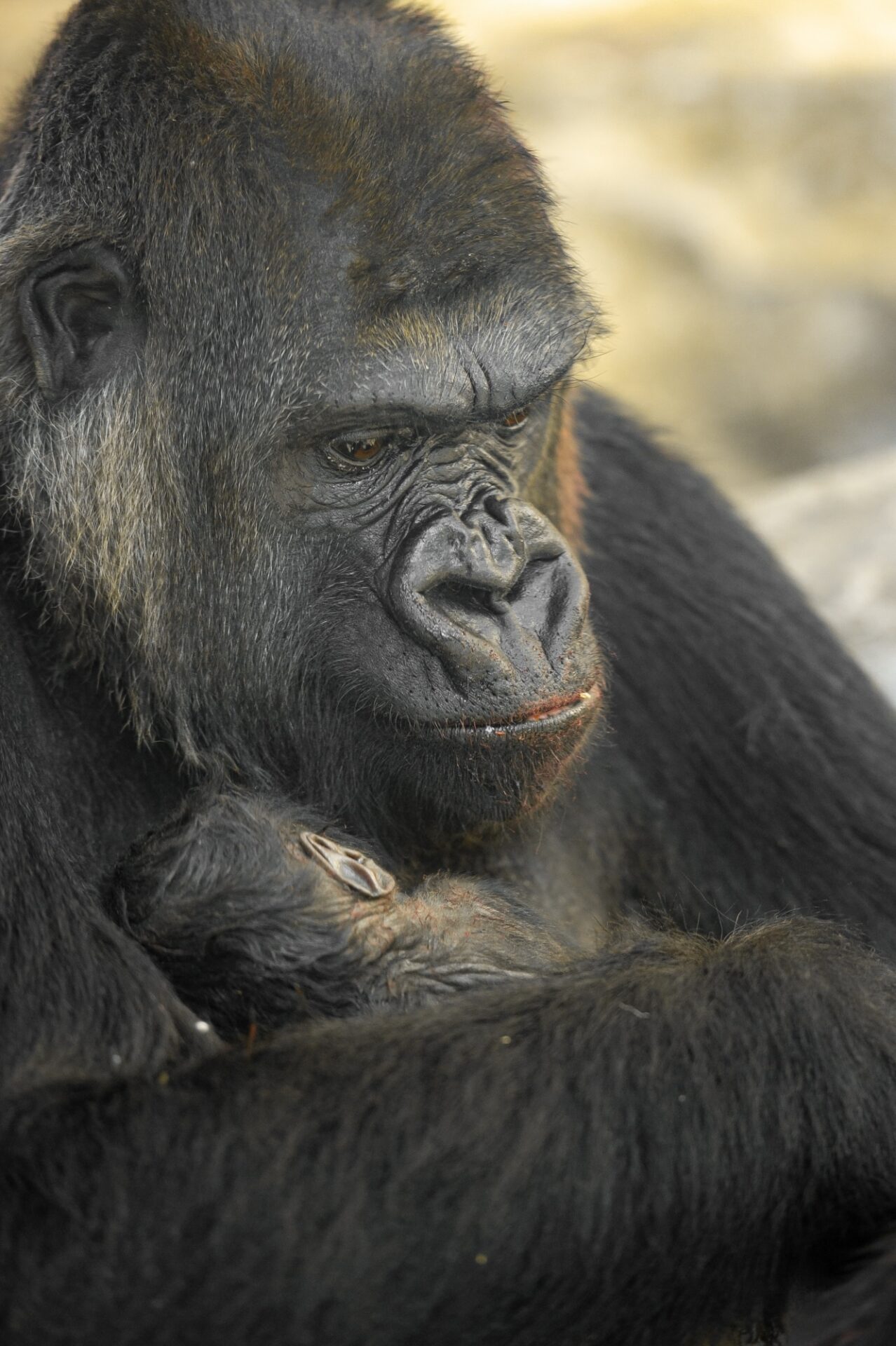
This handout picture, distributed by Zoo Antwerpen shows four newborn meerkats (Suricata suricatta) at the Antwerp Zoo, Thursday 11 August 2022. Credit: Belga
Antwerp performs the same record-keeping role for the Eurasian black vulture, the bonobo and the golden-headed lion tamarin, among other ambassador species. In August, the Antwerp Zoo Foundation and Planckendael Zoo announced a 15-year agreement with the Institut Congolais pour la Conservation de la Nature to jointly manage 3,600 square metres of Congolese rainforest inside the Lomako Yokokala Reserve to the benefit of the area’s estimated 4,000 bonobos (or pygmy chimpanzees). The foundation, together with the ICCN, will deploy rangers to combat poaching, illegal logging and other threats to the critically endangered ape species.
Best-kept heritage
Communication manager Ilse Segers proudly refers to Antwerp as a science and conservation zoo, but she also calls it the best-kept 19th-century zoo internationally on account of its extraordinary heritage dating from 1843. Indeed, many of its buildings, including its Egyptian Temple and Winter Garden containing giant butterflies, are protected. And while the Schönbrunn Zoo in Vienna, which was established in 1752, can claim to be the world’s oldest, there is no denying the historic grandeur of the Antwerp attraction located in the shadow of the palatial Neo-Renaissance train station.
Segers says the inspiration for its founding was the opening a couple of years earlier of a zoo in Amsterdam, which was visited by the family of Jan Frans Loos, who would later become the city’s mayor. He established the Antwerp Royal Society for Zoology, which acquired a 2.5-acre plot of land next to the-then wooden station and persuaded Jacques Kets, a zoologist and botanist, to become the zoo's first director.
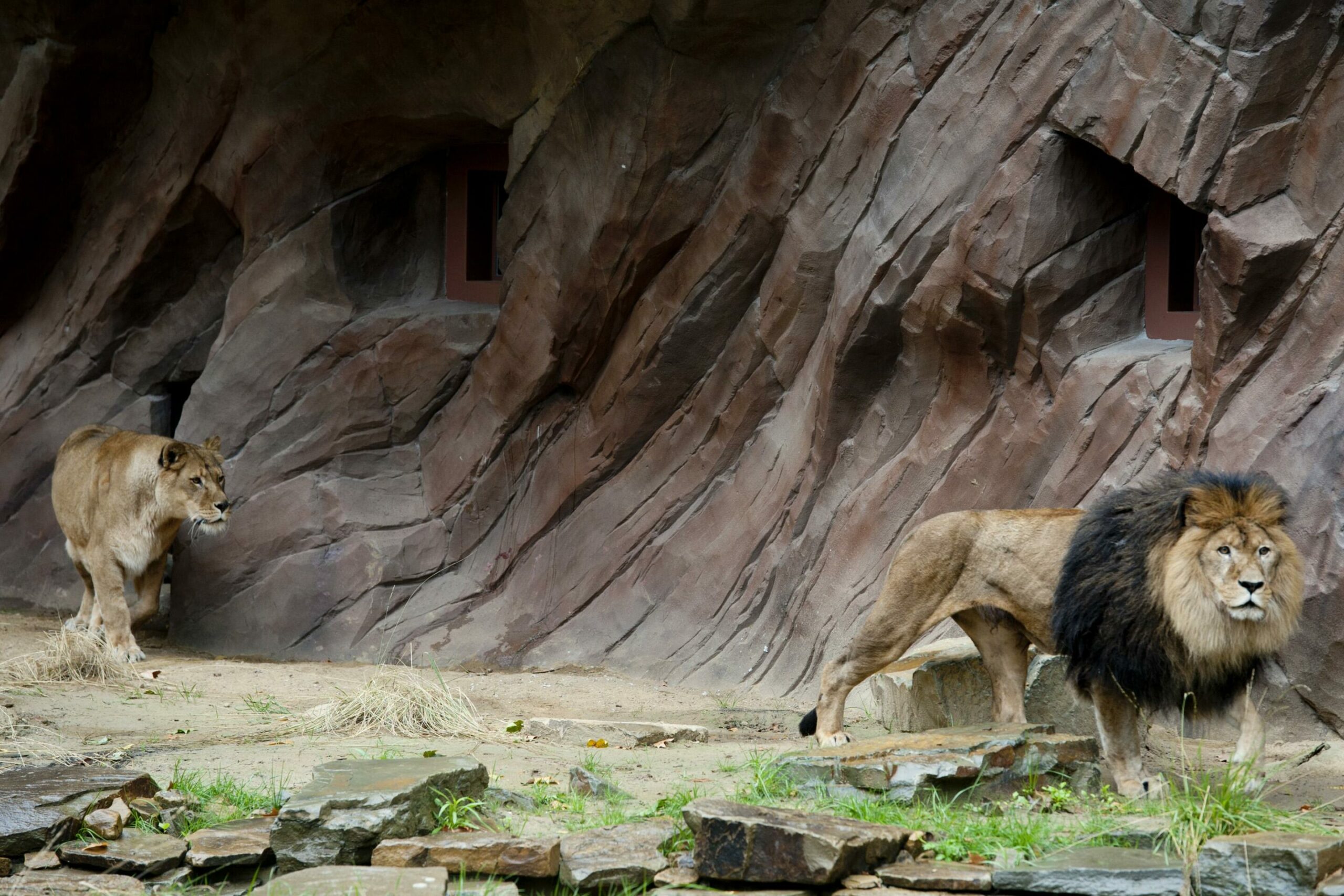
Lions pictured during the opening of a new residence for the lions at the Antwerp zoo, Thursday 08 September 2011. Credit: Belga
An initial entrance fee of one franc – the average manual worker’s daily wage – ensured the zoo would flourish as a place where only the well-heeled would mingle and desirable matches could be encouraged. And while the zoo has preserved this social tradition – its beautifully kept gardens provide little oases of calm in the heart of the city – entry had been extended beyond the bourgeoisie by the turn of the century. In fact, Segers says that members of the zoo pleaded with the Antwerp mayor during pandemic lockdowns to open the site as a place for desperately needed social interaction.
The around 250,000 members, who pay an annual subscription for unlimited access, make up a quarter of all visitors. For non-members, the cost of a day visit can add up for a single family, but Segers points out that the organisation that runs the zoo is non-profit and proceeds are ploughed back into its activities. She also says that the Covid-19 pandemic represented a big hit to the finances of the zoo, delaying planned extensions.
I ask about the future of the zoo and such institutes in general, and she acknowledges the criticism from groups including Brussels-based Global Action in the Interest of Animals (GAIA). However, she says that both parties recognise that the existing animals cannot be reintegrated into the wild and that they both share a passion for conservation. “We will grow more towards those animals which are very endangered and give the space we have to them,” she says. “We are trying to plant that seed [of conservation] among visitors”.
Flamingo a-go-go
A visit to the zoo begins and ends at Flamingo Square, an attractive open space that is free to access for the public – although it is inside the grand former entrance from Koningin Astridplein.
A casual visitor can grab a coffee, take a seat and even enjoy the alluring sight of the exotic pink birds emerging from the adjacent Rotunda building. In the summer, a free programme of live music is organised from 5pm, and cocktails are available, perhaps to be sipped on the marble steps leading up to the adjoining complex of banqueting and conference rooms.
Zoos would often position flamingos at their entrances as a way of enticing the public inside. The flamingos are one of the constants in the ever-evolving life of the zoo, which – as the statue of Darwin close to the Flemish Garden seems to underscore – has had to adapt to survive.
Planckendael to the rescue
Antwerp’s sister zoo at Planckendael can easily be reached by car from Brussels or via a shuttle bus that ferries visitors from behind Mechelen train station to the zoo’s entrance every quarter of an hour. The shuttle service is a 10-minute hop on a bus bedecked with cuddly toy versions of animals that visitors may be expecting to encounter. The decoration is illustrative of the zoo’s super kid-friendly approach.
While certain adults and pram-pushers may wish to stick to the level paths through the park’s thematic sections, the more adventurous can wobble on rope bridges, climb up to platforms and even shimmy through tunnels to get a better view of the attractions.
Planckendael is really the daughter zoo of Antwerp since it was opened in 1956 to provide a home for the animals that the parent institution could no longer accommodate. Located on the grounds of Planckendael castle, the zoo extends over an area of 40 hectares, giving it a footprint that is four times Antwerp Zoo’s. Wooded areas, streams and ponds abound, and the enclosures, unlike in a city zoo, feel very much integrated into the landscape. It is home not just to Antwerp Zoo’s overflows, but those that need more space or specialist care (a rare Indian rhinoceros was born at Planckendael in August following a 16-month pregnancy).
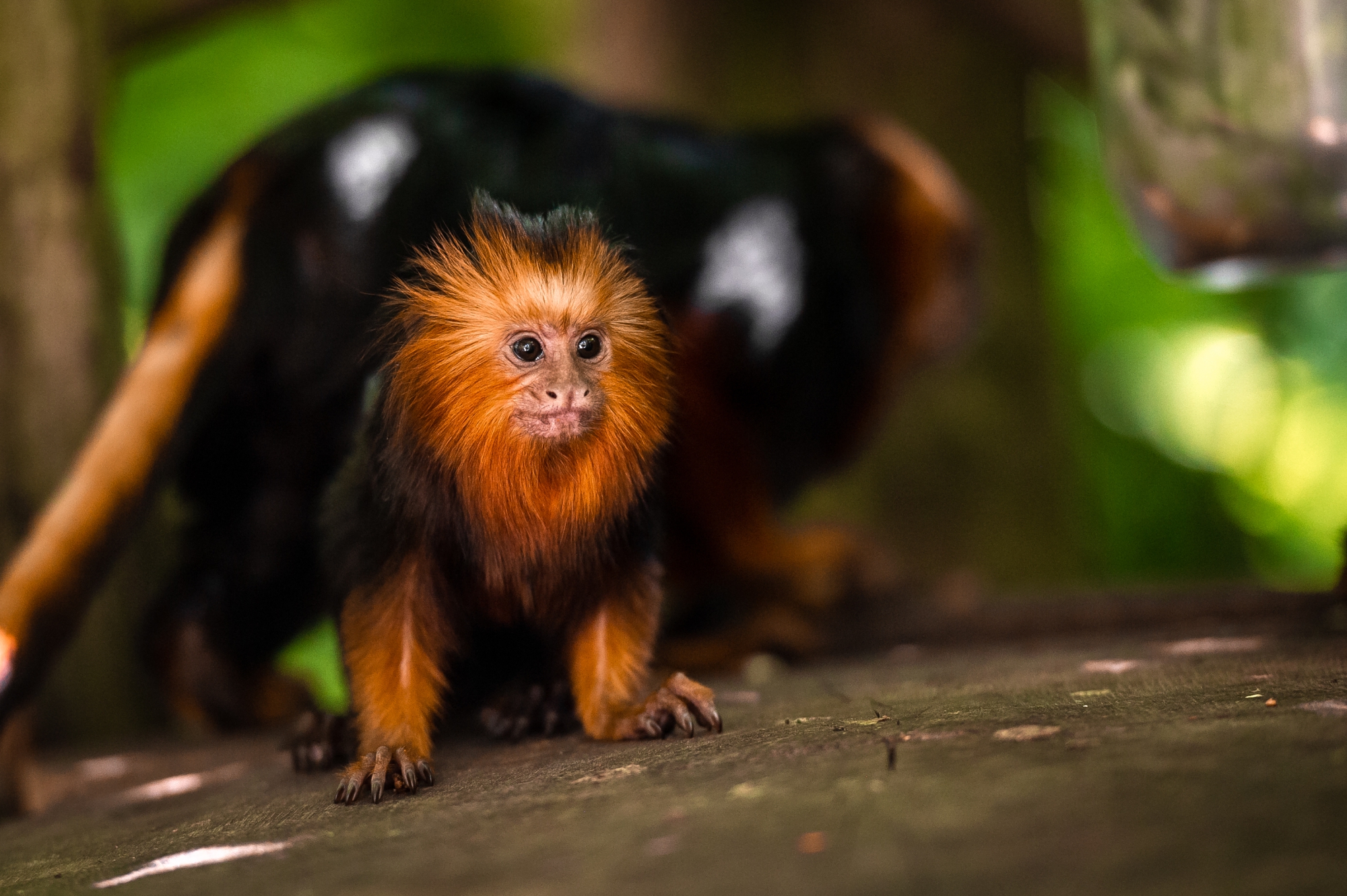
This handout picture, distributed by Zoo Planckendael on Thursday 28 September 2023, shows golden-headed lion tamarin Yara, that has been born on 01 May. Credit: Belga
Navigation is relatively straightforward and not overly prescribed. One senses a general clockwise flow around the zoo’s five continental zones, beginning with Europe and ending with Asia, and although it’s easy to cut off a corner, map stress is not part of the deal. We know when we’ve arrived in the Asian section, for example, since a tuk-tuk and a metal sign advertising Kingfisher beer provide visual clues, and, frankly, what else better says Asia? It's not subtle, and I would have been happier without the periodically audible piped stringed music striving to evoke India or is it China? Or a dodgy takeaway shop?
That said, the café, shop and play areas are nicely blended into the theme of the continent, and those in need of a regular caffeine fix can be reassured that these areas pop up regularly on a tour through the park. The site is large enough to home a pair of hippos, and whatever your views on keeping animals in captivity, the enclosures here do not appear cramped. My own observations: hyenas are bigger than I thought; capybaras are smaller…whether this adds up to a first-class educational experience, I don’t know. I did discover that such a thing as a bush dog exists, and, despite its formidable teeth, it is adorable.
Related News
- Mane attraction: The last stand of the Brabant draft horse
- Outcry in Flemish city after video shows mayor staggering in street
- Belgian station named among World’s seven most beautiful
- 150 tarantulas found living in yoghurt pots in Belgium
- Inside Belgium's infinite library of nature
- The Flemish dog with a noble heart
