
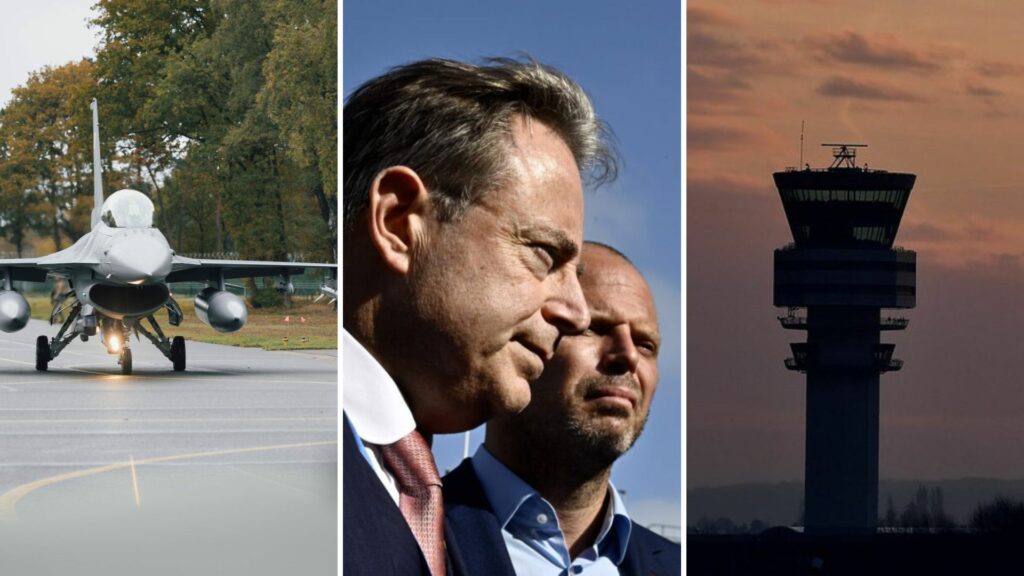
The airspace above Brussels Airport was closed twice on Tuesday evening, after several drones were spotted in the vicinity of the airport and military airbases. From 10am this morning, Belgium's National Security Council will meet to discuss the issue.
Drones reports shut down the airspace above five airports in Belgium on Tuesday evening, and more sightings were reported on Wednesday, including in the coastal town of Ostend and at the army barracks in Heverlee. Later that evening, Defence Minister Theo Francken (N-VA) also provided an update on the drone sightings in Belgium to NATO Secretary-General Mark Rutte.
"Allies are providing welcome support to address the challenge," the organisation said on social media. Francken's office did not wish to comment further on questions about that support, Belga News Agency reports.
Meanwhile, the Federal Public Prosecutor's Office has already opened two investigations into several incidents, and Interior and Security Minister Bernard Quintin (MR) said the situation "requires a coordinated, national approach" and asked to convene the National Security Council.
Five airports targeted
On Tuesday evening, air traffic was disrupted in Belgium after several drones were spotted above Brussels Airport in Zaventem. Air traffic resumed briefly, but was later suspended again.
This marked the first time that air traffic at a major airport in Belgium had been halted due to a drone. However, similar incidents have occurred in recent months in Denmark, Norway and Germany.
On Wednesday morning, 40 flights were cancelled at Brussels Airport as a result of the drone reports: 16 departing and 24 arriving flights. Additionally, hundreds of passengers were left stranded at the airport overnight.
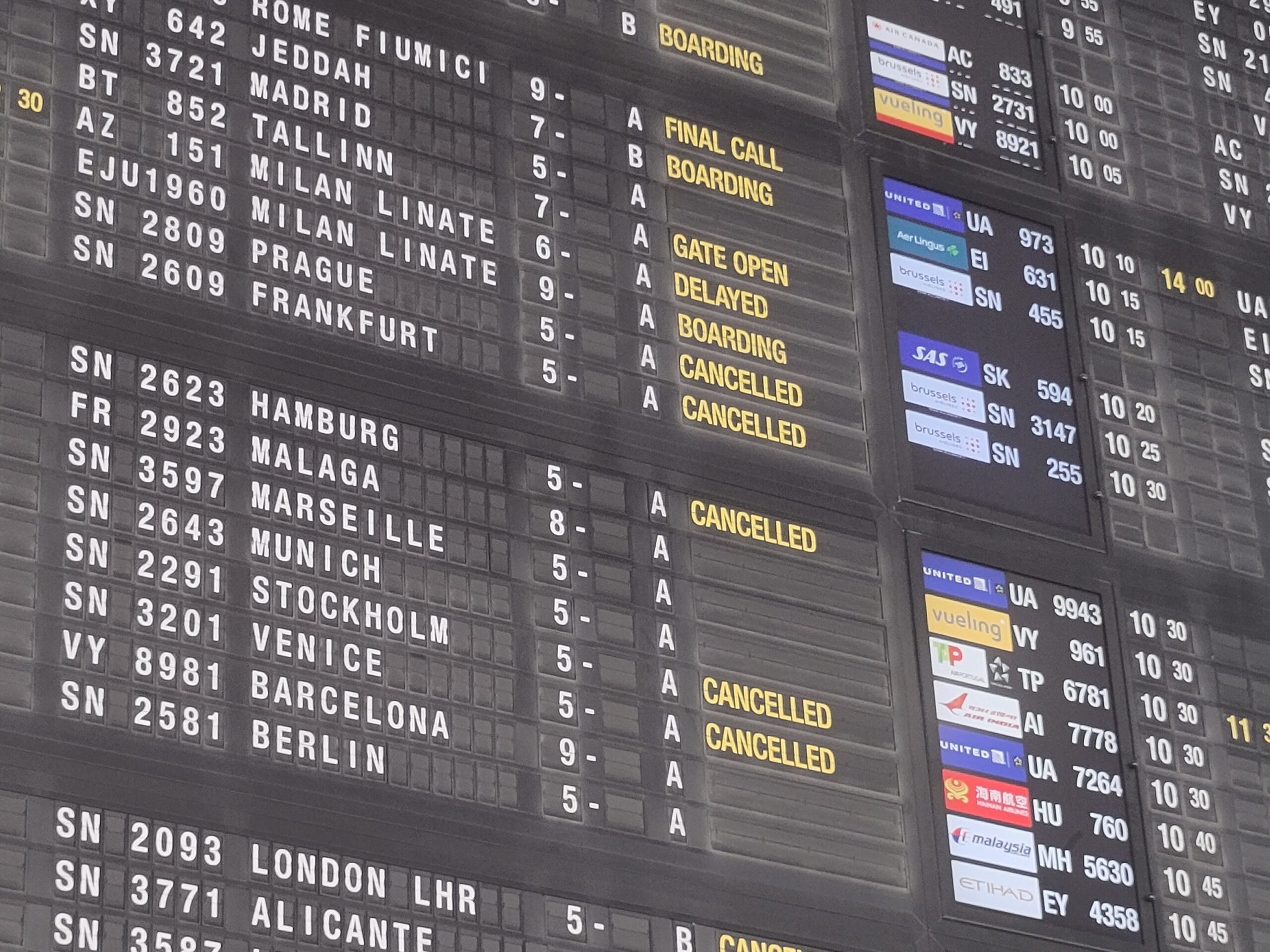
The board of the departure flights with some delayed or cancelled flights pictured at Brussels Airport on Wednesday 05 November 2025, after the drone incursions on Tuesday evening. Credit: Belga/Ine Gillis
In total, drones were spotted over five airports on Tuesday evening. In addition to the disruption at Brussels Airport, Liège Airport was also closed for a while following the drone sightings.
Around the same time, drones were spotted near the Kleine-Brogel military airbase, where Belgian F-16s are stationed and American nuclear weapons are stored. They were also seen flying over a military base in Florennes, where the first Belgian F-35 fighter jets are stationed.
In the House Committee on Defence on Wednesday morning, it was confirmed that drones were also spotted at the military airbase in Schaffen, near Diest (Flemish-Brabant province).
Meanwhile, no drones were observed at Charleroi Airport, but air traffic above the airport was temporarily suspended as a precaution.
Euroclear and frozen assets
While there is still no clarity on who is behind the drones, Francken has suggested that Russia could be the culprit. "The Russians are trying to do this in all European countries," he told RTBF after the previous wave of drone sightings over the weekend.
"Is it the Russians now? I can't say that, but the motives are clear, and the ways of doing things like this are also very clear. War is truly a drone war, and the Defence Department really needs to prepare for that."
According to Francken, the drones are "coming to spy" and trying "to see where the F-16s are, where the ammunition is, and other highly strategic information."
The Belgian security services agree with Francken, saying that there is "no reasonable doubt" that these drone incidents are the work of Russia, despite the lack of hard evidence, VRT reports based on a reliable source.
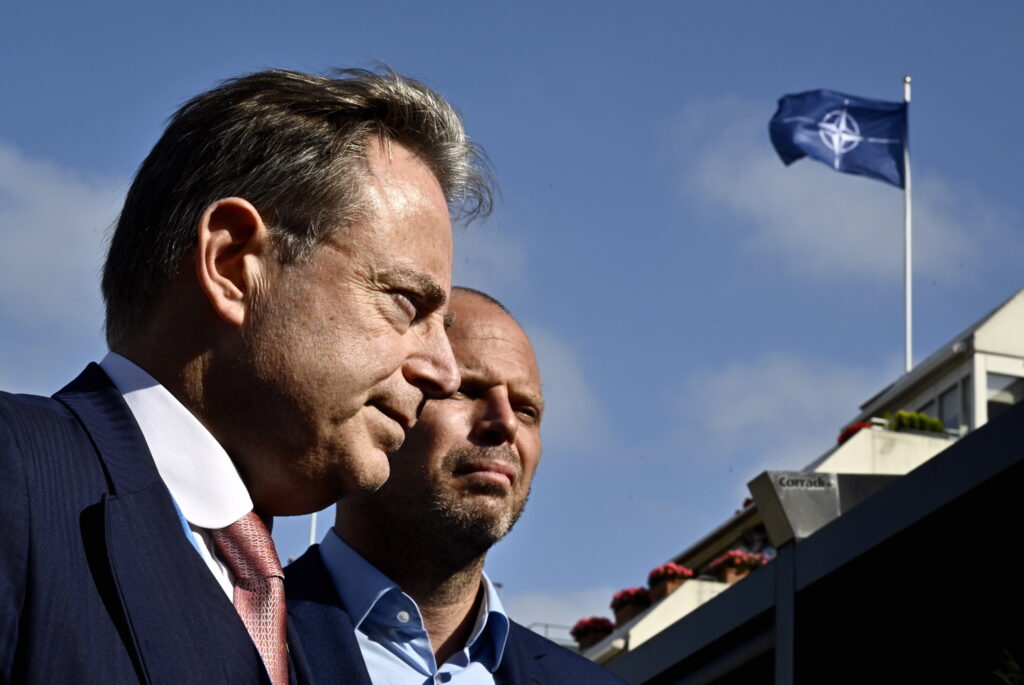
Prime Minister Bart De Wever (front) and Defence Minister Theo Francken (back) pictured at a NATO summit. Credit: Belga /Eric Lalmand
The timing and frequency of the reports are also striking: the number of incidents is rising rapidly, precisely at a time when Belgium is in the spotlight for the role it is playing in releasing around €190 billion in Russian assets frozen in Euroclear in Brussels, and the fierce exchanges between Francken and Dmitry Medvedev, the vice-chairman of the Russian Security Council.
However, the Russian embassy in Brussels on Wednesday evening emphatically denied that Russian security services were involved.
"Regrettably, the recent wave of speculation surrounding the drone incidents in Belgium continues to worsen," the embassy told VRT. "But we emphasise that the Russian Federation is in no way involved in any drone operations in Belgian airspace. We have neither motive nor interest in such activities."
In theory, drones can be controlled from a distance of 150 to 200 kilometres, which means that the operators are not necessarily located on Belgian territory. Therefore, the authorities are working with neighbouring countries to find the perpetrators, said Francken.
'Something bigger is going on'
In the House Committee on Defence on Wednesday, Francken said that these incidents "above both civilian and military installations show once again that the hybrid threat is real and serious."
"The use of drones in the vicinity of airports, air bases and barracks not only poses a security risk, but also directly affects our national security and prosperity," he said, emphasising that addressing the threat is "a shared responsibility".
Francken reiterated that "something bigger is going on" and that this was "clearly not the work of amateur drone pilots."
To tackle the threat, he stressed that the National Air Security Centre must become operational. The airspace surveillance centre is to be housed at the Beauvechain air force base (Walloon Brabant province).
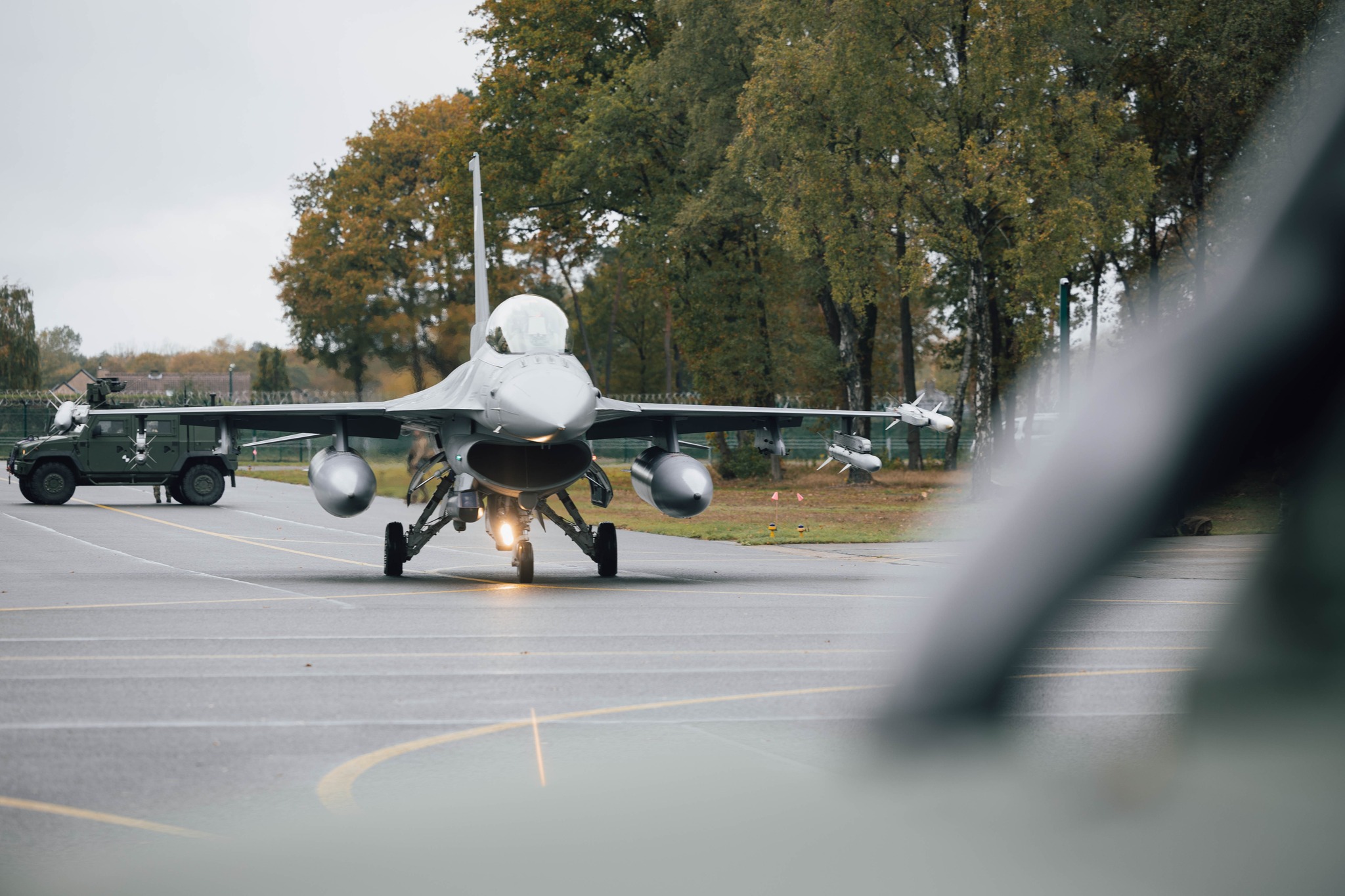
Military airbase at Kleine Brogel. Credit: Belga
"We can also do other things," he said. For example, he wants to submit the rapid purchase of various detection and counter-drone systems to the Council of Ministers.
Therefore, Belgian Prime Minister Bart De Wever (N-VA) is convening the National Security Council – at the request of Interior Minister Quintin – to coordinate efforts between the Defence Ministry and the Interior Ministry, among others.
"It is important to bring the relevant ministers together with the heads of the various services to discuss the situation, take political decisions and ensure that each minister knows what they must do within their remit," Quintin said. "But we must first thoroughly investigate and analyse the situation."
Anti-drone initiative
One of the proposals Quintin is putting on the table is to ensure that all drones are registered, as "far too many" are currently not. "We need to have the right tools to detect, identify and, if necessary, disable them," said the interior minister.
On Friday, Francken is expected to propose an investment plan of €50 million to deploy an "anti-drone initiative." The package should pay for detection systems, jammers and drone guns to protect key installations.
More information about the rules for drones in Belgium can be found here.
More information about the recent drone sightings in Belgium and why shooting them down is not so simple can be found here.
Related News
- Drone reports close Brussels Airport twice: flights have now resumed
- Drones over Belgium's military bases: Can't we just shoot them down?
- Emergency security meeting after drones disrupt Brussels Airport and military bases
- Flights resume at Brussels Airport after further drone sightings disrupt operations
