
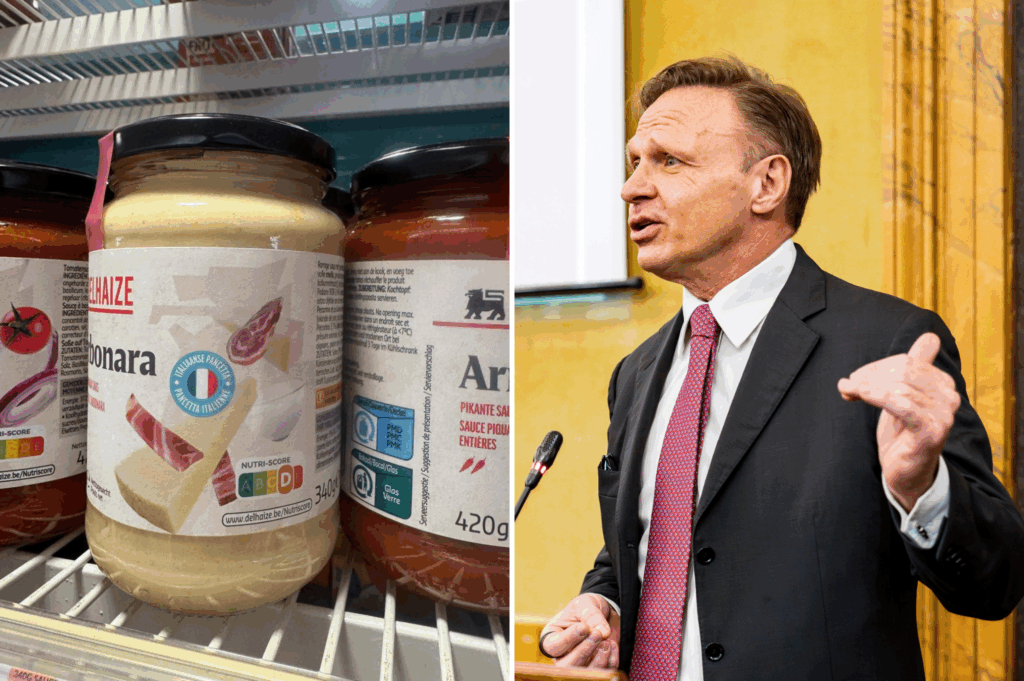
A far-right Italian minister was left reeling after spotting Delhaize’s "carbonara sauce" being sold inside the European Parliament in Brussels, calling it "unacceptable."
Italy’s Minister of Agriculture, Francesco Lollobrigida (Fratelli d’Italia), took to social media to express his outrage at the sale of the Belgian supermarket chain's own-brand sauce during a visit to Brussels this week.
Delhaize's version contains cream and pancetta, which are not included in the traditional recipe from Rome. The jar, adorned with an Italian flag, says it contains "Italian pancetta" and "onions from Calabria."
The Roman dish contains guanciale (pork jowl), which is another type of cured meat from the pig’s cheek, which today is usually more expensive than pancetta.
"Leaving aside the pancetta in the carbonara... all these products represent the worst of 'Italian Sounding,' it is unacceptable to see them on the shelves of the European Parliament's market. I have asked for checks to be carried out immediately," Lollobrigida wrote in a social media post.
He also attached a series of photos, including one of an "arrabbiata" sauce jar, which also had an Italian flag.
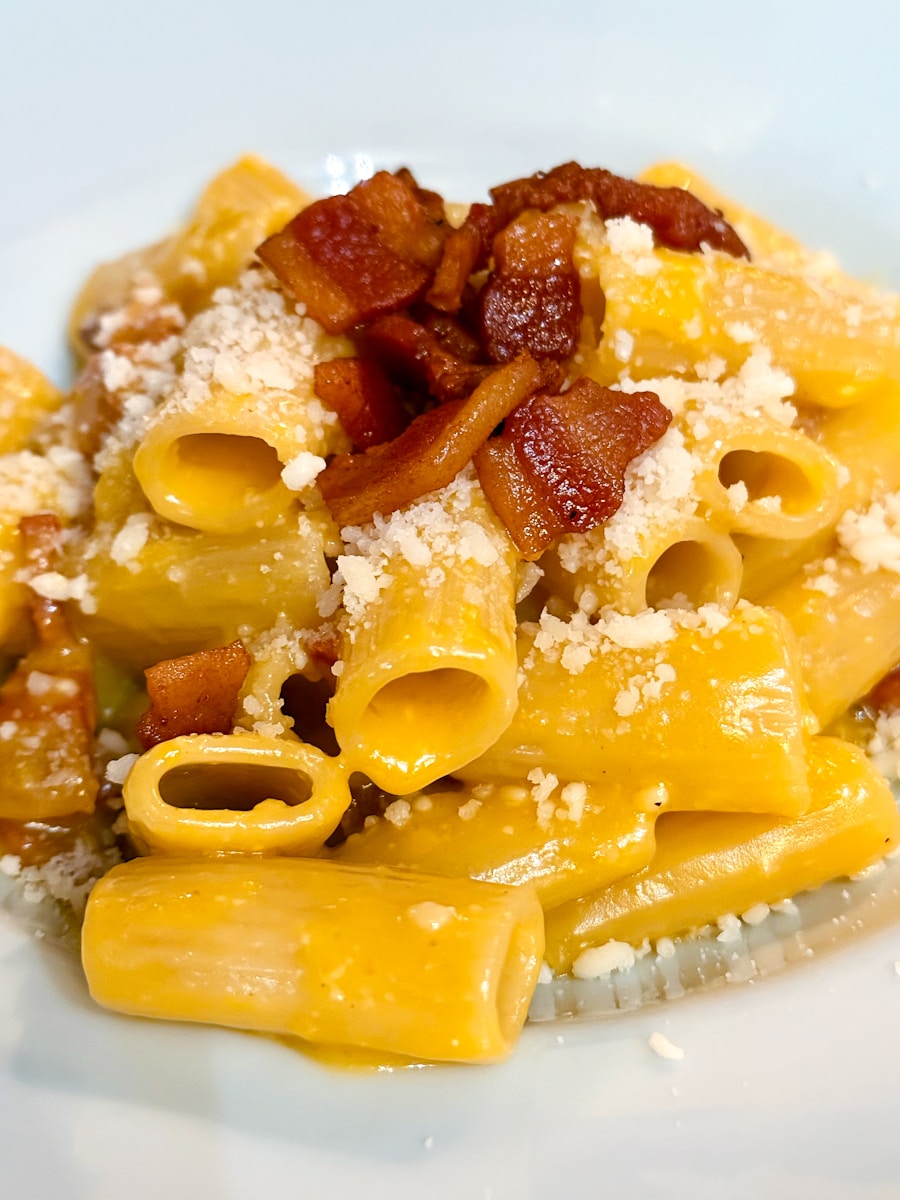
Carbonara pasta. Credit: Moira Nazzari / Unsplash
It is not the first food-related attack on Italy. In August, there was another outcry in Italy over a "cacio e pepe" recipe on the BBC Good Food website, which included butter. It even sparked a diplomatic row with the United Kingdom.
While Italians getting righteous about their food can often be a source of fun, there are some more serious issues at play.
Successive Italian governments have rallied against the Italian Sounding phenomenon, where Italian-style products are sold in other countries, often mimicking or bastardising traditional Italian recipes.
Italy’s biggest agribusiness association, Coldiretti, said the "scandal of fake Italian products" cost the country €120 billion a year.
In a statement following the minister’s post, they said that carbonara is one of the most "falsified" Italian recipes abroad. "From the use of cream in Belgium or bacon instead of guanciale often in Anglo-Saxon countries, to the use of Romano cheese instead of pecorino in the United States.”
They also noted the presence of Bolognese sauce on Delhaize’s shelves as a "tourist trap speciality which has no real tradition in Italy." This is because the regional cuisine in Emilia-Romagna prefers using fresh egg pasta, known as sfoglia, over pasta made from durum wheat semolina, which is generally dry.
What is the most faked food?
The lobby group also provided a ranking of the most fake products, with cheeses ranking first – starting with Parmesan cheese and Grana Padano, but also Mozzarella, Provolone, Gorgonzola, and Pecorino. Cured meats such as salami and Mortadella, but also pasta sauces, wines and extra virgin olive oil also make the list.
However, Europe can rest easy – largely thanks to EU regulations: the United States, South American countries and Australia are the biggest offenders when it comes to selling fake Italian-style food, according to Coldiretti.
In Belgium, Mozzarella-style cheese leads cheese production, with data from 2022 showing production increasing by 7.9% to reach 87,234 tonnes compared to the year before. It also overtook the Dutch cheese Gouda that year.
This is possible as within the EU, there is no protection for the word Mozzarella. This is unlike its specific varieties – i.e. the buffalo mozzarella sold as Mozzarella di Bufala Campana, which has carried the DOP protection label for years.
