
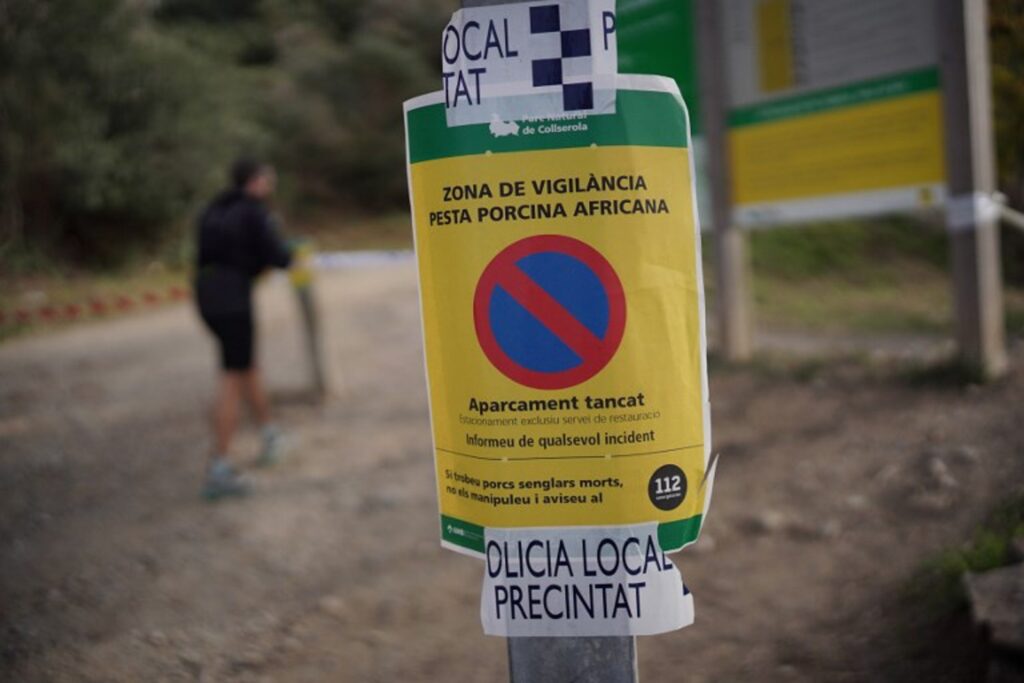
Spain has reported an outbreak of African swine fever (ASF) in Catalonia, the first case in the country since 1994.
The outbreak was detected on 26 November in two wild boars found dead in Bellaterra, near Barcelona, according to the Ministry of Agriculture. ASF is harmless to humans but almost always fatal for pigs and wild boars, posing a significant threat to livestock. Spain, Europe’s largest producer of pork and the third-largest worldwide, immediately announced measures to minimise the economic impact.
The government has informed the European Union and the World Organisation for Animal Health (WOAH) about the outbreak. In response, countries such as Mexico, Japan, and the United Kingdom have temporarily suspended pork imports from Spain. China has restricted imports solely from the Barcelona region.
To prevent further spread, the Ministry of Agriculture has imposed strict biosecurity measures on pig farms and animal transportation. Forest areas across 64 municipalities in Catalonia have also been closed.
ASF has previously affected several European countries, primarily in eastern regions, but also Germany near the Belgian border. Belgium dealt with an outbreak of ASF in wild boars in 2018, which severely impacted its pork industry. It was declared ASF-free in 2020.
Spanish media have reported four additional cases of ASF in Catalonia, although the Ministry of Agriculture has yet to confirm these.
