
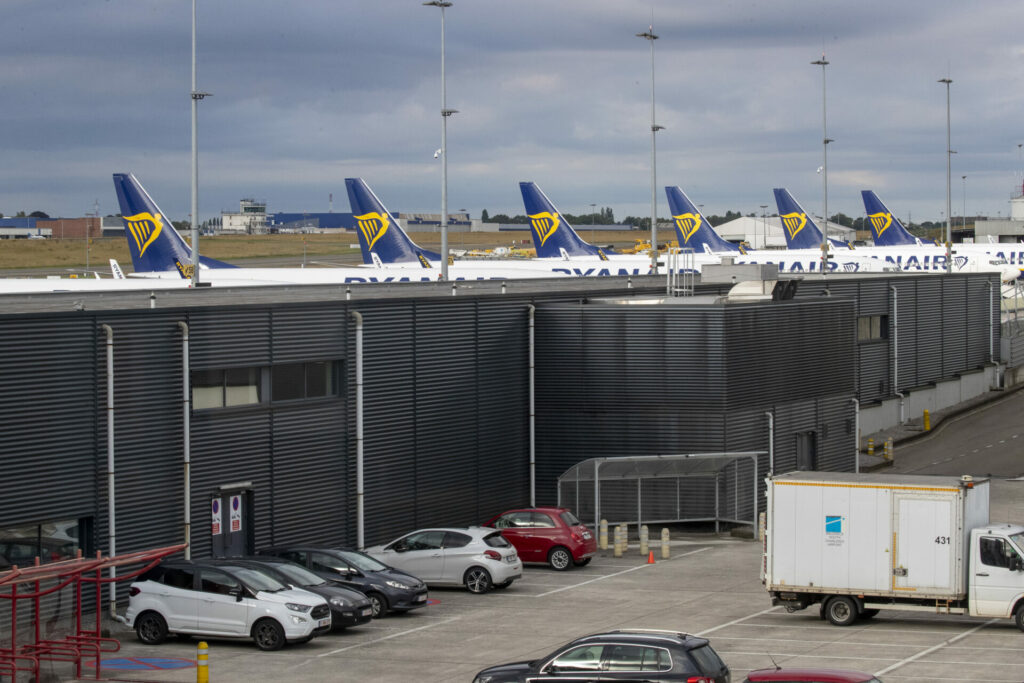
Low-cost airline Ryanair will cut 20 of its "Brussels routes" – which comes down to one million fewer seats – next winter, following decisions by the Federal Government and the local Charleroi City Council to raise flight taxes.
Ryanair's decision follows the announcement of the Belgian Government's budget plan, in which the embarkation tax – usually called the "flight tax" – will be doubled to €10 per departing passenger from 2027. At the same time, the Charleroi City Council has proposed to introduce a €3 tax per departing passenger travelling from Charleroi Airport from next year.
"Belgium's Federal Government has bizarrely decided to further increase Belgium's already sky-high aviation tax by another 100% from January 2027, on top of the 150% in July last," Jason McGuinness, Ryanair's Chief Operating Officer (COO), told The Brussels Times.
"This is not a decision we wanted to make, but we have been left with no choice due to ill-judged economic policy, which is going to do untold damage – particularly to the Charleroi region. Frankly, this is a wholly stupid decision by the Belgian Government, and a wholly stupid decision by the Charleroi City Council."
'Completely uncompetitive'
Mayor of Charleroi Thomas Dermine (PS) confirmed on Tuesday that he had received a letter from Ryanair, regarding the threat of seat and aircraft reductions in Belgium.
However, he stressed that the proposed municipal tax of €3 per passenger is not the issue, as it does not target airlines but rather Charleroi Airport, and has been calibrated so that the airport can absorb the charge.
Earlier this year, Belgium's Federal Government raised taxes to €10 for flights shorter than 500 kilometres, and €5 for flights longer than 500 kilometres. With its budget plan presented last month, the country is "harmonising" these taxes by doubling the latter – bringing them up to the same level.
According to McGuinness, the repeated increases to the aviation tax make Belgium "completely uncompetitive," compared to the many other EU countries, like Sweden, Hungary, Italy, and Slovakia – "where governments are abolishing aviation taxes to drive traffic, tourism, and jobs," he said.
"Even Germany has now recognised that aviation taxes do not work and has revised its decision to increase aviation taxes," McGuinness said.
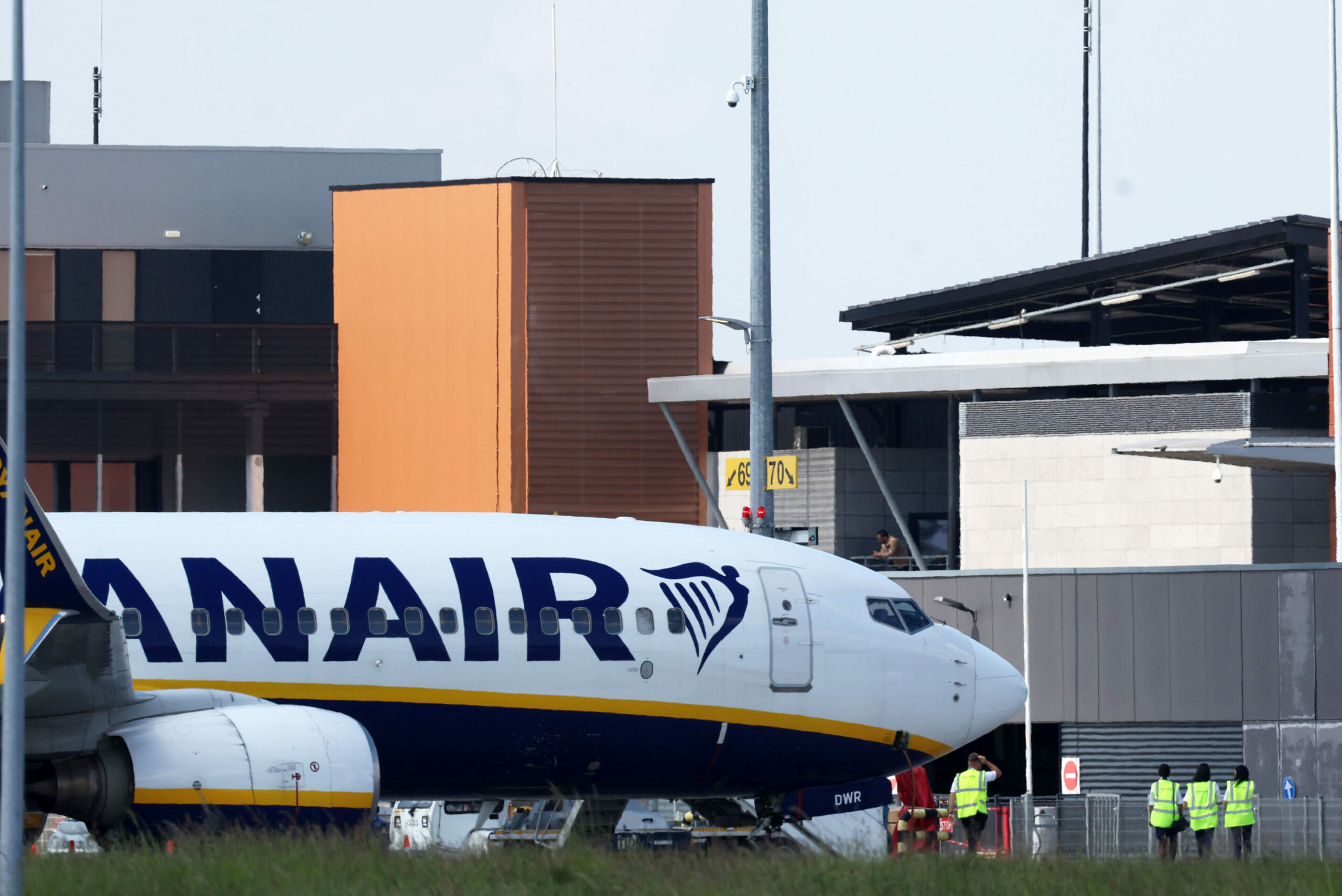
A Ryanair airplane at the Brussels South Charleroi Airport (BSCA), on Tuesday 13 May 2025. Credit: Belga/Virginie Lefour
As a result of this second tax increase in just five months, Ryanair says it has been "forced" to cut 22% of its Brussels traffic (one million fewer seats), five aircraft from its Charleroi base (loss of US $500 million in investment), and 20 routes (13 from Charleroi Airport and seven from Brussels Airport in Zaventem) for the 2026-2027 winter season.
Should the Charleroi City Council proceed with its proposal to introduce taxes on passengers departing from the airport next year, McGuinness stressed that "these cuts will only deepen."
"Ryanair will be forced to reduce flights, routes and based aircraft at Charleroi from as early as April 2026, with thousands of local jobs at risk," he stressed.
These calculations only take into account the winter season, but without any changes, the summer season will be affected as well. On a 12-month basis, Ryanair might be speaking of 30 to 40 fewer routes, and up to 3 million fewer seats.
This current winter season (2025-2026), Ryanair is operating flights to 119 destinations from Charleroi Airport and 11 from Brussels Airport.
'Belgian traffic will collapse'
"If Prime Minister Bart De Wever (N-VA) and his government really wanted to revive Belgium's economy, they should abolish this harmful aviation tax, not double it," McGuinness said.
While many other EU countries are reducing flight-related taxes to support their economies, he stressed that Belgium is going in the opposite direction. "This is driving up access costs and pushing airlines and tourism elsewhere."
"We urge Prime Minister De Wever to scrap this damaging aviation tax before Belgium's traffic, tourism, jobs, and the wider economy collapse any further," he said. "Additionally, the Charleroi City Council needs to abandon its lunatic plans to increase taxes, driving job losses with the effect of lowering payroll, VAT and corporate tax receipts for the local economy."
Ryanair is calling again on De Wever and his government to abolish the aviation tax, "or Belgian traffic will collapse, and fares will soar, just as they have done in Austria and Germany, where governments have repeatedly increased access costs."
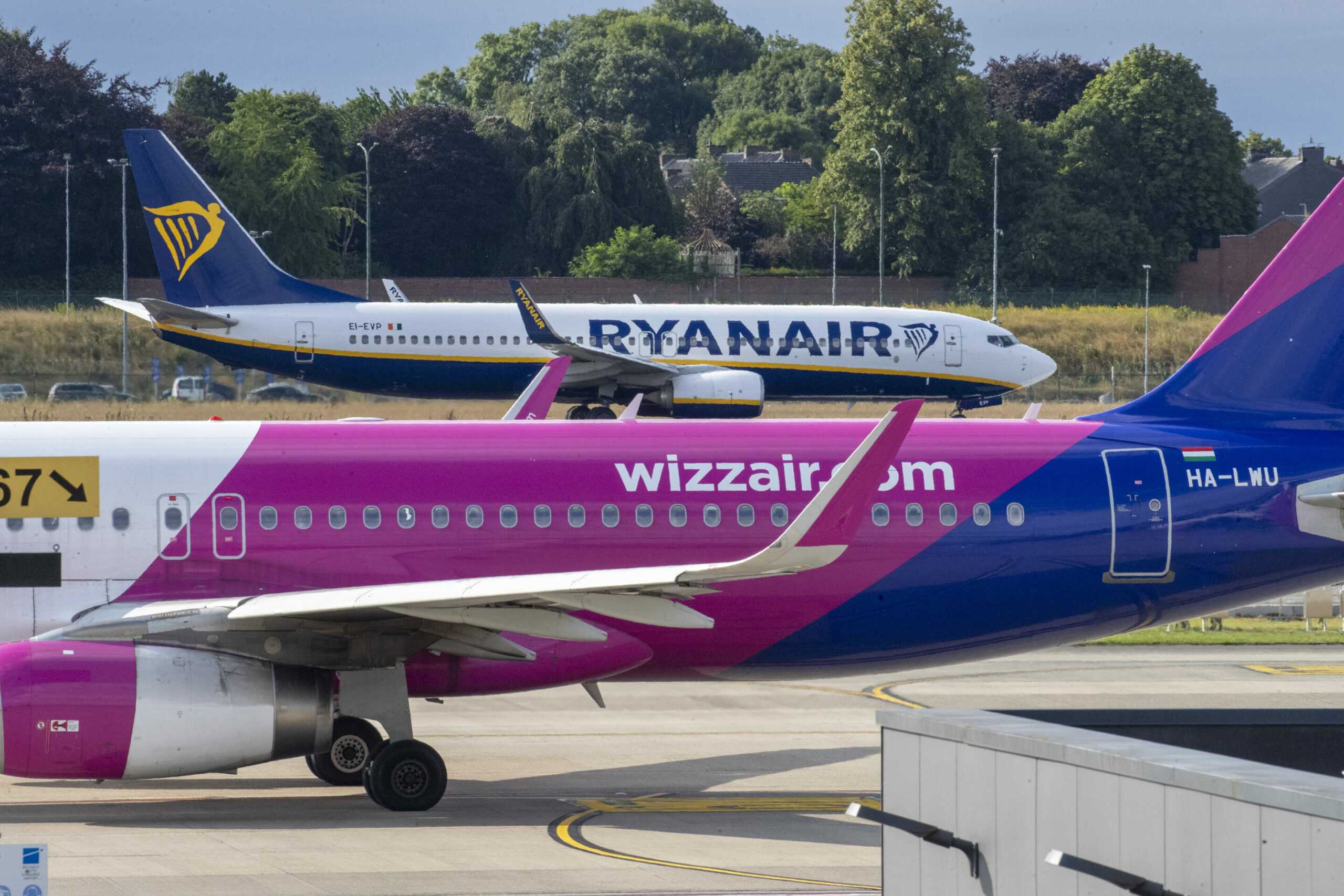
A Ryanair plane and a Wizzair plane, at Charleroi Airport, Saturday 29 July 2023. Credit: Belga/Nicolas Maeterlinck
Wallonia's Airport Minister Cécile Neven (MR) has requested to see the concrete impact of Ryanair's announcement on Charleroi Airport. She stressed that "one of the region's major economic drivers" should not be weakened at "such a strategic moment, when the airport has to make significant investments to improve its services and meet requirements."
"The government has brought visibility to the airport with a solid permit and a clear development framework. It is time for everyone to realise this and support the airport in the current context," she added.
Last July, the Walloon Government approved the operating licence for Charleroi Airport for the next 20 years. It plans to expand its activities with more flights: 4,000 more over the next six years.
Should the Belgian Government reverse their decision on increasing the flight tax, Ryanair would also reverse their decision to cut aircraft and flight routes from Brussels, McGuinness underlined. "I am also hopeful, but I am not very optimistic."
Too early to comment
On Tuesday, Ryanair wrote to Prime Minister De Wever, Transport Minister Jean-Luc Crucke (Les Engagés), Wallonia's Airport Minister Cécile Neven (MR) and Mayor of Charleroi Thomas Dermine (PS) to call for the reversal of these increases.
Low-cost airline Wizzair did not respond to The Brussels Times' request for comment about whether it is considering following Ryanair's example. Brussels Airlines referred to its previous comments about the raised flight tax.
The Brussels Times contacted Brussels Airport with questions about the impact of Ryanair's decision on its operations. The company's press office said that it was "too early to comment" at the moment.
The Brussels Times repeatedly contacted Charleroi Airport for comment, but did not receive a reply by the time of publication.
