
In the ongoing saga of the Brussels Government formation, a new round of talks are underway to form a so-called "Guinness coalition" – an unprecedented centre-left majority without liberals MR and the return of greens Ecolo.
Since the elections a year and a half ago, countless attempts have been made to form a Brussels Government. As the biggest party in the regional elections in Brussels in June 2024, French-speaking MR have led negotiations.
In recent weeks, its leader, Georges-Louis Bouchez, tried to force yet another attempt at a breakthrough, but without success. Now, faced with the impasse, Les Engagés leader Yvan Verougstraete is trying a new coalition without the French-speaking liberals.
"We must recognise that trying the same thing over and over again in the hope of a different result is pure madness," he said in a press release last week.
Guinness?
Dubbed the "Guinness coalition", Verougstraete proposed a centre-left alternative as the new hope to get Brussels out of its political deadlock by early 2026.
The name is not a reference to Ireland's favourite beer, but to the famous Book of Records, which the company sponsors. "This is a coalition of all records. In terms of the number of days without a government, the number of parties and the budget deficit that needs to be compensated," he stressed.
For this coalition, on the Dutch-speaking side he is trying to get together Groen (greens), Vooruit (socialists), CD&V (Christian Democrats), while on the the Francophone side it is PS (socialists), Ecolo (greens), DéFI (regionalists) and his own centrist party Les Engagés. Notably, this coalition leaves out MR.

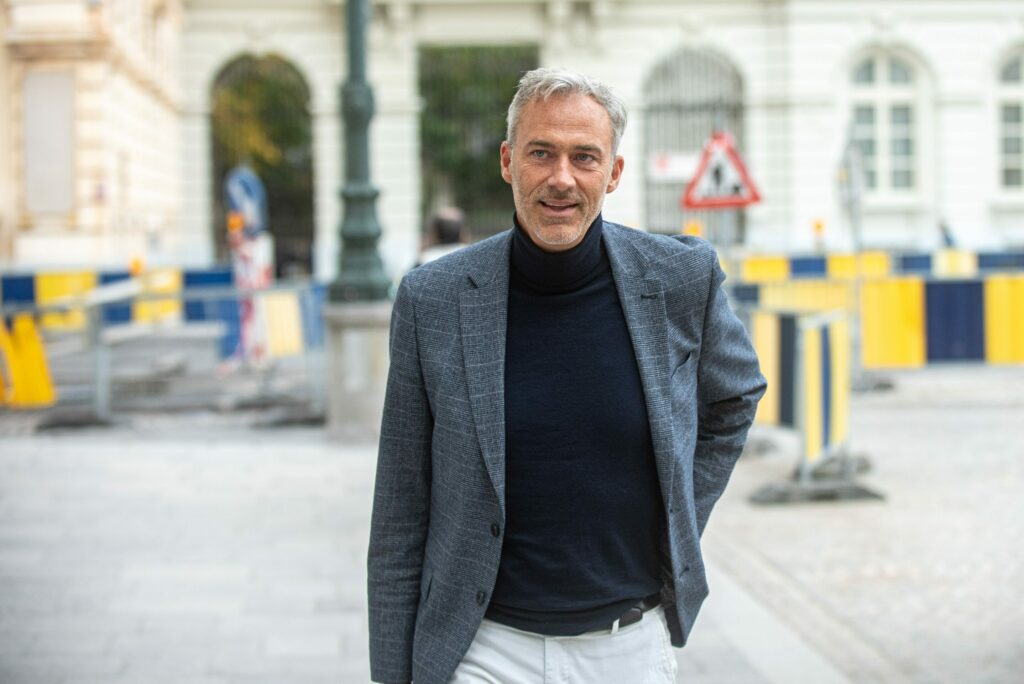
MR leader Georges-Louis Bouchez was furious. Credit: Belga/Jonas D'Hollander
There is just one problem: these seven parties together do not have a majority, as they represent just 43 of the 89 seats in the Brussels Parliament (45 are needed for a majority). What's more, they do not have a majority in either of the language groups, which is also a requirement in Brussels.
Still, this coalition "comes closest to a majority," according to Verougstraete. On the French-speaking side, the support of one (or both) independent MPs is essential.
Among Dutch-speaking parties, meanwhile, CD&V is participating in the discussions but has not yet formally committed to joining the government. For now, its Brussels leader Benjamin Dalle prefers to listen and observe, as his federal party leader Sammy Mahdi does not want his party to take part in a centre-left coalition in the capital.
'Others shout, we work'
Additionally, Verougstraete still hopes to convince the Flemish liberal Open VLD to join the coalition if the negotiators present a solid and fiscally responsible budget.
"We want to put Brussels in order. Realising structural reforms and saving at least €1 billion is the objective," he told Bruzz last weekend. "I feel that I sat around the table with satisfied people today. There were no surprises. We are moving forward. Others shout and scream, but we work with people of goodwill."
Almost certainly, Verougstraete is alluding to Francophone liberal MR party leader Georges-Louis Bouchez, who has been weighing in on the Brussels formation for months. In recent days, Bouchez made no secret of his dissatisfaction with the manoeuvring of his coalition partner Les Engagés.
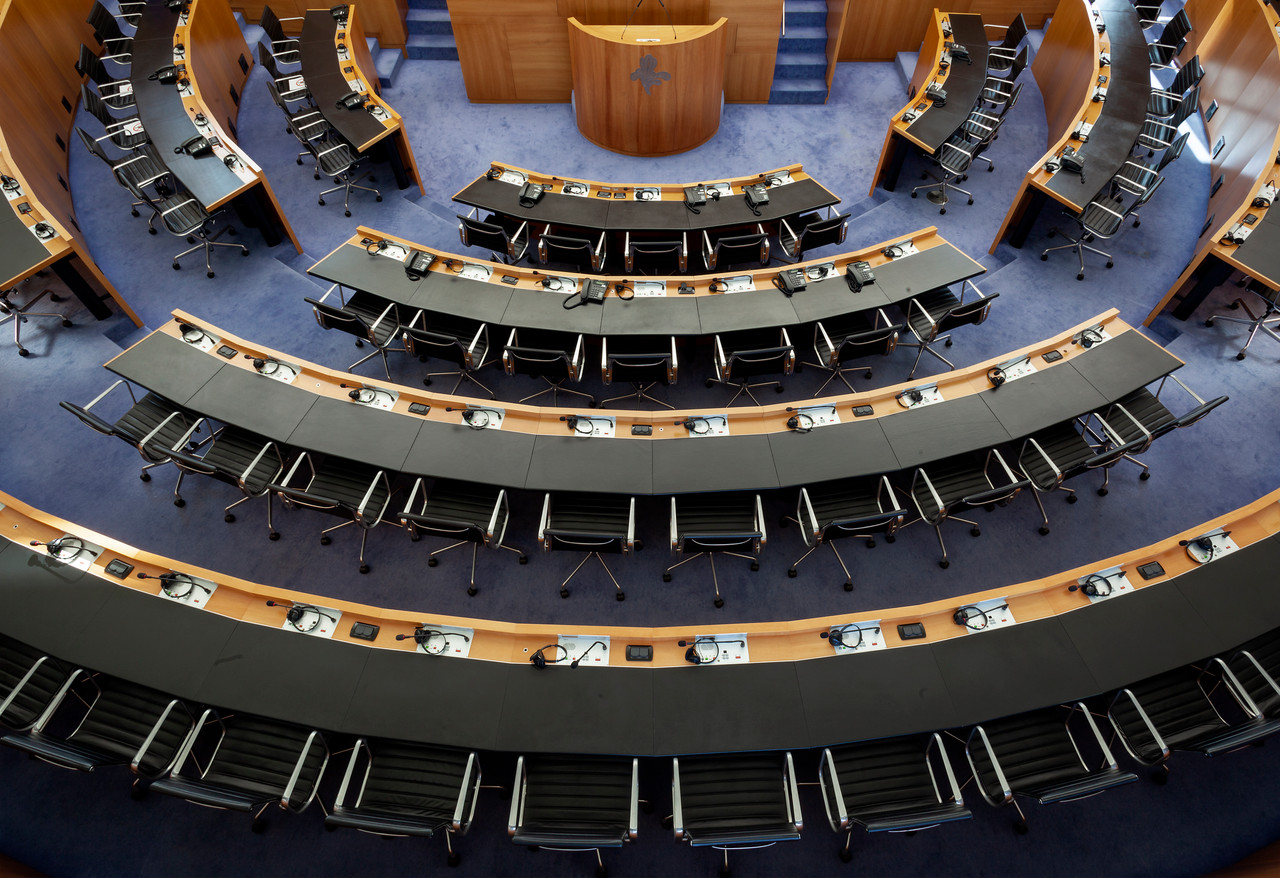
Empty Brussels Parliament. Credit: Belga
On the Dutch-speaking side, Groen – which won the regional elections in this language community – stressed that the Region must regain its capacity for action to improve the daily lives of Brussels residents.
"I believe in this new coalition. It is not the first time I have believed in it, but I must admit that this time I sense a certain collegiality among all the parties," said Elke Van den Brandt, the Brussels leader of Groen and outgoing Mobility Minister, on Tuesday morning on Francophone radio.
According to her, the challenge for this new coalition is to transform financial recovery and environmental choices into concrete gains for residents. "We are going to do it for Brussels, for the people of Brussels."
The big issues – budget, cleanliness, security – are not about "being left or right," she stressed, but about "being for Brussels."
What's next?
This week, Verougstraete is setting up eight working groups to tackle key issues such as mobility, security and housing, he said.
The party leaders will then meet to continue the talks between Christmas and New Year. If these talks remain productive, the parties could meet in a formal conclave after the New Year.
"I think all parties must show that they are serious," Van den Brandt stressed. "We must show that we are going to create real solutions and that there will be real answers on the table."
Additionally, Verougstraete's promise of delivering an initial budget note by Christmas must be kept, she said. "A first note for Christmas is what Mr Verougstraete promised us, so we are going to hold him to his promise."
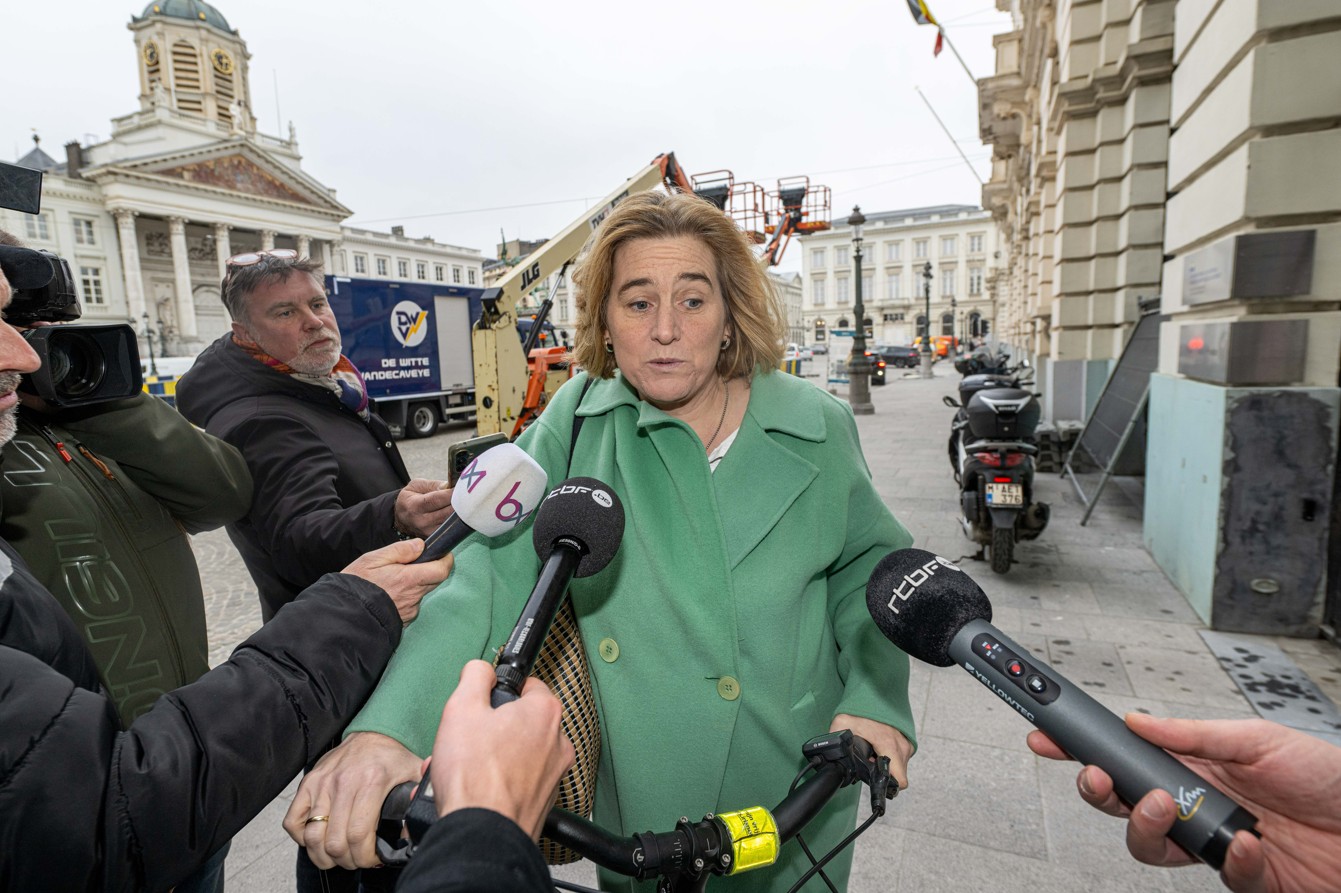
Groen's Elke Van den Brandt arrives for a meeting to form the Brussels Government, 3 November 2025. Credit: Belga/Jonas Roosens
Van den Brandt stressed that she remains confident about the feasibility of the coalition. "We are not that far from a solution. I think that many people in the Brussels Parliament have already expressed their willingness to support a project for Brussels."
In any case, Verougstraete would first like to go to Parliament with a budget agreement in place to obtain the required 45 votes. If that succeeds, the path to a government seems to be open.
To get other parties over the line, the "Guinness" coalition partners need to show that this is not just a thought project, she believes. "The important thing was to show that this is serious, that there is a budgetary exercise. It has to be credible and ambitious," she said. "It has to be realistic."
