
It's at this time of the year, as it draws to a close, that before we look forward, we inevitably look back.
More often than not, we search for meaning in the previous 12 months of our existence. Have we progressed, have we achieved what we set out to, have we been a good friend, have we made a difference? Can we be proud of ourselves?
For most of us, ticking off at least some of these is a good start, and a jumping off point for improvements and goals for the coming year.
The same is true for politicians and those in public life. The only difference is the evaluation of their successes or failures comes not just from their self reflective assessment, but also from the wider public, other politicians and more often than not journalists and commentators.
It is after all the role of journalists in a free society to hold those in power to account, and to measure their successes or failures so that the electorate can make informed decisions about their politicians and leaders. It is with this in mind that I look back now over the past year in Belgium.
In basic terms, on a federal, national level, Belgium can certainly be said to have progressed in 2025. A year ago, the country still didn't have a Federal Government. Within a few short months from January, we have seen the formation of the Arizona Coalition under the stewardship of Prime Minister Bart De Wever (N-VA), agreement on much needed social reforms including tax, benefits, pensions and unemployment, together with measures to cut the rocketing national debt.
In addition there have been successful inward investment initiatives and a profitable trade mission to the USA. Add to that closer ties to US law enforcement and intelligence agencies as part of a more coordinated strategy to deal with the influx of drugs into the port of Antwerp.
Whether you agree with the specific policies or not, one cannot deny that these are substantial, tangible achievements many thought not possible at the beginning of the year. Of course there are still challenges, but few thought the fledgeling coalition would have such a sense of purpose and conviction so soon.
This is something De Wever and his cabinet can indeed be proud of. But perhaps the thing that they and he can be most satisfied with, is the most recent achievement; that of successfully standing up to the EU and convincingly making the case against the use of frozen Russian assets to fund the war in Ukraine.
It was a victory on several fronts. It shifted, at least temporarily, the power balance in the EU, it enhanced Belgium's standing internationally, and it unified the country - a feat those of us who know Belgium fairly well, are keenly aware is not to be sniffed at. Bart De Wever can take much personal credit for this, and one can only hope that he spends the political capital he has garnered wisely in the coming months.
As I said, the federal politicians involved in these achievements and decisions over the past year can look back with some degree of satisfaction and maybe even pride. The same cannot be said for another group of politicians however.
For them, I would dare to venture, pride is the last thing they should feel.
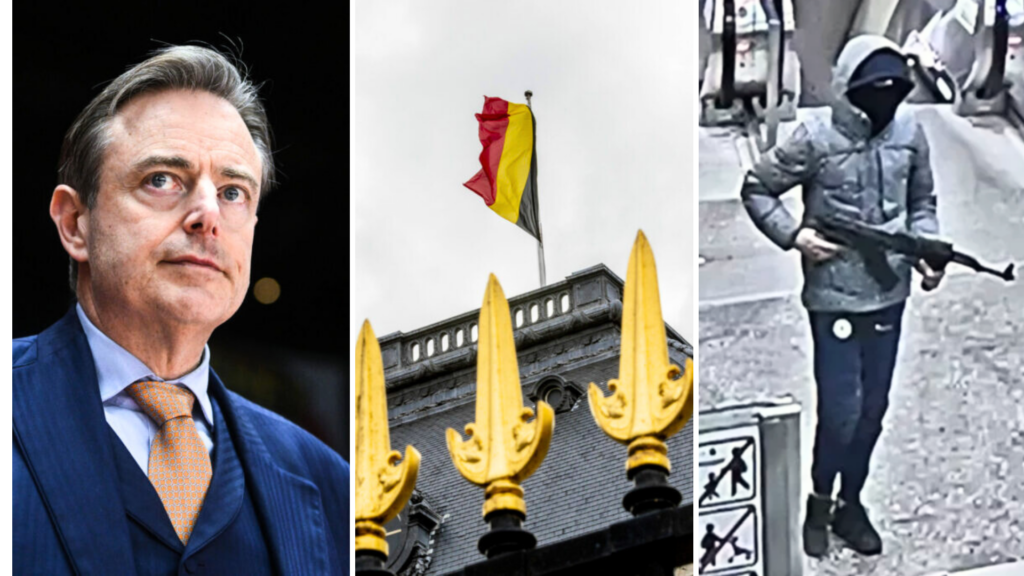
I speak of course of the bunch of so called public servants tasked with forming the Brussels Regional Government. It is frankly a disgrace that nearly 18 months after elections, the capital of Europe still has no functioning governing body. It matters. It matters a great deal.
Brussels has huge and growing problems, not least of which is a serious crime situation. It is not acceptable for a city like this to have such visible violent gun crime flare ups in such public places, often in broad daylight. It is not normal, and don't let anyone tell you it is.
Some of the responsibility lies at the door of the Federal government, but it is exacerbated by the lack of government for Brussels. There is no effective strategy or coordination and a severe lack of resources as a result of a total lack of decision making and strategy - and a complete lack of accountability.
The lack of government is also driving away investment, crippling infrastructure, eroding social projects, bankrupting NGOs and charities and damaging cultural life here. It is creating a stifling malaise and slow decline which if not addressed soon could have lasting effects on the vibrancy, diversity and constant reinvention we so love about Brussels. It is also damaging social cohesion.
And the most disgraceful aspect of this? No-one will take responsibility. It is fashionable to blame certain parties and certain leaders for the total mess. But this is missing the point, and letting others off the hook. They are all to blame.
If you operate in a democracy, and if your electoral system is designed to give representation to all, no matter how small the party, then you should see it as your duty as a politician to work with with them all to find a solution that represents the people's wishes.
If you don't, and you decide that you want to ignore the electorate and cut out legally elected members, then you are on a road to disaster. You will encourage the very thing you are supposedly fighting against; an increase in lack of trust in politicians, a rise in populism and a disenfranchisement of large sections of the population.
Oh and guess what will happen the next time there is an election? The problem will be even greater.
This Brussels Government situation needs to be solved now. In my opinion, all the relevant people from all the involved parties should be locked in a building and not allowed out until they have formed a government. One might even suggest that food and comforts should be reduced each day until a decision has been made - but maybe thats going a bit too far. Nonetheless, if it's good enough for 133 cardinals, its good enough for this motley crew.
They cannot be proud of what they have achieved this year - for they have achieved nothing. Actually that's not entirely true. They have achieved the distinction of diminishing Brussels reputation, damaging its livabillity and detrimentally impacting the quality of life here.
The opposite of pride is of course shame. That's what they should feel. When they look back on 2025 they should be ashamed, for they have singularly failed in their jobs. They have failed to carry out the wishes of the people, above and beyond their own vested party interests.
They should think on this solemnly when making any New Year resolutions. They should resolve to do a better job - the job they were elected to do. It's time they look forward, and stop looking back to an ideal past they can no longer control. It's time to get on and govern, and do some things that maybe, just maybe, they can be proud of in a year's time.
Whether we will be quite so proud, is another matter.
Happy New Year to all of you, our readers, and may you have a peaceful and prosperous 2026 from all of us here at The Brussels Times.
