
Following Donald Trump’s repeated threats to take over Greenland, there have been renewed calls for a boycott of US products in Europe.
A major boycott of US goods emerged early last year in response to Donald Trump's return to the White House and his subsequent decision to impose tariffs on imports from other countries.
The movement, which mainly took off in Canada and Europe, is now picking up pace as a way for people to show their discontent with the policies of the Trump administration.
Facebook groups and Reddit communities such as WorldBoycottUSA, r/BuyFromEU or r/BoycottUnitedStates have sprung up, aiming to provide information on alternatives to US goods.
In addition to these communities, there are apps such as 'Detrumpify Yourself', created by the French independent app developer Sacha Montel. The app functions by allowing the user to scan the barcode of a product they are thinking of purchasing and telling the user if said product has ties to the US or not.
The Brussels Times tested the app in a local Carrefour and found a large number of products – especially within the processed food section – that had ties to the US.
Detrumpify Yourself analyses US capital involvement, not the country of manufacture, so there are some surprising inclusions in the product list. Côte d’Or chocolate, for example, is actually owned by Mondelēz International, a company based in the US.
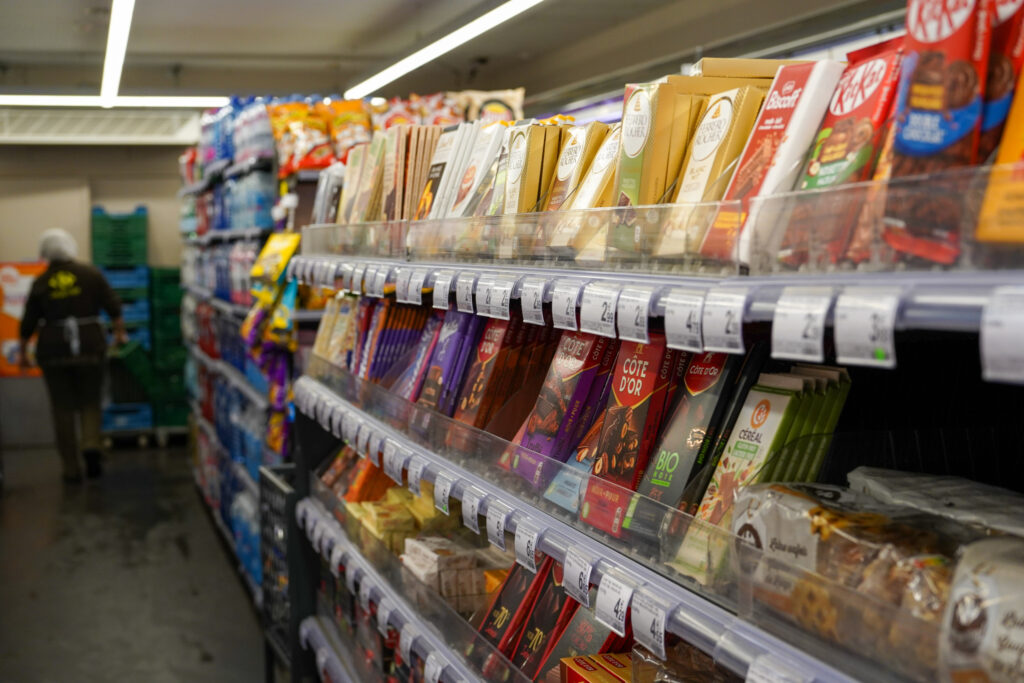
Carrefour shelf filled with Mondelez products. Credit: Vicente Torre / The Brussels Times
A 'simplistic and outdated' approach?
Here in Brussels, views on the US boycott are mixed. Although many people are backing the movement, others are concerned about the practicalities involved in finding alternatives to US products and questioned the political effectiveness of such a strategy.
Emma Delorme, 23, who is originally from France but lives in Anderlecht, said she understands the idea behind the boycott, but raised several practical concerns which have made her hesitant to participate.
“Sometimes you don't really know the origin of stuff you buy. For example, I go to the market. I don't know where it's from,” said Delorme, who works at the Brussels Alliance Française Francophone cultural foundation.
Another problem Delorme faces is that buying Belgian or French-made products can be significantly more expensive. “I like to buy it, but it gets really expensive quickly. I can buy my clothes secondhand, but for food, I just buy what is cheaper, honestly," she added.
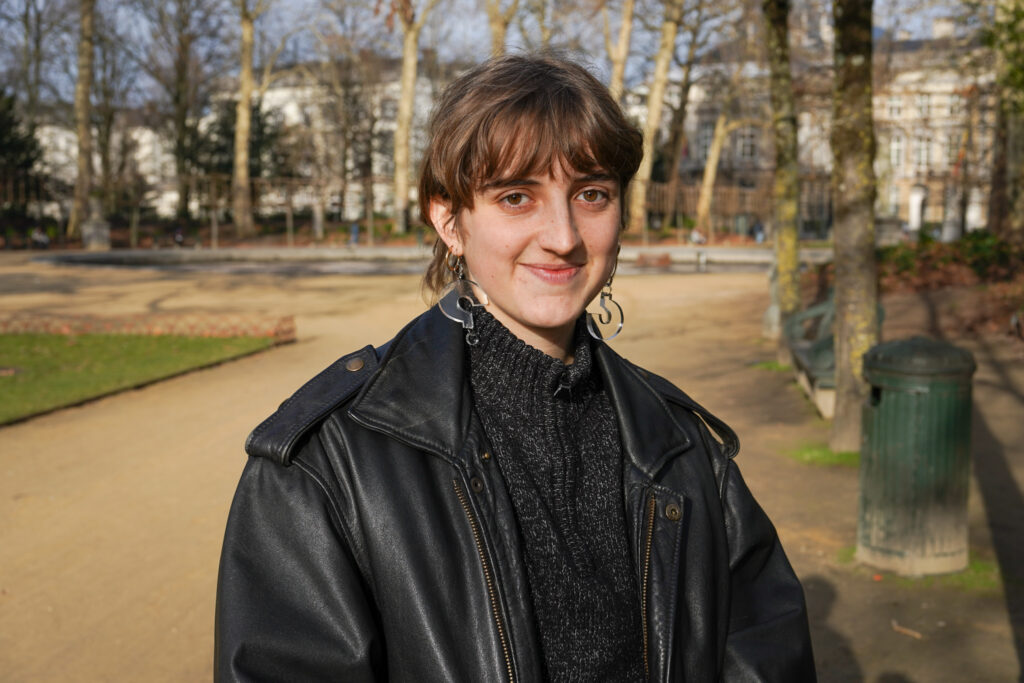
Emma Delorme. Credit: Vicente Torre / The Brussels Times
Michael, 55, who is originally from the UK but lives in Brussels, said he was firmly opposed to a boycott, arguing that they are politically ineffective and outdated.
"Has any company ever been brought down by a product boycott by individual consumers - never mind any government?" he asked. "No. Not giving a company a few hundred of your hard earned euros isn't going to make them reverse their business strategy, and it isn't going to overthrow a government. It's way too simplistic and outdated an approach.
"Also, not everyone from a country necessarily agrees with the policies of the government, and you are potentially hurting them through job and income impacts in their country. Change generally needs to come from within a country, and through more sophisticated, coordinated, sustained and nuanced approaches.''
'We as a society should stand our ground and resist'
Others we spoke to were convinced that joining the boycott is the right thing to do. We met Lotte and John* in the Marolles district. The young Belgian woman and her American boyfriend have not yet participated in the boycott, but were some of the most eager among our interviewees to follow through with the idea.
“I think it's great," said John. "We as a society should stand our ground and resist the people that are treating others the way they are…especially to someone like Trump."
“I feel ashamed to be part of that. Even though I am against it and I voted against it, you can't help but feel like the whole world sees your country as a country that allows that.”
The pair mentioned the latest Greenland escalation and ICE-related violence as their reason for supporting the idea.
Even when we mentioned the connection of certain Belgian companies to US capital, Lotte stood firm. “Boycott is boycott," she said. "I think it's a slow process, but we should start putting things in place to keep away from America”.
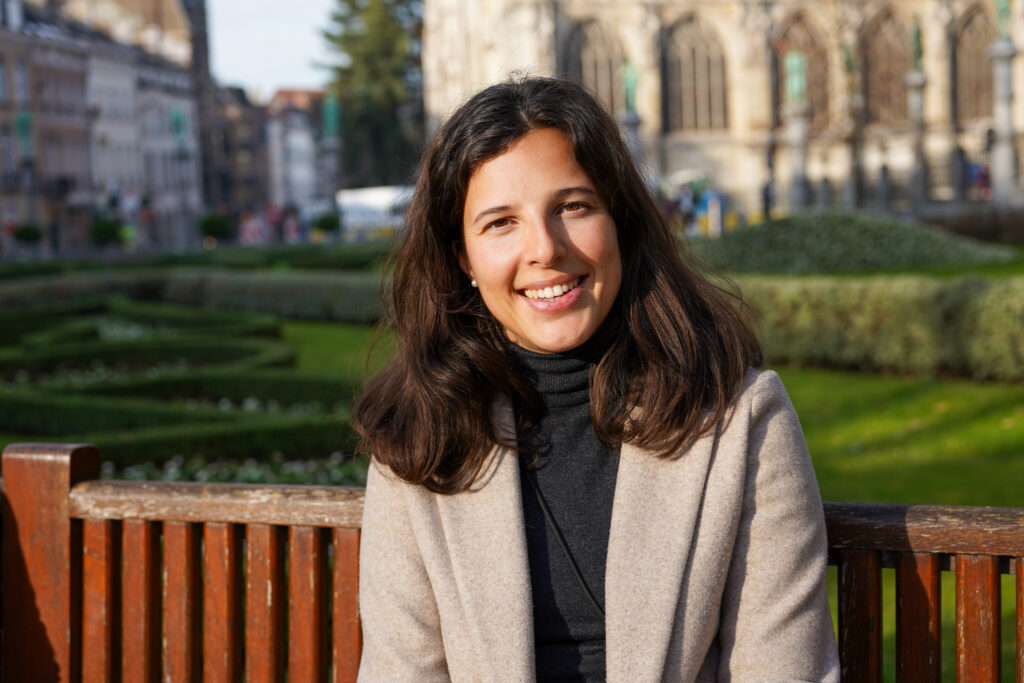
Nadia supports the boycott. Credit: Vicente Torre / The Brussels Times
Nadia, 30, also supports the boycott. She has participated in boycotting US products herself, although for quite different reasons to many of those backing the boycott strategy. Her reasoning is centred on ecological impact, support for local businesses, and her own sense of well-being.
“I like local, small brands," said Nadia. "Even if those big chains are franchises, I prefer to give my attention and my money to small places.”
While she is open to the possibility of switching supermarkets Nadia admitted that cutting certain digital services like Google Maps or Instagram would be problematic for her. The other people we spoke to all agreed with this sentiment, noting that there few worthwhile European alternatives to those offered by US companies.
* Names have been changed
