
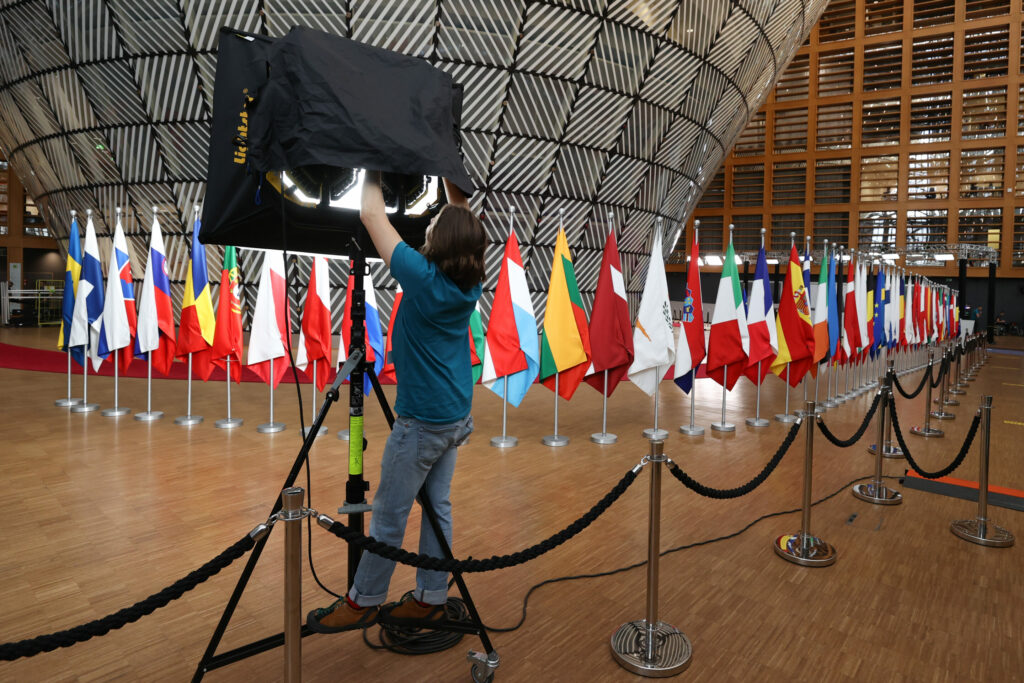
Last night, European leaders were relieved to hear US President Donald Trump has decided not to impose tariffs against European countries after announcing the “framework of a deal” on Greenland.
The president's U-turn has taken the sting out of the tail of tonight’s summit, but questions over the announced deal remain as leaders gather tonight in Brussels from 7 pm.
The summit was convened last Sunday by Council President António Costa following Trump's threats to impose a 10 percent tariff on eight countries which have backed Denmark over the Greenland issue. After last night's announcement, there had been some confusion over whether the meeting would even go ahead, but officials have confirmed it will take place.
"We can negotiate all political aspects – security, investment, the economy – but we cannot negotiate our sovereignty," Danish Prime Minister Mette Frederiksen said on Thursday, after Trump’s announcement of a framework deal.
With Trump offering few details, lingering questions remain, including what is in the framework deal and whether it leaves open the possibility of future US annexation of Greenland.
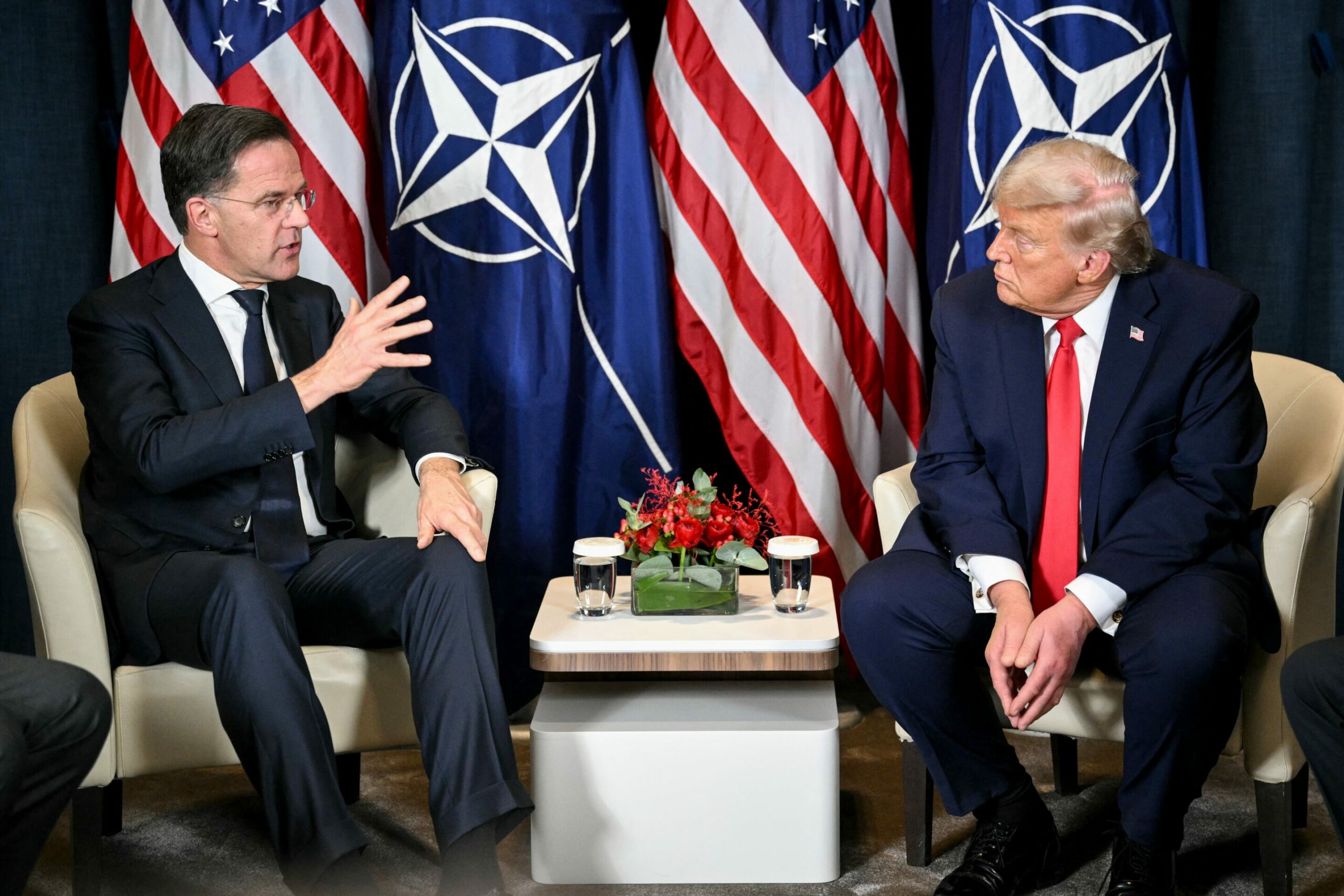
US President Donald Trump (R) speaks with NATO’s Secretary-General Mark Rutte during a bilateral meeting on the sidelines of the World Economic Forum (WEF) annual meeting in Davos on January 21, 2026. Credit: Belga / AFP
The informal European Council meeting is expected to address the unprecedented damage done to US-European relations by Trump's aggressive rhetoric and threats against the Arctic island. It is now unclear what the status of the long-awaited US-EU trade deal is, as the European Parliament has formally suspended the ratification process on the agreement.
On Thursday, Europeans remained sceptical about the 'deal' over Greenland, believing the issue will soon be back on the agenda. Trump’s U-turn came just hours after he doubled down during his speech on Wednesday on his desire to acquire Greenland. "You can [sell us Greenland], and we will be very appreciative. Or you can say no, and we will remember," he said.
Tonight in Brussels, leaders will sit down to digest the events of the last few weeks, but also draw up some possible options should the issues arise again.
EU diplomats had floated the idea of reviving the retaliatory tariffs on €93bn worth of US exports from 7 February as a counter response.
'Bazooka' option
If Trump had followed through with his plans to impose tariffs against allies, the other widely discussed retaliatory option for the EU was using the Anti-Coercion Instrument (ACI), sometimes dubbed the 'bazooka' option. The tool, which came into effect in 2023, is designed to counter external countries bringing in or threatening to introduce measures which seek to influence the EU’s trade and investment.
It was designed for situations like these, but was originally conceived as a protection mechanism against China or Russia. Indeed, few had imagined deploying it against an ally such as the US before now.
It would have been tricky to give the green light for its use, despite backing from France and Germany. While only a qualified majority (15 Member States) is needed to pass it, a first meeting between leaders last Sunday showed no clear path to its deployment due to internal divisions.
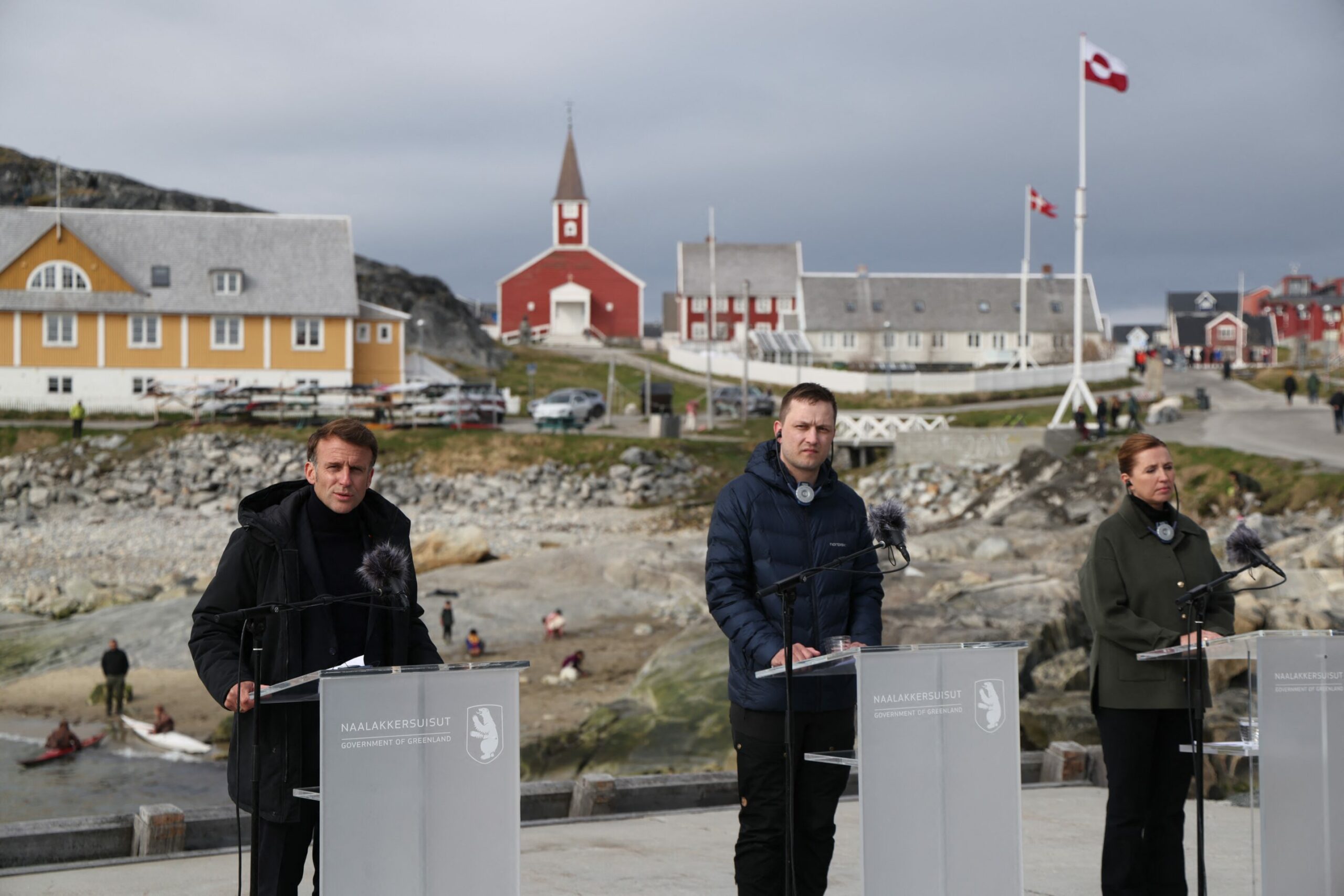
French President Emmanuel Macron, Greenland's Prime Minister Jens-Frederik Nielsen and Danish Prime Minister Mette Frederiksen attend a joint press conference in Nuuk, Greenland, on June 15, 2025. Credit: Belga / AFP
Yet, with Trump doubling down on his threats to take Greenland, pressure was building for European leaders to stand up for European citizens against Trump's coercive tactics.
Global markets were also spooked by Trump having initially not ruled out using military force, while opinion polls in the US did not overall support his annexation plans.
Faced with these threats, Europe upped the ante by discussing deploying the ACI, not buying US weapons anymore to prioritise European ones, restricting access for US firms (e.g. tech companies) from the European markets, and even a boycott of US products.
Many of these options had been, until recently, unthinkable and heightened the chances of a disastrous trade war between the two powers.
Europe needed to show its muscle and buy time on the Greenland issue, according to a senior analyst at the leading think tank, European Council of Foreign Relations (ECFR), Agathe Demarais.
United front
Analysts agree that Europe has at least been able to buy time, de-escalate and engage in constructive dialogue with the Trump administration.
One thing which remains vital for the EU is to maintain unity. Tonight will be a chance for leaders to informally prepare next steps for future sanctions should this or a similar international crisis occur again.
Discussions are also expected on how fast the EU should reduce its dependencies on the US, for example with buying weapons, technology and AI.
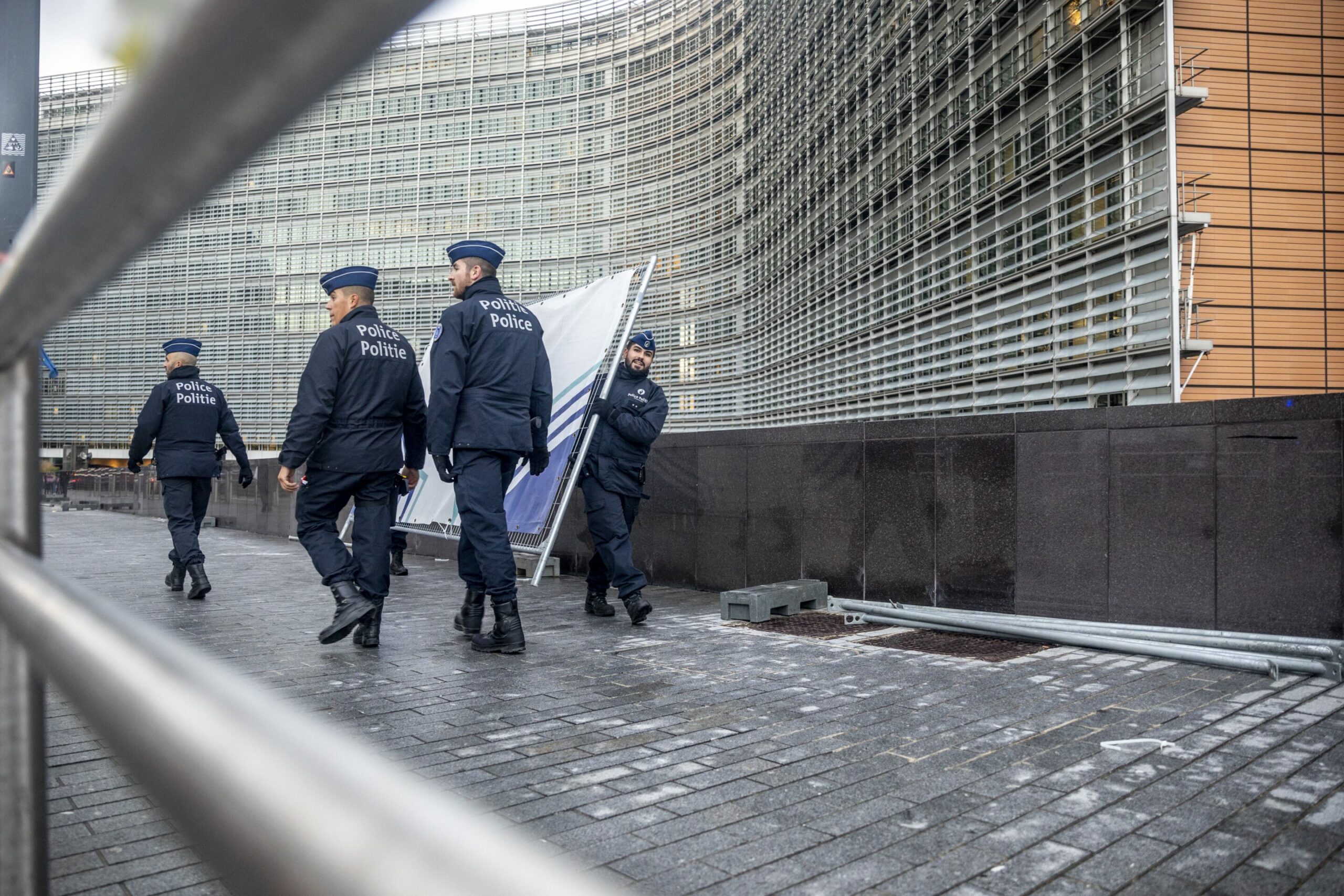
Illustration picture shows police outside the EU headquarters during a European council summit, in Brussels, Friday 22 October 2021. Credit: Belga / Hatim Kaghat
This week, the chair of the EU-Greenland relations committee, Barry Andrews MEP (Renew -Europe), told The Brussels Times that European countries should start prioritising buying European weapons systems over US ones.
Europe should also start reevaluating its investment strategies, given how many US bonds are held in Europe, Andrews said.
However, ECFR’s Demarais warned against selling off the $2.8tn in US Treasuries held in European countries, as it would provoke a sharp depreciation of the US dollar against the euro.
"That some economists close to the White House have called for Washington to pressure Europeans to accept such a sell-off further suggests that it may not be in Europe’s best interests to proceed with such a plan," Demarais explains.
No ally of ours
While these nuclear options are unlikely to be deployed following Trump's climbdown, Europeans appear to have woken up to the fact that the Trump administration is not behaving like an ally.
Ahead of the EU summit at the European Council this evening, President Antonio Costa said that the "geopolitical challenges Europe is facing sometimes seem daunting".
He mentioned Russia's war of aggression, the international rules-based order being undermined, and core alliances being questioned.
"But the EU will come out of this stronger, more resilient and more sovereign. Our response must have three components: a Europe of principles, a Europe of protection and a Europe of prosperity," Costa said.
