
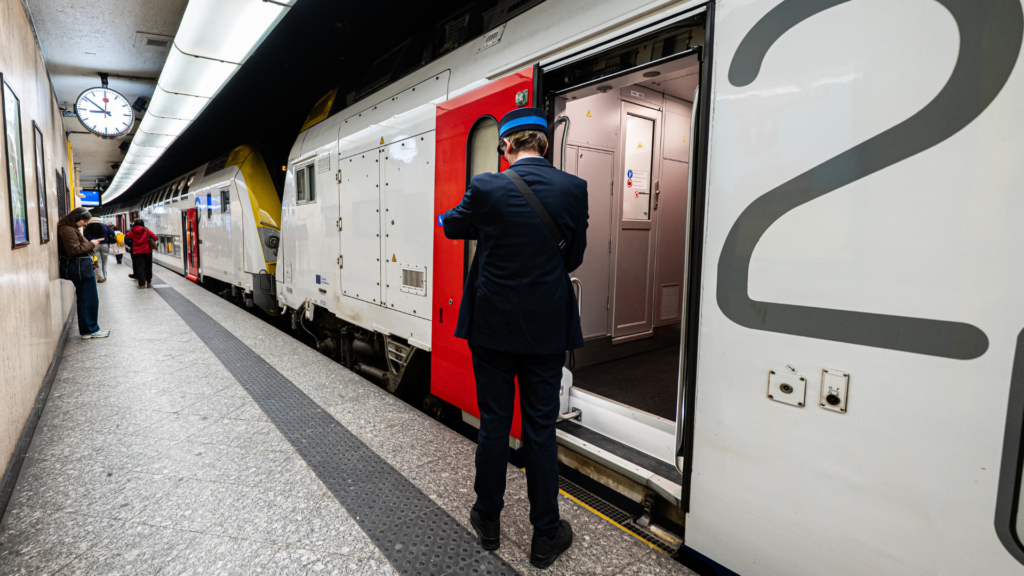
Train travel in Belgium will be disrupted on Tuesday as the country enters the second day of a five-day railway strike.
While the action called by Belgian unions will continue to affect railway traffic until 22:00 on Friday, 30 January, alternative train schedules will be in place to ensure passengers can still reach their destinations.
Fewer trains scheduled
On Tuesday, only a few trains will run during the morning and evening rush hours (P trains), warned the national train operator, SNCB/NMBS.
However, the majority of trains between major Belgian cities, known as IC trains, will be running on Tuesday, with only one in four trains cancelled.
Similarly, two out of the three regularly scheduled local and suburban trains (L and S trains) will be operational on Tuesday.
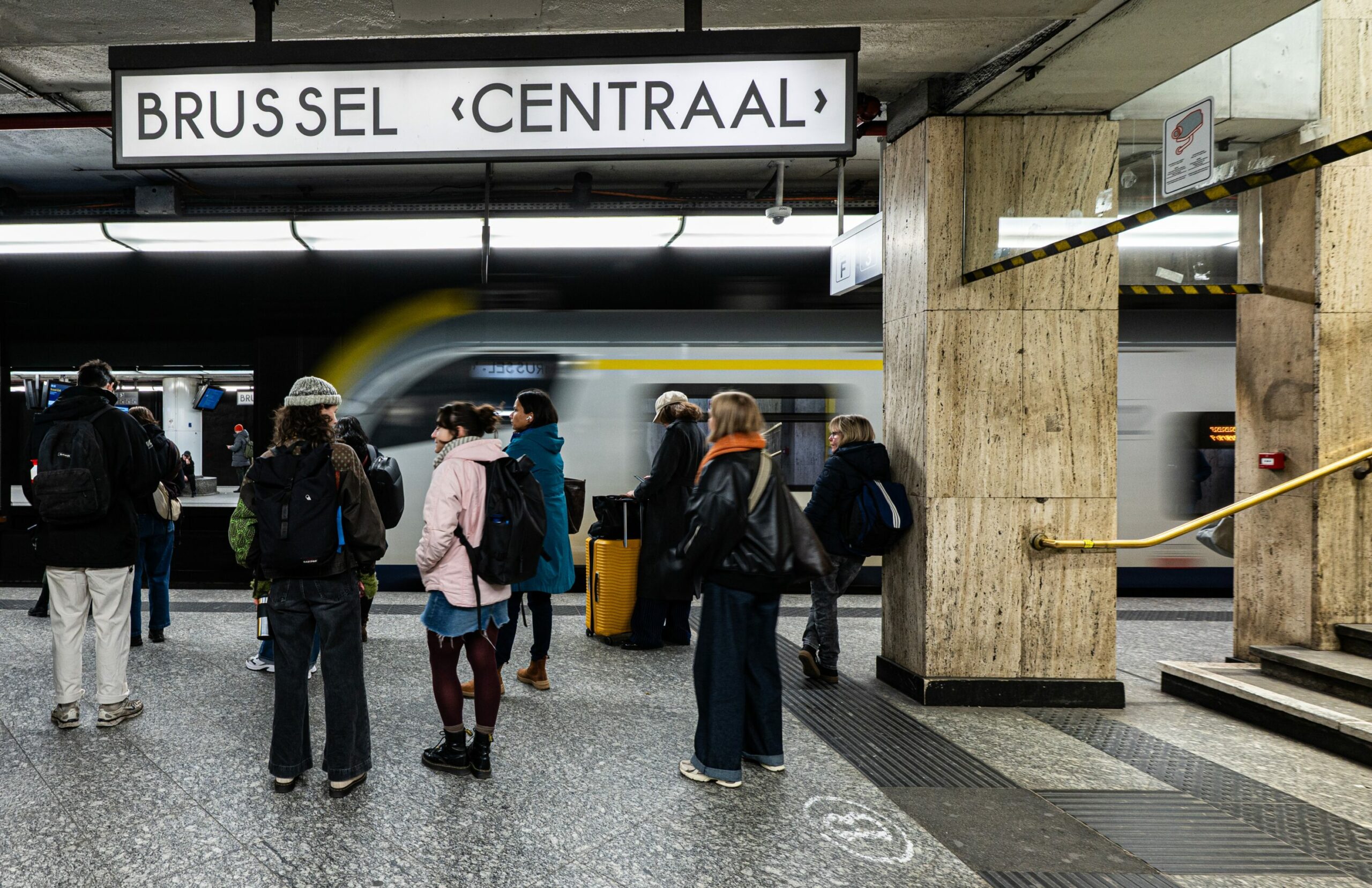
Passengers pictured as a train passes by, on the first day of a 5-day strike of the national railway company SNCB/NMBS at the Brussel Central station Monday 26 January 2026. Credit: Belga/Emile Windal
Train service will continue to be limited on Wednesday, as only two out of three IC trains are expected to be running, while only half of the L and S trains are planned to be operational.
Similar to Tuesday, SNCB warns that only a few P trains will be available during peak hours in the morning and evening on Wednesday.
Passengers can consult the details of the adapted train timetables via the SNCB app or website. Timetables should be available at least 24 hours in advance of each strike day, according to SNCB.
Cancelled international trains
The high-speed train operator Eurostar "expects to run a near normal timetable during the rail strike," according to spokesperson Céline Ronquetti. So far, no Eurostar journeys have been cancelled due to the strike.
Similarly, all OUIGO Brussels-Paris trains and ICE Brussels-Cologne-Frankfurt trains will all be running on Tuesday and Wednesday as scheduled.
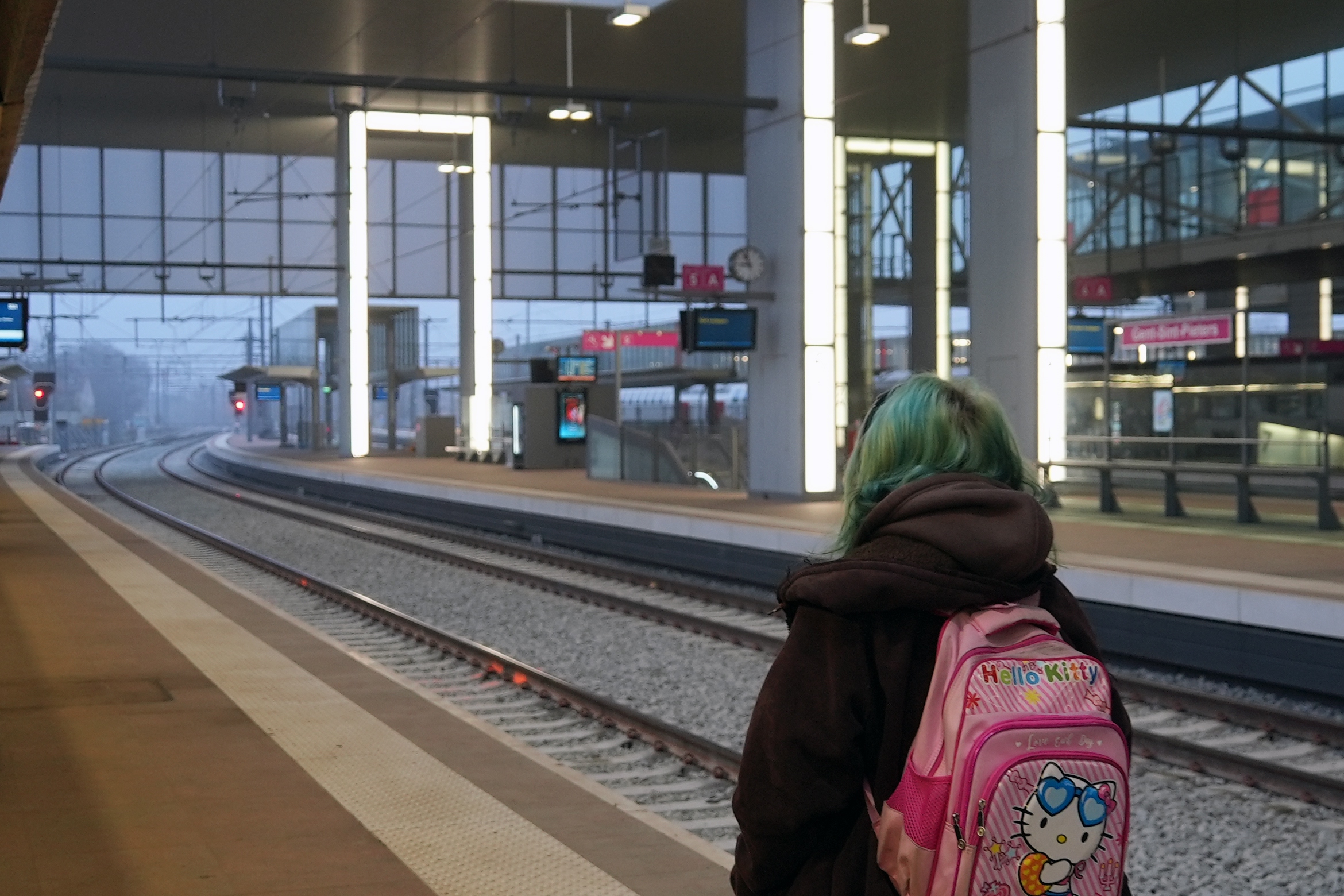
A passenger pictured on the tracks on the first day of a 5-day strike of the national railway company SNCB/NMBS, at the Gent-Sint-Pieters train station in Gent on Monday 26 January 2026. Credit: Belga/Jonas D'hollander
While most TGV INOUI trains departing and arriving at Brussels-Midi are expected to run, four trains have been cancelled on Tuesday and Wednesday, namely train 9886/7, 9832, 9870, and 894/5.
Additionally, the Brussels-Vienna Nightjet train will only depart from Cologne on Wednesday evening. Nightjet passengers can use IC trains between Brussels/Liège and Cologne.
Passengers with tickets for EuroCity trains will continue to face disruptions on Tuesday and Wednesday, with only 12 out of the 16 EuroCity trains between Brussels and Rotterdam scheduled to run.

Union members distribute info flyers to commuters at the Brussels Central station, on the first day of a 5-day strike of the national railway company SNCB/NMBS on Monday, 26 January 2026. Credit: Belga/Emile Windal
Meanwhile, half of the 16 EuroCity Brussels-Amsterdam trains departing from Brussels will run on Tuesday and Wednesday, although the majority is expected to have their final stop in Rotterdam.
Additionally, only nine out of the 16 EuroCity Brussels-Amsterdam trains depart from the Netherlands. Most of these trains are expected to depart from Rotterdam rather than the Dutch capital.
The EuroCity train operator further warns that the train EuroCity Direct 9512 departing Amsterdam Zuid at 06:03 will only run to Antwerp Central rather than Brussels-Midi.
An overview of the disruptions to the international train services is available online on the SNCB online traffic disruption page.
Unions against employment reforms
The strike is supported by five unions and was announced at the end of last year. It follows the approval of a bill by Federal Mobility Minister Jean-Luc Crucke (Les Engagés) to modernise the management of the country's public railway companies.
One of the main points of contention for the union members is the government's decision to end the appointment of permanent roles within SNCB/NMBS and the rail infrastructure group Infrabel. The unions argue that this risks sacrificing the stability and expertise of employees who maintain the safety of the railway network.

Members of the union FGTB CGSP Cheminots - ABVV ACOD Spoor held a meeting in support of the workers on strike on the first day of a 5-day national strike of the national railway company SNCB/NMBS in Brussels, Monday 26 January 2026. Credit: Belga/Emile Windal
In addition, union members have also raised concerns over changes to the system of labour negotiations, which they say could see unions sidelined in favour of management decisions.
Several railway staff are also striking to denounce reforms to Belgium's pension system and poor working conditions.
Mobility Minister calls strike 'unreasonable'
On Monday, Mobility Minister Crucke called the strike "unreasonable" during an interview on the morning radio programme De Ochtend.
"I spent dozens of hours negotiating with the unions. I did not force anyone to sign an agreement. It is the members' right not to agree, but it is also the government's right to say: we take responsibility and we move forward," he said.
The minister argued that the public railway sector needs to be more flexible to allow it to endure future competition.
Bus strike in Wallonia
The train strike coincides with a union action at the transport company LETEC, which has disrupted bus services, particularly across Wallonia.
The LETEC strike, which began on Monday, was called for an indefinite period as a response to reforms to the operator's Public Service Contract.
Passengers are advised to consult the operator's app and website for the latest information.
