
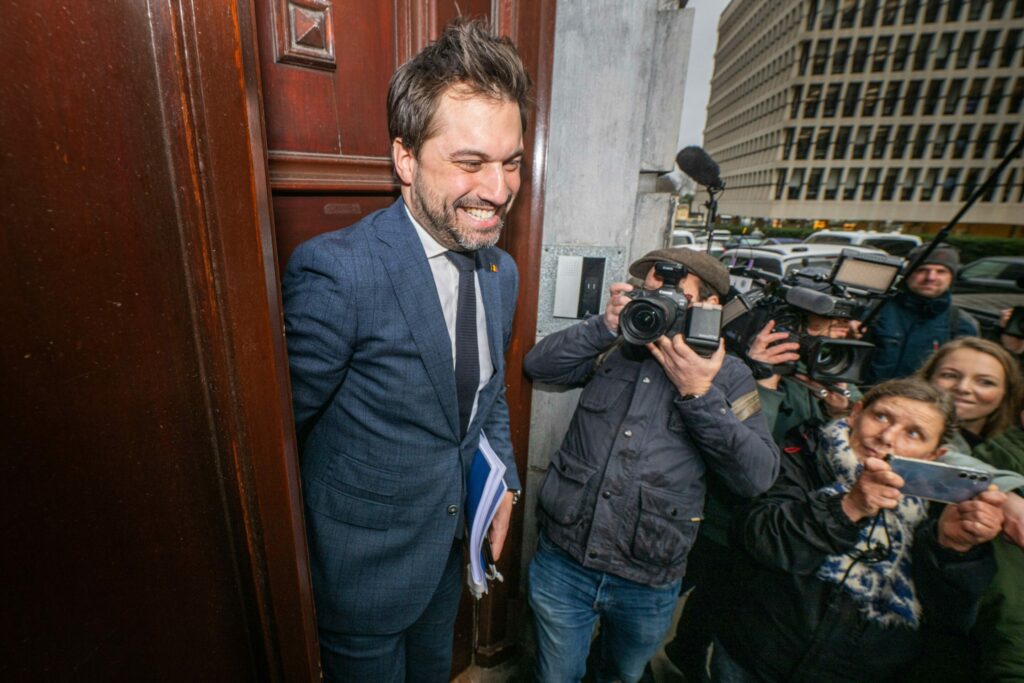
More than 600 days after the elections, it seems that Brussels could finally be on the verge of finding a new regional government.
Since Tuesday morning, seven political parties have been locked up in negotiations, and they will not leave until they find an agreement.
A surprising twist in the 20-month-long government formation saga was announced on Monday evening: a conclave to find a new Brussels Government would begin at 10:30 the next day. The main focus of the talks would be on how to restore balance to the budget by 2029.
"For the first time, there is a credible configuration that has a majority on both the French-speaking and Dutch-speaking sides," said Ahmed Laaouej, leader of the Brussels PS.
The parties around the table on the French-speaking side are MR (liberals), PS (socialists) and Les Engagés (centrists). On the Dutch-speaking side, it involves Groen (greens), Vooruit (socialists), CD&V (Christian Democrats) and Anders (liberals).
The parties were brought together in a conclave, led by MR leader Georges-Louis Bouchez. The liberal is "particularly keen" to start the talks, and aims to reach a government agreement "before the end of the week," The Brussels Times has learned.
The intention is to go all the way: the negotiators (maximum four per party) will not leave the historic building of the University Foundation until they have the beginnings of a government agreement. Most of them told reporters they packed their suitcases for "a few nights."
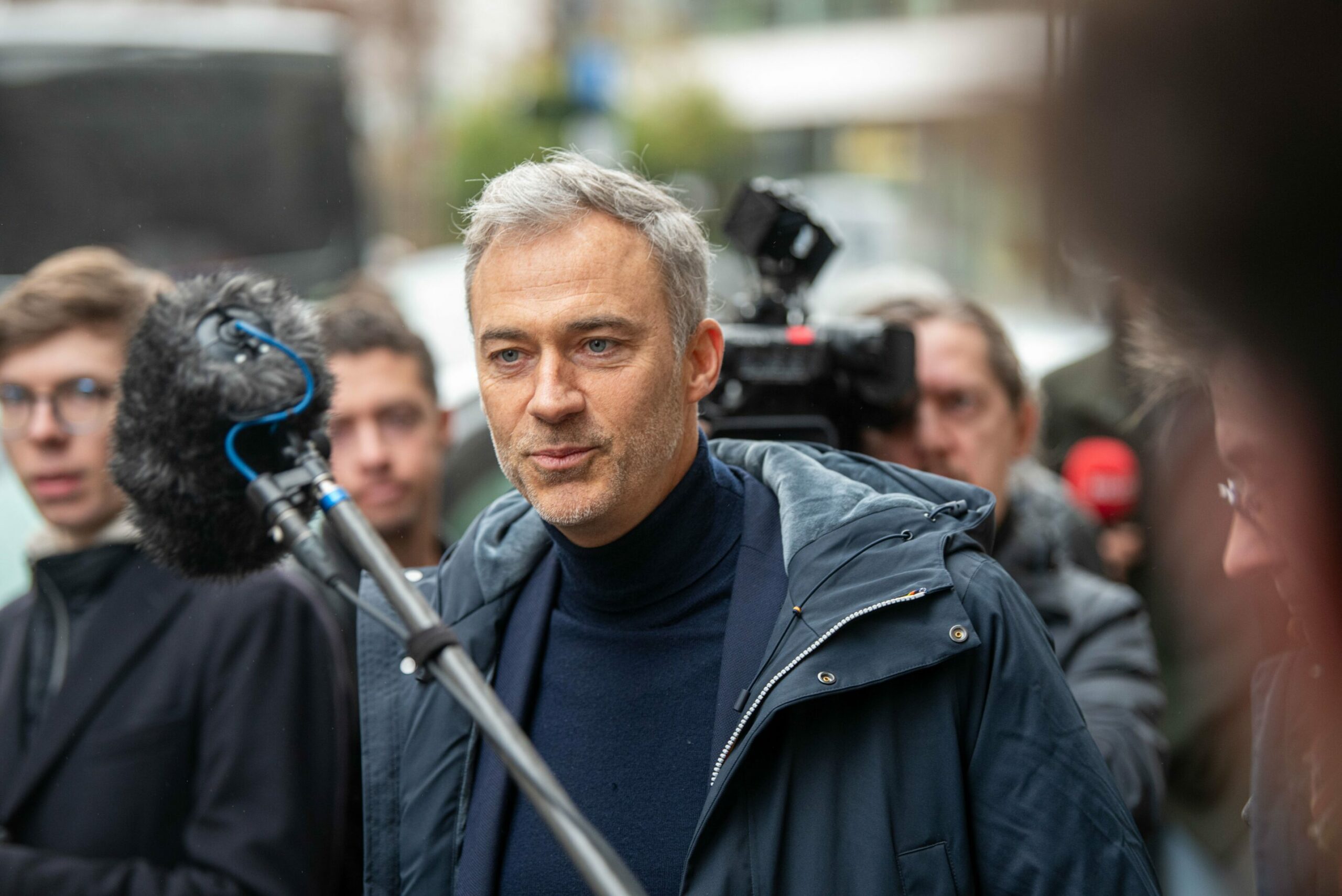
Yvan Verougstraete (Les Engagés) arrives at the start of the conclave for the formation of a Brussels government, Tuesday 10 February 2026, in Brussels. Credit: Belga/Jonas Roosens
An offer Anders can't refuse
Crucially, this conclave is only possible because Anders (Flemish liberals) suddenly announced it was willing to drop its biggest demand: not enter into a government that did not include N-VA.
This demand complicated matters intensely, as PS refused to budge on its own, opposing the main demand: do not enter into a government with the Flemish nationalists. Now, it seems like Brussels' PS leader Laaouej has achieved his goal.
In August last year, Frédéric De Gucht was elected as the new leader of the Flemish liberal party (then still called Open VLD). Since then, he made his inflexibility his trademark, and even changed the party's name to 'Anders', which means "different" in Dutch – symbolising that he would do things differently.
By accepting Bouchez's invitation to take part in the conclave (and therefore, the new Brussels Government – even if it excludes N-VA), critics are arguing that maybe De Gucht is not doing things so differently after all. However, he refutes this.
"The discussions we have had with MR over the past few days make it clear that the other parties are prepared to make the necessary efforts, including balancing the budget in 2029," he told VRT.
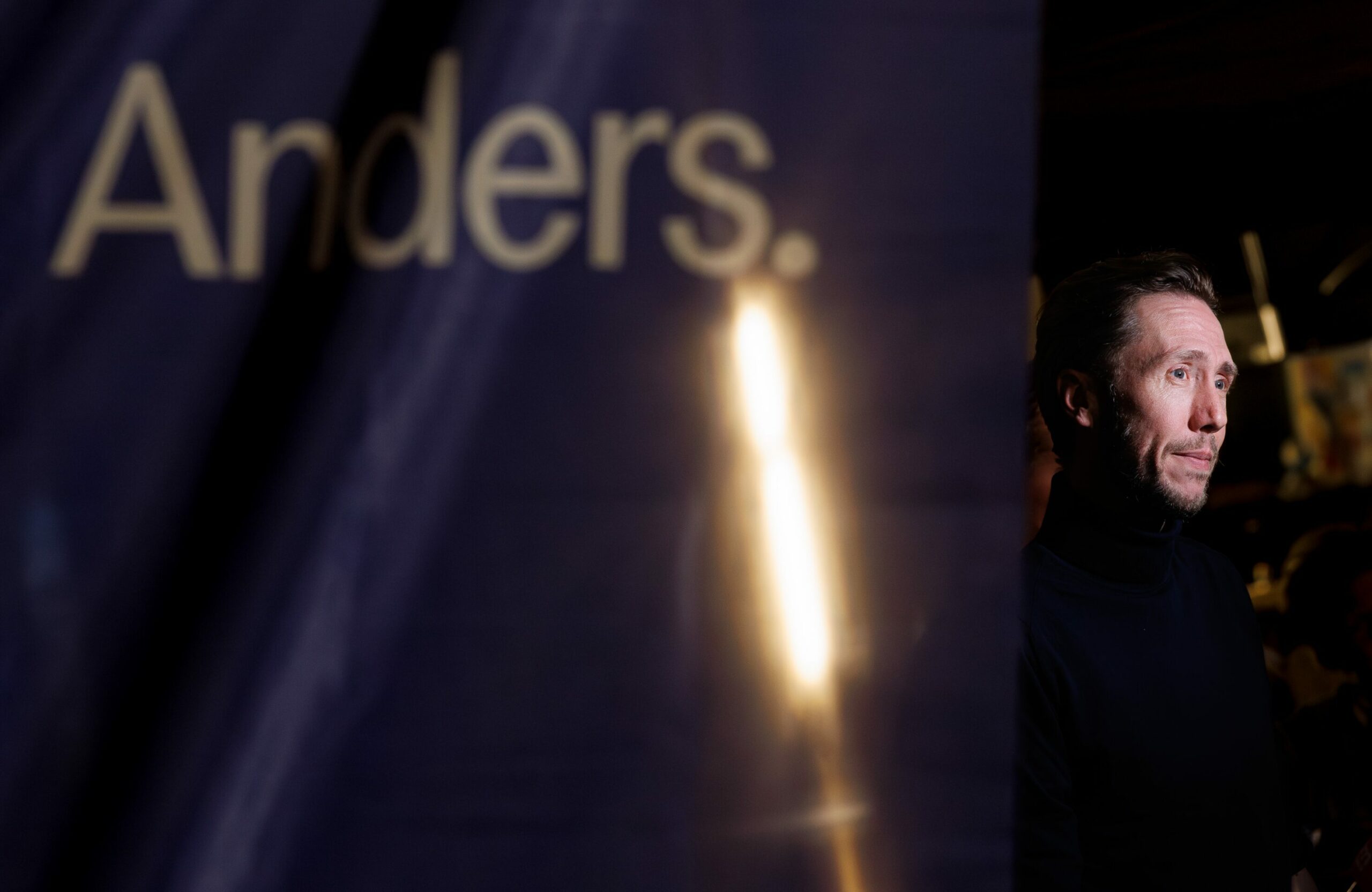
Leader of the Flemish liberals, Frédéric De Gucht, pictured with the party's new name 'Anders' in Brussels, Monday 19 January 2026. Credit: Belga/Benoit Doppagne
"I have always said that we would sit down at the table for a project that would put Brussels back on track. This comes very close to 'an offer I cannot refuse.' This could be a historic turning point for Brussels," De Gucht said.
Importantly, he emphasised that his party's participation will come at a price: Anders is demanding a balanced budget by 2029. While this is not an easy feat for a region struggling with a severe budget deficit, the parties around the table seem to have widely accepted the need for spending cuts.
At the end of January, Brussels Budget Minister Dirk De Smedt (Anders) was, surprisingly, able to announce that the budget deficit was a good €200 million less deep than previously estimated – reducing the deficit from €1.24 billion to €1.03 billion (on a total budget of €6 billion).
In his message on social media on Sunday evening, Bouchez also referred to De Smedt's work as an important foundation for the talks.
This, in addition to MR's ambitions to tackle Brussels' many administrative layers as well as the Capital Region's security and cleanliness issues, ensured that Anders took, De Standaard reports.
Fourth time is the charm?
However, experts have already warned that hopes should not be too high. In the past 600 days, the current party constellation under discussion has already been attempted three times. First, in the summer immediately after the elections in 2024, then in February-March 2025, and one final time during the last summer.
However, it is hoped that this fourth attempt – under the watchful cameras and microphones of the entire national press waiting outside the building – will provide sufficient pressure to find an agreement in the coming days.
Now that everyone has agreed to come to the table, the classic left-right divisions on issues such as work and the economy, taxation, mobility and housing are likely to come to the fore again.
In practice, this means that the conclave is not a silver bullet. The negotiations did not last 600 days just because of egos and vetoes; there are real fundamental and ideological differences between the parties and their visions for Brussels, RTBF's Bertrand Henne pointed out.
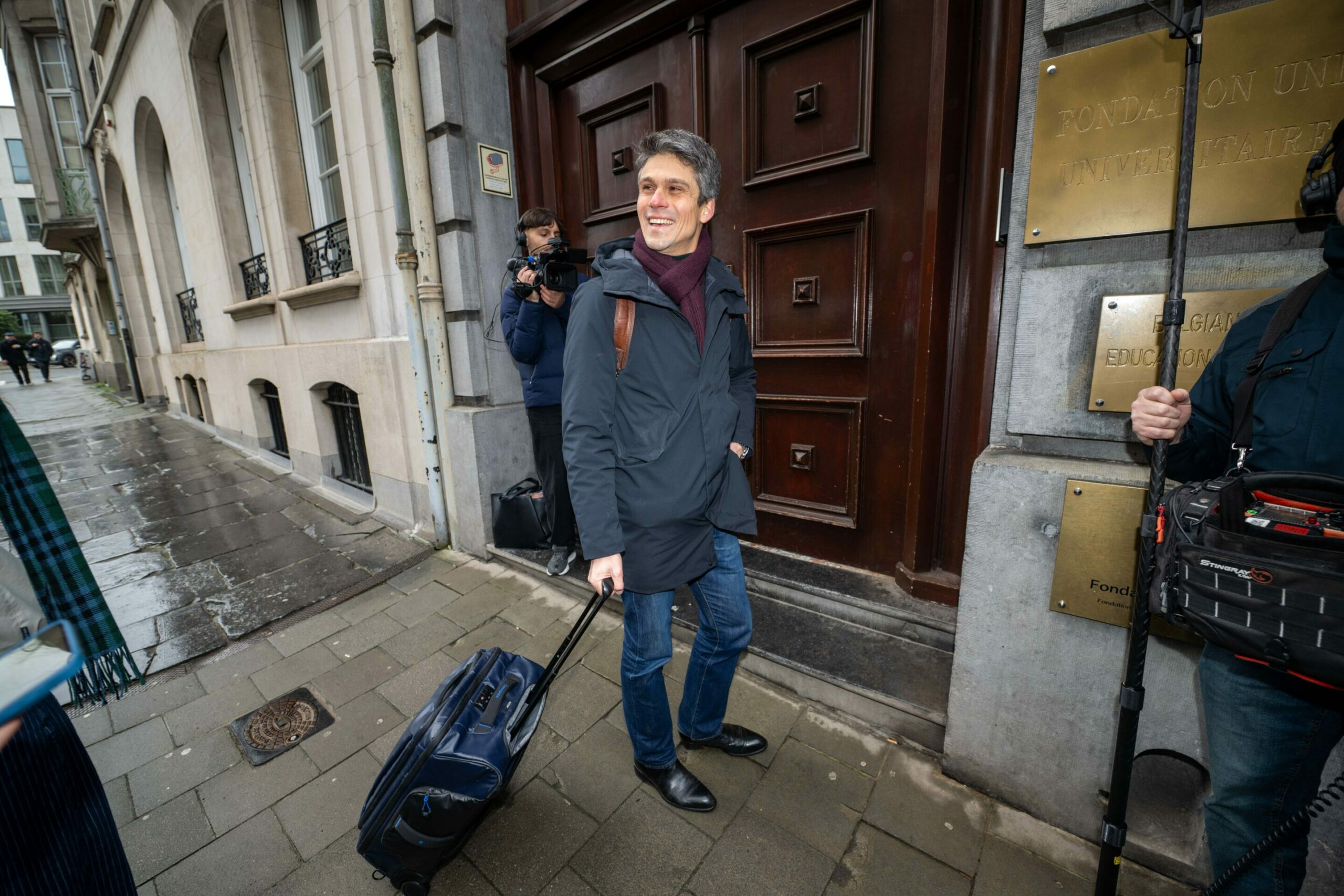
CD&V negotiator Benjamin Dalle arrives at the start of the conclave for the formation of a Brussels government, Tuesday 10 February 2026. Credit: Belga/Jonas Roosens
For example, finding a mobility policy that satisfies both the Flemish greens and the Francophone liberals will be tricky, tensions between MR and PS tensions between have not been resolved, and CD&V will again not have a ministerial role despite being included in the three-party coalition on the Dutch-speaking side.
However, if there is one thing that the past 600 days have ensured, it is that the seven parties are aware of each other's sensitivities.
"We now know each other's negotiating margins," a French-speaking source told Bruzz. "No one can accept that we will emerge from this conclave without an agreement. The urgency is sky-high, and the pressure from outside will be ramped up. And everyone is fed up with the chaos in parliament and the standstill in the caretaker government."
Bouchez aims to finish the conclave before the end of the week – possibly as early as Thursday, but insiders told The Brussels Times that they are more inclined to believe white smoke will only emerge late on Friday evening.
"We know each party's red lines. The texts we are going to put on the table take this into account. The budget tables have already been turned upside down over the past 600 days," Bouchez said. "We do not have to start from scratch."
Related News
- Brussels conclave begins: Multi-day negotiation marathon expected
- 'I'd work miracles': Belgian PM reckons he could 'fix' Brussels in five years
- Bouchez aims to form a new Brussels Government 'within days'
- 600 days with no Brussels Government: New hope on the horizon as citizens protest
- 'Truly dramatic': No Brussels government until 2029?
