
Almost half of the citizens across five major EU countries think that the European Union should ban the US social media platform X (formerly Twitter) if it continues to break European legislation, a new YouGov survey found.
The Commission issued its first fine to X under the Digital Services Act (DSA) on 5 December: €120 million for breaching its transparency obligations. The platform's owner, Elon Musk, then retaliated by blocking the Commission's official ad account on the platform.
"This survey demonstrates that Europeans strongly back escalating measures to hold X and Big Tech accountable. The strength of the feeling across all these states really took us by surprise," Nienke Palstra, People vs Big Tech Campaigns and Policy Director, told The Brussels Times.
The survey, conducted by YouGov across Germany, France, Spain, Italy and Poland, reveals that a vast majority of respondents (60-78%) think that the EU should take further action against X if it does not address these breaches of European law.
The majority of those (62%-73%) who wanted further action – and 47% of total participants – want X to be banned from the EU if it refuses to address these breaches.
Deepfakes, Grok and police raids
"This poll comes at a really tense time in the world, including for social media and regulation," said Palstra.
The main question, she says, is whether European Commission President Ursula von der Leyen and the Commission want to choose to uphold EU digital law like the DSA, and protect people.
"This is the world-leading flagship legislation that was meant to stop people from experiencing harms such as disinformation and deep exploitation on platforms like X," she said. "So for us, this polling comes at a key point of accountability around X."
Palstra and the People vs Big Tech are most expecting to see EU enforcement action against X, as the breaches are "so blatant," she said. "This is a test: will the EU step up to its role? It has said it wants to hold the social media giants to account."
Since the EU imposed its €120 million fine on X, the platform – and its built-in AI assistant Grok – have come under additional fire for a slew of attacks on European values, including spreading an estimated three million images of deepfake pornography and child sexual abuse material on the platform.

Campaigners from People vs Big Tech, WeMove Europe, and EDRi launched four mobile billboards driving across Brussels, calling on Ursula von der Leyen to stand up to Trump and Big Tech, and defend Europe’s digital laws, Wednesday 19 November 2025.
The fallout from the scandal saw a bipartisan group of 54 MEPs demand that policymakers "robustly investigate and enforce European law". In France, prosecutors raided X's office in Paris as part of their ongoing investigation into child abuse material.
Meanwhile, the harms that can be caused by social media continue to top the political agenda, as eight countries – Spain, France, Denmark, Italy, Greece, Finland, Germany, and the United Kingdom – and the European Parliament all consider a social media ban for minors to protect them from "illegal and hateful content".
Against this backdrop, the results of this polling clearly show that European voters are fed up with political inaction, and are ready for someone to lay down the law.
If X fails to respond to the Commission's fine, 70% of respondents were supportive of repercussions. Among those, between 17-28% think that further fines should be given to X, between 23-29% believe X should be banned, and the largest segment – between 40-52% of those in favour of repercussions – believe that the Commission should fine and ban the social media service entirely from the EU.
Laughing in the face of the EU
Indeed, the numbers show that Europeans welcome this attitude from the Commission: 60 to 73% of respondents support the EU defending online safety and digital privacy – even if this damages the relationship with the United States.
"It is really striking to see those responses from countries like Germany, for example, whose car manufacturing industry might be affected by that," Palstra said. "It shows how core these issues of social media sit with everyday people."
For her, the results clearly show that Europeans want leaders who are not afraid to stand up to Big Tech. "Europeans are done with empty warnings. X has been fined, investigated, and given every opportunity to comply – and it has chosen to laugh in the face of the EU instead."
"From France and Spain to Germany and the UK, governments are already considering banning kids from social media to protect them. While this shows politicians are finally waking up to the dangers of Big Tech products, tech companies have a legal responsibility to make their products safe for everyone," she added.
Despite overwhelming support for this course of action, banning social media platforms remains a measure of last-resort, only to be exercised when all other enforcement action has failed.
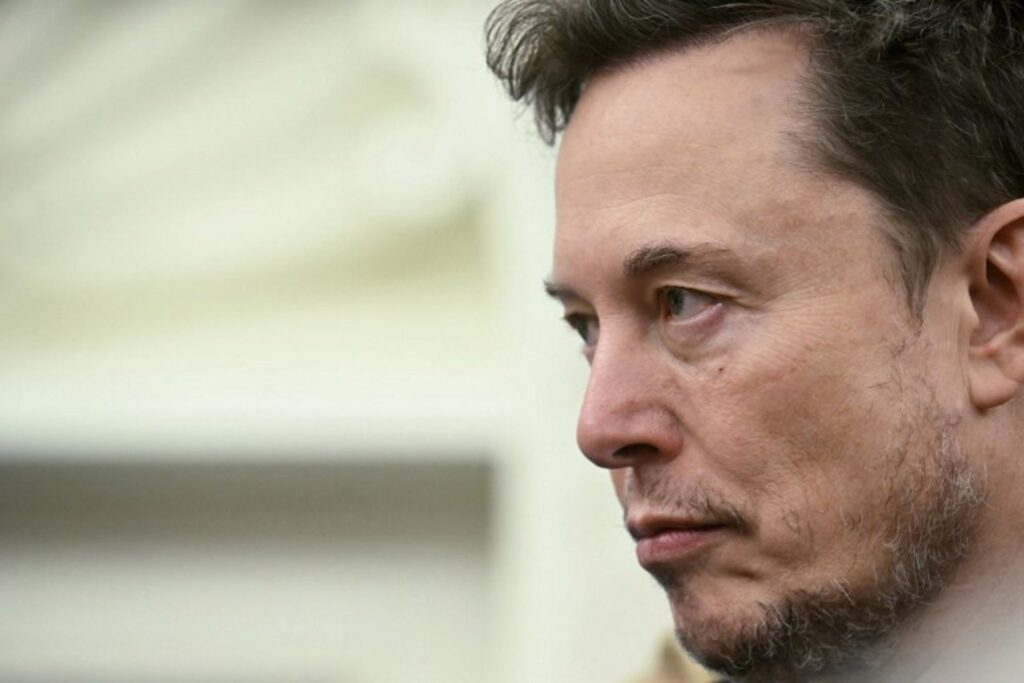
X owner Elon Musk. Credit: Belga
According to the People vs Big Tech, X's actions prove that it is openly hostile towards EU laws and has taken deliberate steps to undermine enforcement, including obstructing researcher access to data.
Nonetheless, the strong public sentiment for banning X if it does not address breaches makes it clear that EU citizens want to see strong action from the Commission.
"X may be the first major platform to face this level of scrutiny by the Commission, but it will not be the last," said Palstra. "The latest polling data shows that European lawmakers have a golden opportunity to use X to set a vital precedent and send a clear message to Big Tech: European laws come first."
X has until 5 March to respond to the fine under the Digital Services Act.
