
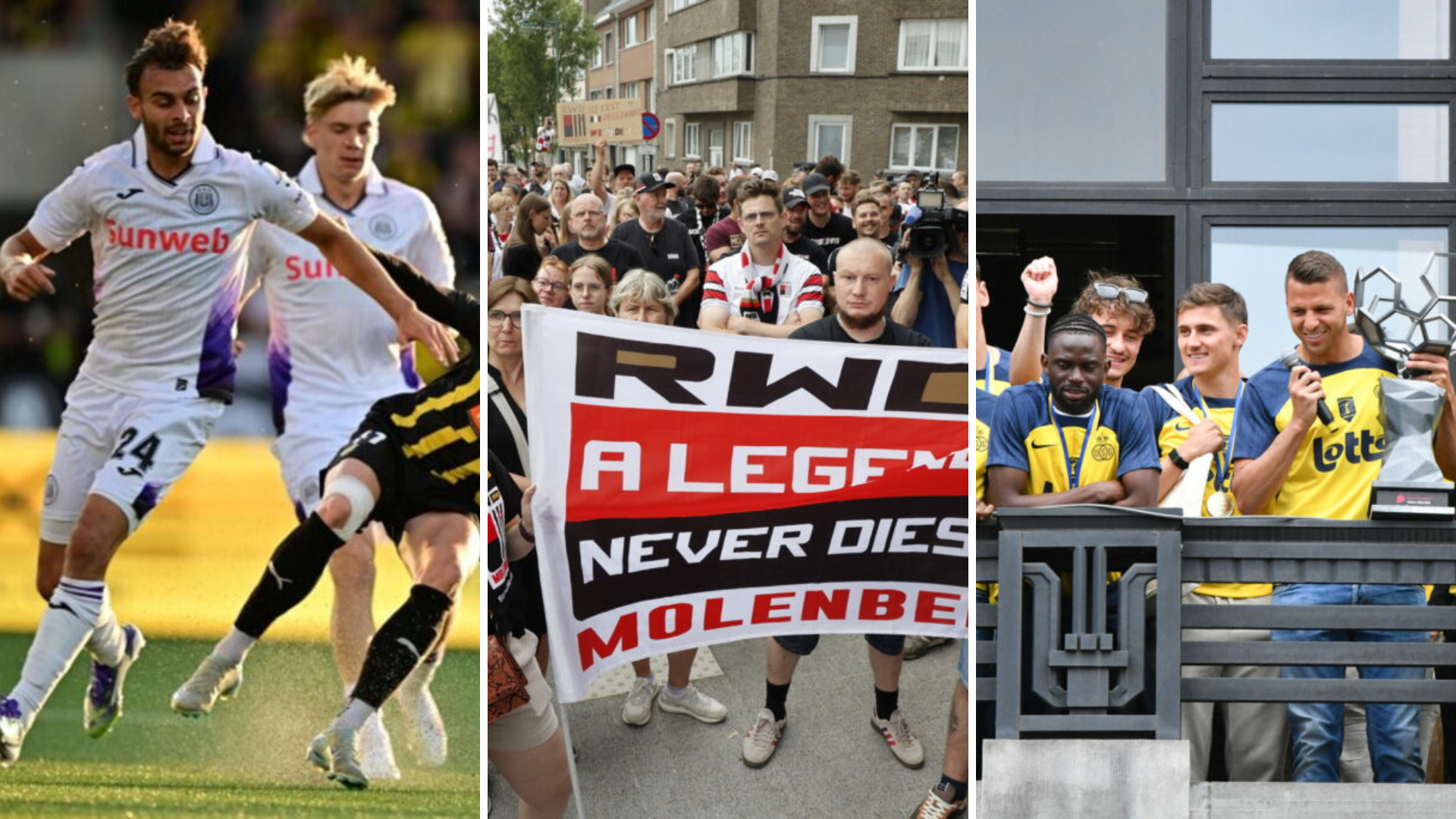
Although Belgium's oldest club is Royal Antwerp, with the Flemish team having been founded in 1880, Brussels also has historic ties to football which stretch back to the 19th century.
The Belgian capital saw several ill-fated club launches before any team managed to establish themselves over the long term. The now-defunct Daring Club de Bruxelles, Royal Léopold Club de Bruxelles, and Royal Racing Club de Bruxelles, for instance, were all among the first teams to be granted a matricule registration number by the Belgian FA.
These days, the city hosts two clubs in Belgium’s top flight in Anderlecht and Union Saint-Gilloise, both of which are among the leading lights of the Pro League. While the former has historically been Belgian football's flagship club, with a record 34 league titles and several European trophies to their name, it is the latter team which has seen the most recent success.
The capital is also represented in the second tier by RWDM Brussels, a Molenbeek-based club which was still in the top flight as recently as 2023. The club's current iteration is a revival of the original RWD Molenbeek, which was dissolved in 2002 and was itself the result of a merger of several of the capital's more historic clubs.
On the pitch, the three clubs have experienced varying fortunes over the last few decades. In the stands, meanwhile, their respective fanbases reflect the socioeconomic and linguistic diversity of the city as well as the country as a whole.
Anderlecht
Belgium’s most successful club draws in supporters from all around the country, bridging Belgium’s regional and language barriers. Their main rivalries on the national stage are with Club Brugge, a fixture known as the Topper, and against Standard Liège in the Classico. Matches against their fellow Bruxellois teams, however, are also eagerly-anticipated affairs.
According to an RTL poll, just over half (50.4%) of the club’s supporters are based in Flanders, with less than 30% living in the Capital Region.
Just under two-thirds (65%) of its season ticket-holders are Dutch-speaking, a figure which contrasts with the fact that the Mauve et blanc (or rather Paars-wit) are based in what is now a predominantly Francophone area.
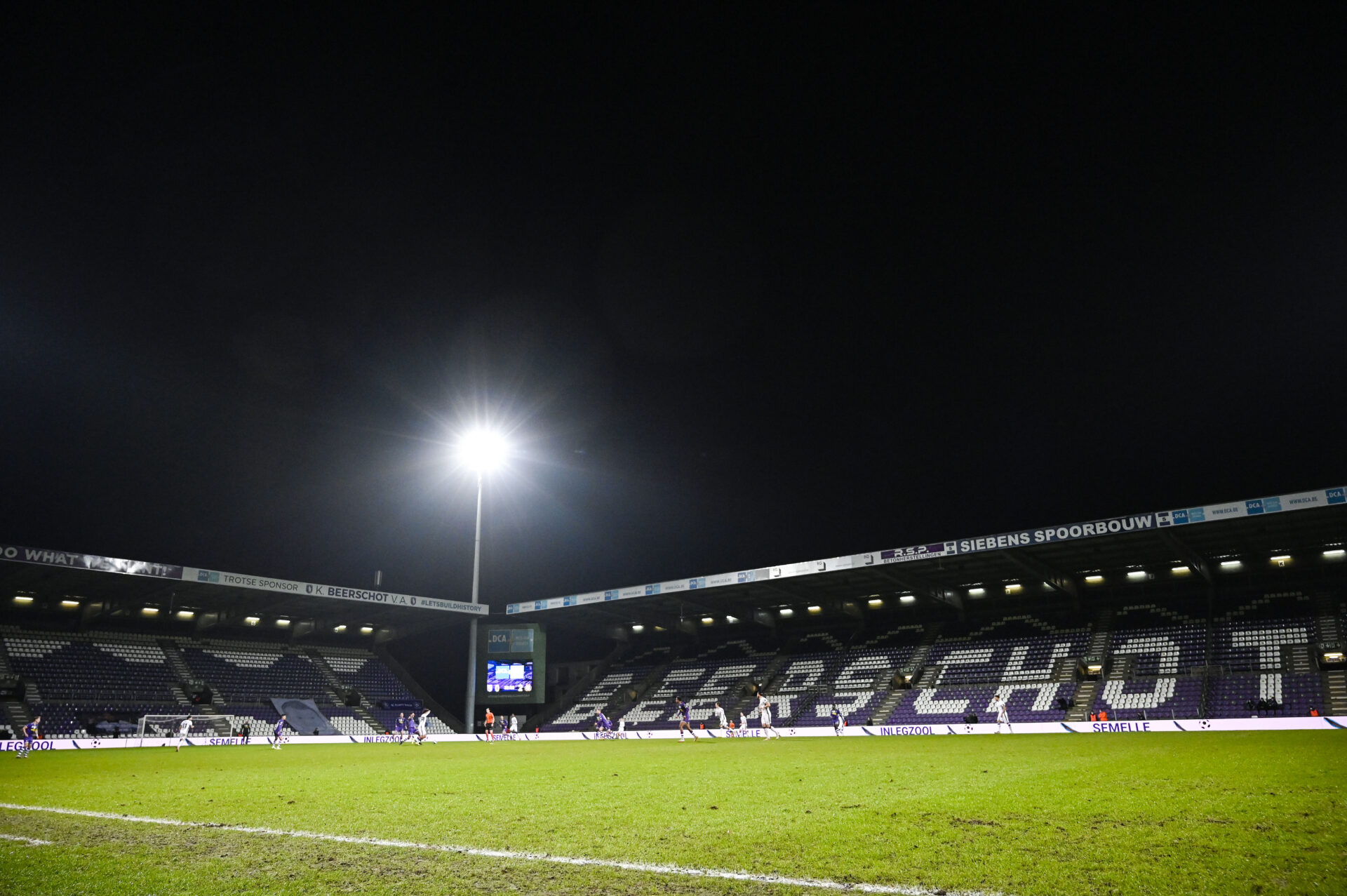
Beerschot stadium. Credit: Belga/Tom Goyvaerts
Union Saint-Gilloise
Les Unionistes, one of Belgium's oldest clubs, long languished in the lower divisions of Belgium football before re-emerging at the forefront of the scene in the last decade.
The Forest-based side enjoy widespread popularity among those working within the European institutions, to the point of having a current European Commissioner employee as a club legend. Italian striker Ignazio Cocchiere, now a policy assistant for EU commissioner Wopke Hoekstra, notably scored the goal that saved the club from relegation to the fourth division in 2014.
While a core of long-time supporters remains, there has been a noticeable influx of new fans. According to the result Sudinfo's poll, just over a third of USG’s supporters have been following the club for fewer than five years, contrasting with the Belgian average which stands at over three-quarters.
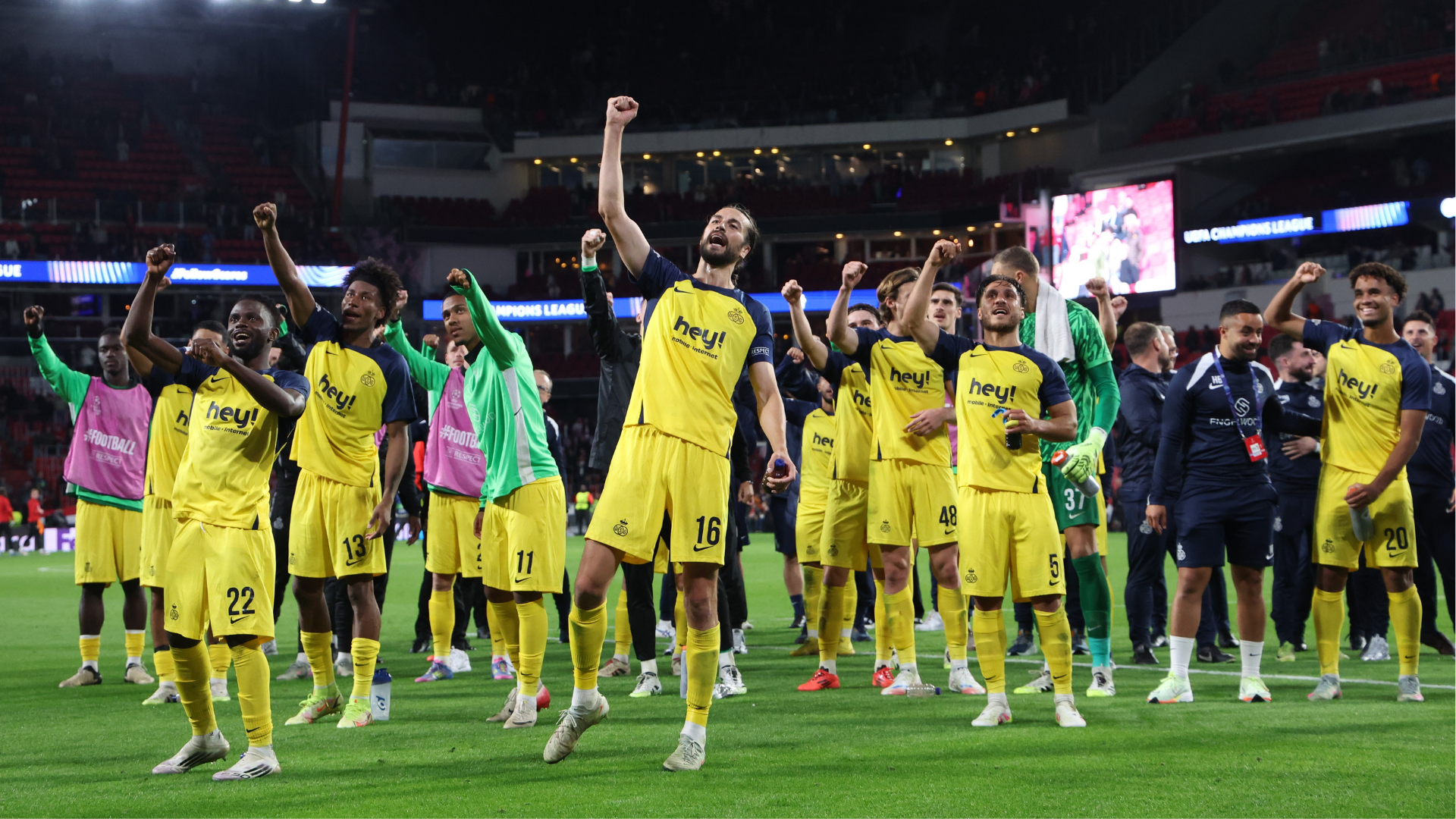
Union's players celebrate after winning a game against Dutch team PSV Eindhoven. Credit: Belga/Virginie Lefour
Compared to their local rivals, though, the Apaches have a higher proportion of local support. According to RTL, two-thirds of the club’s supporters are based in the Brussels Capital-Region. The club also has the highest proportion of foreigners among its fanbase, making up 15% of USG supporters.
Union Saint-Gilloise fans also stand out in the Brussels football landscape due to their political leanings, with anti-fascism a prominent theme in the banners and slogans found in the stands of the Stade Joseph-Marien.
According to a study by UCLouvain and the Free University of Brussels (ULB), two-thirds of Union Saint-Gilloise supporters are also fans of another club. One in six fans support one of the other two Brussels teams, while Standard Liège are also popular among fans of the Apaches.
RWDM Brussels
Officially, the second-division side is a revival of RWD Molenbeek, which began life as White Star Club d’Ixelles in 1909 and folded in 2002. The club notably reached the semi-finals of the UEFA Cup in 1977.
The Coalisés briefly dropped any reference to their home commune from their full name this summer, before fan protests last summer forced a compromise with the team's American ownership.
Kevin Meyvaert, a Vrije Universiteit Brussel (VUB) professor and lifelong RWDM supporter, tells The Brussels Times that there is a sense of "solidarity" among the Molenbeek fanbase, which has been unwavering throughout the club's recent troubles.
"Initially, Molenbeek were supported by workers in that north-west area of Brussels," Meyvaert explains. "With time, and as the municipality became more diverse, many of those fans moved out to other municipalities of Brussels, or to Flanders or Wallonia. A lot of Flemish people from the periphery still come to watch RWDM as a result of their family link to the club."
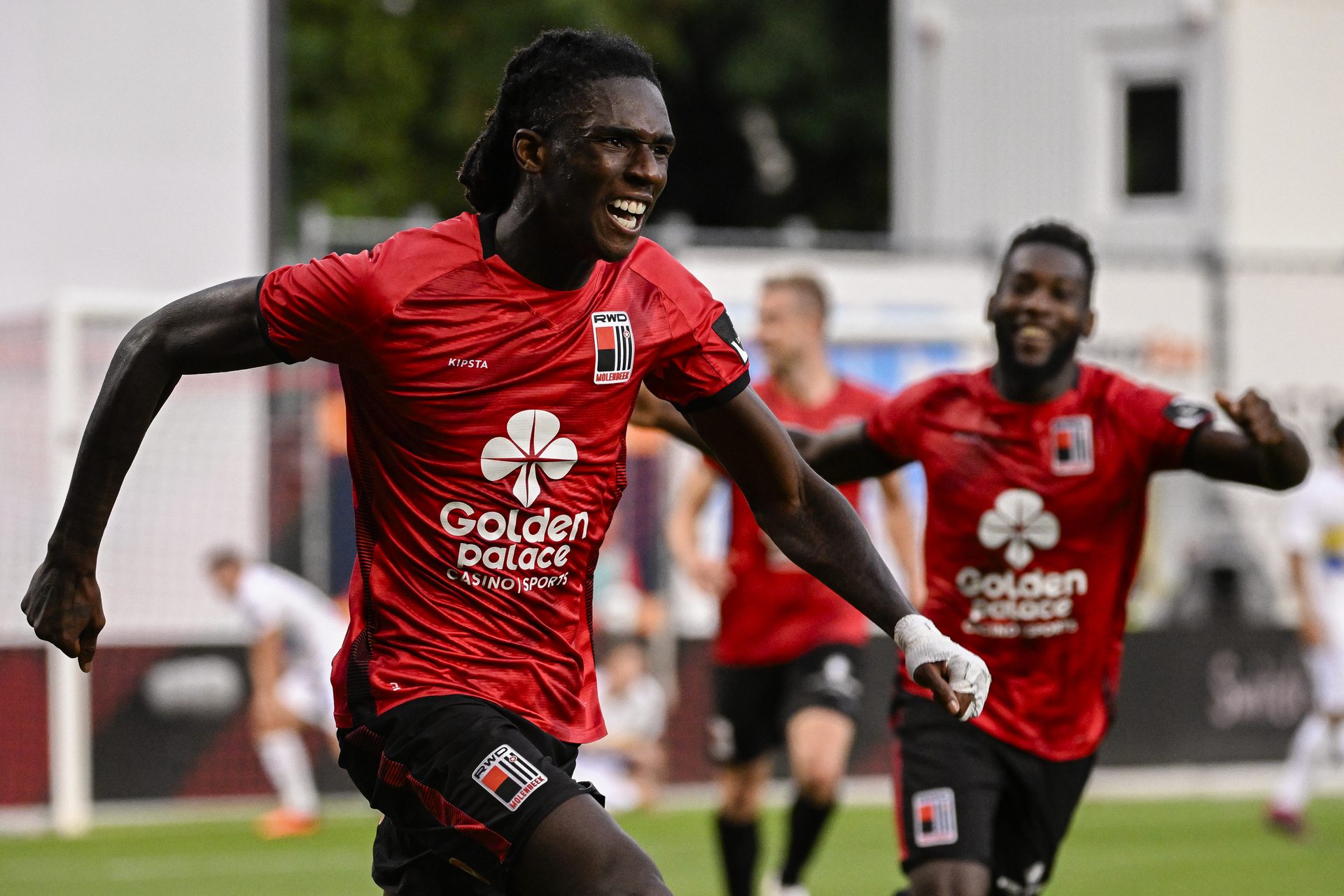
RWDM's Pierre Dwomoh celebrates after scoring a goal. Credit: Laurie Dieffembacq/Belga
Despite the club’s limited catchment area, matchdays at the Stade Edmond Machtens are surprisingly bilingual. "It's difficult to say who exactly is French-speaking or Dutch-speaking there," says Meyvaert. "There are a lot of Francophone who went to Dutch-speaking schools there, like myself."
Le Soir, meanwhile, paints a nuanced picture of the club's matchgoing support. Most of it revolves around an atmosphere of good-natured Zwanze, the uniquely Bruxellois brand of humour (RWDM's fixtures against Union Saint-Gilloise have been branded as the Derby de la Zwanze).
A smaller, less pleasant section of the fanbase, though, consists of a core of hooligans infamous for being involved in a number of violent incidents. Several instances of fights with opposition fan groups, the francophone outlet points out, have contributed to fostering an unwanted reputation for the club’s fanbase.
Do any other clubs play in Brussels?
Outside of the top two divisions, clubs representing each of the Capital Region's 19 communes can be found across Belgium's football pyramid.
Each one has its own distinct identity and background. The Anderlecht-based BX Brussels is owned by former Red Devils captain Vincent Kompany and his sister Christel. Fémina White Star Woluwé, one of the very few exclusively-female clubs in the country, were crowned Belgian champions in 2019.
Royal Léopold FC, now an amateur club nestled in the Neerstalle neighbourhood of Uccle, notably represented Belgium at the 1900 Olympic Games in Paris, sending a team which included ULB students and taking home the bronze medal.
