

For most of Antwerp’s residents, 17 February was just like any other day in Belgium. But for the city's Chinese community it was a very important date – the start of the New Year, according to the traditional Chinese calendar.
When thinking of Asian diasporas in the West, you might first think of San Francisco or London, both of which have large Chinatown districts. Antwerp’s Chinatown might not be as big as those in other countries, but its cultural impact punches well above its weight.
Sitting next to the central railway station, Belgium’s only officially-recognised Chinatown is more commonly referred to by the locals as the Van Wesenbekestraat. As its name suggests, it is mostly packed into a single business-heavy street, around 200m long. In addition, neighbouring Van Arteveldestraat is also listed as part of the complex.
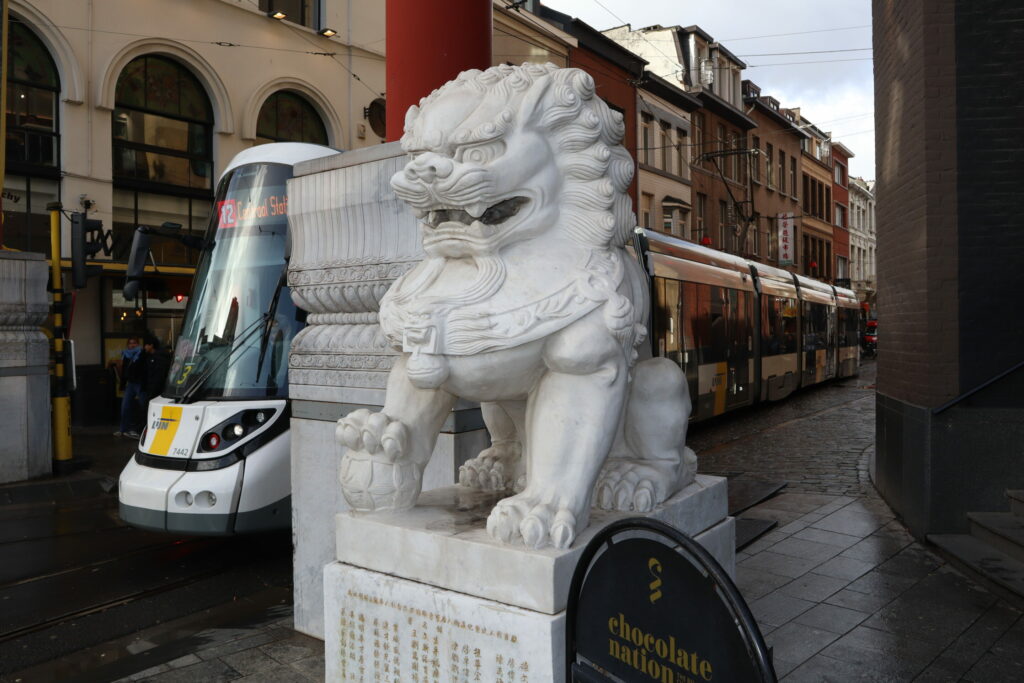
Guardian lions are a traditional Chinese ornament. Usually set up in male and female pairs, they symbolize yin and yang. Credit: Kosmos Khoroshavin / The Brussels Times
Just like the neighbourhood itself, the entrance to Antwerp's Chinatown is characteristic and distinctive, immediately catching the eye of any passerby. The traditional Chinese archway known as the Pagodepoort was constructed in China and shipped to Antwerp in parts.
It was eventually erected in 2010, nine years after the recognition of the neighbourhood as the city's official Chinatown. It is surrounded by two guardian lions, protecting the place from evil spirits.
Chinese immigrants began to arrive here in large numbers in the 1970s. The first venues to appear were small restaurants, but in time, other businesses and cultural institutions sprung up. Among these are a buddhist temple, a martial arts school and several traditional Chinese medicine providers.
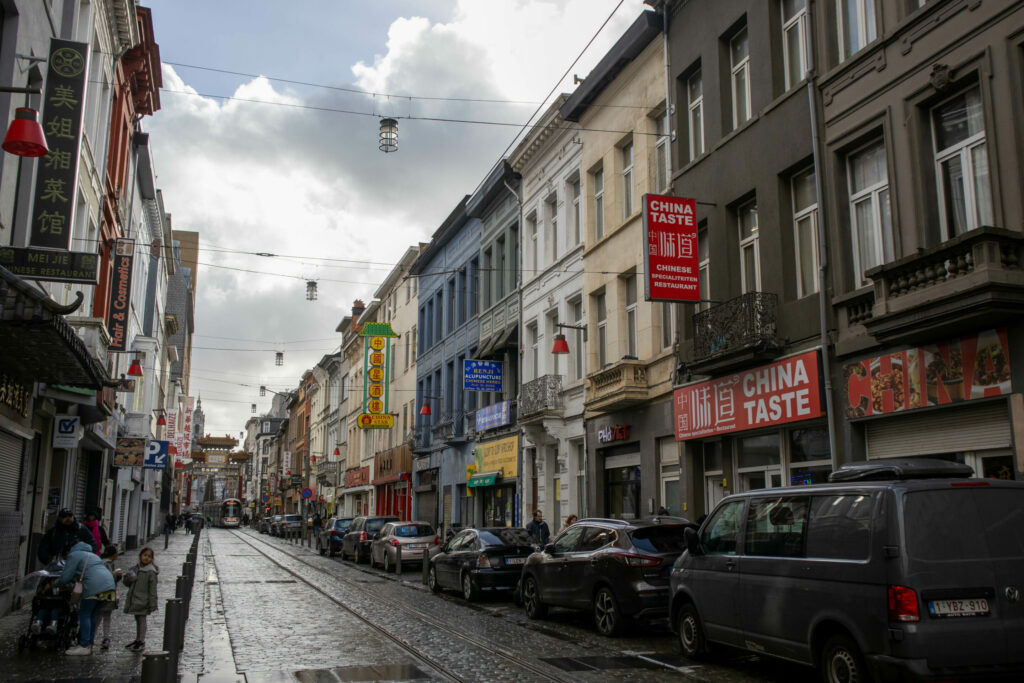
View of the Van Wesenbekestraat. Credit: Kosmos Khoroshavin / The Brussels Times
The neighbourhood has been through a complex transformation since then. While the very first immigrants operating businesses in Van Wesenbekestraat were mostly Cantonese-speaking Chinese, many other Asian groups now maintain a large presence here. These include Thai, Filipino, Indonesian and Nepalese communities.
To better reflect this cultural and ethnic diversity, there have been calls – so far unheeded – to rename the area Asiatown.
Understanding the Spring Festival
Chinese New Year is widely celebrated across the world, wherever you find the Chinese diaspora. It has also influenced celebrations in other cultures such as the Tet in Vietnam and the Shogatsu in Japan. Collectively, these celebrations are known as Lunar New Year.
To learn more about Chinese New Year, I went to the Van Wesenbekestraat Buddhist Temple. It was originally opened in 1998 by a Taiwan-based Chinese Buddhist monastic order called Fo Guang Shan, which has over 300 other temples throughout the world.
Master Hsing Yun, a renowned figure in Taiwanese Buddhism, was involved in founding it.
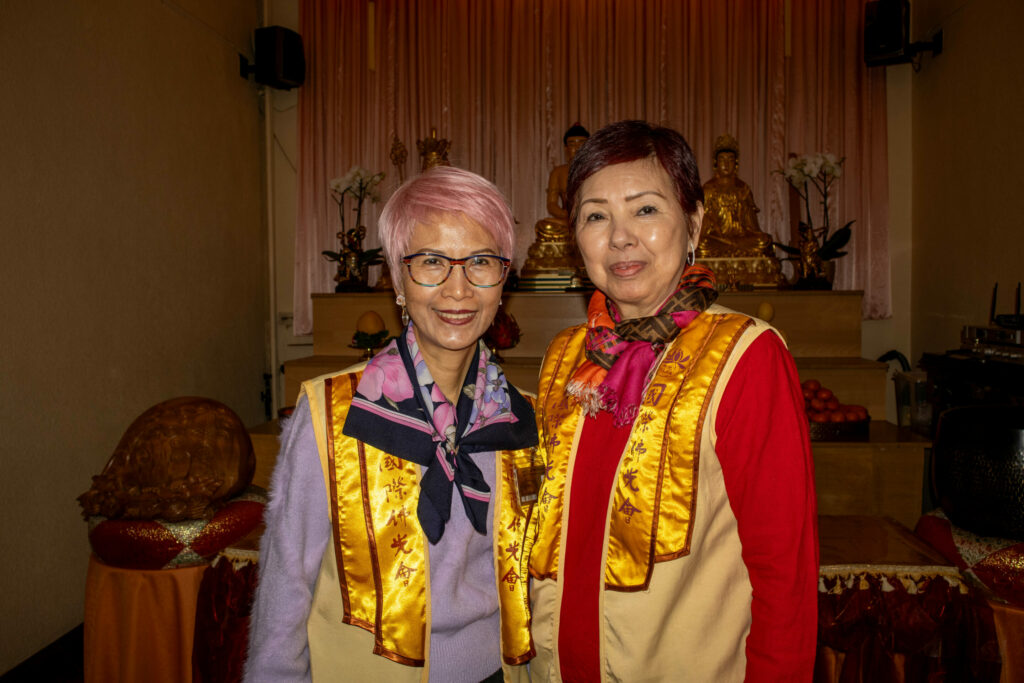
Representatives of the Buddhist Temple Josephine Ho and Winnie Choi photographed in the shrine room. Credit: Kosmos Khoroshavin / The Brussels Times
Josephine, the temple's newly appointed president, tells me that the most important aspect of Chinese New Year is the act of reunion. A New Year’s Eve dinner happened on the evening of 16 February this year. “It's like Thanksgiving in a way. For us it’s important to gather with our family and celebrate together," she says.
Another crucial concept is the idea of new beginnings as winter ends and spring begins, prompting the holiday's other common name: the Spring Festival. Josephine explains that many people meticulously clean their houses to sweep away ill-fortune and attract luck during this time.
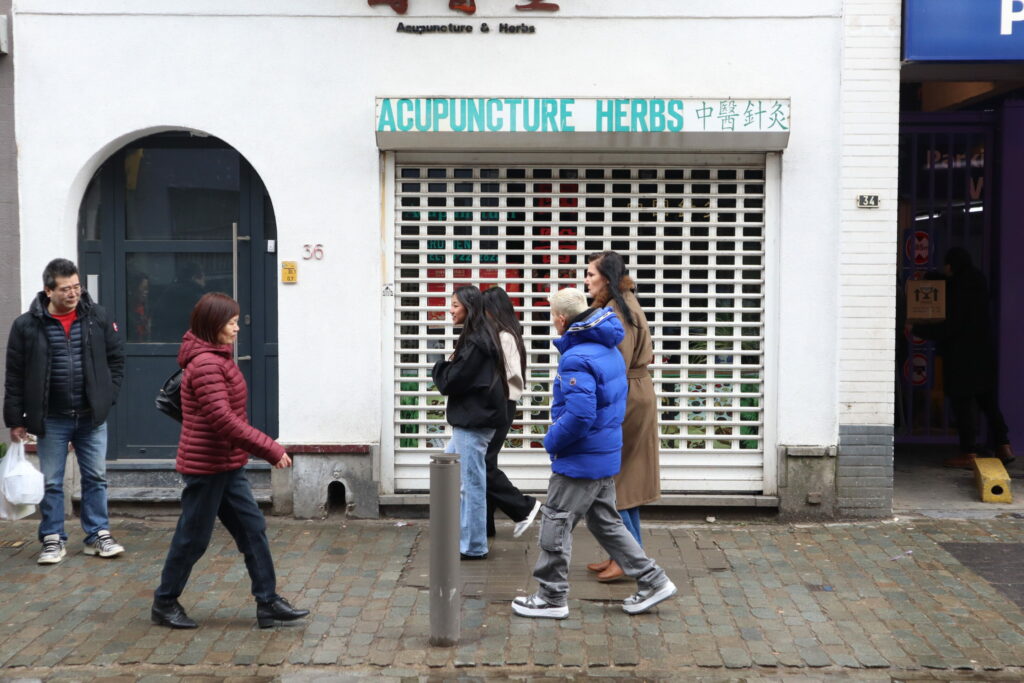
A photo of local pedestrians passing by a traditional Chinese medicine (TCM) venue. The four foundations of TCM are acupuncture, herbalism, massages and qigong . Credit: Kosmos Khoroshavin / The Brussels Times
As I thank my hosts and head to the exit, they give me two mandarins and a red envelope. The mandarins follow a curious pattern of homonyms, words with same spelling or pronunciation but different meanings. The words 橘 (jú – mandarin orange) and 吉 (jí – luck) are very similar, while in Cantonese it is 柑 (gām – mandarin orange) and 金 (gām – gold). So by giving out mandarins you share luck and wealth, something I happily accepted.
The red envelopes are usually given out to loved ones with money inside during the New Year’s Eve dinner. The colour red has big significance, symbolising the Chinese nation historically and is deeply associated with the legend of Chinese New Year's first celebrations. The envelope I received contained predictions for the year, with mine advising me “not to be stingy”.
A look from the neighbourhood
My next stop was Hong Kong Chinese noodle restaurant Ting Kee. From the outside, it looked fairly unremarkable – but we all know looks can be deceiving.
On a small budget, I warmed myself up with the restaurant's signature dish – wonton dumplings with pork and shrimp filling, alongside beef and fish balls served with beef stew and noodles.
Accompanied by hot tea for just 50 cents, this hearty dish will live long in my memory. Eating noodles on the Chinese New Year is a time-honoured tradition, with longer noodles symbolising a long and healthy life.
While finishing my meal, I met Wing Yan, a university student from Antwerp, who is a regular customer at Ting Kee. For her, Chinese New Year is an important tradition, which her parents taught her to follow. “I think it’s important to celebrate. I respect my forefathers and not not doing it would feel like leaving my ethnicity behind," she says.
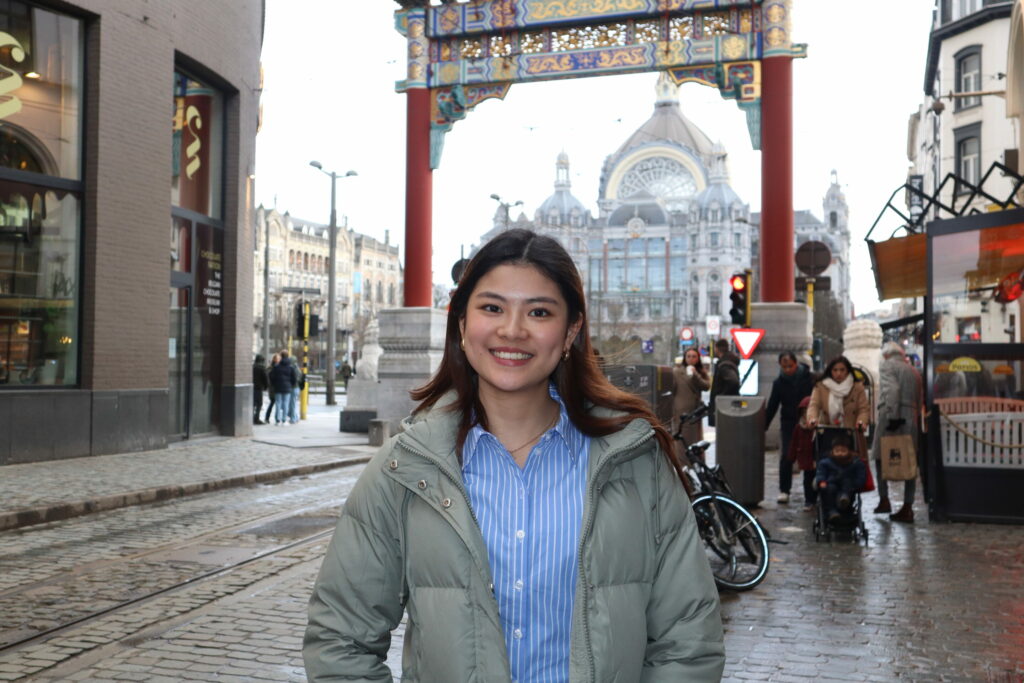
Wing Yan is an Antwerp-born Belgian Chinese. Credit: Kosmos Khoroshavin / The Brussels Times
Yan shared one particular important staple of her own family’s New Year’s Eve celebrations – eating crayfish. “We have a sentence in Chinese – Nian Nian You Yu ('may you have abundance'), which is a play on the words abundance (餘 yú) and fish (魚 yú).
Yan’s loves the area around Van Wesenbekestraat. “I love the Chinese people here and the shops like Sun Wah," she says. "I’d really miss it if it disappeared – it’s like being in your own hometown.”
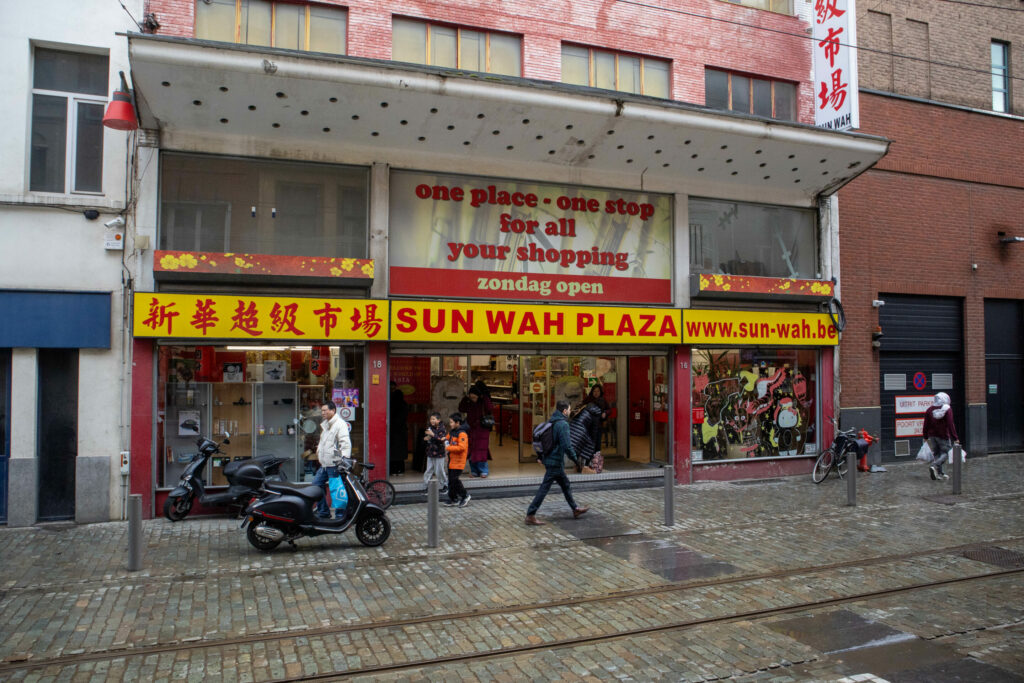
Sun Wah Plaza shop. Credit: Kosmos Khoroshavin / The Brussels Times
Following Yan's advice, I walked over to Sun Wah, which is considered to be one of the largest and most authentic Asian grocery stores in Belgium. It has products that I had never seen before, offering a very wide variety of regional foods, cutlery, crockery and other goods.
Jason, whose family has owned the business since 1983, tells me that for him, Chinese New Year is about eating with your family, giving out Hong Bao (the red envelopes) and sharing prosperity and good luck. “The number of the dishes is important," he explains. "Four is not good. [Number four (四, sì) and death (死, sǐ) sound similar]. Nine or ten is okay, but the more the better.”
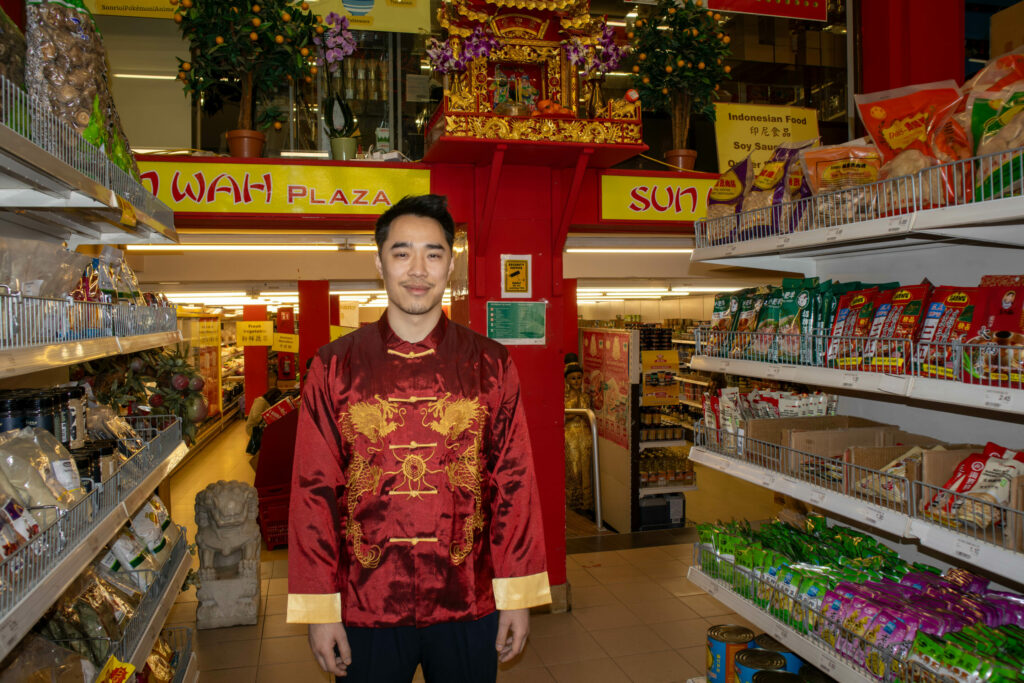
Jason greeted me in traditional Chinese festive attire. Credit: Kosmos Khoroshavin / The Brussels Times
What surprised me the most about Antwerp’s Chinatown is how well it blends into the city's fabric, while retaining its distinctive identity.
This weekend, the streets will be lined with people attending the annual Chinatown parade with colourfully dressed drummers and lion dance performers. The city will erupt in celebrations, showing its love for this small but impactful community.
