
EU countries are expected to bring back the question of using Russian frozen assets to support Ukraine, a cabinet member of the bloc’s chief diplomat said at an event in the European Parliament on Tuesday.
The European Council agreed in December to put together a €90 billion loan for Ukraine after it became clear – following Belgian-led resistance to the idea – that there would not be an agreement on repurposing Russian frozen assets to fund a reparations loan for Kyiv.
Belgium strongly objected to initial plans to unlock €210 billion in Russian frozen assets which are mainly located in the Brussels-based financial clearing house Euroclear. Belgian Prime Minister Bart De Wever argued his country could be vulnerable to Russian retaliation if the plan went ahead.
The €90 billion loan agreed in December covers roughly two-thirds of Ukraine’s financial needs (military requirements and public services) for the next two years. The package was in last stage of the legislative process, with the first loan instalment expected to be delivered in April.
Hungary's veto
This week, however, Hungary withdrew its promise not to block progress on such a loan, refusing to ratify the package. In exchange for giving its green light on the loan, Budapest has demanded that Ukraine restore a pipeline for Russian oil that Moscow destroyed last month. Hungary has also vetoed a new round of sanctions against Russia.
There is consternation at the highest levels of the EU over Hungary's decision to act as a blocker on the loan to Ukraine. The €90 billion package requires unanimous approval from Member States.
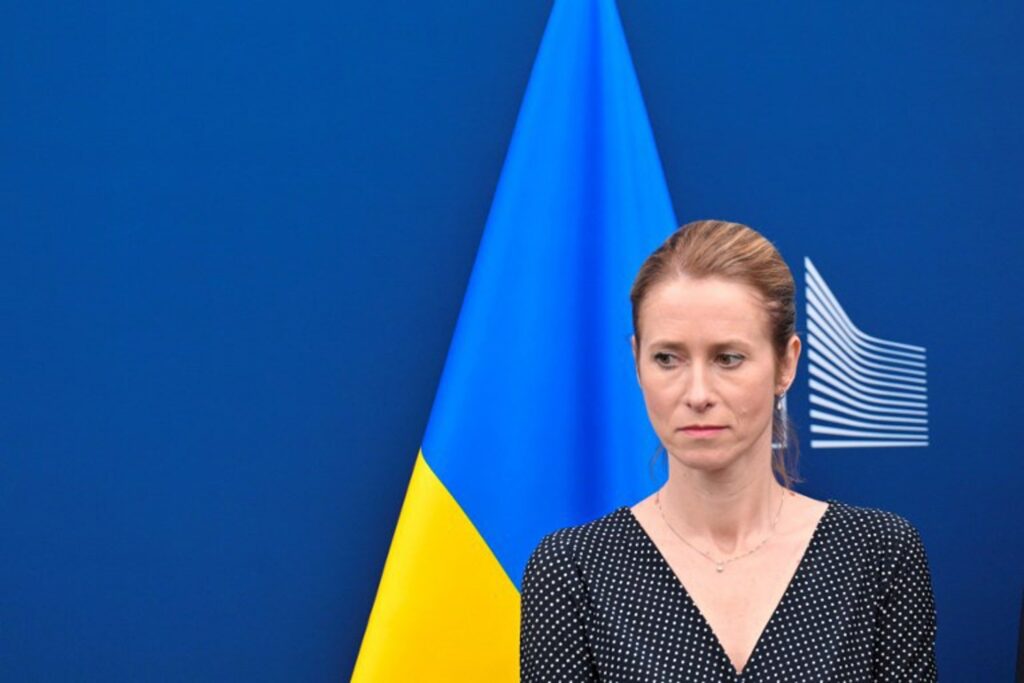
“A country cannot retrospectively back off from this decision,” said Oliver Mõru, member of the cabinet of Kaja Kallas, at an event organised by Rasmussen Global about Ukraine in the European Parliament. “I guarantee you we will find a solution,” he added.
A return to the frozen assets debate?
One such solution could be to try once more to find a way through on the idea of a reparations loan secured against immobilised Russian central bank assets. Mõru’s comments on Tuesday suggest this as a possible direction of travel.
He said that efforts have been focused for now on the €90 billion loan, but he only characterised it as something that “will buy us time.”
On the reparations loan, Mõru said he expects “some member states” to bring it up at Council after the loan is passed.
During a press conference following Monday’s Foreign Affairs Council, meanwhile, Kallas made her frustration over Hungary's backtracking clear – and she too suggested a possible return to the idea of a reparations loan funded by frozen Russian assets.
“It was agreed in the European Council," said Kallas. "And we just work on member states also respecting that agreement that was made on the leaders’ level. But if that doesn’t work, we can always go back to using the frozen assets."
This had been the EU’s “plan A” before it was shelved in December, she added.
With two mentions of the frozen assets by Kallas and her team in as many days, perhaps the debate can be expected to fully re-emerge sooner rather than later.
But for that conversation to be anything other than a non-starter, anyone willing to take this topic seriously is going to have to spend some quality time with the Belgian prime minister, who has been given no reason thus far to change his mind.
