
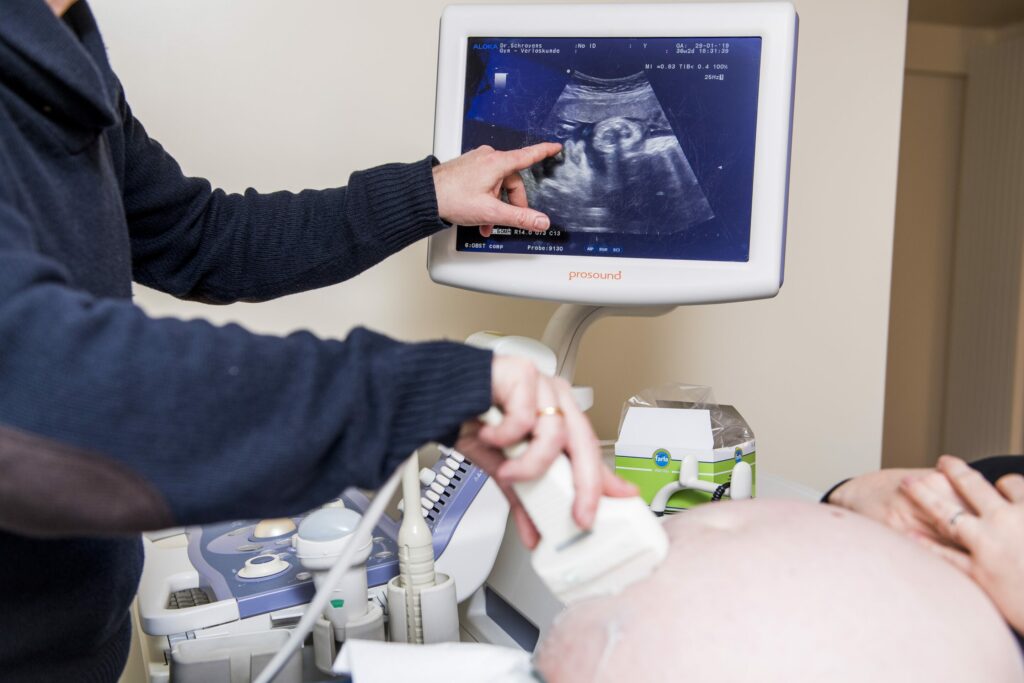
For many people settling in Brussels, the prospect of starting a family brings with it a host of questions: which hospital should I choose? Can I have a midwife? What birth options are available?
Alison Copner, a prenatal teacher at Brussels Childbirth Trust (BCT), offers guidance to help parents-to-be navigate the Belgian maternal care system.
“We have monthly courses where we talk about how to prepare for childbirth and parenthood,” Copner explains to The Brussels Times. “It’s particularly helpful for expats, because the Belgian system can be complex. We help them understand the support available and how to access it.”
Understanding the Belgian healthcare system
Belgium’s healthcare system allows parents considerable choice, but that can also be overwhelming. “We explain that parents can choose their caregiver, their location, and even the style of birth they want,” says Copner.
“In Brussels alone, there are probably about 15 maternity hospitals, each with slightly different characteristics. Some charge more for private rooms, some allow independent midwives, some offer water births. We help parents understand these options so they can make informed decisions.”
She notes that many newcomers struggle with the language barrier or with understanding how hospitals operate. “Some just follow a doctor without realising all the options they have. A doctor should explain whether you want a natural birth, a water birth, or other alternatives. Otherwise, parents might not know that other options exist.”
Types of birth in Belgium
Belgium offers a range of birth experiences. Parents can choose to have an independent midwife, a hospital midwife, or a gynaecologist, and many hospitals support water births or births with a doula present, in addition to the partner.
“Some women go without a midwife, others bring their own,” Copner explains. “We teach parents to double-check their birth plan and ensure they understand what each hospital offers. Mobility, support, and personal choice are really emphasised.” There is also an option for independent midwives to attend a home birth.
One aspect Belgium stands out for Copner as especially distinctive: its approach to maternity care. “They help parents prepare for birth and provide follow-up support afterwards,” she explains. “In the first months, these caretakers may even visit homes to assist with cooking or light household tasks. This kind of comprehensive support is uncommon in many other countries.”
Improving breastfeeding support
If there is one area Copner believes could be improved in Belgian childbirth care, it is breastfeeding support. “The main issue is consistency,” she explains. “Mothers often have different midwives across shifts, and the advice they receive can vary. One person in the morning may suggest one approach, and another in the afternoon something completely different. It leaves new mothers confused.”
Despite being satisfied with their births and the overall care in hospitals, many mothers report feeling uncertain and under pressure when it comes to feeding their babies. “We hear the same feedback repeatedly: the hospitals are supportive, but inconsistent guidance can make mothers doubt themselves,” Copner adds.
Mobility during labour
Brussels University Hospital in Anderlecht has introduced a new ambulatory epidural system, allowing women to give birth vaginally while managing pain effectively and maintaining mobility during labour. While not the first of its kind in Belgium, the approach represents a significant step forward in childbirth care.
“Women are encouraged to walk and change positions,” says Copner. “Even with an epidural, movement is beneficial. It gives women real choice and can make the birth experience more empowering.”
Advice for newcomers to Belgium
Copner emphasises that while the Belgian system is highly supportive, parents need to understand it to make the most of it. “Every hospital is different. Parents sometimes get confused because experiences vary. But if you take the time to understand the options, you can have a positive birth experience in Belgium.”
Her final advice is simple but reassuring: “Whatever you want to do – take a bath, move around, have a midwife – someone will support you. You just need to know your options and communicate your wishes.”
