
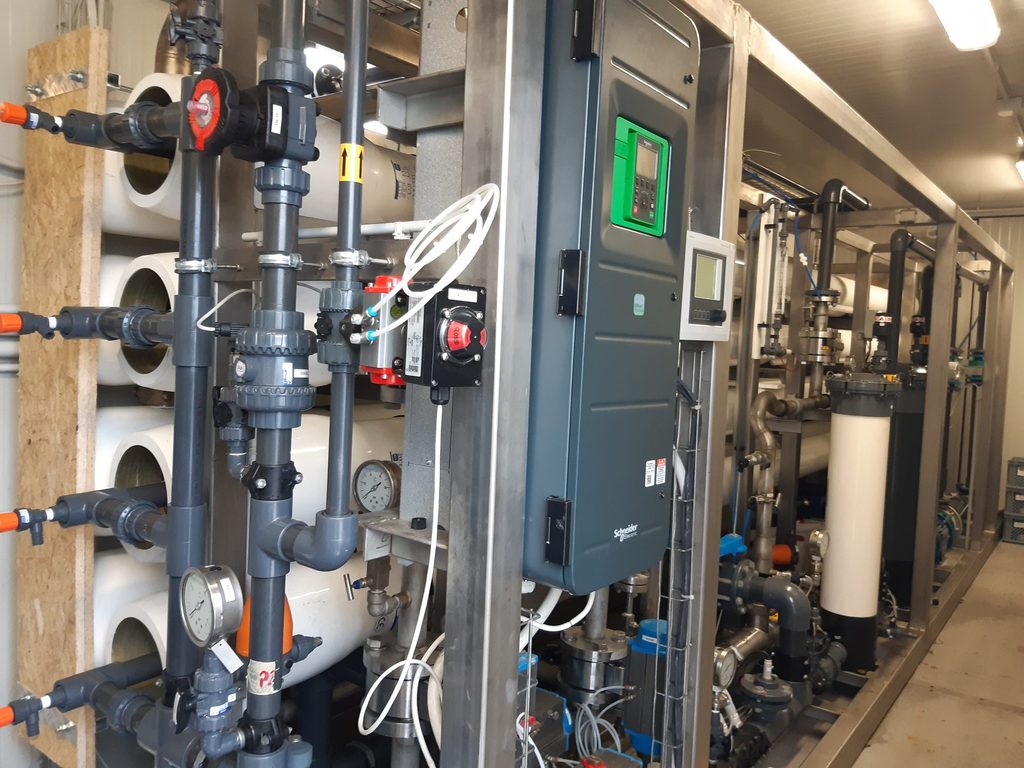
Attacks on desalination plants are disrupting water supplies in the Middle East, raising concerns in one of the world’s most arid regions.
A desalination station in Bahrain was damaged on 8 March in a drone attack allegedly carried out by Iran, according to Bahraini officials. The attack followed accusations from Iran that a similar strike on the island of Qeshm affected water supplies for 30 villages.
Tensions escalated further after former US president Donald Trump issued an ultimatum, threatening to target Iran’s power stations if Tehran did not reopen the Strait of Hormuz within 48 hours. In response, Iran appeared to focus its attention on desalination plants in the region.
On Sunday, UAE Foreign Minister Sheikh Abdullah bin Zayed Al Nahyan tweeted: “Water is life,” vowing that no one would “go thirsty.”
Water desalination is critical in a region where natural water availability is ten times lower than the global average, according to the World Bank. Desalination plants provide potable water for millions of residents and underpin local economies.
The Middle East hosts roughly 42% of the world’s desalination capacity, a recent study in the journal Nature revealed. In the UAE, 42% of drinking water comes from desalination, compared with 90% in Kuwait, 86% in Oman, and 70% in Saudi Arabia, according to a 2022 report by the French Institute of International Relations (Ifri).
“Without desalinated water, there’s nothing there,” commented Esther Crauser-Delbourg, an economist specialising in water, highlighting the strategic importance of such facilities in cities like Dubai and Riyadh.
Concerns over water infrastructure are not new. A 2010 CIA analysis warned that disruptions to desalination plants in Arab countries could result in consequences worse than the loss of any other industry. In 2008, Wikileaks disclosed a US diplomatic cable indicating that Riyadh could face evacuation if its desalination facility in Jubail were severely damaged.
Desalination facilities face multiple threats, including missile or drone attacks, power outages, and contamination from oil spills, experts have told AFP. Operators, like Philippe Bourdeaux of Veolia, report reinforced security measures, including missile defence systems, around key sites in certain nations.
Bourdeaux added that mechanisms are in place to mitigate spill damage and ensure continuity. Plants are often interconnected, allowing for water supplies to be redirected if one facility is compromised. They typically hold reserves adequate for two to seven days of consumption.
Historically, few attacks on desalination facilities have been documented. Notable instances include Saudi-Yemeni strikes and Israeli bombardments of Gaza over the last decade. Prior to 2016, the last significant incidents were during the Gulf War in 1991.
Potential consequences of an attack range from local disruptions to large-scale crises, such as urban exoduses and water rationing, said Crauser-Delbourg. These could have cascading effects on tourism, industry, and data centres that rely heavily on cooling systems.
Despite these risks, Bourdeaux explained that the resilience of desalination infrastructure—through connectivity and reserves—helps to mitigate shortages provided disruptions do not last long.
