
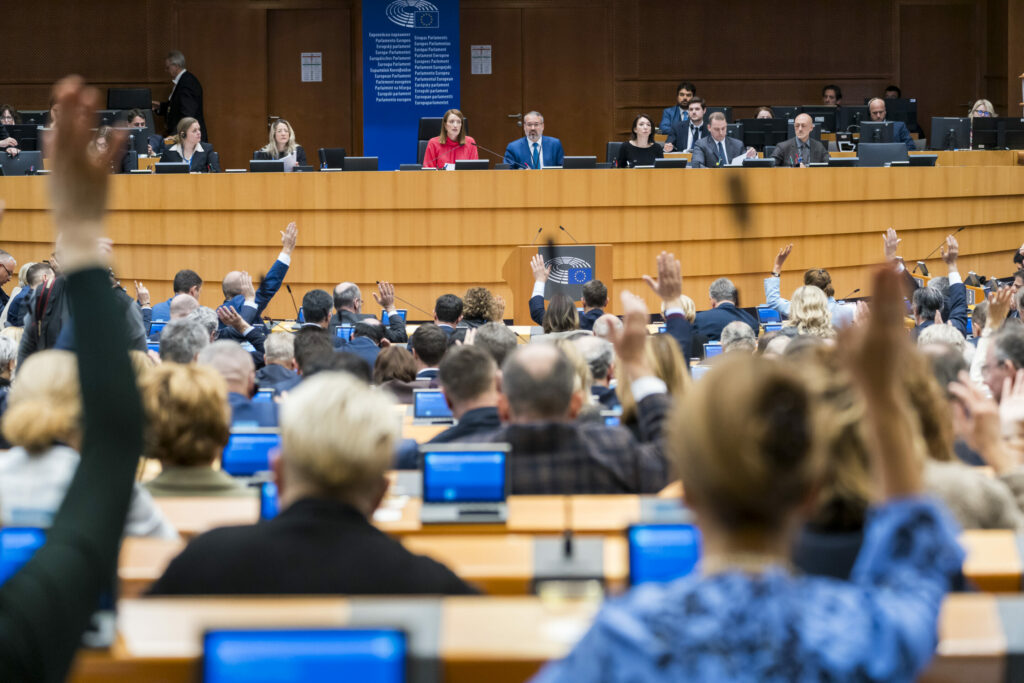
The European Parliament approved a new version of the EU-US trade deal with better protections on Thursday. However, opponents of the deal are calling it "a capitulation" to the Trump administration.
The amended text was passed in the Brussels mini-plenary session with 417 votes in favour, 154 against and 71 abstentions. MEPs set conditions for lowering tariffs on US products, but maintained the main elements.
The original deal will scrap tariffs on several US industrial goods, while also providing an EU commitment to buy up to €1 trillion in US oil, liquid natural gas and defence products. In return, a 15% tariff was applied to most EU exports.
Today's new approved text sets conditions on the approval of the trade deal. Yet the changes and safeguards passed in today’s Parliament vote will still need to be negotiated with EU Member States, who are likely to resist the changes. EU trade commissioner Maroš Šefčovič also told the FT that MEPs should stick to the terms of the agreement.
Pressure from the US Ambassador to the EU, Andrew Puzder, is believed to be behind this, who this week told the Financial Times (FT) that the energy aspect of the trade agreement was at risk if the bloc attempted to modify any of the terms.
MEPs have postponed the vote twice before, first for tariffs threats made against EU countries during the Greenland crisis, and also after the Supreme Court ruled Trump’s tariffs as illegal.
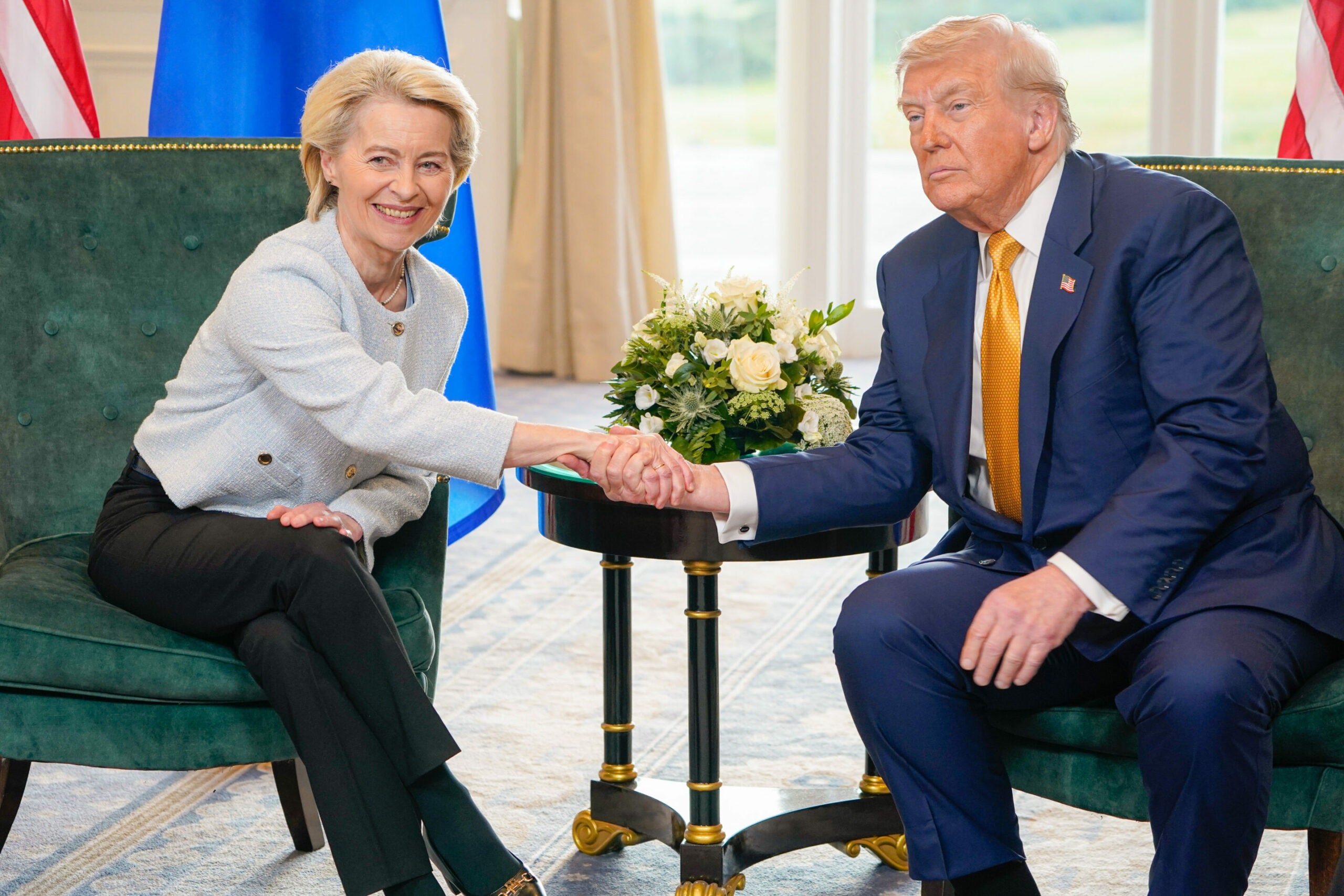
President of the European Commission Ursula von der Leyen, travels to Scotland, upon invitation of Donald Trump, President of the United States, to discuss transatlantic trade relations Sunday 28 July 2025. Credit: EU
Yet on Thursday, a majority approved changes which provide the block with improved protections, including tougher suspension clauses in the event of an economic or territorial threat, as seen with Spain or Greenland.
"Today’s vote shows that the EPP Group remains committed to safeguarding businesses, workers and employment on both sides of the Atlantic, and acts when it matters," said Željana Zovko MEP, EPP Group member responsible for US trade relations.
'Capitulation'
Some, however, have questioned whether it is possible to expect stability for EU businesses when negotiating with the Trump administration.
Last week, Belgian MEP Saskia Bricmont (Greens/EFA) confirmed to The Brussels Times that she would be voting against the deal due to "the unpredictability" of the Trump administration.
But the only European Parliament group to have opposed the deal on Thursday was The Left, which in Belgium is represented by the Belgian Workers' Party (PTB-PVDA).
Europe's radical left group called the vote a "capitulation to Trump" and demanded a delay to the vote, arguing that "the EU cannot enter into any agreement in good faith" with the United States.
Independent Belgian MEP and member of the international trade committee, Rudi Kennes (The Left), told The Brussels Times on Thursday: "Ursula von der Leyen gave up European sovereignty and humiliated us to please the US authoritarian leader.
"She agreed to a deal that is bad for Europe and damages our economy. We will be subjected to tariffs, and Trump is still threatening our territorial integrity. Whose interests is she actually representing?"

European Parliament President Roberta Metsola (EPP). Credit: EU
The Left's position is rooted in the annexation threats still hanging over Greenland, a "full trade embargo" threatened against Spain, a US Supreme Court ruling striking down Trump’s tariffs, and the global economy thrown into chaos by Trump’s war on Iran.
The Left's co-leader, Martin Schirdewan (Die Linke, Germany), said: "This trade deal enshrines the EU's subjugation to US economic interests."
He believes it is "utter madness" to approve a deal which obliges European states to purchase massive quantities of liquefied natural gas and fossil fuels from the US. "Instead of European energy independence, we now have a new dependence on the US."
