
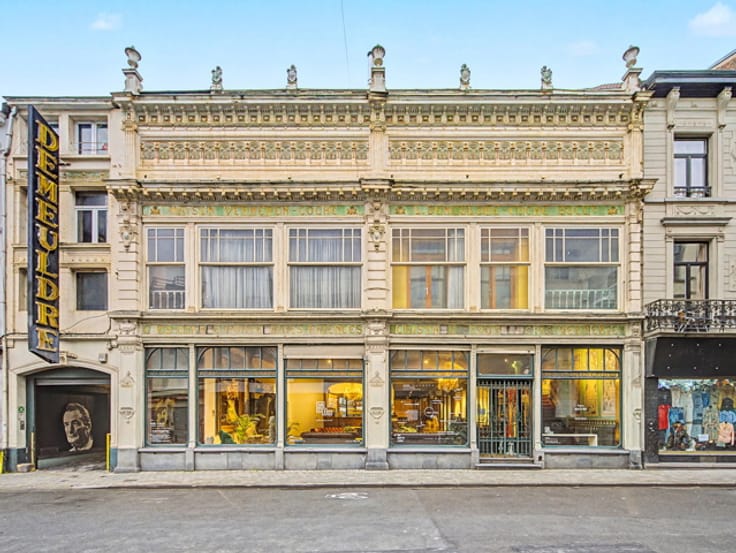
A remarkable piece of Brussels’ architectural and industrial heritage has just been put up for sale. The former Demeuldre-Coché porcelain factory, located on Chaussée de Wavre in Ixelles, is currently on the market with an asking price of €3.5 million.
As described by Brigitte Salama Immobilière, there is around 3,000 square meters of habitable space on a 1,000-square-metre plot. The building offers a mix of potential uses from retail and office space to housing or even an art gallery. According to the estate agent, the property stands out not only for its size and versatility but also for its rich architectural and historical value.
Spread over three floors, it includes 10 bedrooms, four bathrooms and six toilets, alongside vast reception areas. The living room alone covers approximately 800 square meters, while the kitchen extends over 200 square metres.
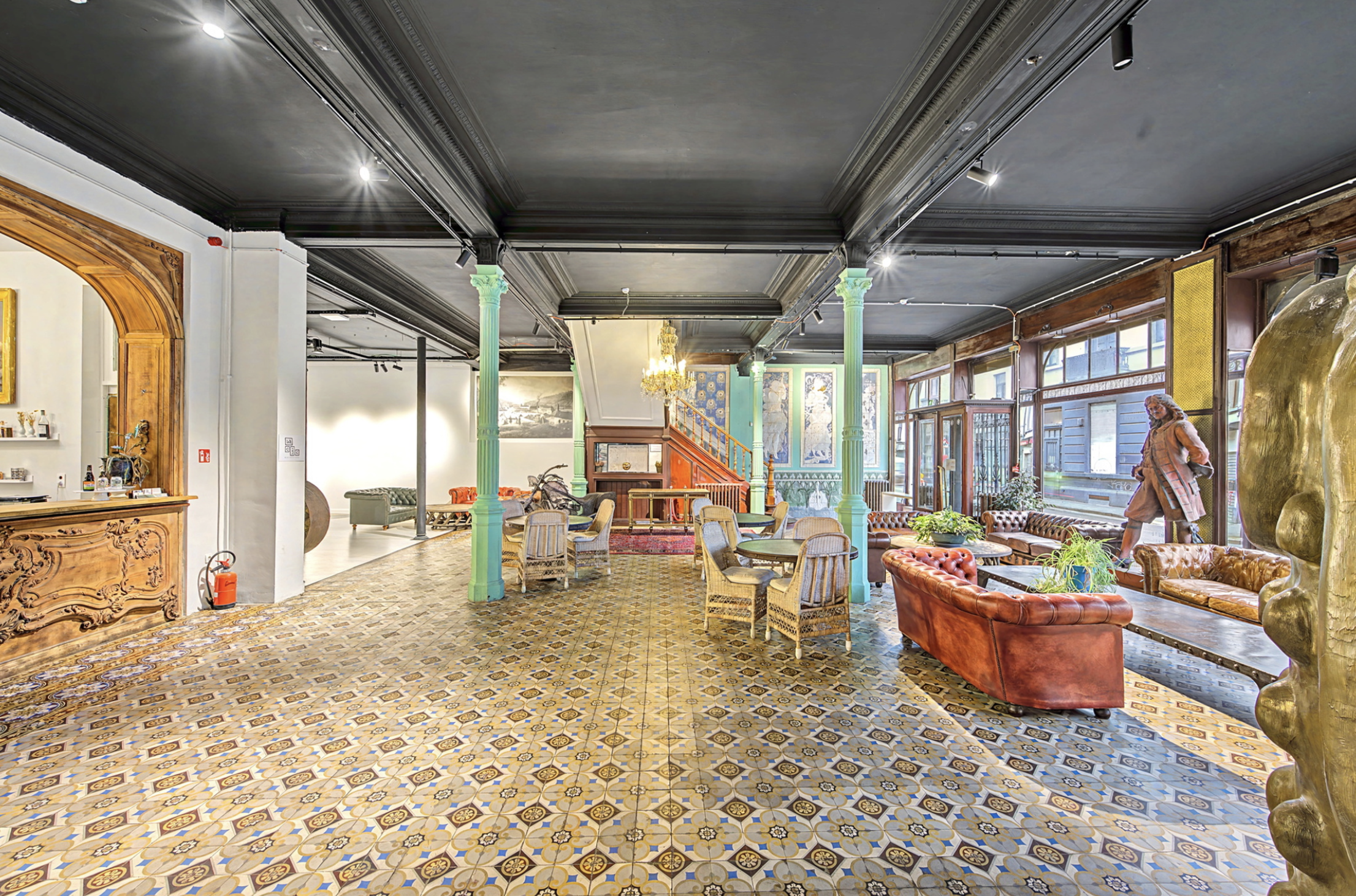
Living room. Credit: Brigitte Salama Immobilière
The building also benefits from dedicated services, including a concierge and on-site security. In terms of accessibility, it offers six indoor parking spaces as well as 10 additional outdoor spots. The property tax (précompte immobilier) amounts to €16,638 per year.
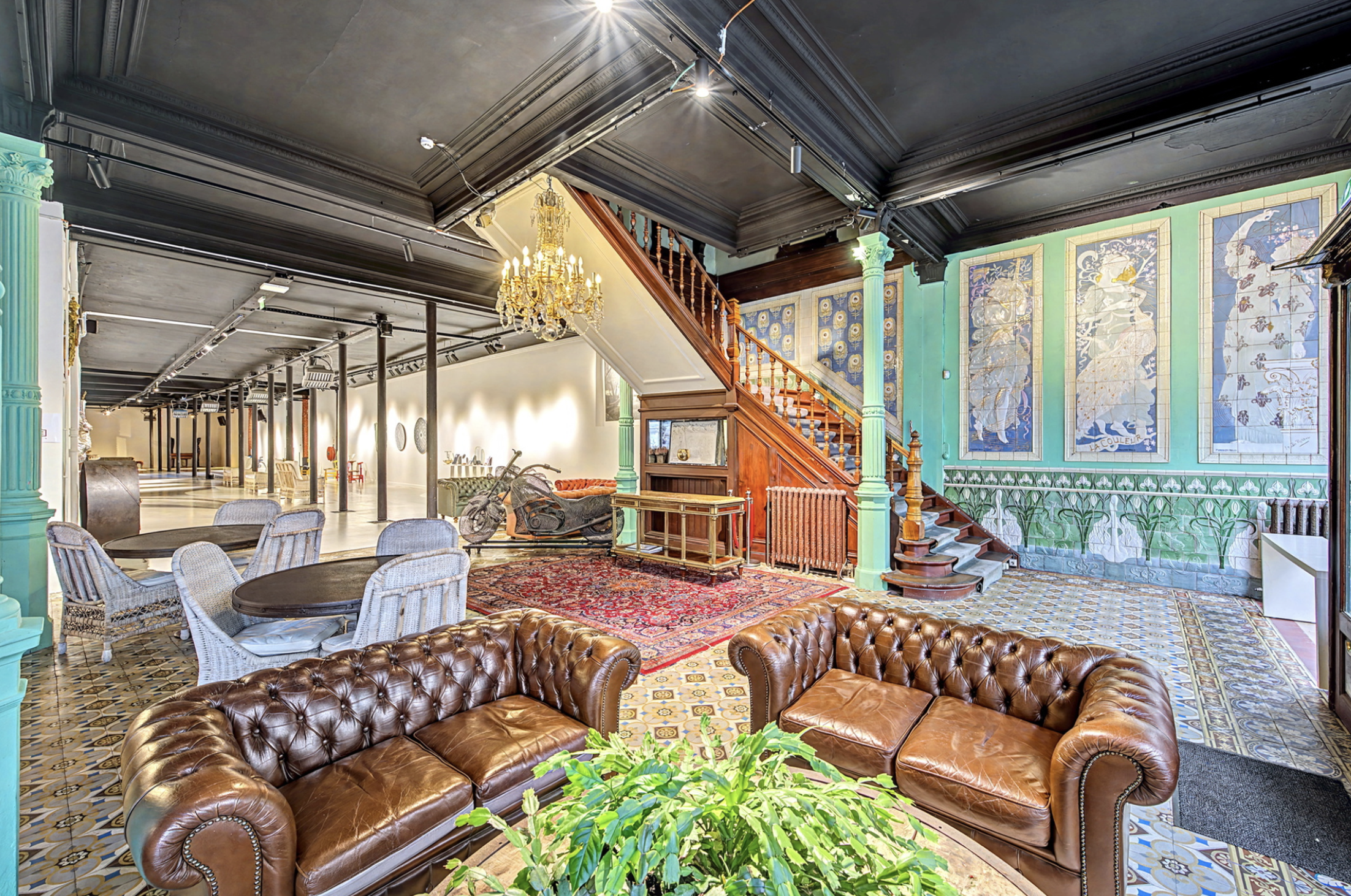
3,000 square meters of living space. Credit: Brigitte Salama Immobilière
A 19th-century industrial legacy
According to monument.heritage.brussels, the site dates back to 1830, when French porcelain maker Charles-Christophe Windisch founded the original factory shortly after Belgium’s independence.
At the time, Windisch had just parted ways with his associate, the painter and engraver Frédéric Faber, who had taken over another porcelain manufacture nearby. He chose to establish his new factory in the former coaching inn “Au Mayeur”, strategically located along the Chaussée de Wavre. The project was financially backed by Jean-Jacques Coché-Mommens, a journalist and editor of Le Courrier des Pays-Bas, known for his involvement in the Belgian independence movement.
After Windisch’s death in 1843, Coché-Mommens took over the factory himself and brought in French porcelain maker Michel-Antoine Caillet to continue developing the business.
The site would then remain in the hands of successive families, including the Cochés, Vermeren and later the Demeuldres, who would shape its golden age.
Under their leadership, the factory expanded significantly, becoming a key player in the production of porcelain, crystal and decorative ceramics. By the late 19th century, it had also embraced the rise of Art Nouveau, collaborating with prominent architects such as Victor Horta and Paul Saintenoy. The factory notably contributed decorative ceramic elements to several Brussels buildings, including the iconic Old England store on Montagne de la Cour.
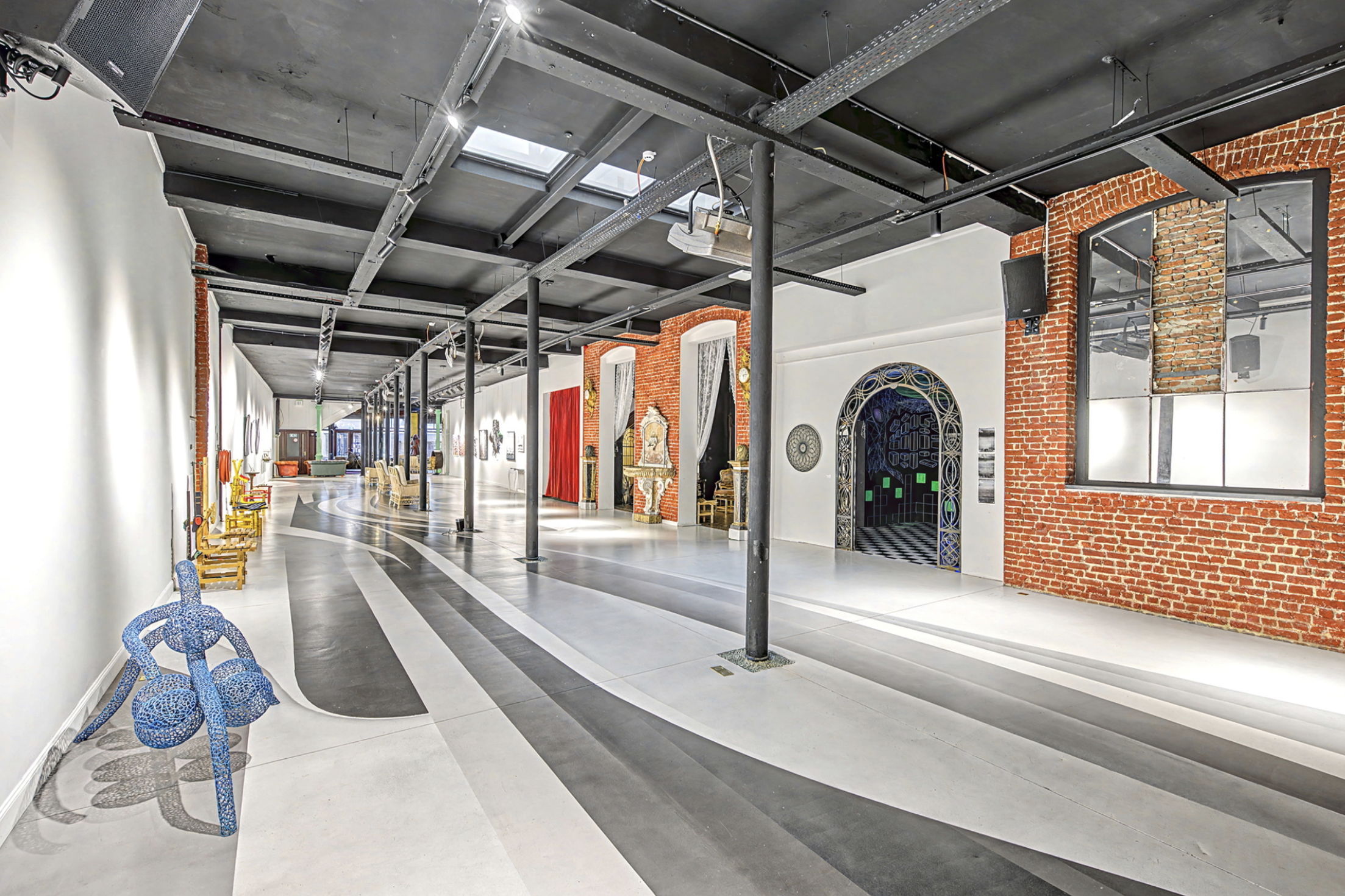
There is also an art gallery. Credit: Brigitte Salama Immobilière
Architecture designed to impress
The current complex reflects this prestigious past. The retail façade, designed in 1905 by architect Maurice Bisschops, combines eclectic influences with Italian neo-Renaissance inspiration. Large display windows, ceramic friezes advertising the factory’s products and elaborate decorative details were all conceived to attract passers-by.
Inside, many original features have been preserved, including cast-iron columns, a coffered ceiling and decorative ceramic panels. Some of these works were created in collaboration with renowned artists such as Isidore De Rudder.
Behind the shop, an exhibition hall built in 1874 extends through the plot to Rue Georges Lorand. Its metal structure, adorned with floral ironwork and topped with a skylit roof, still bears witness to the industrial ingenuity of the period.
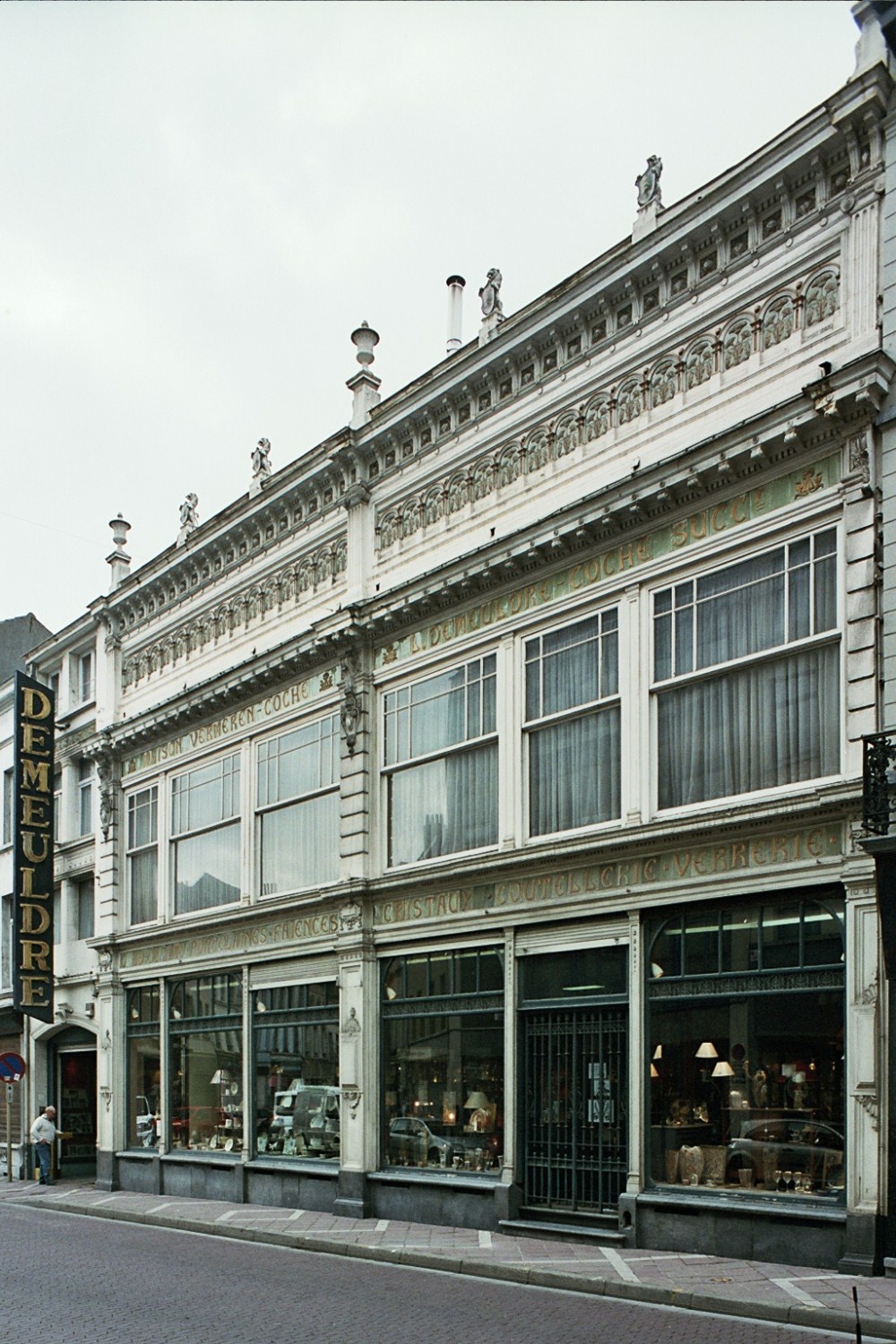
The facade. Credit: monument.heritage.brussels
From industry to heritage site
The factory’s industrial activity declined after the Second World War. In 1953, production ceased entirely, with the company focusing solely on retail. The workshops were eventually demolished around 1960, leaving only the shop and exhibition hall standing today.
Now listed and preserved, the building represents a rare opportunity on the Brussels real estate market: a historic site combining architectural character, cultural significance and redevelopment potential.
