
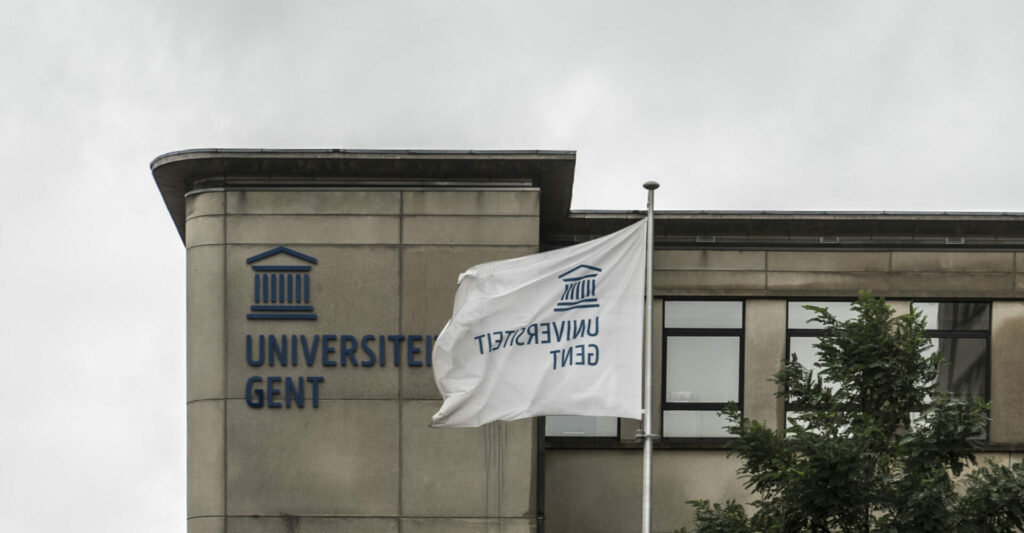
The University of Ghent has officially ended its participation in the European research project OSTEONET due to concerns about its collaboration with a disputed Israeli partner.
On Saturday, the university confirmed that it is now considering withdrawing from other ongoing projects involving similar partners after the European Commission approved the withdrawal without imposing sanctions.
In May 2024, UGent decided to end existing collaborations with Israeli partners that received negative evaluations from the Commission for Human Rights Policy and Dual-Use Research. However, the university awaited formal confirmation from the European Commission regarding the legality of its withdrawal from OSTEONET.
OSTEONET focuses on establishing a multidisciplinary research network to develop 3D in vitro cellular models of healthy and ageing bone tissues.
Recently, the European Commission stated it would not oppose UGent’s withdrawal but did not clarify whether the resignation was deemed regular or irregular. Importantly, it did not impose any sanctions on the university for the decision.
This move by UGent sets a precedent within Horizon Europe, the EU’s flagship research and innovation funding programme, and broadly impacts the European research landscape.
The university intends to accelerate efforts to terminate further collaborations with what it describes as “problematic Israeli partners.”
