
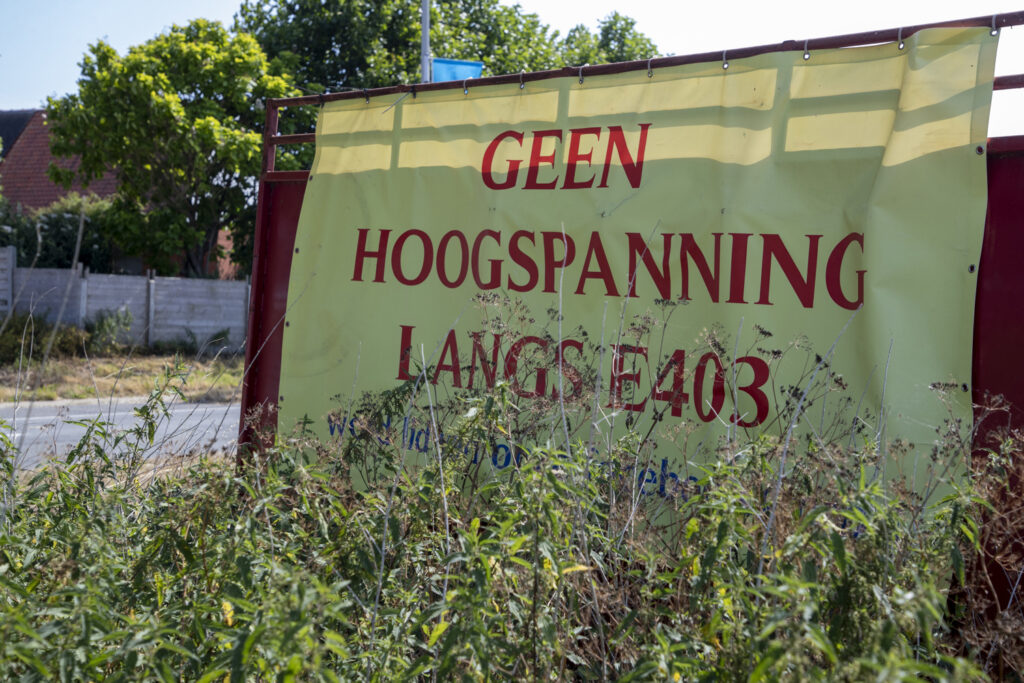
The Flemish Minister Jo Brouns (CD&V) has granted the environmental permit for all five sections of the Ventilus high-voltage line project in West Flanders, a strategic electricity link for Belgium that will connect to the Hainaut Loop.
The decision gives transmission operator Elia the green light to begin construction work by summer, as announced by the company.
However, political reactions are divided. Following the news, mayors in municipalities affected announced an appeal.
Vlaams Belang criticised the decision as "a slap in the face to thousands of West Flemish residents," while Groen called it "a victory for common sense."
Groen MP Jeremie Vaneeckhout, representing Anzegem—a municipality impacted by the project—accused CD&V of "five years of political manoeuvring with false arguments, undermining energy security and valid local concerns."
The 82-kilometre Ventilus line will carry electricity from new offshore wind farms in the North Sea to inland areas, connecting Zeebrugge to Avelgem and strengthening Belgium's power grid. The Hainaut Loop will extend this connection from Avelgem to Courcelles.
The project was revised to address concerns raised by residents and expert opinions. According to Minister Brouns, Elia must adhere to "strict conditions" to complete the project while protecting the environment.
Residents' protests primarily focus on environmental impact and health concerns. A first public consultation last year drew over 2,500 responses, prompting Elia to adapt the project. This revision generated an additional 500 reactions.
To minimise disruptions, the permit imposes requirements such as vegetated buffer zones and restoring land after construction. Measures aim to limit nuisances for residents, agriculture, and traffic during the works. A complaints register will also be established.
A compensation policy has been prepared, with details already communicated to affected residents. For businesses, a framework will be developed in collaboration with employer organisations by the summer. Brouns emphasised a fair and transparent approach: "Those experiencing disturbances from Ventilus must be compensated appropriately. Clear commitments have been made."
"This decision provides clarity and allows progress," Brouns stated, stressing the geopolitical importance of strategic investments in energy infrastructure. "We will closely monitor compliance with all environmental requirements."
The Ventilus line will be partly underground, but it includes a 21-kilometre overhead segment, which remains contentious in West Flanders. Mayors from Ardooie and Lendelede have announced legal challenges to the permit. Lendelede Mayor Carine Dewaele argued for a completely underground solution using direct current technology: "We’re deeply concerned, as Lendelede is the most affected municipality."
Vaneeckhout maintained, "A responsible policy means being honest with people. Experts have repeatedly proven that an underground connection wasn’t a viable option. Denying this was pure political posturing at the expense of our energy future."
Mayors from municipalities such as Ardooie and Lendelede, where the power line would pass overhead through their territory, denounce the permit.
"The electricity produced by offshore wind farms is certainly essential, but we disagree with the way it's going to be done," explained Carine Dewaele, the mayor of Lendelede.
"We want an underground line. This is possible thanks to direct current. Lendelede is the municipality most affected by Ventilus. This is a major concern for us," she said.
"We are going to look into how we can suspend the environmental permit pending a final ruling by the Council of State," said Véronique Buyck, the mayor of Ardooie.
An appeal had already been filed with the Council of State against a previous decision by the Flemish Government to amend the zoning plan. An appeal against the permit granted on Monday should, in principle, be filed with the Flemish Council for Permit Disputes.
