
From next school year, tuition fees for some international students from outside the European Economic Area (non-EEA) studying at some universities in Brussels will soar, making studying in Belgium unaffordable for many candidates.
Until recently, non-EEA students could enrol at the same rate as European students at the RITCS arts school for audiovisual art, drama, theatre and sound in Brussels. But starting from the 2026-2027 academic year, tuition fees for non-EEA students are skyrocketing to €17,500 per year due to budget cuts.
"As a result, there is a real risk that talent from outside Europe will be deterred from pursuing arts education here," Nora Mahammed, Head of the BA & MA Drama and BA Technical Theatre Design programmes at RITCS, told The Brussels Times.
These budget cuts do not come from the universities themselves, but from the Flemish Government (responsible for schools in the Dutch-speaking education system), which is cutting €31 million out of its budget for non-EU students. Universities would have to pass on all operating costs above the set 2% funding threshold to the students.
Retaining talent
Recognising the impact of these cost-cutting measures, the RITCS and the Royal Conservatoire of Brussels (EhB) have launched a crowdfunding campaign to "retain international talent".
These sky-high tuition fees would mean that the schools would be able to welcome far fewer non-EU students. What's more, the ones that would still be able to apply would all come "from a certain financial background", Mahammed said.
This, she stressed, would be a huge missed opportunity. "As a Brussels arts college, our vision is truly rooted in a foundation of diversity and a Brussels identity, and in preparing our students to work for and with a global city like Brussels, where other perspectives on art, other repertoires and other artistic languages are of enormous importance."
"If you look at a city like Brussels and consider the international community living there, you quickly realise that our arts sector stands to gain immensely from students who can engage with that highly diverse audience through their artistic practices," Mahammed said.
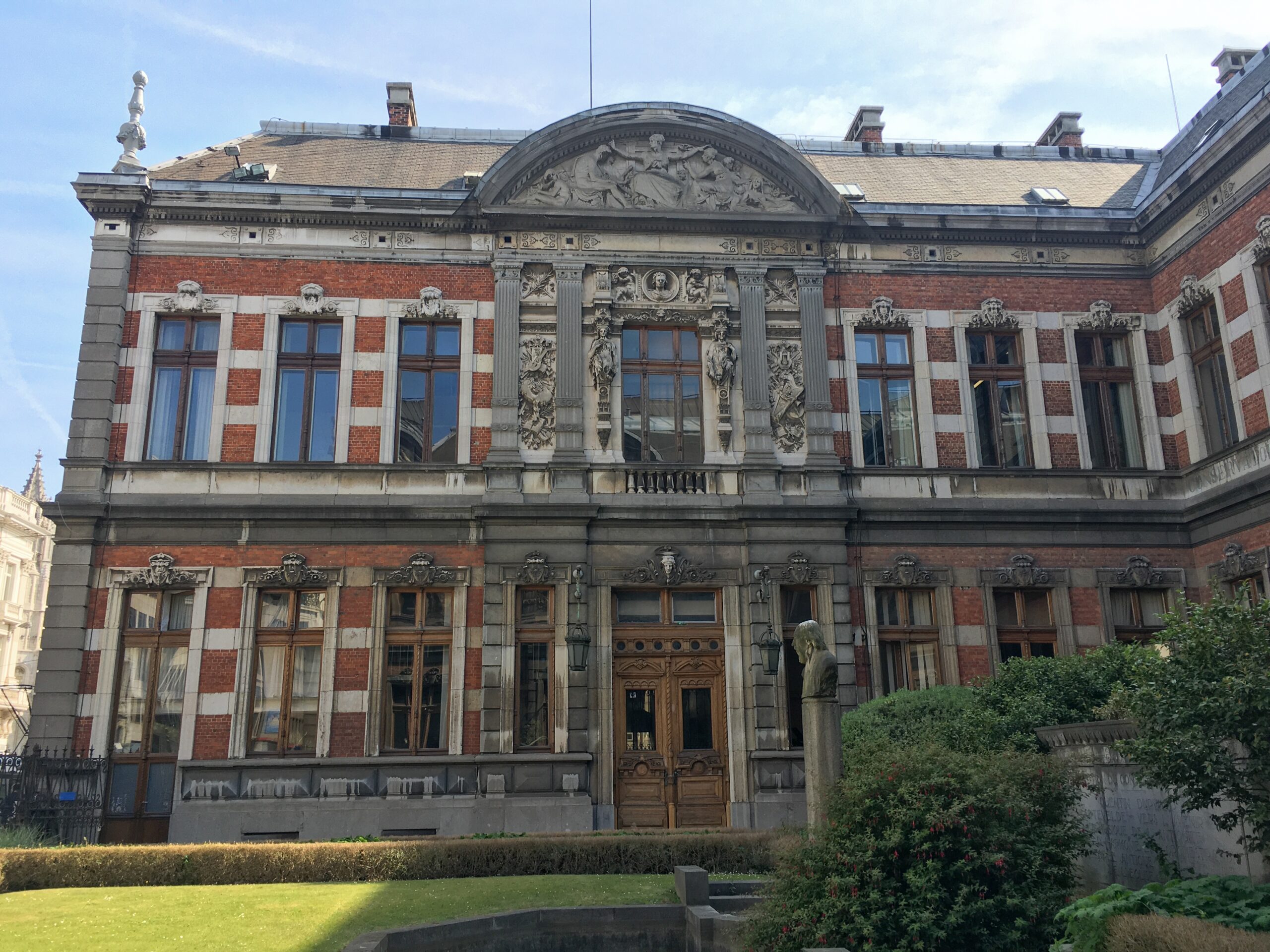
Conservatoire Royal de Bruxelles, Wednesday 18 May 2022. Credit: Belga/Morgane Berger
Additionally, international students also bring their own international networks into the schools. "They enrich the teaching materials and also raise standards because they introduce different practices into the classrooms from which both students and teachers learn. And ultimately, in the long term, they enrich our arts landscape."
To ensure that already-enrolled non-EEA students can finish their degrees, the Erasmus University College Brussels has decided to introduce a transitional measure, despite the financial challenges. Their increased tuition fees will be partially covered by the school, enabling them to complete their studies.
For new students, however, the financial barrier remains particularly high.
"Talented students are dropping out now," Mahammed said. "Not because they are not good enough, but simply because they cannot afford it. That is a loss for them, but also for our schools and the Brussels arts sector."
That impact is already being felt: for the master’s programme in Drama at the RITCS, two international students from Tunisia and Turkey were recently selected during the intake interviews and admitted to the next stage of the artistic auditions. Now, they are at risk of being unable to start their studies.
Crowdfunding
By launching the new Future Voices Fund, RITCS now aims to lower that barrier through crowdfunding – as part of a phased approach.
For this first initiative, which runs until the end of June, they are aiming to raise €50,000 (€12,500 per student per year). This way, they could reduce the €17,500 tuition fees for these two students to €5,000 per year throughout their two-year Master’s programme.
"The most urgent priority right now is ensuring that there is no gap in our international master’s programme, and that these two students we have already admitted to the intake interviews can come and study here," Mahammed stressed.
The next phase is to set up a fund that can be used to welcome international non-EU students to the schools in the long term, through some kind of fund.
The goal, they said, is to award scholarships annually to international students with artistic potential. The number of scholarships will depend on the funds raised through crowdfunding and future initiatives.
"In a context where art, education and research are becoming increasingly intertwined internationally, a diverse student population is not a luxury, but an absolute necessity," Mahammed said.
More information about the initiative and how to donate can be found here.
