
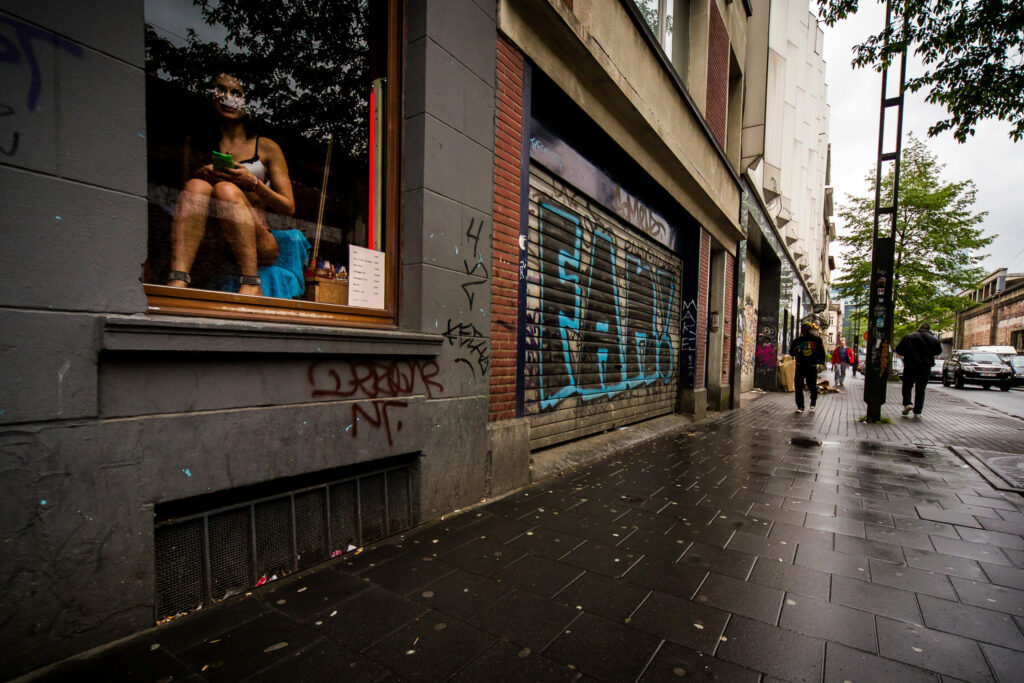
One month after nighttime closure measures came into force in Brussels’ Northern Quarter, local authorities and field organisations are drawing sharply different conclusions about their impact.
Local authorities in Brussels report fewer violent incidents, while sex workers warn of income losses and reduced social control.
Introduced on 1 April by the municipalities of Saint-Josse-ten-Noode and Schaerbeek as part of the regional “HotSpot Quartier Nord” strategy, the measures require businesses in parts of the area to close between 01:00 and 06:00.
The objective was to curb nighttime violence, drug-related issues and disturbances that had become increasingly problematic for residents.
First results
According to an initial evaluation by the Brussels North Police Zone, the policy is already showing results. Authorities report "significant decrease" in violent incidents during nighttime hours, as well as a calmer atmosphere in the neighbourhood.
"This first evaluation shows that the ordinance is delivering results," said Mayor of Saint-Josse, Emir Kir (Independent). "Residents are reporting calmer nights, fewer disturbances and a renewed sense of security."
Schaerbeek Mayor Martin de Brabant (MR) also described the first results as “encouraging,” while stressing that the observation period remains short and that the impact of the measures will need to be confirmed over time.
Police chief Olivier Slosse argued that the nighttime closure order has helped officers focus more effectively on securing the area. "The closure ordinance is an additional tool helping us reduce criminal pressure in the Northern Quarter," he said.
'A double-edged sword'
But on the ground, organisations working with sex workers paint a different picture. Utsopi, the Belgian union of sex workers, says it remains cautious about the official figures.
Daan Bauwens, project facilitator at the organisation, warns that many residents and workers in the area live in precarious conditions and may hesitate to report incidents to the police.
"We need to be very careful when interpreting these numbers," he said to The Brussels Times. "These are not people who will easily report violence or theft."
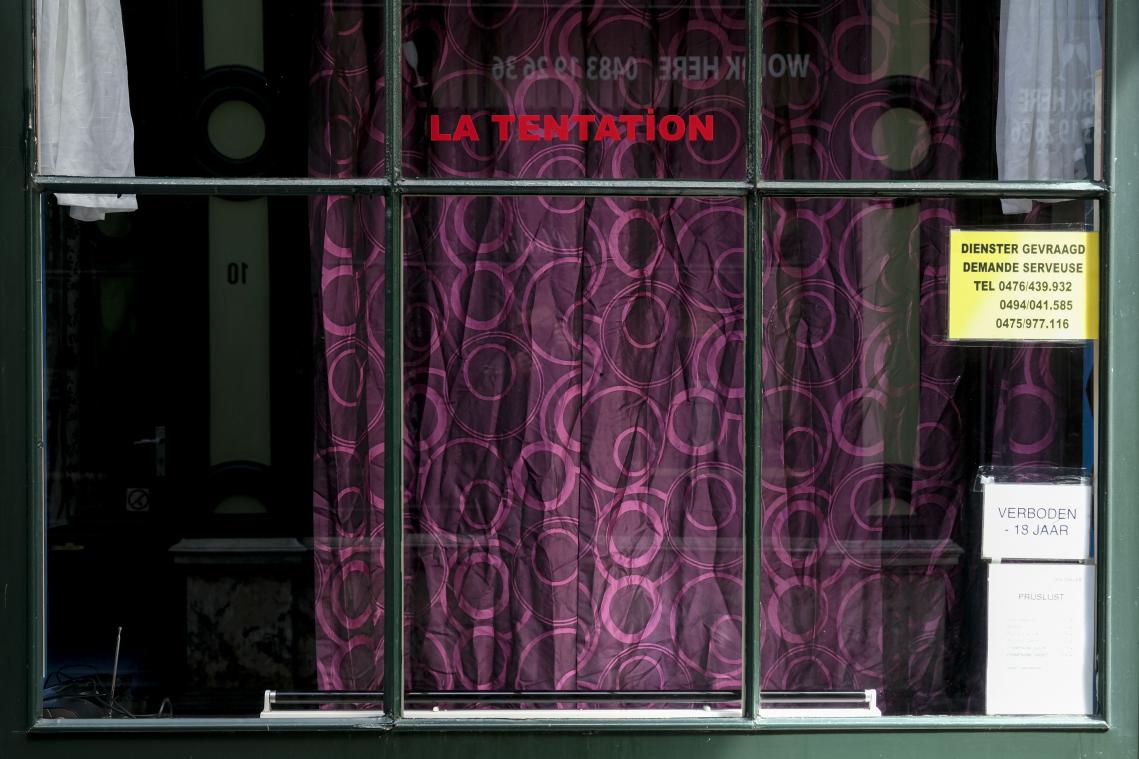
Credit: Belga
According to Bauwens, some parts of Rue d’Aerschot – the heart of Brussels’ red-light district – do appear calmer at times. But he says the situation fluctuates greatly and that problems may simply have shifted into smaller surrounding streets.
"We’ve received testimonies from people working in back streets like Rue des Plantes and Rue Linné saying there is now almost no control or social oversight at night," he explained. "In some places, the situation has even worsened since the curfew."
For Utsopi, one major concern is the disappearance of what Bauwens calls “social control”. With sex workers no longer present overnight, the streets become largely empty after 01:00. “There are no more eyes on the street,” he said. “I really wonder what happens there at night now.”
Loss of income for sex workers
The organisation also says the measures are having significant economic consequences for sex workers. Traditionally, windows in the area operate on two 12-hour shifts over a full 24-hour period. But with the mandatory closure from 01:00 to 06:00, only 19 working hours remain.
“The rents haven’t changed,” Bauwens said. “Workers still pay between €250 and €300 per shift, but they earn less money.”
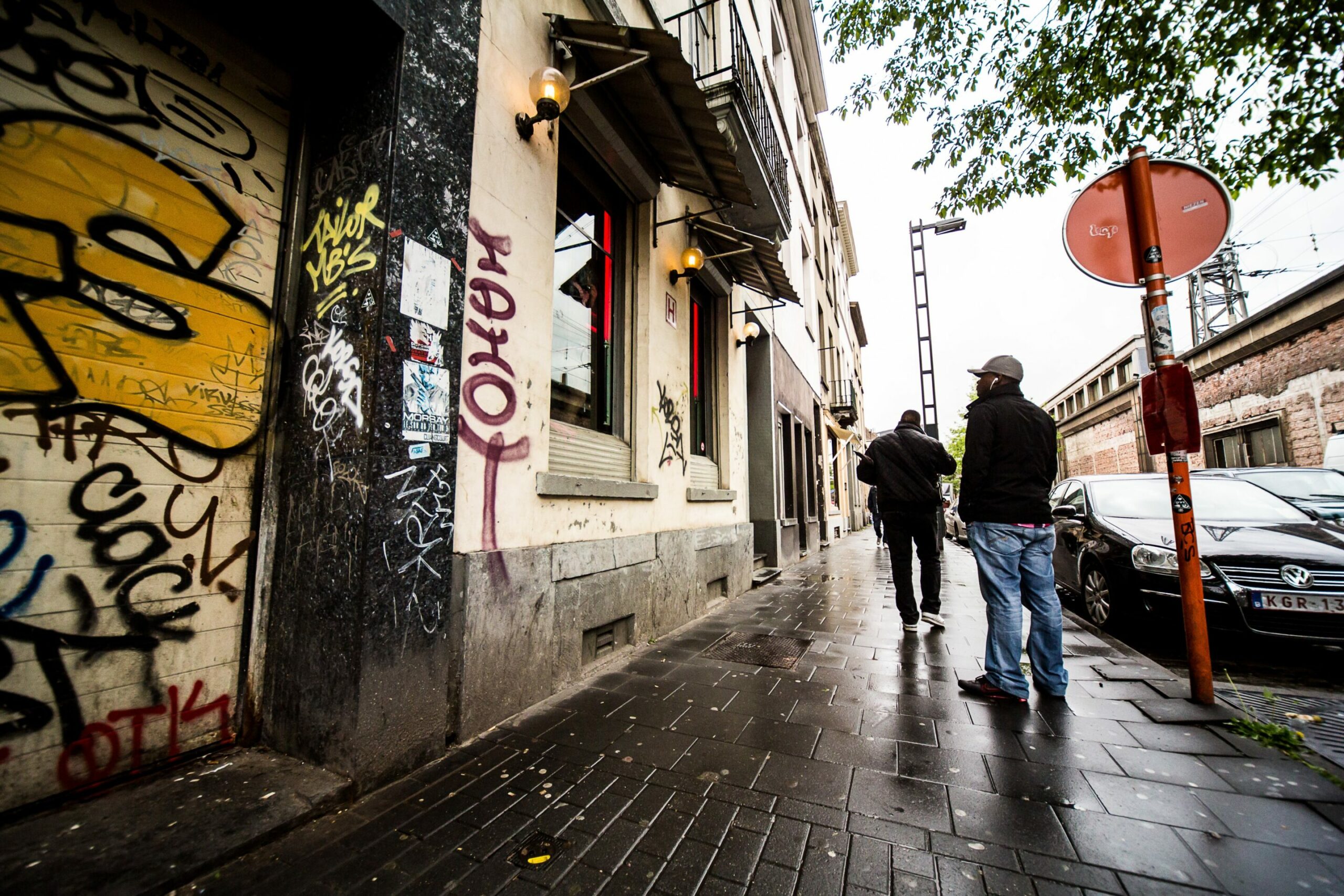
A man looking up at the women in the window in Rue d'Aerschot in the Red Light District in Schaerbeek, Brussels, Tuesday 14 May 2013. Credit: Belga/Siska Gremmelprez
According to him, this confirms fears already expressed by the sector when the measures were first announced. “The neighbourhood reorganised itself quickly, but it has led to a major loss of income for sex workers.”
Calls for a broader approach
While acknowledging that authorities had to react to growing insecurity and visible drug use in the area, Utsopi argues that repression alone will not provide a lasting solution.
"Drug use is fundamentally a medical issue, not just a criminal one," Bauwens said, calling for stronger cooperation between municipalities, police, healthcare organisations and outreach associations working with drug users.
He also criticised the lack of investment in neighbourhood policing. According to him, plans for a stronger community police presence have existed for years but have yet to be fully implemented.
