
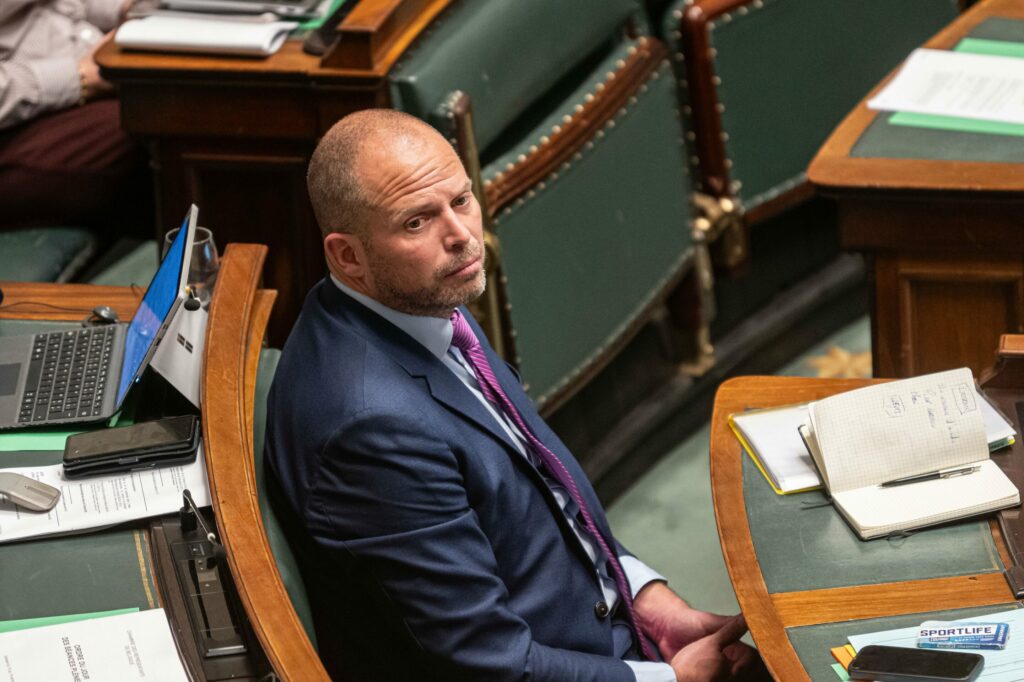
Belgium's Defence Minister Theo Francken (N-VA) is expecting a proposal from the Netherlands by mid-June to find a solution to ongoing problems with a joint programme to build new anti-submarine warfare (ASW) frigates.
Questioned before a parliamentary committee, Francken did not hide the significant difficulties facing the project and confirmed the delay in the delivery of the first frigate, now expected no earlier than 2033.
Belgium decided to acquire two new frigates and six new minehunters in 2018, in a partnership with the Netherlands, as the Dutch and Belgian navies have been working together for several years.
The Belgians were responsible for the minehunters, and the Dutch for the frigates. While the Belgian side of the contract is progressing smoothly, the same cannot be said for the Dutch side.
Three memoranda of understanding (MOUs) have been signed. The cost of the frigates for Belgium has increased from just over €1 billion in 2017 to €1.8 billion in 2023, due to inflation and technical upgrades to the systems.
Under the leadership of Ludivine Dedonder, the Ministry of Defence negotiated an industrial return of €350 million for Belgium.
However, the frigates have design flaws requiring them to be lengthened by seven metres, widened by 50 centimetres, and given increased tonnage.
Additionally, allegations of corruption have emerged against Damen, the Dutch shipbuilder involved.
Francken spoke with his Dutch counterpart. "The meeting went well; there is goodwill on both sides and a willingness to find solutions. It must be understood that this is very troublesome for the Netherlands, not just for us," explained Francken.
The minister intends, however, to stick to the 2023 MOU. "I want the 2023 MOU, with the amendments, and nothing more. Another €500 million is unacceptable for us," he stated.
A serious operational problem is also likely to arise. The two current frigates – the Leopold I and the Louise-Marie – are ageing and may no longer be available by the time their replacements arrive.
'Rotten affair'
Francken declined to comment on alternative options for the Belgian Navy, noting the complexity of the situation. He, however, acknowledged that other countries, such as Turkey, Sweden and Italy, also produce frigates and might offer alternatives.
Meanwhile, the opposition has been scathing in its criticism. "We are gradually heading towards a frigate crisis," warned opposition member Kjell Vander Elst (Anders).
"This rotten affair seems to be turning into a financial and operational nightmare," added Philippe Courard (PS).
"Exploding costs are the hallmark of Steven Vandeput (Francken's N-VA predecessor). We saw it with the CaMo contract, and we're seeing it now with the frigates," declared Nabil Boukili (PTB-PVDA).
