
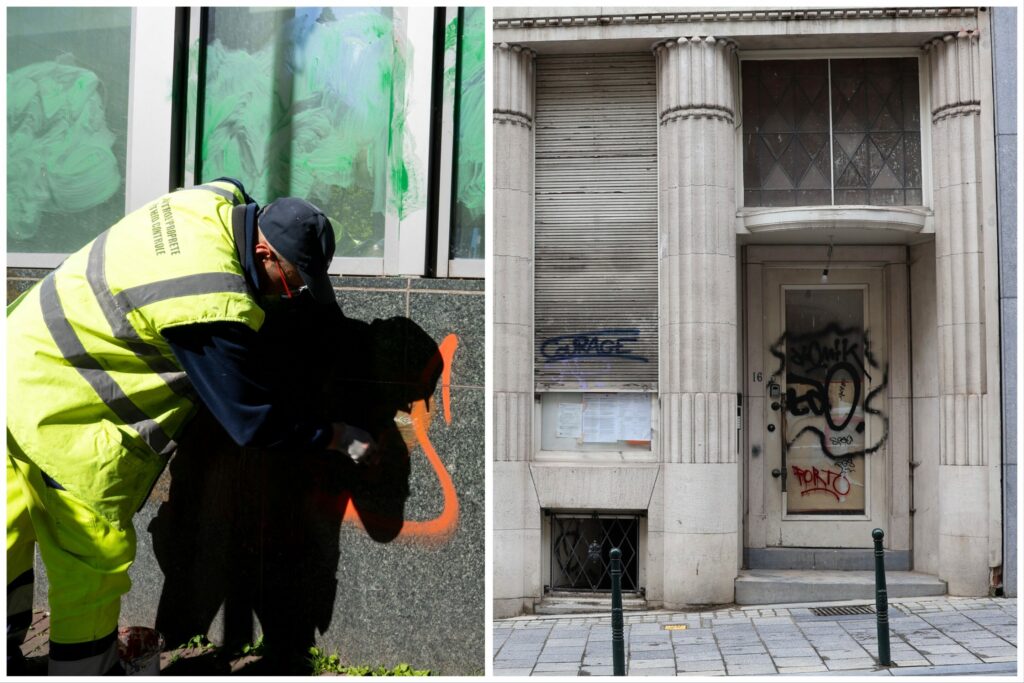
No municipality in Brussels escapes spray paint. Unwanted graffiti and tags appear regularly on historical monuments, benches, lampposts – and especially on building facades and public transport.
While Brussels supports street art and commissions artists to create murals in controlled environments, the city fights against unwanted tagging and graffiti.
Seen as vandalism, unauthorised tagging and graffiti are illegal in Belgium, and are considered a "mixed" offence, meaning artists can receive a fine or even spend time in prison. However, the unsolicited nature and protest are foundational elements of graffiti culture.
Graffiti also concerns locals who sometimes find unwanted tags — a quickly applied artist's signature — on their front door or a wall. To keep streets clean, residents can report graffiti via the regional portal, FixMyStreet, which then alerts local authorities.
In May, locals spotted hundreds of graffiti and tags on private and public facades, monuments, and public furniture.
"This is damaging to the neighbourhood," a Saint-Gilles resident lamented on 11 May on the FixMyStreet portal, alerting authorities to several instances of graffiti. "Over the course of a couple of weekends, more and more graffiti has been sprayed, turning clean facades into this state."
Who is responsible for cleaning graffiti?
For public buildings, furniture and transport, the city — funded, of course, by taxpayers — pays the bill for cleaning services.
In May, for example, the City of Brussels launched a 10-day campaign, investing €40,000 in steam-cleaning public furniture from tags and stickers.
All communes participate in the FixMyStreet initiative, which invites public participation and allows authorities to react quickly and remove graffiti from public spaces.
The FixMyStreet interactive map also shows that significantly more tags are spotted in Ixelles and Etterbeek compared to other municipalities.
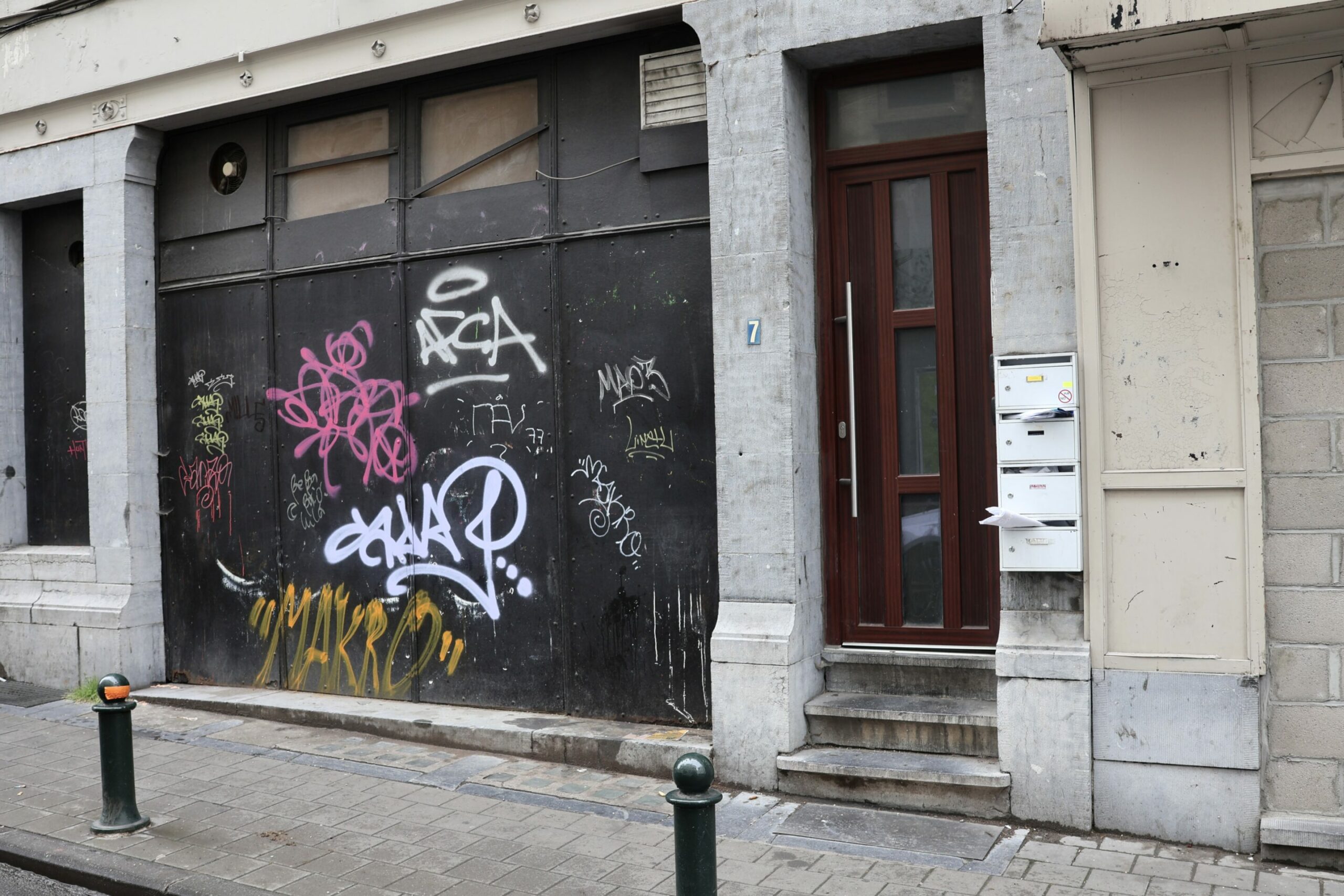
Garage door covered in tags on the street in Ixelles. Credit: The Brussels Times/Eva Hilinski
Communes often have dedicated anti-graffiti units. The regional cleanliness agency Bruxelles-Propreté also removes tags, primarily from public buildings within its remit.
In case of private property, the General Police Regulation, common to the 19 Brussels municipalities, imposes a duty of maintenance upon the owner, co-owner or tenant, with administrative fines applied for non-compliance.
Who pays for cleaning private property?
In practice, municipalities often avoid a strictly punitive approach, Brulocalis, an association representing the City and communes of the Brussels-Capital Region, told The Brussels Times.
Many communes in Brussels offer a free removal service for residential buildings, under certain conditions. The façade must be in public sight, and they must have received a signed waiver from the owner of the owner or property manager.
The City of Brussels removes graffiti from private residential buildings for free, except for those listed as protected under the regional heritage register. In those cases, the owner must have the graffiti removed at their own expense.
Ixelles, on the other hand, offers free services at the owner's request, regardless of the property's use, provided the graffiti is on a facade facing the street. Ixelles will also automatically remove offensive graffiti on its own initiative.
Other communes that offer free services include: Etterbeek, Forest, Jette, Molenbeek, Saint-Gilles, Anderlecht, Uccle, Koekelberg, and Woluwe-Saint-Pierre.
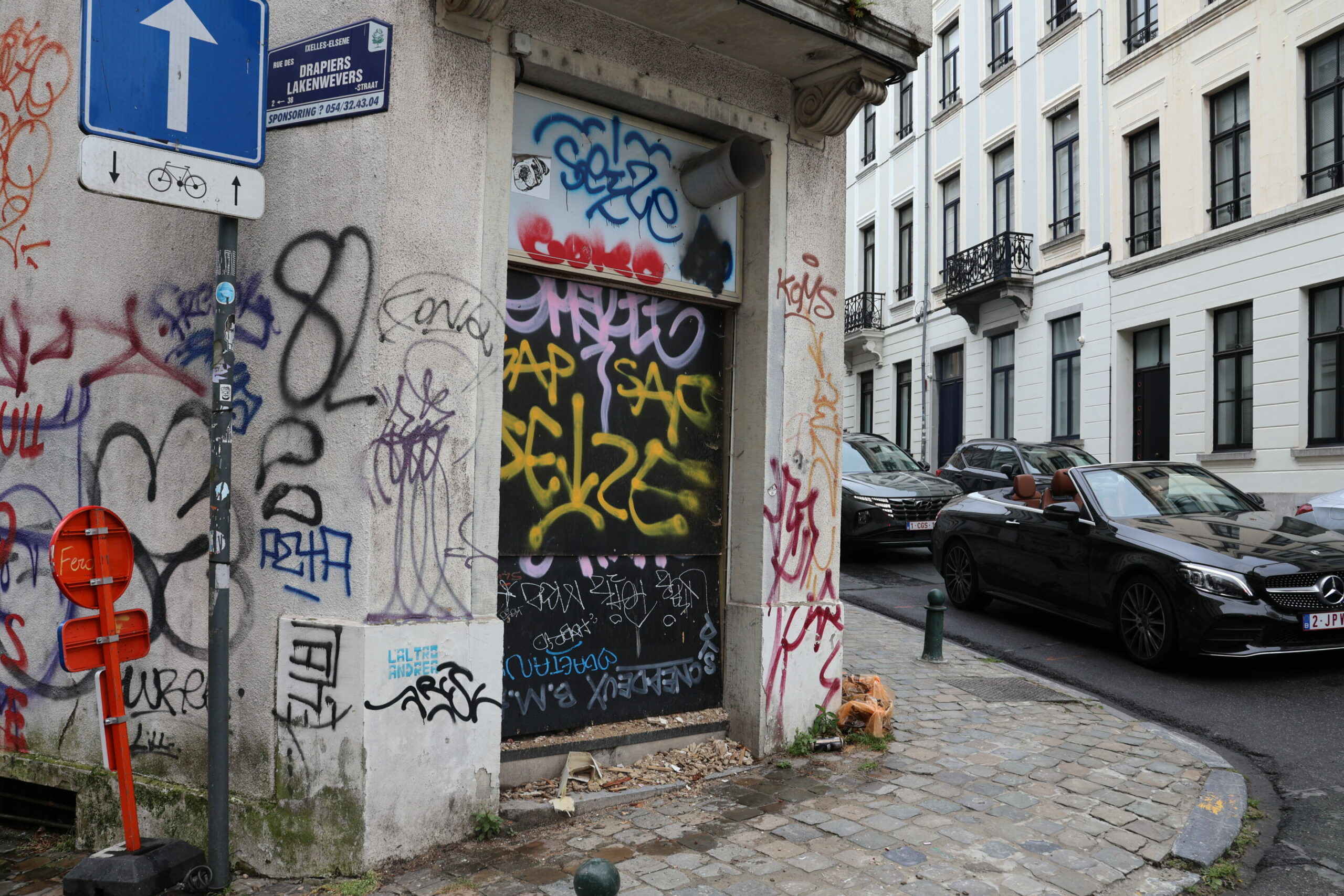
Street in Ixelles with a building covered in tags. Credit: The Brussels Times/Eva Hilinski
Woluwe-Saint-Lambert offers a free cleaning of street-facing private facades, provided the owner requests it within three months after authorities spot the unwanted graffiti. If no action has been taken to have the graffiti or tag removed, owners risk monthly fines.
Commercial buildings, shops, and office spaces are also responsible for maintaining the building at their expense and are more often excluded from free municipal interventions.
Most free municipal interventions concern facades facing public streets, which leaves alleyways for locals to clean themselves.
Private contractors often charge a few hundred euros, depending on the amount of graffiti they have to clean and the cleaning method required.
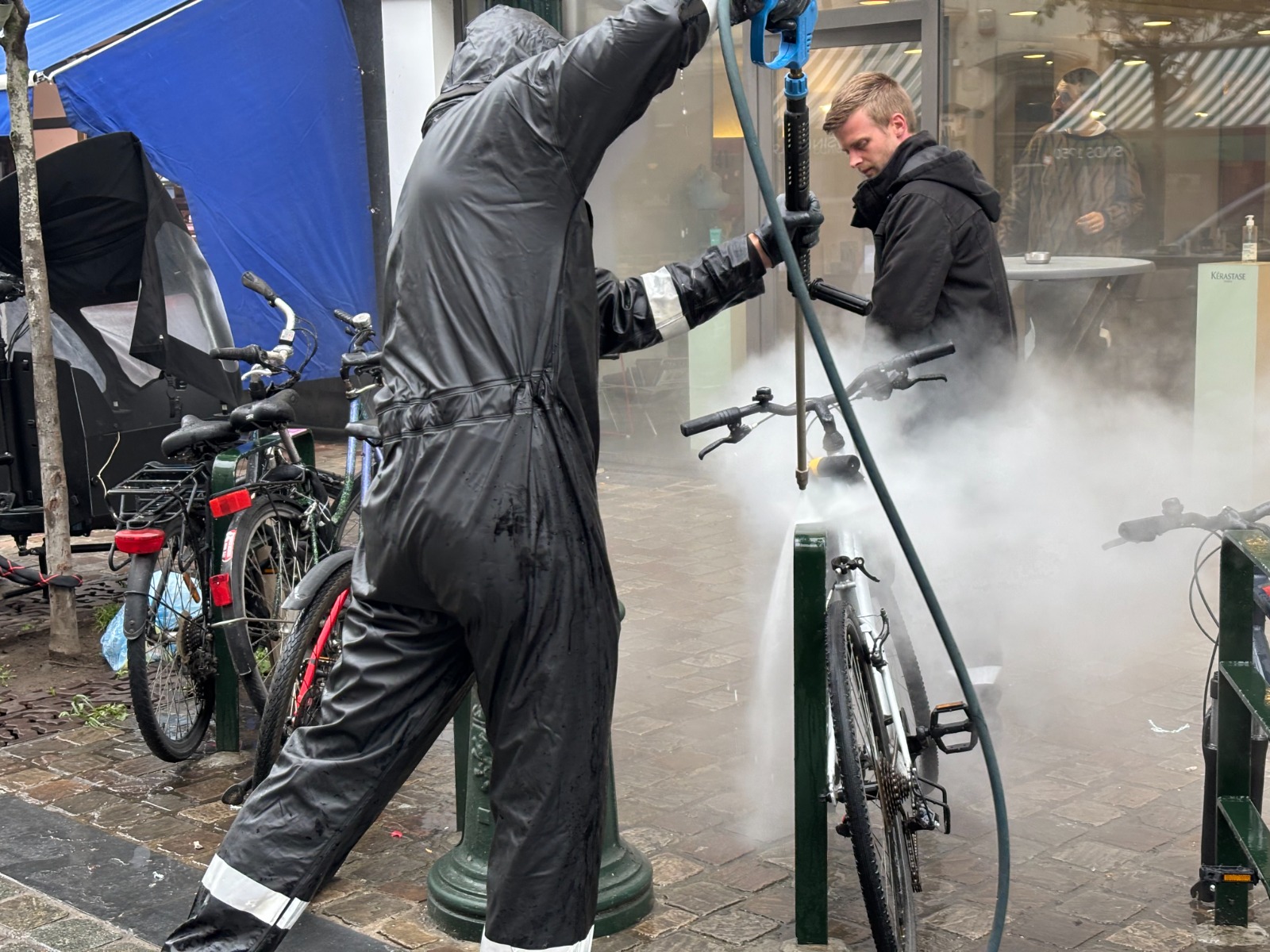
First large-scale steam-cleaning campaign. Credit: City of Brussels
Fines for ignoring graffiti
All municipalities can impose administrative fines under the Communal Administrative Sanctions law (GAS/SAC) should property owners fail to maintain the cleanliness of a property.
However, in practice the enforcement is not strict. "Local authorities prefer to reach an amicable settlement with the owner," Brulocalis said. "The SAC and the fines are merely tools intended for owners who categorically refuse to cooperate with the local authority."
