
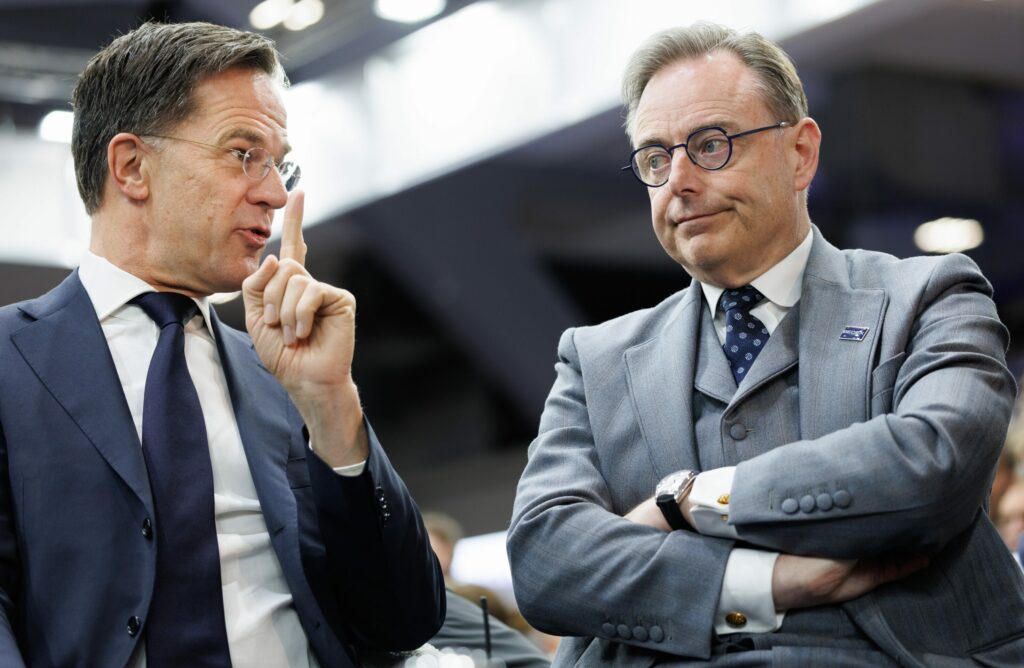
NATO defence ministers are gathering today in Brussels, where they will discuss the sensitive matter of defence spending in advance of next month's NATO summit in Ankara.
The United States is putting pressure on allies as it seeks to make sure they deliver on the pledge they made last year to ramp up defence spending.
For the first time, every European member of NATO met the alliance's target of spending at least 2% of GDP on defence in 2025. The milestone comes amid continued security concerns linked to Russia's war in Ukraine and growing pressure from allies to strengthen military capabilities.
However, significant differences remain across Europe, with Belgium ranking among the countries that have done little more than meet the minimum requirement.
According to an analysis from NATO and research from Oxford Economics cited by Euronews, Belgium spent exactly 2% of its GDP on defence in 2025. The country joins Spain, Portugal, Luxembourg and the Czech Republic among a group of NATO members that reached the alliance's benchmark but did not significantly exceed it.
By contrast, Poland remains Europe's biggest defence spender relative to the size of its economy. The country allocated 4.48% of GDP to defence in 2025, surpassing even the United States, which spent 3.22%. The Baltic states also rank among the alliance's top spenders, with Lithuania dedicating 4% of GDP to defence, followed by Latvia (3.73%) and Estonia (3.38%).
Belgium still far from NATO's new goal
While Belgium has finally reached NATO's longstanding 2% target, the country remains well below the alliance's newly agreed ambitions. At the NATO summit in The Hague, allies endorsed a new objective of spending 5% of GDP on security and defence by 2035. Of that amount, 3.5% must be allocated to core military spending.
According to Oxford Economics, Belgium would need to increase its core defence expenditure by around 1.5 percentage points of GDP to reach that threshold. Similar increases would be required in Spain, Portugal, Luxembourg and the Czech Republic.
Defence spending reaches Cold War-era highs
Across Europe, military budgets have risen sharply in recent years. European NATO members increased defence spending by 14% in 2025, reaching approximately €739 billion, according to the figures cited by Euronews.
The increase represents the steepest annual rise since the 1950s. Collectively, EU countries that are members of NATO spent 2.5% of GDP on defence last year, up from 2.1% the previous year. Countries closest to Russia have led the rearmament effort, driven by a heightened perception of security threats.
