
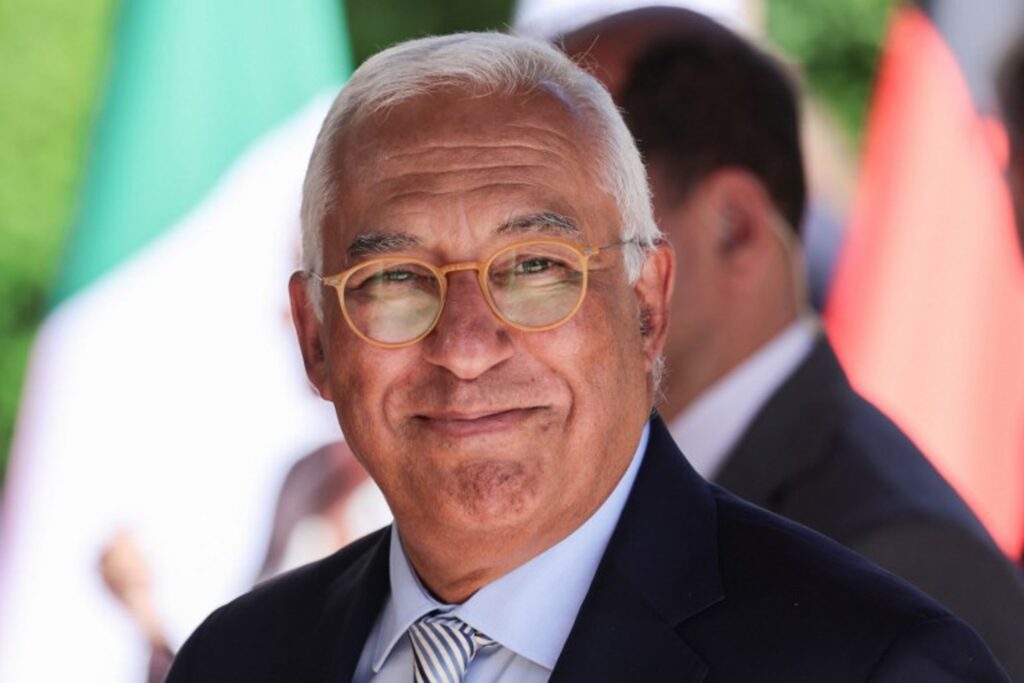
The President of the European Council, António Costa, is emerging as the European Union’s “natural representative” for potential future peace negotiations on Ukraine, according to diplomatic sources.
Costa reportedly expressed readiness during discussions at Thursday's EU summit in Brussels, with his inner circle confirming his preparedness.
Diplomatic sources emphasised the President’s mandate to ensure EU unity, stating he is the natural representative of the bloc’s interests under its treaties.
Costa revealed brief contacts between his office and the Kremlin. He described an initiative to establish a diplomatic channel with Russia, aimed at preparing the EU to defend its interests when peace talks become feasible.
These contacts were reportedly limited in scope and did not involve substantive discussions or negotiations, according to sources.
The Portuguese leader stressed the EU’s responsibility to contribute to securing a fair and durable peace that aligns with European interests. However, observers note that Russia’s current stance does not indicate readiness for negotiations.
Belgian Prime Minister Bart De Wever underscored that any potential negotiations involving the EU must fall within its competencies. He stated that Costa would be better suited to this role than any other representative.
De Wever also highlighted that sanctions against Russia, including the freezing of the central bank’s assets, were EU initiatives, further underscoring the bloc’s role in peace talks.
Like many of his counterparts, De Wever noted that Russian president Vladimir Putin shows no sign of wanting to engage in serious talks on a "sustainable" and "acceptable" resolution to the war in Ukraine. Even so, leaders exchanged views on Thursday evening on how such negotiations should proceed.
However, he clarified that security guarantees for Ukraine fall under the purview of individual member states, suggesting that France, Germany, and the UK might represent national interests in such discussions.
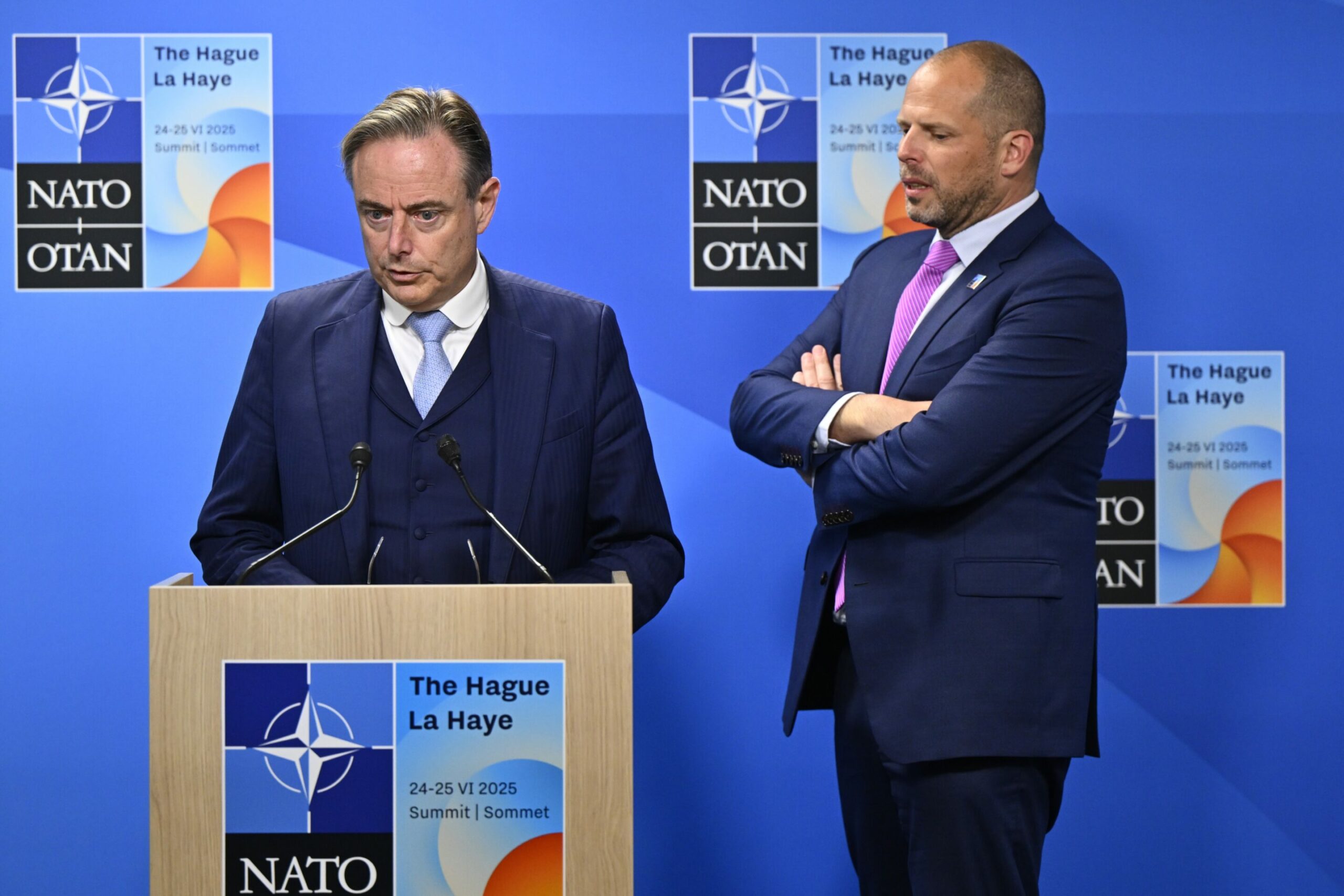
Prime Minister Bart De Wever and Minister of Defence and Foreign Trade Theo Francken hold a press conference at a heads of states summit of the NATO (North Atlantic Treaty Organization) military alliance, Wednesday 25 June 2025, in The Hague, The Netherlands. Credit: Belga / Eric Lalmand
European leaders displayed renewed unity by endorsing conclusions on Ukraine this Thursday, marking the first unanimous decision since Hungarian Prime Minister Viktor Orban’s veto in March 2025.
Orban’s defeat in April elections replaced him with Peter Magyar, who vowed to cease blocking EU decisions for domestic or partisan reasons.
Ukrainian President Volodymyr Zelensky attended the summit, engaging in extended discussions with EU leaders and praising their solidarity with Ukraine.
The EU also prepared to extend its sanctions against Russia for 12 months, doubling the previous six-month renewal period. Formalisation of this extension at the ministerial level is pending.
In addition, leaders reignited Ukraine’s EU accession talks, unlocking the first cluster focused on EU values and fundamental rights after years of delay due to Hungarian opposition.
Zelensky called for momentum to open the five remaining groups of chapters during the summit. European Commission President Ursula von der Leyen endorsed this approach, outlining plans for progress by summer.
A diplomatic source confirmed the EU’s goal of advancing Ukraine’s integration while maintaining pressure on Russia, laying foundations for future peace negotiations.
Summit discussions
EU leaders rounded off the first day of the summit with a discussion on how to address the large trade deficit with China, which is accused of fuelling overproduction through massive state subsidies and flooding the European market with cheap goods.
They stressed the need for "constructive dialogue" while calling on the Commission to "expand its arsenal of tools" to defend trade interests, according to a diplomatic source. At the same time, leaders acknowledged that the EU itself must strengthen its economic competitiveness and continue diversifying its trade relations.
On Friday at 09.30, leaders begin the second and final day of the summit with a debate on the EU's new multi-annual budget for the period 2028 to 2034.
