
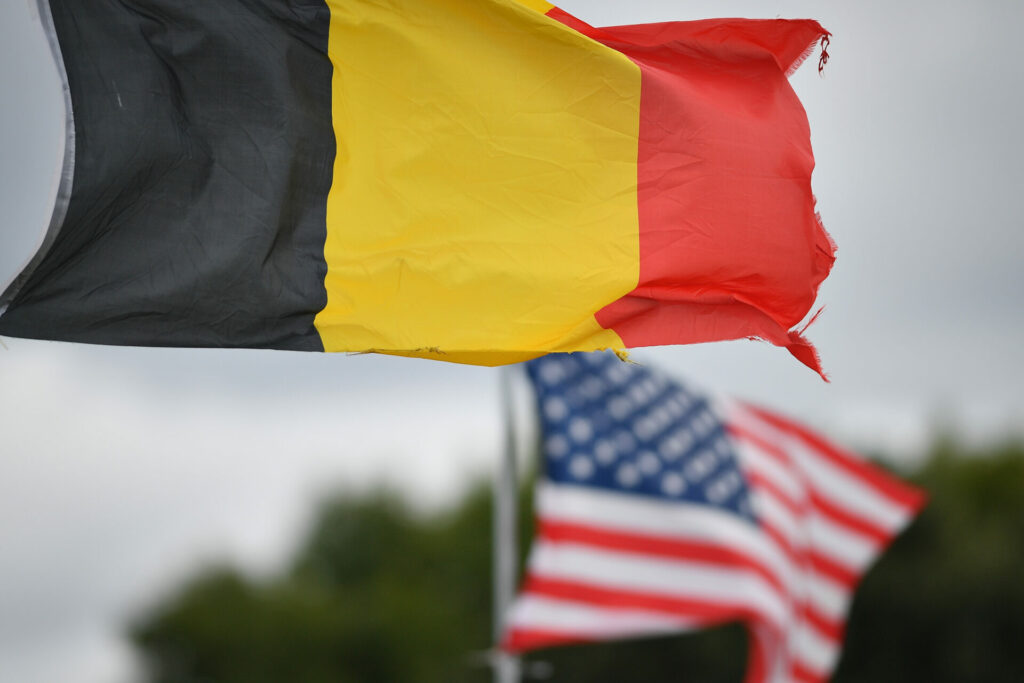
On Saturday afternoon, dozens of Americans and their families will gather at a château outside Brussels for a Fourth of July barbecue.
Some will arrive wearing stars and stripes. One British guest plans to dress as George Washington, while his American wife will come as Betsy Ross – the woman credited with making the first US flag.
For them, the afternoon is about more than fireworks and hot dogs. As the United States marks its 250th anniversary this year, the holiday offers many Americans living abroad an opportunity to share familiar traditions with friends from around the world while reflecting on the lives they've built in Belgium – and what's going on back at home.
Building a life in Europe
For many of the people we spoke to, Belgium was never supposed to be home. But years later (and in some cases, decades later) they're still here.
When John Tylke was transferred by the First National Bank of Chicago from Communist Poland to Belgium, he expected Brussels to be just another stop in an international career. Instead, one assignment turned into a lifetime.
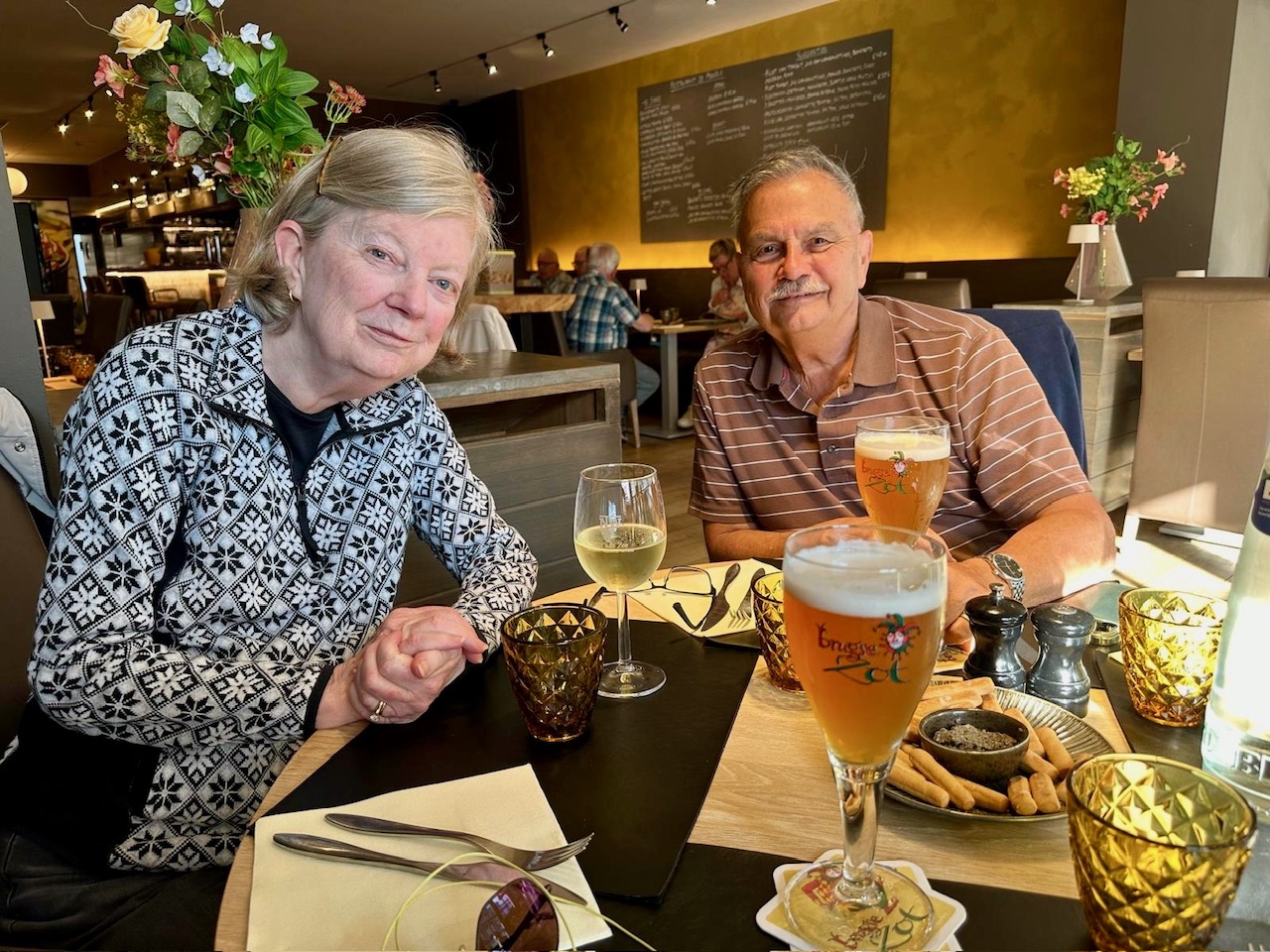
John and Linda Tylke enjoy a Belgian meal. 'A restaurant experience in Belgium is very different from American experience in a restaurant,' John explained. Credit: Supplied
"We went with the thought we were going for two years," his wife Linda said. "Fifty years later, we are still here."
Living in Belgium wasn't supposed to be permanent for Paul and Julia Willoughby either. They first arrived through Paul's military posting and later returned as teachers at the Brussels American School. After retiring in Tennessee for several years, they decided Belgium still felt more like home.
"I fell in love with this country in 1981," said Julia. "I've had a love affair with it ever since."
Kristen Crosson came to Belgium for love, moving across the Atlantic to be with her British husband. After nearly a decade, she officially became a Belgian citizen and spends her days helping fellow Americans find everything from Cheerios to ranch dressing through the grocery business she launched during the pandemic.
Nancy Evans, on the other hand, never wanted to move to Belgium at all. She was 17 and freshly out of high school when her father's job relocated her family from outside Boston.
“I was very mad,” she said. “I didn’t want to come, didn’t know where Belgium was, and couldn’t speak French.”
Now, almost 60 years later, the country she once resisted has become the place where she built a career, raised a family and devoted much of her retirement to volunteering.
Healthcare, quality of life and sense of community
Although they arrived in Belgium for different reasons, many found themselves staying for similar ones. Alongside practical advantages like healthcare, a slower pace of life and easy access to the rest of Europe, they found something harder to leave behind: a sense of community.
"When you're living abroad, you become more dependent on the friends in your community," Linda Tylke said. "They're experiencing the same difficulties of transitioning to a new place."
Far from home, those friendships often become something closer to family. They are the people who help navigate unfamiliar systems, celebrate holidays together and make a foreign country feel familiar.
Evans found that same sense of belonging through volunteering. Today, she spends much of her retirement with the International Protestant Church, the American Women's Club of Brussels and Lena's Project, a charity established in memory of her late daughter that funds summer activities for children living in poverty.
"If you can't find real joy yourself," she said. "Give it to someone else, and you find joy."
For the Willoughbys, that sense of community was one of the reasons they returned to Belgium after retiring to Tennessee.
"You didn't get to know your neighbours," Paul said of their life in the US. "They didn't introduce themselves, and they didn't interact." Belgium, by comparison, felt more connected.
Overcoming homesickness
But making Belgium their home didn't mean leaving America behind. For Crosson, feelings of home, it turns out, can sometimes fit on a grocery shelf. She hears it in the requests customers make when they walk through her door.
"People just started saying to me, 'Man, I miss this. Man, I miss that. I can't get over there to get it and bring it back in my suitcase,'" she said.
Those conversations have turned her shop into a taste of home for Americans across Belgium.
Her daily life, however, has become more distinctly Belgian. Crosson said she has come to appreciate long restaurant meals, relaxed gatherings in friends' homes and the ability to move easily between city and countryside.
Evans has found her own balance. She still carries her accent, still misses a good American hamburger and still lights up when talking about Bruce Springsteen.
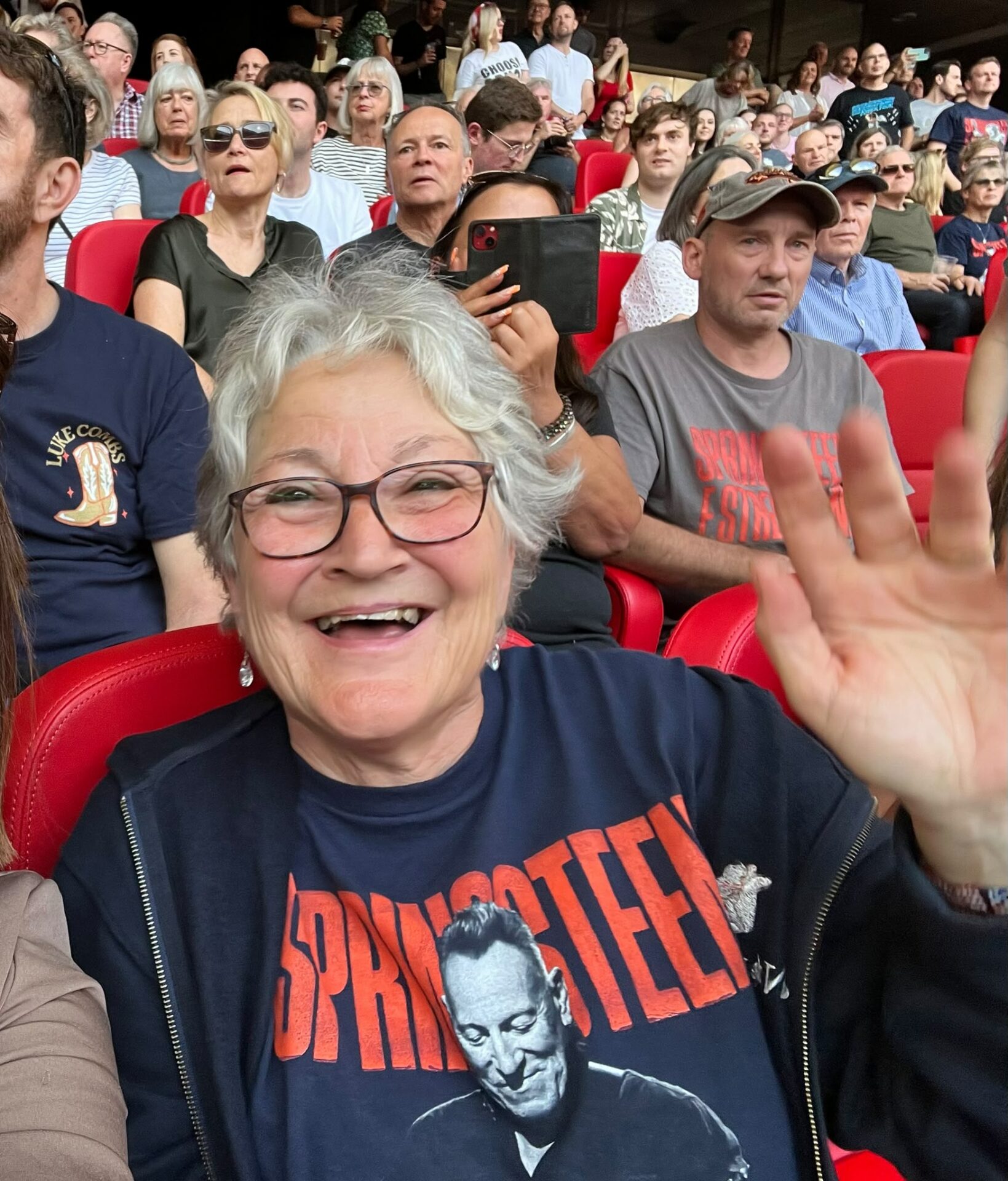
Nancy Evans has been to 17 Bruce Springsteen concerts across several European cities, including Werchter, Paris, and London. Credit: Supplied
The Tylkes have blended the two cultures in a different way. Their family moves comfortably between French and English, with their children and grandchildren having grown up in Belgium.
For each of them, it has never been about choosing one identity over the other. Instead, they've found ways to carry both with them.
The US political climate
Living abroad has also changed how many of them see the United States. "We thought we were keeping up with things, but we were really just tourists back in the United States," Paul said. "It wasn't the place that we had left all those years ago."
One of the biggest differences they noticed was in the changes to the country's political climate over the past decade – particularly since the election of President Donald Trump.
"There was a division," Paul said. "People were counter to each other."
Watching American politics unfold from Belgium has only deepened those concerns. The couple said there have been times when they felt reluctant to tell people they were American.
Yet they continue to follow events back home closely, shaped by years of returning to the United States each summer to stay connected.
Crosson said living overseas has similarly changed the way she thinks about immigration to the United States.
"It has taught me more patience," she said, "to better understand the life of immigrants in the United States."
Tylke said living abroad has given him a perspective he doesn't think he would have had if he'd stayed in the United States.
"I think living outside the United States makes it easier to see the pluses and minuses," he said.
'I felt very American'
Evans said moving overseas had the opposite effect to the one many might expect. Rather than weakening her connection to the her homeland, it strengthened it.
"As soon as I stepped out of the States," she said, "I felt very American."
Though their views of the United States are not all the same, each has been shaped by distance. What none of them describe is a simple relationship with the country they left behind.
On the Fourth of July, those different perspectives will matter less than the traditions that bring them together.
For Crosson, one of the best parts of celebrating American Independence Day in Belgium is sharing the holiday with friends who have never experienced it before.
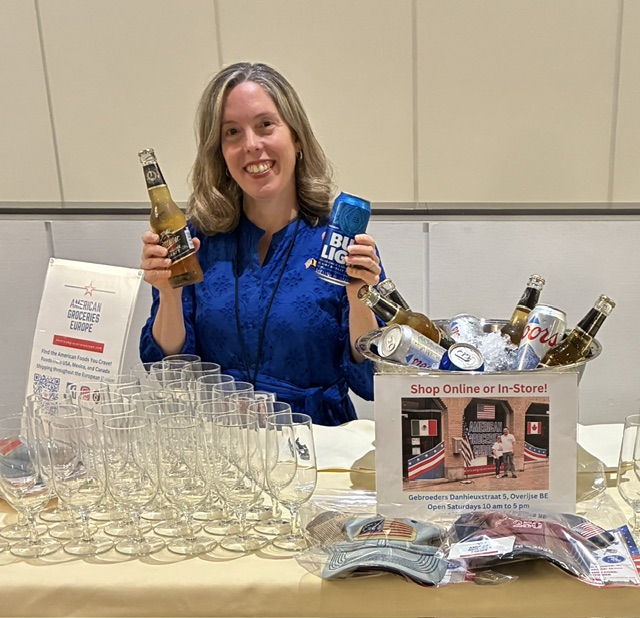
Kristen Crosson passes out American beers from her grocery company at the EU Parliament's celebration of America's 250th anniversary.
"They've seen it on TV. They've read about it in books, but they've never experienced it," she said. "I love sharing my culture with them."
By the time the last burgers come off the grill and families begin making their way home, the American holiday will have been about more than marking the country's 250th birthday.
For the Americans who stayed in Brussels, it is also about celebrating the community, friendships and traditions they have built here – proof that leaving your home doesn't always mean leaving it behind.
Related News
- Investigation into damage at Cinquantenaire Park following US July 4th party
- Two journalists removed from US party in Cinquantenaire Park: What happened?
- 'Let's ignore media noise': US marks 250th anniversary with celebrations in Brussels
- Why Trump's ambassador to Belgium insists everything is going perfectly
