
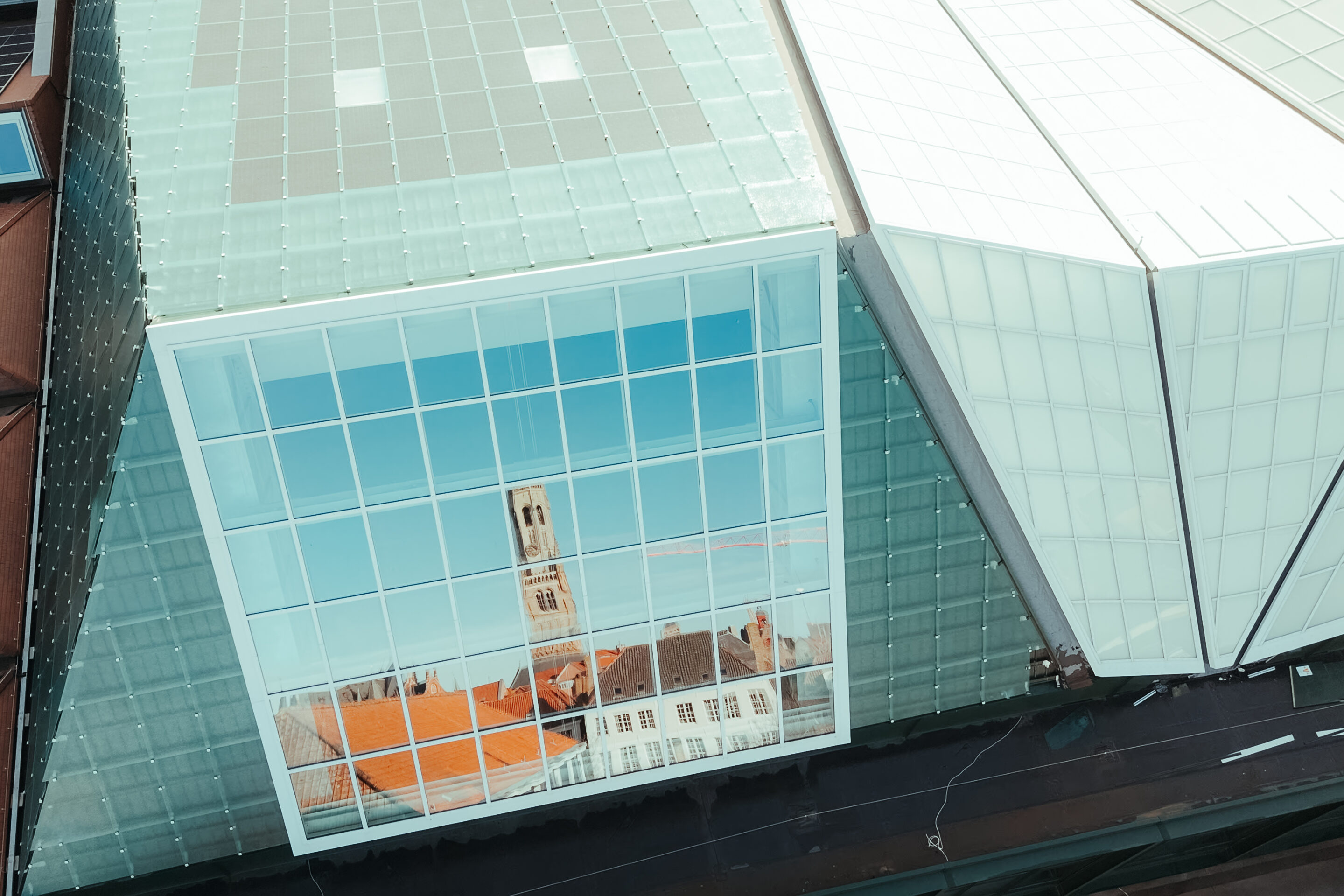
“We’re opening a new chapter in this heritage city,” said Bruges Mayor Dirk De fauw. “It will be a place where old and contemporary art challenge one another, where different stories and perspectives come together, and where art experiences are accessible to a wide audience.”
He was speaking at the much-anticipated opening in May of the BRUSK museum, after seven years of design, planning and construction. The new space gives the city two temporary exhibition halls to complement its permanent collections. While BRUSK can draw from Musea Brugge’s adjacent Groeningemuseum, it makes space for masterpiece loans from international museums and institutions as well as contemporary art.
Depending on the notoriety of featured artists or works, BRUSK could be a standalone attraction, but for most, it will probably serve as an additional attraction within the historic centre. The mayor hopes it will get the 8.3 million visitors per year to extend their stays as opposed to drawing more tourists.
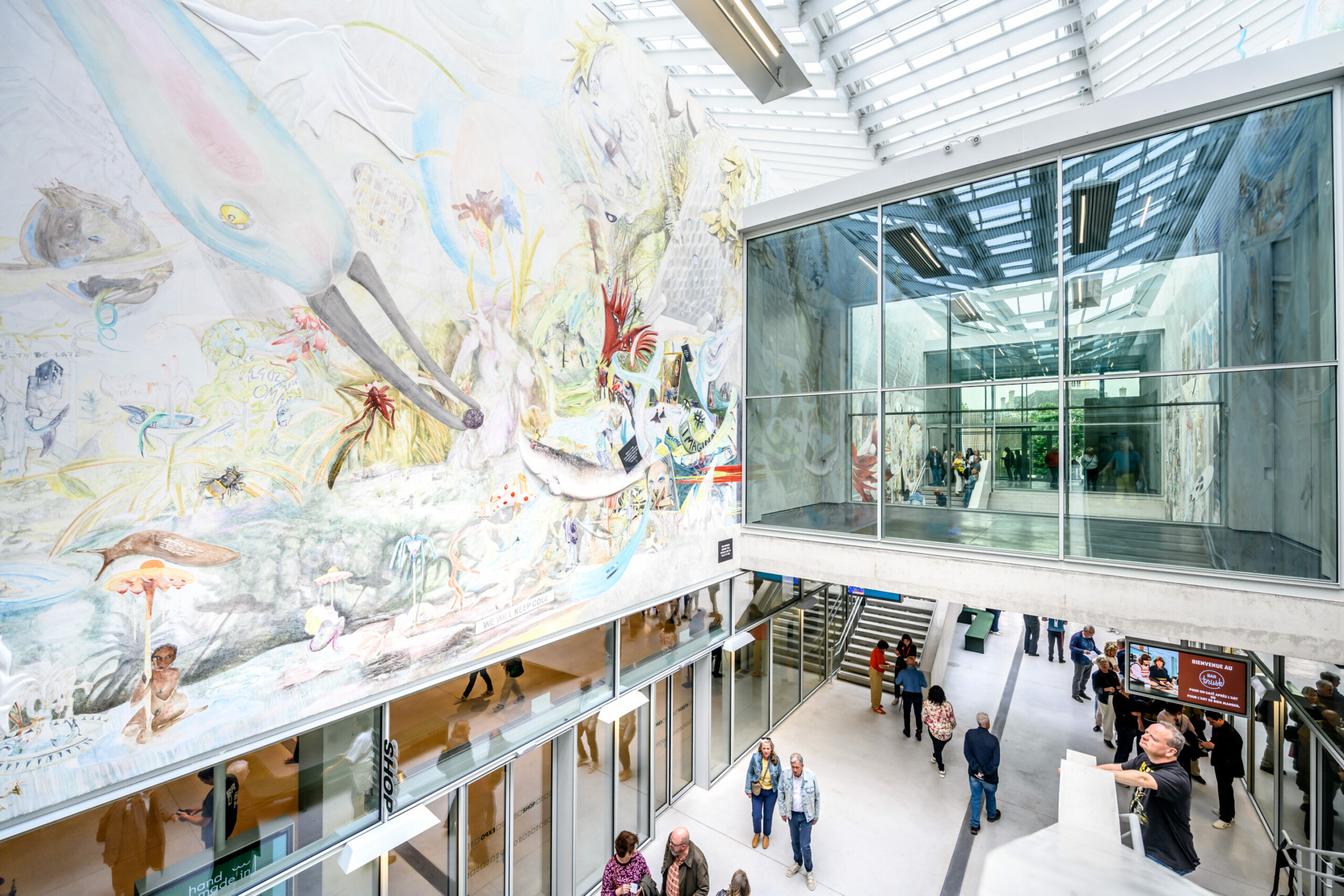
New BRUSK museum. Credit: Jan Darthet
BRUSK also reflects a broader ambition within Bruges to evolve beyond its image as a perfectly preserved medieval destination. While the city remains associated with brick Gothic buildings, canals and Flemish Primitives, officials increasingly emphasise contemporary culture and year-round programming aimed at residents as well as tourists.
Inside surprises
The monumental exhibition halls (1600m2 and 800m2) “offer exceptional possibilities while remaining flexible enough to accommodate a wide variety of exhibitions,” De fauw says. They are flanked by two glass galleries: one closed but visible for transporting artworks, the other open-air but covered for performances, installations and public activities facing the future park.
BRUSK also has a public gathering space with a 2,500m2 ground floor that is freely accessible, including a café (Bar Brusk, which stays open after museum hours), a shop, lockers and a light-filled passageway called the Scala.
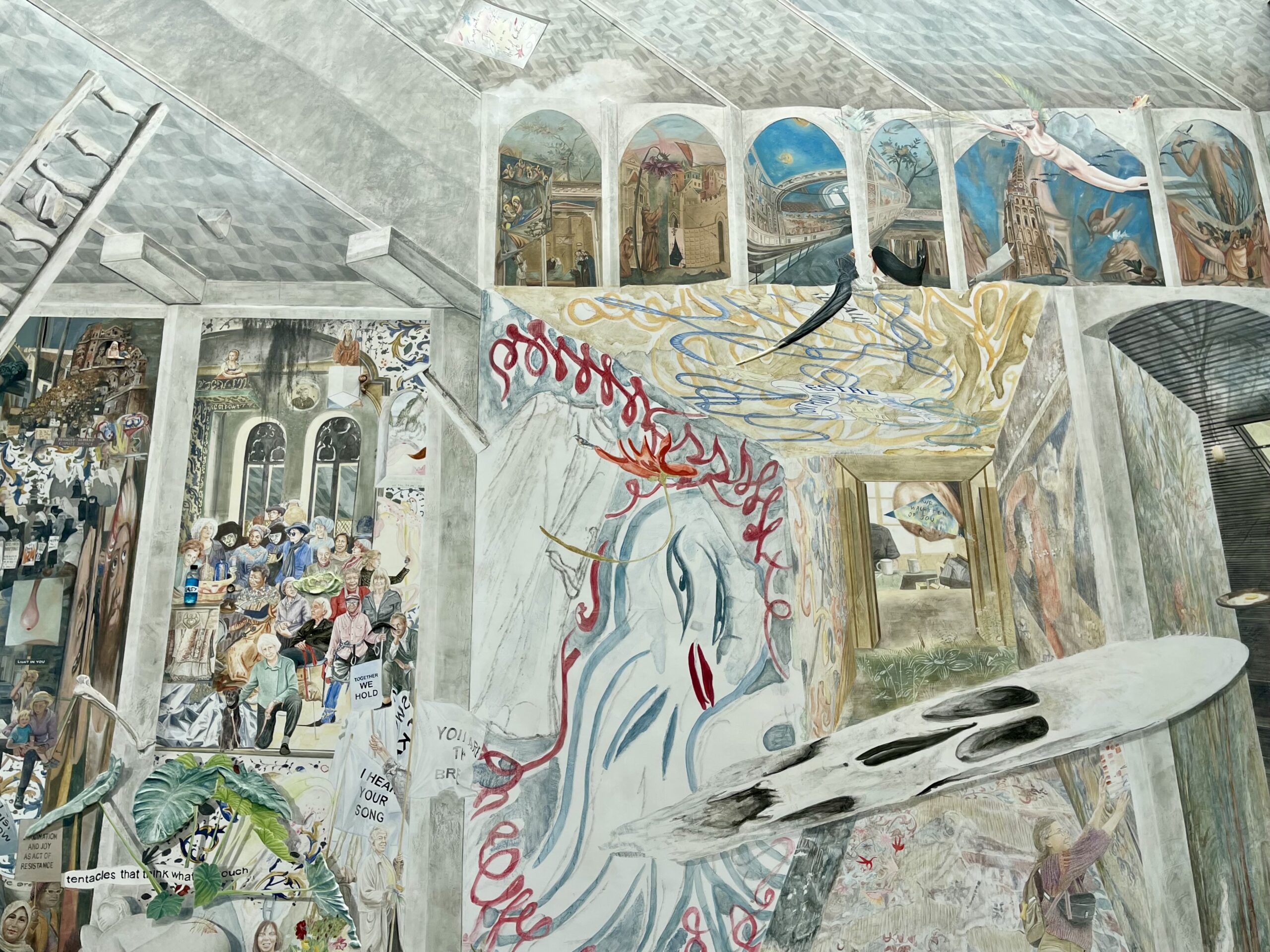
Laure Prouvost fresco at BRUSK. Credit: Angela Danby / The Brussels Times
De fauw says BRUSK will reinforce Bruges’ position as a city where heritage and innovation complement each other. “BRUSK should not only be a place for art lovers or international visitors, it should also be an open house for the people of Bruges,” he says.
Getting there is half the fun as BRUSK’s main entrance is accessed by a long passageway leading from a doorway opposite the city’s beguinage, past medieval houses to the modern building. Two other entrances connect to the Groeningemuseum and to the park that will be installed between 2028 and 2031.
Inside, the Scala features a monumental fresco in the central stair hall designed by Molenbeek-based Laure Prouvost, a French Turner Prize winner, called The Whispering Walls Rêve. It incorporates small mirrors, glass birds and bas-relief with visual nods to Dadaism and Alice in Wonderland.
Architecture
Rather than dominating the skyline, BRUSK reveals itself gradually. The route to it winds quietly past medieval brick façades and streets before opening unexpectedly onto soaring glass and steel volumes. That sense of discovery is intentional: visitors move from the enclosed backdrop of old Bruges into a bright contemporary space filled with transparency and light. The transition mirrors the museum’s broader ambition to connect the past and present.
“The building has been designed as a place for meeting, connection and creativity,” says De fauw. “Now we show, without any opposition against it, that we could build something totally new in this historical city.”
Opening exhibitions
Until autumn, BRUSK is featuring the exhibitions, Bigger Picture (see following pages) and Latent City, which contrast sharply in age and style. The former examines the origins of Bruges’ international identity from the year 990 to 1550, while the latter features AI-driven digital art.
“We bring together elements that at first glance do not belong together with the intention that they find each other,” says BRUSK Director Kristi Strubbe.
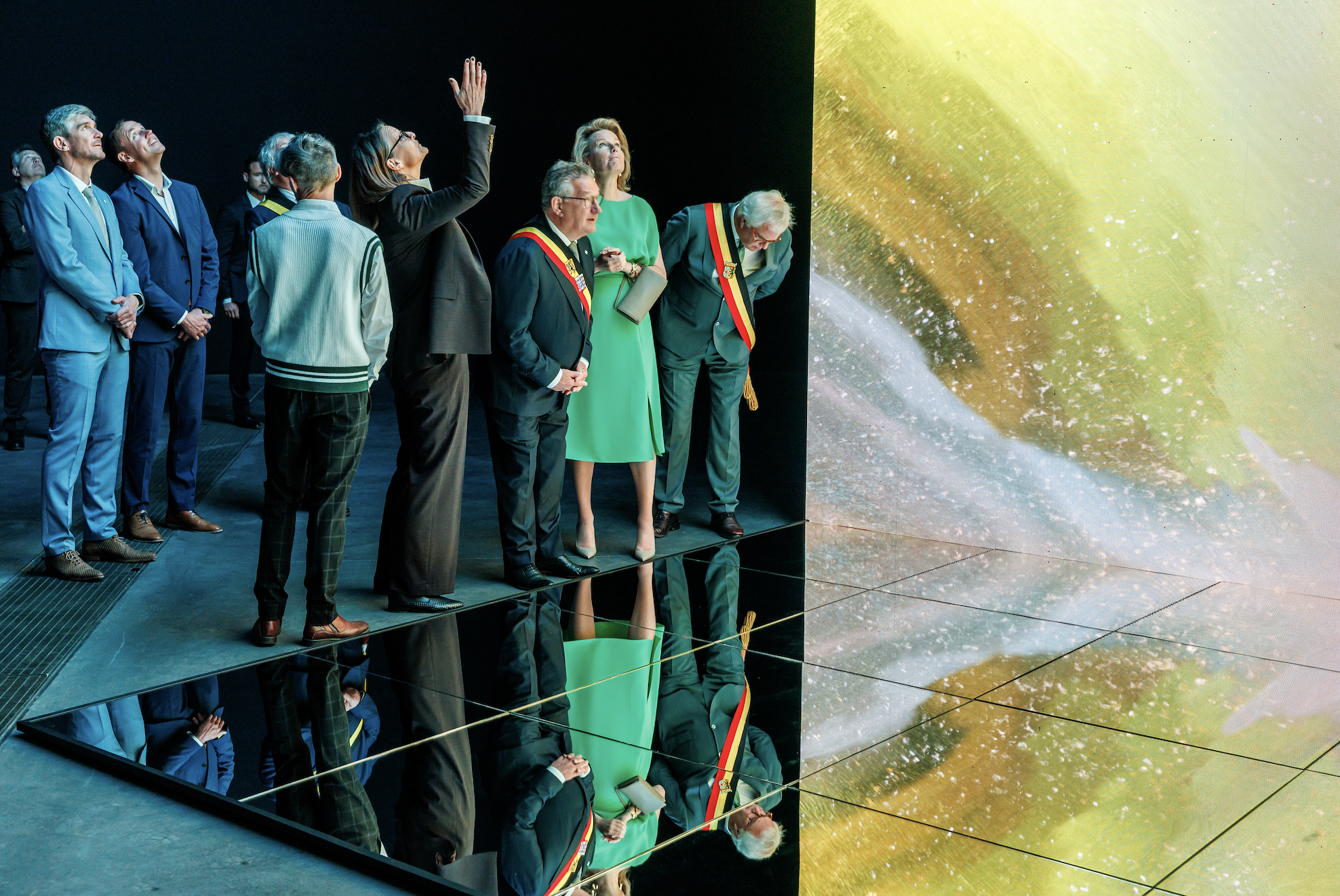
Brugge mayor Dirk De fauw, Queen Mathilde of Belgium and West-Flanders province governor Carl Decaluwe pictured during a royal visit to the BRUSK arts center in Brugge, Monday 04 May 2026. Credit: Belga / Kurt Desplenter
Bigger Picture looks at the links between old Bruges, Scandinavia merchants, crusaders from Jerusalem, Ottoman Empire diplomats and Islamic world scholars, while Latent City is a Belgian premiere by Turkish-American digital art pioneer Refik Anadol, who uses data as ‘pigments’ to create continuously evolving digital paintings. For Bruges, Anadol input hundreds of thousands of historical and current images to create a ten-metre-high sculptural screen displaying an infinity of colours and motion.
BRUSK is already more than its opening billing suggests. Exhibitions will turn over seasonally, and from 2027, it will absorb highlights from the Groeningemuseum during that building's four-year renovation. A city sometimes accused of being too picturesque for its own good has, with a single building, made a forceful argument to the contrary. The medieval stage is still standing. The performance, at last, has changed.
