

Belgian self-employed workers do longer hours than employees and are burning out at a faster rate, with a new survey highlighting why.
According to a new survey of freelancers released this week by Xerius, a fifth of self-employed workers (21%) did not go on holiday last year, and for those who did, the amount of time off falls short of what employees take,
Financial pressures cause a sizeable share of freelancers to avoid taking leave. The consequences can be seen in the increasing numbers claiming work incapacity payments for depression and burnout.
"Our findings show that entrepreneurs who take little or no holiday tend to be more vulnerable. They are more likely to face financial pressure and have less room to genuinely recover and recharge."
"That is also the central tension in this research: self-employed people say they need holidays to rest, recharge and disconnect," Youssef Deconinck, spokesperson for Xerius told The Brussels Times.
"But at the same time they face very concrete barriers such as financial uncertainty, responsibility towards clients and the fact that there is often no one to take over their work," said Deconinck.
Their survey shows that while the majority of self-employed people (58%) took at least one vacation last year, this masks behaviour that undermines the need for rest. For example, 4 in 5 freelancers agree they work occasionally on public holidays, while 2 in 3 work on 'days off'.
"As a freelancer myself, I never really put on a full out-of-office. I usually keep an eye on my inbox and deal with anything urgent to stay on top of things," Jenny Bjorklof, Community Leader for the Freelancers in Belgium network, told The Brussels Times.
"That said, I do think fully disconnecting is the ideal if you can make it work. It is good for your energy, creativity and long-term productivity. So I aim for something in between: enough attention to keep things under control, but enough distance from work to genuinely recharge."
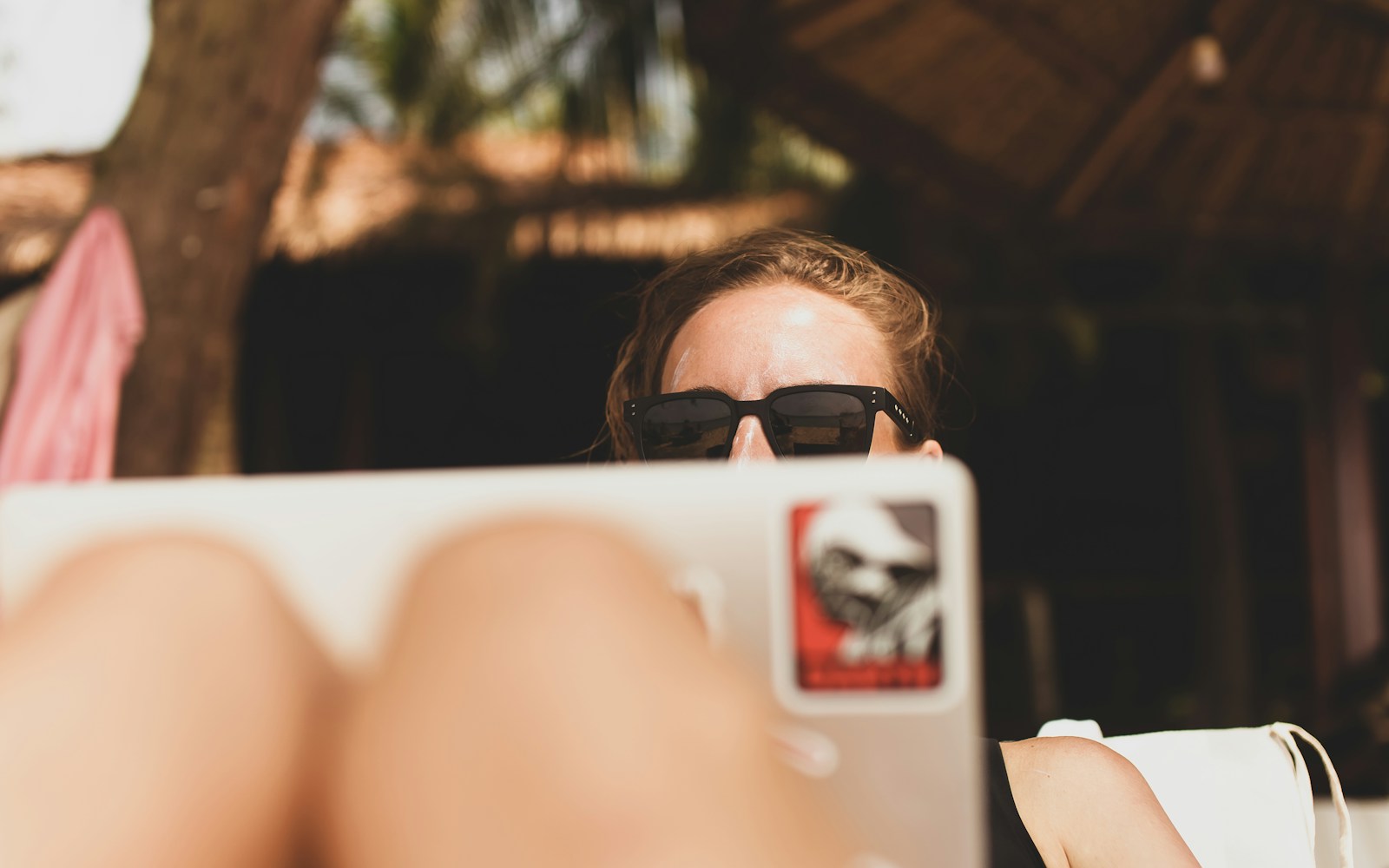
Credit: Anton Shuvalov
Fewer days off and longer hours than employees
Xerius' survey shows that, on average, self-employed workers take 21 days off a year, on average split into 15 days for a vacation and 6 individual days off each year. This falls short of the 30 days for full-time employees.
In addition to taking less time off, self-employed workers work longer hours than employees.
The Brussels Times' previous analysis of Eurostat data showed that Belgian self-employed workers did an average of 42.2 hours a week, compared to 34.1 hours for employees, the largest gap between freelancers and workers in the EU.
Many self-employed workers recognise the need to take time off, According to Xerius, 86% agreed that they need the time off to recharge their batteries or switch off, and 78% consider it very important to take a holiday. However for mainly financial reasons, many can't go on leave.
Young freelancers are mostly affected by this, 90% of those under-26 and 76% of those aged 26 to 35 say that financial uncertainty is their biggest barrier to taking more holidays.
Overall, self-employed workers cite issues to do with a potential loss of revenue, not having someone to take over the work, assumed client expectations that they will always be available, and the cost of a holiday, as reasons they can't take a break.
Bjorklof recognises this pattern especially among freelancers with multiple clients. "More entrepreneurial freelancers are also responsible for sales, client relationships, visibility and keeping the business moving."
"For them, disappearing completely can be much harder. Clients still have questions, opportunities do not always wait, and financially it is not always possible to take several weeks fully off," Bjorklof said.
A 'clear link between holidays and mental health'
The precarious nature of self-employed work and the challenges in achieving a good work-life balance are highlighted by Xerius's survey. These also come with consequences for mental health.
"We see a clear link between taking holidays and mental wellbeing. Entrepreneurs who regularly switch off also feel happier in their work," according to Deconinck.
The link between a lack of time off work and mental wellbeing can be seen in official statistics.
According to data from the National Institute for Health and Disability Insurance (RIZIV), the self-employed are those with the highest increase in claiming 'incapacity to work for depression or burnout'. In 2024, these payments increased 14.2% for self-employed workers compared to a 7.1% increase for employees and jobseekers.
Over the 2019 to 2024 period, which included the Covid-19 pandemic, incapacity to work payments increased 71.2% for self-employed workers for depression and burnout, against 42% for employees.
Bjorklof polled the Freelancers in Belgium network which showed that most preferred to take several short breaks throughout the year rather than one or two big holidays.
"That makes me wonder if the challenge isn't wanting to take time off, but actually being able to disconnect." She advises freelancers to create systems and processes and to use automation to reduce reliance on a physical presence, as well as documenting recurring tasks so that someone else can step in if needed.
More importantly freelancers need to "build a financial buffer over time. Having the freedom to say "I'm unavailable this week" is one of the biggest luxuries of a sustainable business."
