
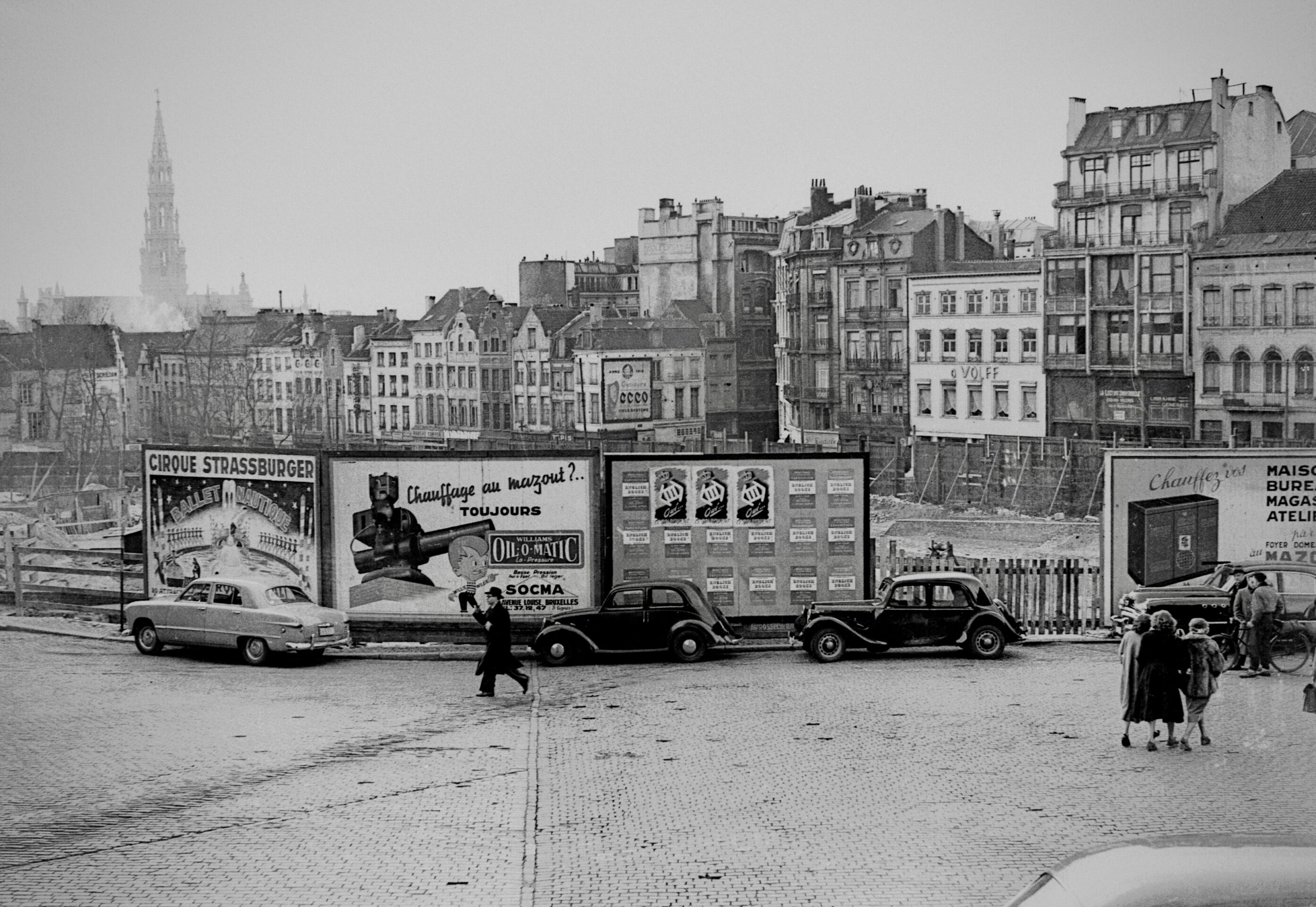
On October 4, 1952, a young King Baudouin descended into the new Brussels-Central station and inaugurated what was hailed as a triumph of modern Belgium. Beneath the city lay a railway link just 3.5 kilometres long. Above it stretched broad new boulevards, gleaming public buildings and a vision of a capital fit for the post-war age.
The North–South Junction looked deceptively simple. Connect Brussels-North and Brussels-South. Allow trains to pass through the city instead of stopping at either end. Create a central station in the heart of the capital. Improve mobility. Modernise Belgium.
In principle, it was an elegant solution to an obvious problem.
In practice, it became one of the largest, longest and most controversial infrastructure projects in Belgian history.
The Junction took more than four decades to complete. It survived two world wars, political disputes, financial crises and repeated redesigns. It demolished entire neighbourhoods, displaced thousands of residents and transformed the geography of Brussels more profoundly than perhaps any other 20th century project. When it finally opened, it was both an engineering triumph and an urban wound.
Today, millions of passengers hurry through it without a second thought. Yet the story of the North–South Junction is, in many ways, the story of modern Brussels itself.
An idea almost as old as Belgium
The need for a connection emerged almost as soon as Belgium acquired railways. The country's first line opened in 1835 between Brussels and Mechelen. As the network expanded, Brussels acquired major stations to the north and south. But they were terminus stations. Trains arrived, stopped and could go no further.
For passengers, the arrangement was inconvenient. Travellers heading from Antwerp to Mons or Ostend to Liège often had to cross the city between stations. For railway operators, it was inefficient and increasingly impractical as traffic expanded.
By the late 19th century, Belgium had one of the world's densest railway networks. Brussels sat at its centre, yet the network's hub remained strangely disconnected.
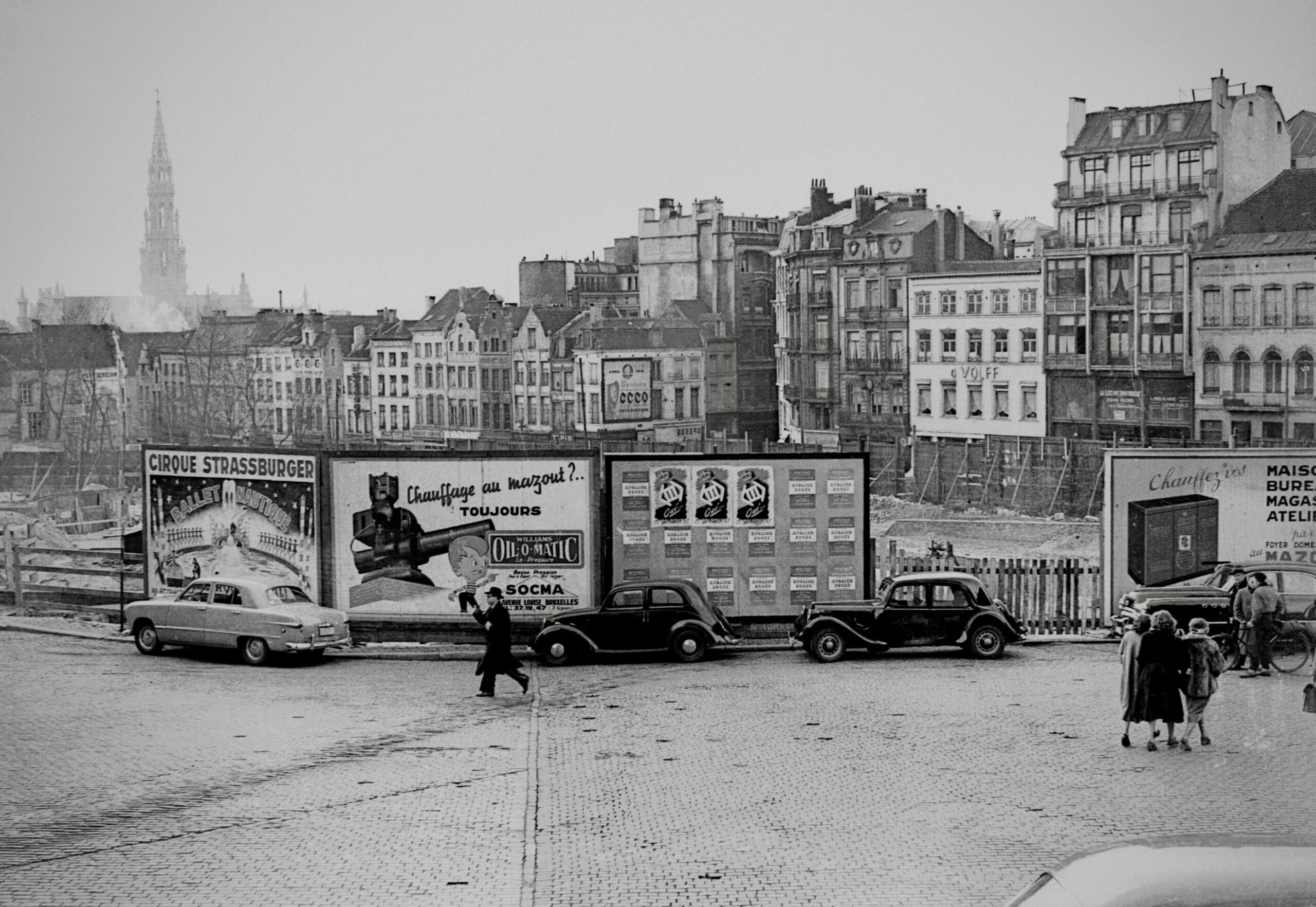
The media campaign for and against King Leopold III return here on the North - South junction (Central Station) construction site in Brussels. Credit: Belga Archives
Plans proliferated. Engineers proposed tunnels, viaducts and surface routes. Committees met. Reports accumulated. The fundamental logic remained irresistible: the capital needed a through railway.
After decades of debate, parliament finally settled on a largely underground route designed by railway engineer Frédéric Bruneel that would take the line under the Botanical Gardens, the Cathedral and the Notre Dame de la Chapelle church. The scheme would not only link the Brussels North (Nord/Noord) and Brussels South (Midi/Zuid) but also create a grand central station in the middle of the city. It was eventually adopted in 1903, although work only began in 1911.
Cutting through the city
The railway challenge was complicated by geography.
Brussels is a city built on a slope. The Upper Town, home to royal and administrative institutions, sits significantly above the historic Lower Town around the Grand-Place and Senne valley. The chosen route followed the hillside between the two, avoiding major monuments while maintaining workable railway gradients.
Yet the solution carried a price.
The line could not run straight. The North and South stations were not perfectly aligned, forcing engineers to create the distinctive curve still visible today. That curve cut through some of the city's oldest and most densely populated districts.
What followed was not merely a railway project but an act of urban surgery.
Entire neighbourhoods disappeared beneath excavators and demolition crews. The Putterie district, a lively working-class quarter that occupied the future site of Central Station, was largely erased. Medieval streets vanished. Historic buildings were demolished. Gothic cellars and remnants of old Brussels disappeared beneath rubble.
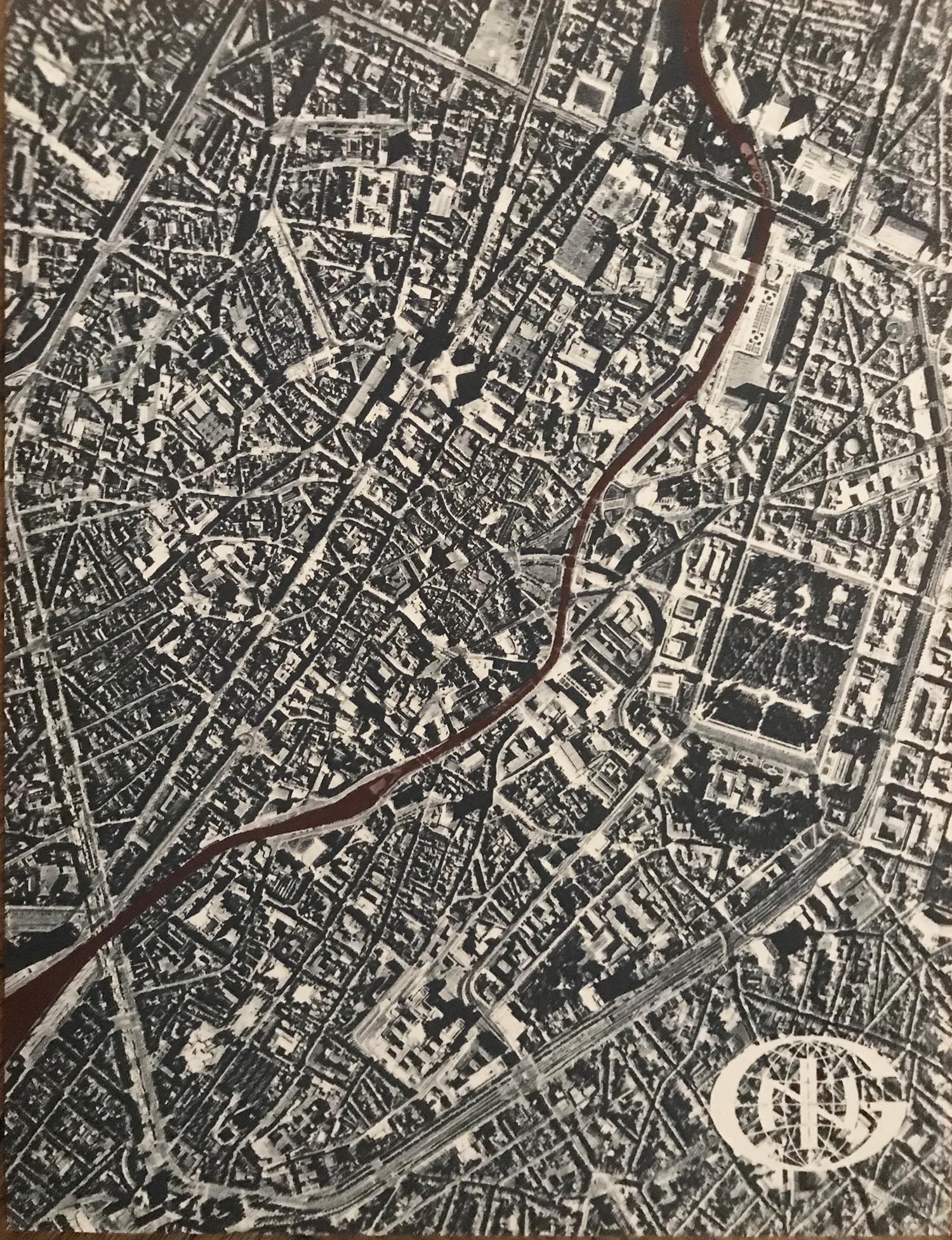
Map of the route of the North-South Junction from the air
More than 1,000 buildings were eventually destroyed. Around 12,000 to 14,000 residents were displaced. Seventeen hectares of dense urban fabric disappeared.
Some contemporaries applauded the destruction. The old neighbourhoods were often dismissed as overcrowded, unhealthy and outdated. Modernisation, they argued, demanded sacrifice. Others regarded the project as vandalism on a metropolitan scale.
Interrupted by history
If the demolition was dramatic, the delays became legendary. Prime Minister Charles de Broqueville confidently expected completion by 1915. Then came the First World War. Work stopped almost immediately.
After 1918, Belgium faced the enormous task of national reconstruction. The Junction increasingly appeared an expensive luxury. Critics questioned whether it should proceed at all. Others argued about electrification, route changes and station design. Political consensus evaporated.
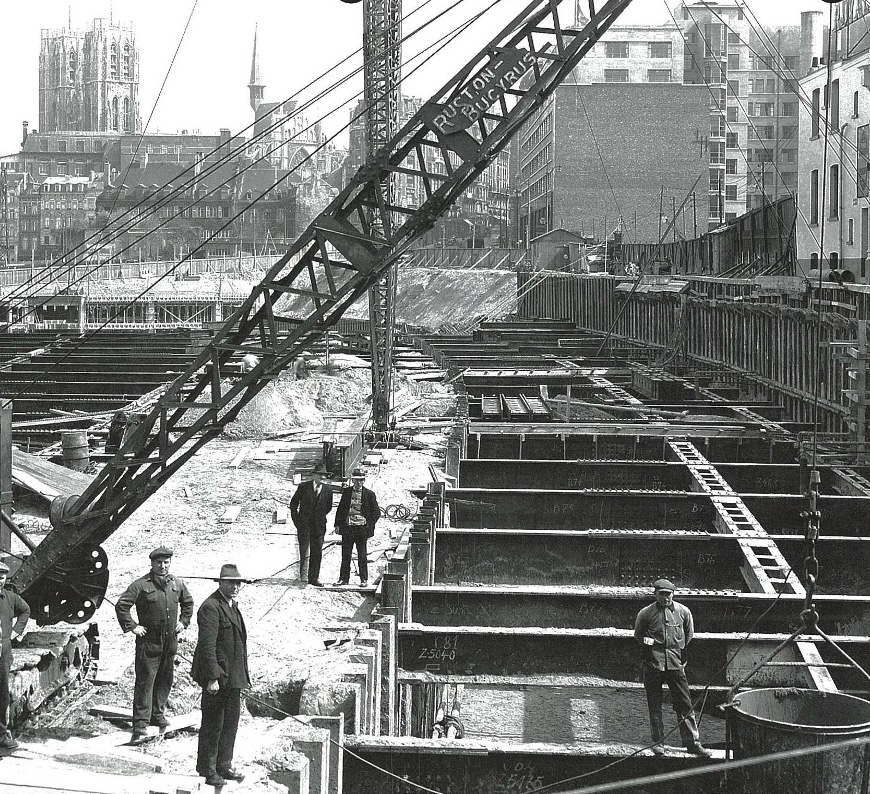
Construction works for North-South junction, with the Cathedral tower in the background.
For years, Brussels lived with a half-built scar running through its centre. The Great Depression unexpectedly revived the scheme. Public works offered employment. Railway traffic continued to grow. In 1935, the government created a dedicated National Office for Completion of the North–South Junction to finally push the project forward.
Construction resumed. Then came another interruption. The Second World War halted progress once more.
Only after 1945, aided by post-war reconstruction and broader investment programmes, did the project move decisively towards completion. By then, generations of Brussels residents had grown up surrounded by construction sites for a railway that still did not exist.
Building a new capital
The Junction was never simply a railway. It became a blueprint for a new Brussels.
The old North and South stations were replaced with entirely new facilities, set further back to accommodate the through-running tracks. Between them rose the long-awaited Central Station (Centrale/Centraal), originally designed by Victor Horta and completed after his death by Maxime Brunfaut. There were also the rarely-used Congress (Congrès/Congres) and Chapel (Chapelle/Kapellekerk) stations.
The engineering figures were extraordinary. Millions of cubic metres of earth were moved. Massive reinforced concrete structures were installed. Deep cut-and-cover tunnels were excavated beneath the city. Workers battled unstable ground and groundwater using innovative engineering techniques.
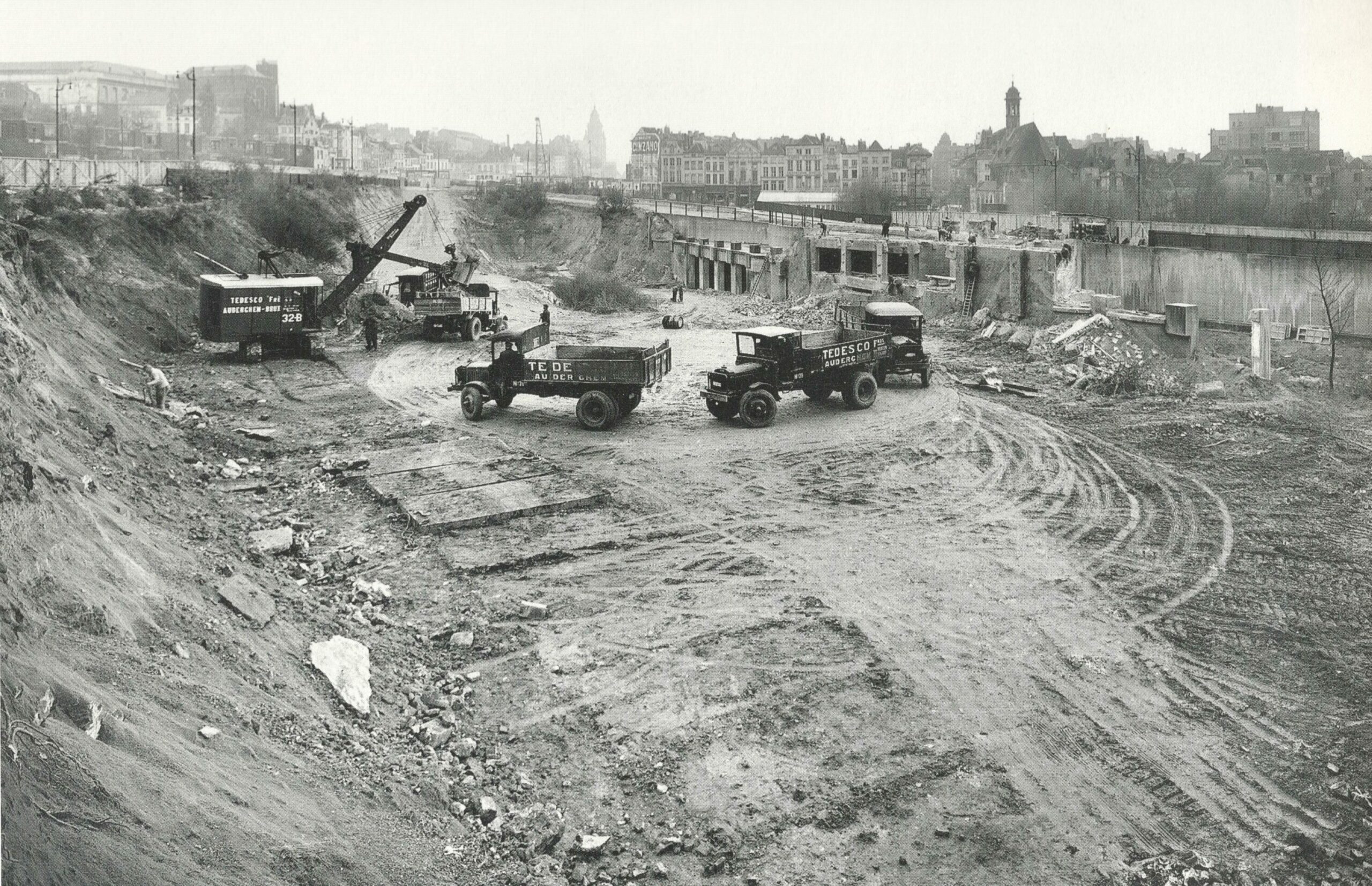
Clearing the ground during the works for the North-South junction in 1950 near the Central Station. Credit: Belga
Above ground, an entirely new urban landscape emerged.
Broad boulevards swept across the city centre. Government buildings, administrative complexes, corporate headquarters and public institutions filled the cleared land. The Royal Library, Royal Archives, and a convention centre rose in the Mont des Arts/ Kunstberg area, while the Centre for Fine Arts (now Bozar) and the vast Cité Administrative rose where older neighbourhoods once stood.
The new axis embodied post-war confidence. Wide roads, tunnels and viaducts accommodated the car. Modern offices symbolised economic progress. Administrative power concentrated along the route.
Yet critics argued that the project created a barrier as much as a connection.
The broad boulevards effectively deepened the divide between the Upper and Lower Town. Communities that had evolved over centuries were severed. The city centre increasingly became an administrative district rather than a mixed urban neighbourhood. In connecting Belgium's railway network, the Junction arguably disconnected parts of Brussels itself.
When the line finally opened in 1952, however, its operational success was immediate. Within days, more than 1,100 trains and 135,000 passengers had used the new route.
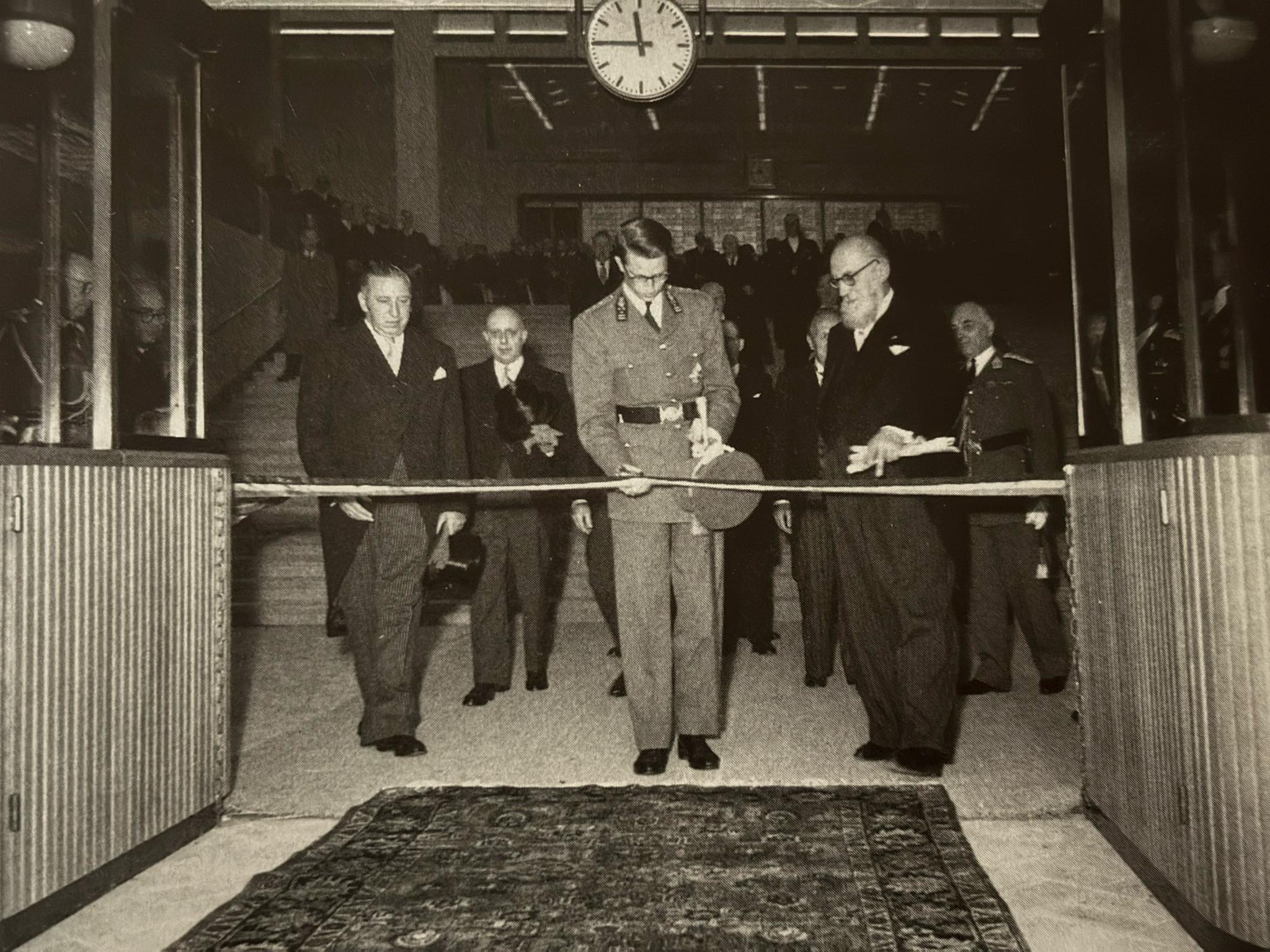
King Baudouin opening the new Brussels-Central station in 1952.
For the first time, trains could cross Brussels seamlessly. Antwerp–Brussels–Mons. Ostend–Brussels–Liège. International services. Commuter traffic. Everything converged through the six tracks beneath the capital.
Unlike London or Paris, where many railway lines terminate at separate stations, Brussels acquired a through-running system that delivered passengers directly into the city centre. It was a remarkably efficient arrangement.
And perhaps too efficient. Success created dependence.
Today, roughly a quarter of all Belgian rail passengers pass through the Junction. More than 1,200 trains use it daily. It remains one of the busiest railway bottlenecks in Europe. When a train breaks down in the tunnel, disruption ripples across the national network. The project designed to solve a national transport problem has become one of the network's greatest vulnerabilities.
The north-south city
There is a curious symmetry to Brussels. The railway Junction runs north to south. The pre-metro tram tunnels broadly follow the same orientation. Long before either, the Senne river traced a similar path through the city. Nearby, the canal connects north and south as well. Each generation has imposed its own linear infrastructure on the same geography.
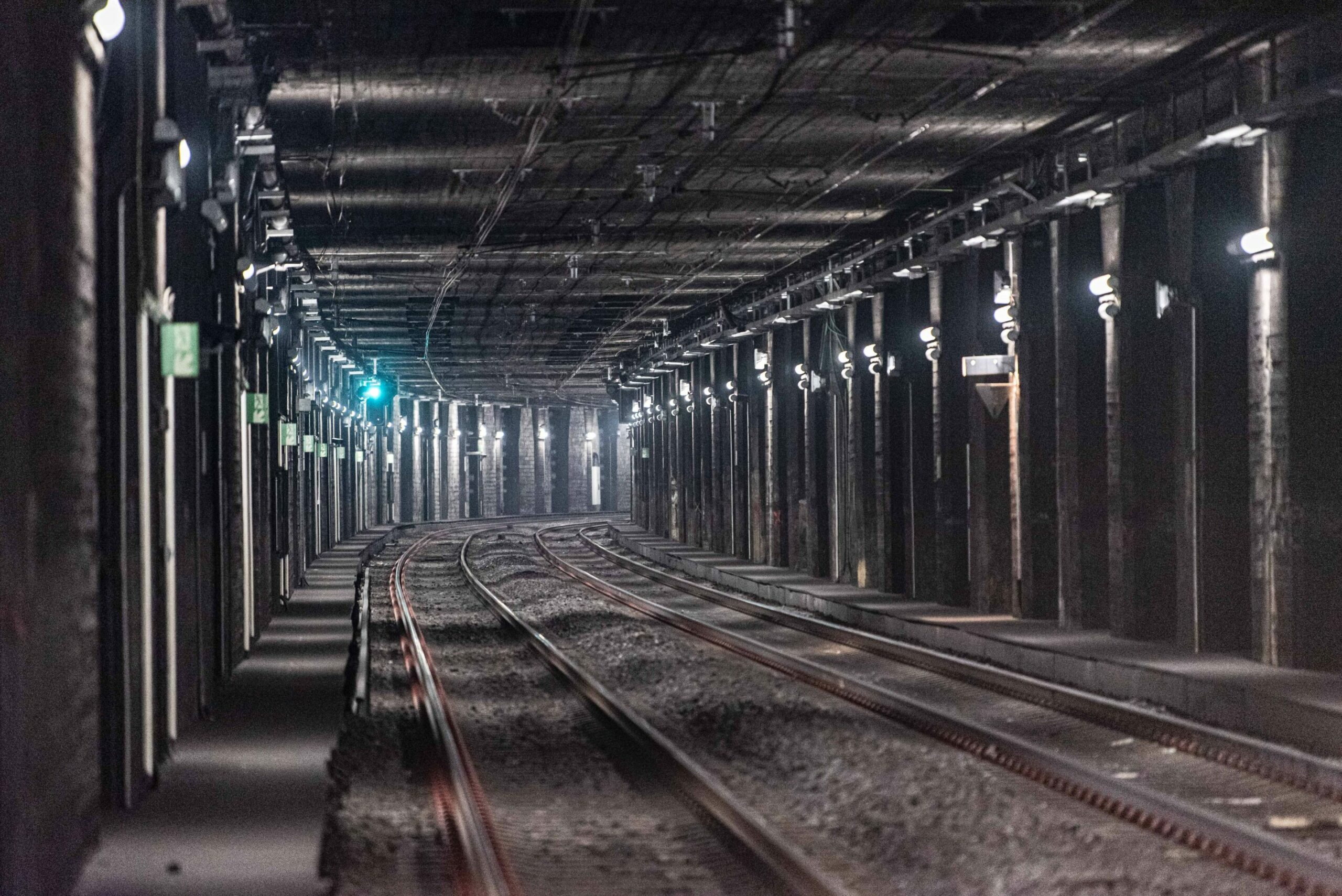
A general view inside of the tunnel network is seen during a tour of the major works in the North-South junction tunnels in Brussels, organised by Infrabel, on Friday 06 March 2026. Credit: Belga / Jonas Roosens
The North–South Junction was perhaps the most ambitious of them all. It remains a monument to a particular vision of progress: one that believed cities could be rationally reordered through engineering, that mobility justified disruption, and that the future could be built with concrete, steel and determination.
The results remain visible everywhere. In the stations millions use every year. In the sweeping boulevards above the tunnel. In the missing streets and vanished neighbourhoods. In the altered skyline.
When King Baudouin cut the ribbon in October 1952, Belgium celebrated a railway achievement decades in the making.
What opened that day was more than a transport link. It was the physical expression of a country reshaping its capital — and, in the process, reshaping itself.
