
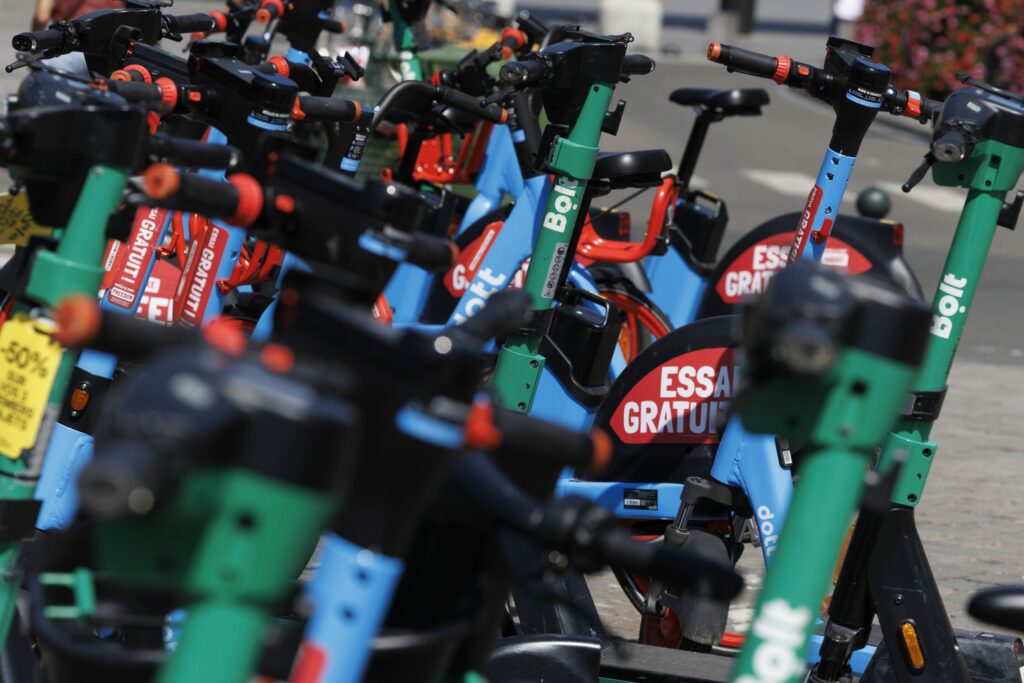
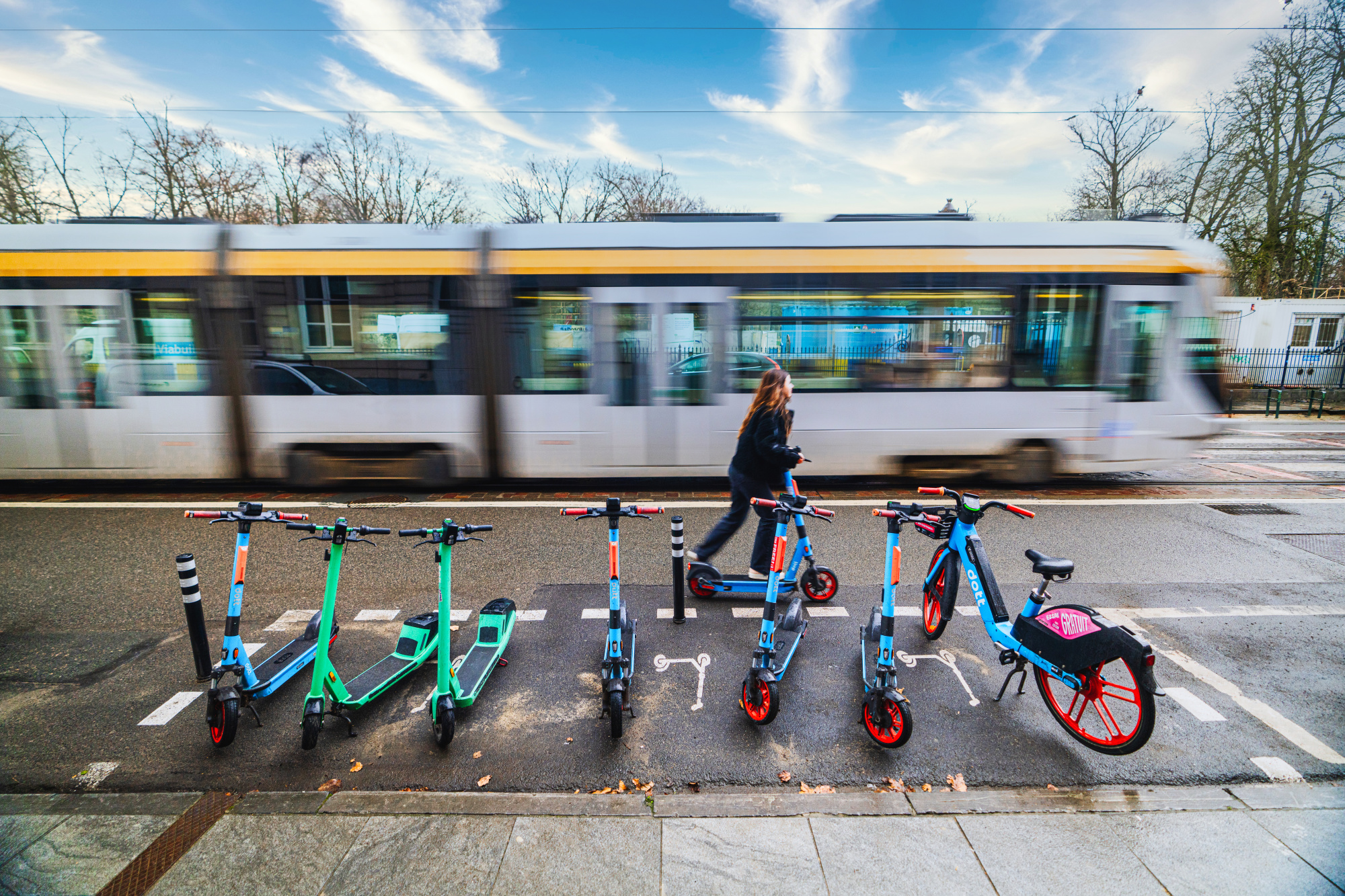
Some may be breathing a sigh of relief as shared e-scooters will be taken off the streets of the Brussels-Capital Region by 1 September. Others will be sighing in frustration.
In June, the Brussels Government decided to ban electric shared scooters from the streets from 1 January 2027. But last week, the Council of State ruled that the plug must be pulled much more quickly – "as soon as possible" even.
However, it seems like the authorities are giving providers Dott and Bolt until 1 September to remove their e-scooters.
What is really going on with the most controversial way to get around the city?
Residents embrace the system
When shared e-scooters showed up on Belgian roads back in 2018, Brussels residents embraced the system. With an app, people could always find a scooter nearby, which they could leave anywhere.
However, after years of unclear rules, scattered scooters, plenty of accidents and general nuisance, the initial enthusiasm quickly turned to frustration for many. Recently, the city's drug gangs have started employing them as getaway vehicles during shootings and drug deals.
Injuries and ID checks
Since the end of last year, those wanting to use an e-scooter in Brussels have had to complete a mandatory identity verification check before the vehicle can be activated – something that many called the final nail in the coffin of a system that had already been under fire for some time.
The city had previously introduced designated drop-off zones and an automatic speed limit (20 km/h in the entire region, and 8 km/h in the pedestrian zone). However, these measures appeared to have little effect.
The region recorded a sharp increase in accidents involving e-scooters: 666 people were injured in incidents involving electric scooters in Brussels in 2025 – a 26% increase compared with the previous year. Authorities argue that the design of e-scooters also contributes to the severity of injuries. Unlike bicycles, riders are more likely to suffer head and facial injuries when accidents occur.
Brussels is not the first European city to take the step to ban the vehicles. Shared e-scooters have already been removed from the streets of Paris, Madrid and Prague.
Credit: STIB
Licensing battles
Still, the nuisance was not the reason for the earlier-than-planned disappearance of the scooters. Instead, it is the result of a licensing battle between the multinationals providing the scooters.
The case before the Council of State was brought in 2023 by Lime. The operator missed out on a licence when Brussels decided to limit the number of providers to two, and picked Bolt and Dott.
Lime took that decision to court, claiming that it was insufficiently justified and based on a partly unlawful resolution. The Council of State ruled in Lime's favour.
However, the ruling did not grant a licence to Lime, but declared the existing licences of providers of shared e-scooters and free-floating shared bikes (which do not have to be returned to a fixed station) null and void. It concerns operators Bolt, Dott and Voi.
Letting the dust settle
A meeting is scheduled in mid-August between the regional authorities and the operators, including Lime. The aim is to examine the Council of State's ruling together and seek solutions.
"We need to find a solution with the operators," François Descamps, spokesperson for Brussels Mobility Minister Elke Van den Brandt (Groen), told The Brussels Times. "If an agreement is reached, we will begin a new transitional phase until the ordinance is finalised."
Until now, there was a deadline of 31 December, as the operators' licences remained valid until the end of the year before expiring in 2027. However, following the Council of State's decision, those licences no longer exist.
"That means that there is no longer a precise deadline by which the ordinance must be finalised," Descamps said. "When the dust has settled, we can discuss with all partners what everyone wants and what the way forward is."
What about e-bikes?
Voi stressed that maintaining the bike-sharing scheme in the capital must be a priority. Specifically, the company is asking whether it can continue its services until a new tender is issued. Exactly when that will be remains to be seen.
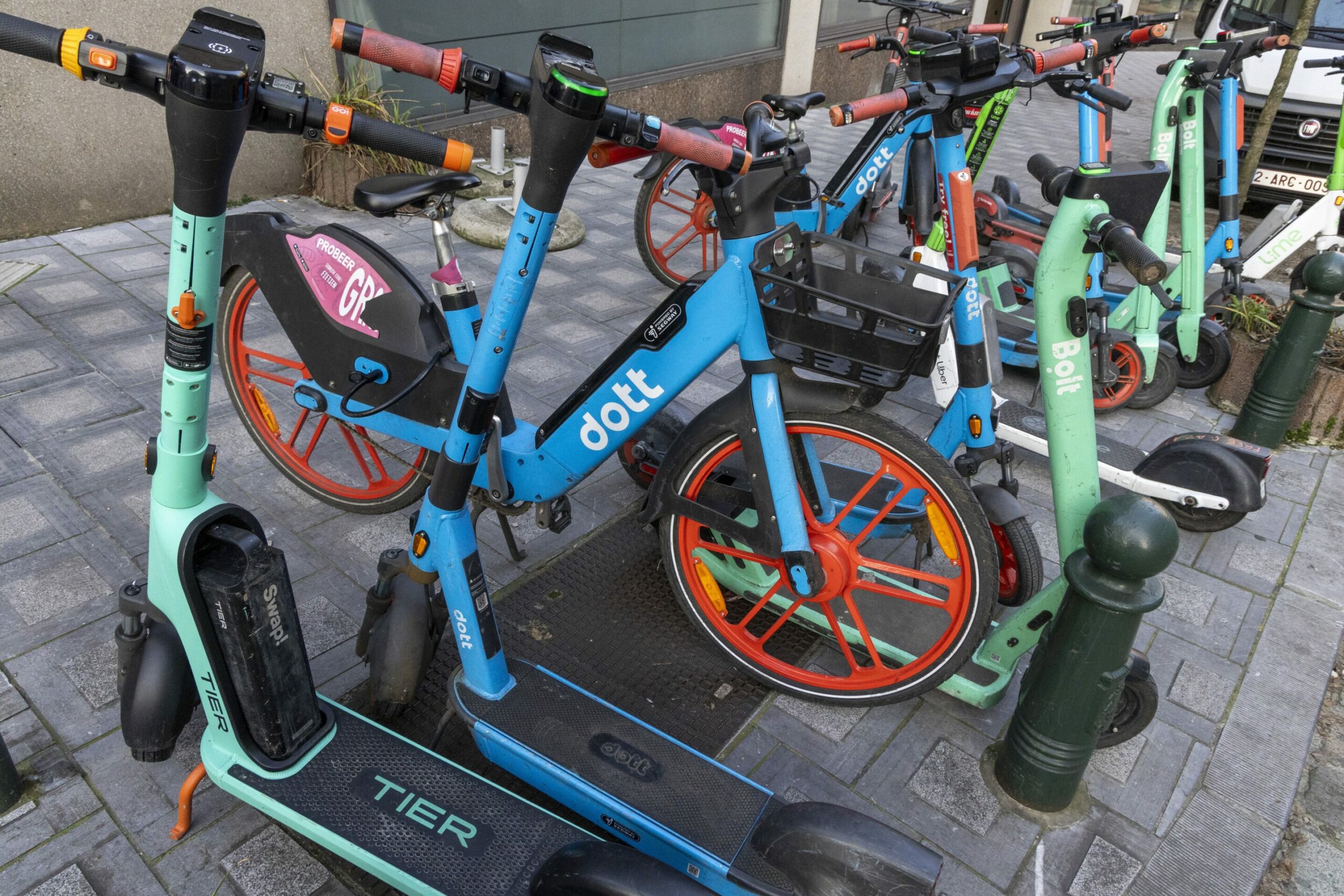
Electric scooters pictured in Brussels. Credit: Belga / Nicolas Maeterlinck
Within the government, it appears that the intention remains to remove the shared scooters as quickly as possible, while allowing the shared bikes to stay.
In the best-case scenario, this would mean that bikes from Bolt, Dott and Voi could remain, and that bikes from Lime might be added, The Brussels Times has learned. Whether the best-case scenario will be possible, however, is not certain.
If no compromise can be reached within the sector, there is a possibility that free-floating shared bikes might not return at all. Many fear that this could leave a significant gap in Brussels' transport system.
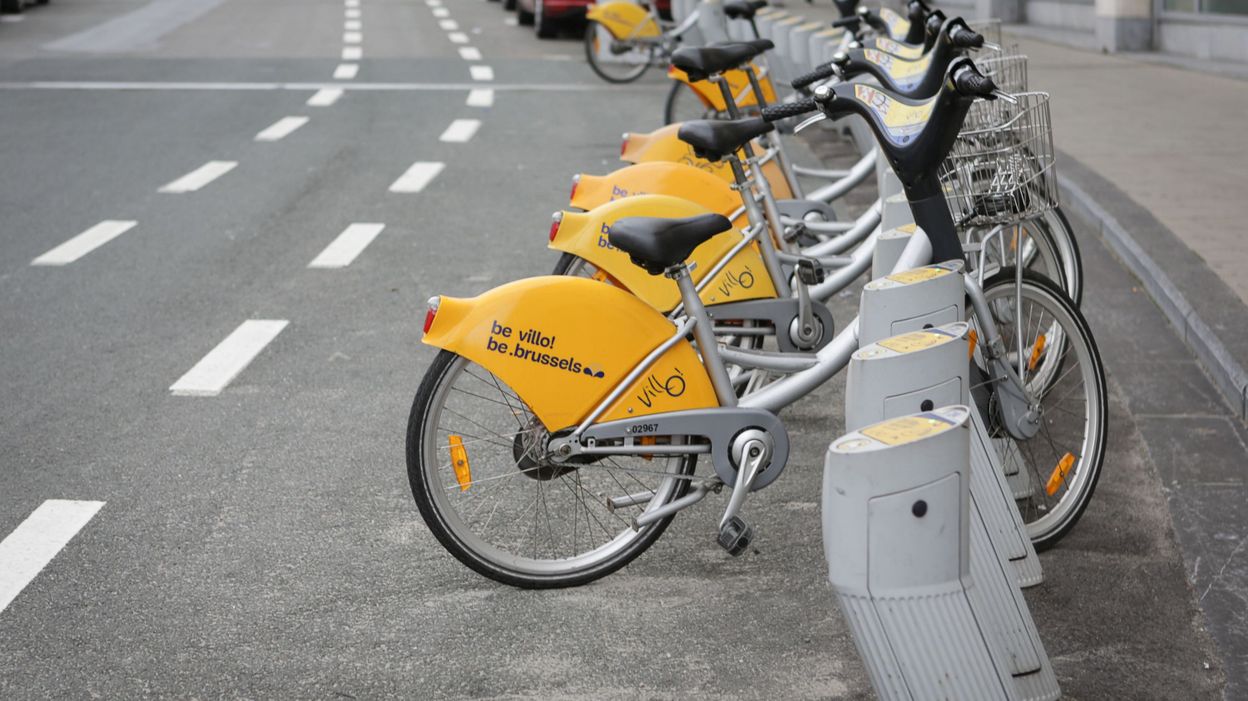
Meanwhile, the region's Villo! shared bicycle system will get an update, but not until autumn 2028 – two years later than expected. They are currently operated by JCDecaux, but the licence will also expire in September this year.
Key part of transport mix
Shared e-scooters are also deeply embedded in Brussels' transport mix: they were used by nearly 800,000 users for almost 10 million journeys last year.
In response to the Brussels Government's decision to ban e-scooters altogether before the summer, operator Bolt told The Brussels Times that it was "deeply disappointed" as the vehicles had become "essential transport in Brussels and a key part of the transport system".
The company added that private and shared scooters are often lumped together in the public debate, despite the fact that shared scooters need to follow strict rules while private ones are "unregulated, untraceable and subject to no operator oversight".
"Shared scooters and e-bikes are complementary services, not interchangeable ones. They serve different users, different trip types, and different needs," Bolt said.
The company stressed that it remains open to dialogue and hopes that Brussels residents will make their voices heard.
In the meantime, the Touring support organisation for motorised transport has called on the Brussels Government to quickly find a legal solution that would allow shared e-bikes to remain on the roads.
Credit: Belga
While Touring said it could understand that the problems associated with shared scooters were leading to a review of their place in public spaces, "bikes must not be dragged down with them".
"The annulment of a licensing procedure cannot lead to Brussels residents, commuters and visitors being permanently deprived of a mobility solution that generated nearly two million journeys in 2024, an increase of more than 60% in one year," Touring emphasised.
For them, shared bikes meet a very specific need: covering the first or last kilometre between a station, a public transport stop, home or the workplace. They also make it possible to cycle without having to buy a bike, find secure storage or risk having a personal electric bike stolen.
"The consultation in mid-August must lead to continuity of service, not a gap in transport provision," Touring added.
Studies also show that compared to shared bike users, shared scooter users tend to be slightly less educated and less likely to hold a driving licence. Therefore, Professor of Mobility Dirk Lauwers (UAntwerp, Ghent University) recently described the decision to ban the vehicle in De Morgen as "not socially neutral".
