
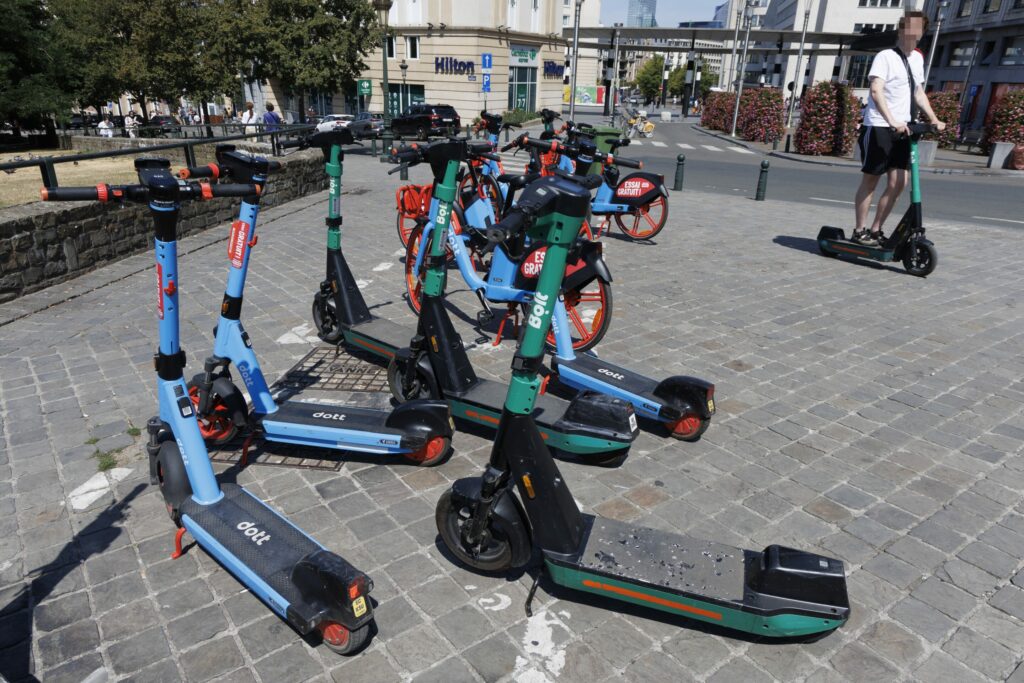
A petition calling on the Brussels authorities to keep the contested shared e-scooters on the capital's streets has reached considerably more than the required 1,000 signatures. Now, the Brussels Parliament will have to consider the proposal after the summer recess.
After the Brussels Government's recent decision to ban shared e-scooters from its territory from 2027, several Brussels residents launched a petition via the Capital Region's official democratie.brussels platform – calling for shared e-scooters to be retained in the capital.
"Scooters are a key part of the transport ecosystem that many people use, including myself," Peter Beckett, a former Bolt employee and one of the people who launched the petition, told The Brussels Times.
While he acknowledged that the bus, tram and metro network of Brussels public transport operator STIB-MIVB is generally a useful way to get around the city, it does leave some gaps.
"Some routes are just way faster to do on a scooter than by using the STIB network," Beckett said. "They are a very efficient way to bridge those gaps."
'Not in a great place'
Beckett and his friend Lucas Boulitreau (whose name is on the petition) were "very annoyed" about the decision, prompting them to take action through "the only mechanism that I could see to try and do something about it": launching a petition.
Now, the petition has gathered more than 1,500 signatures – meaning the 1,000-signature threshold has been comfortably exceeded. As a result, the Brussels Parliament will have to consider the matter after the summer recess.
The Brussels Parliament's first plenary session is scheduled for 21 September, but there is a possibility that the petition will also be discussed by the Mobility Committee the week before.
By that date, Beckett reckons, many more will have signed the petition. Still, he is sceptical about whether the petition will result in tangible results. According to him, Brussels is "not in a great place" at the moment, governance-wise.
"They have built the world's biggest pizza oven in Schuman. They do not have any money. But they did manage to build a really coherent ecosystem for dockless shared mobility," he said. "And now they are tearing it all apart for reasons that I cannot quite understand."
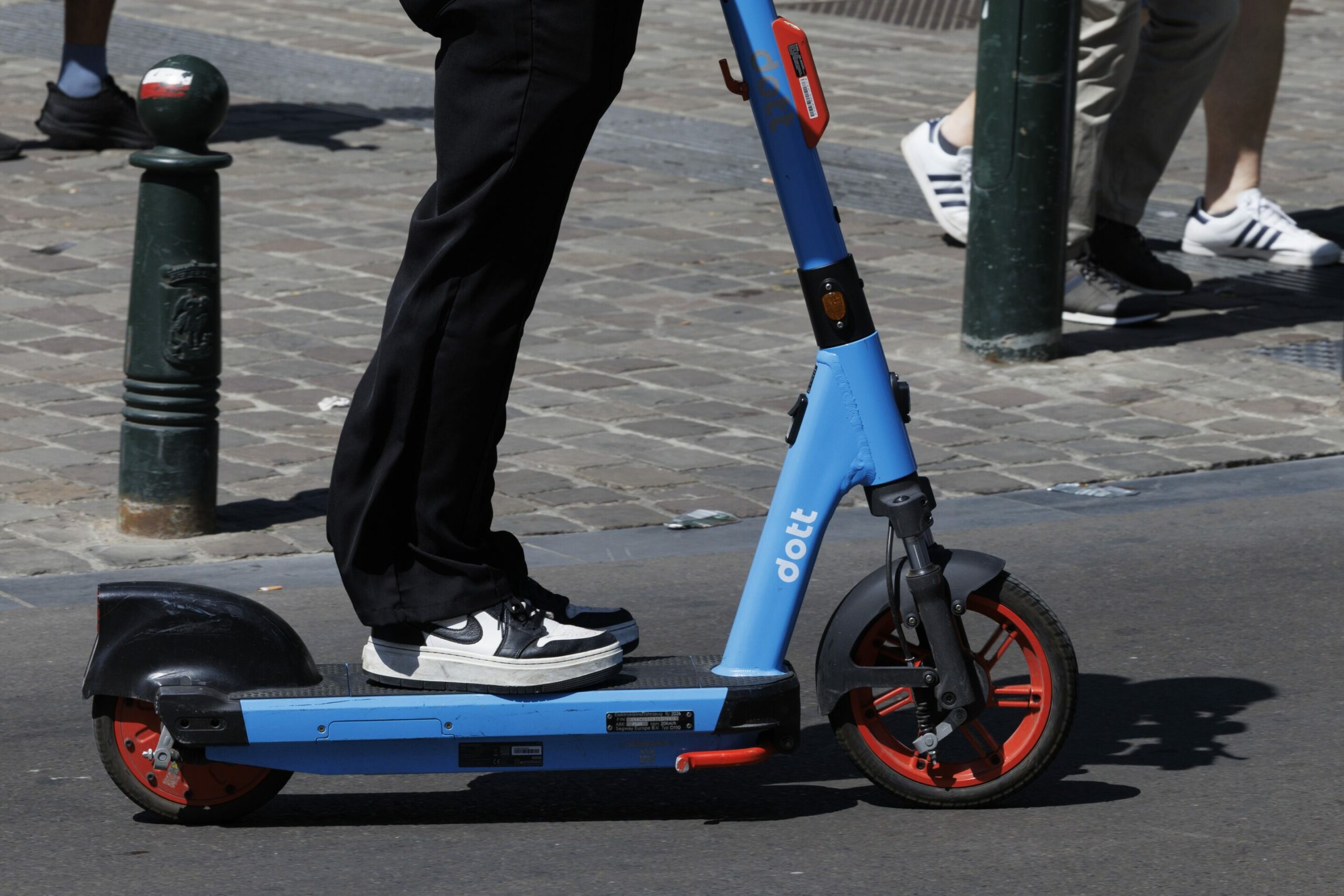
Person riding an e-scooter in Brussels, on Sunday 02 August 2026. Credit: Belga/Nicolas Maeterlinck
While the Brussels Region cited the rising number of accidents and the use of e-scooters for criminal purposes, among other things, as the reasons for the ban, Beckett and Boulitreau stressed that banning the vehicles altogther is too simplistic a solution.
"Shared e-scooters are regulated, have speed limits, are fitted with geofencing, are insured and can be tracked," the petition reads. "More than 700,000 people used them in 2024. They serve routes that are poorly covered by public transport."
The introduction of drop-off zones has significantly reduced the disruption caused by "scattered" scooters, they stated.
"Banning them will not make the scooters disappear," the petition stressed. "Instead, users will simply switch to private scooters, which are neither regulated nor traceable."
Increasingly complicated
Since the launch of the petition, however, the situation has become even more complicated. In early August, the Council of State decided that e-scooters had to disappear from Brussels' streets "as soon as possible" and by 1 September at the latest.
Until now, the deadline was 31 December, as the operators' licences remained valid until the end of the year before expiring in 2027.
However, following the Council of State's decision, those licences no longer exist: the ruling declared the existing licences of providers of shared e-scooters and free-floating shared bikes (which do not have to be returned to a fixed station) null and void. It concerns operators Bolt, Dott and Voi.
In practice, this means that there is now no precise deadline by which a new framework for shared mobility (not just scooters, but also shared e-bikes) must be finalised.
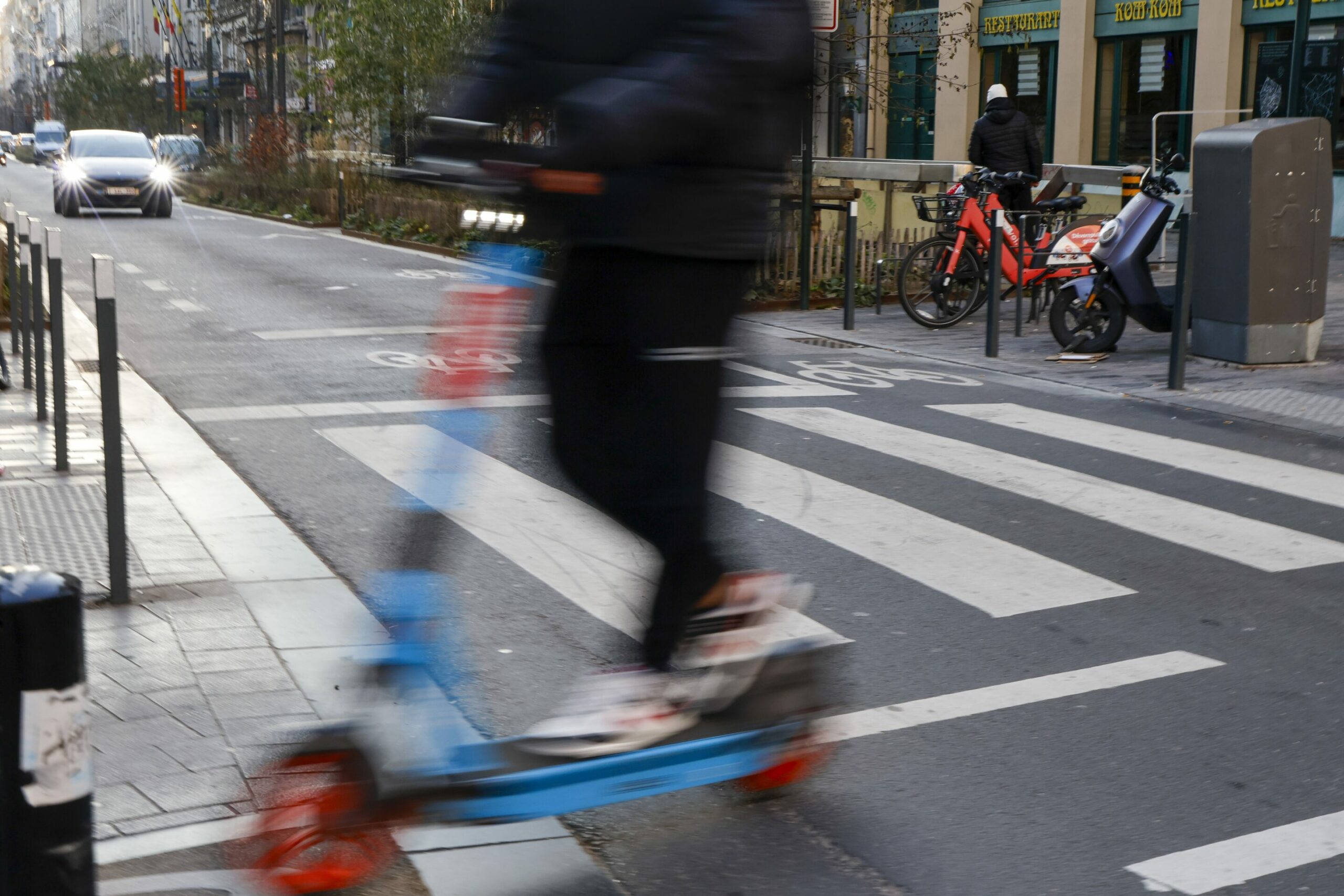
A shared e-scooters, in Brussels, on Friday 26 December 2025. Credit: Belga/Nicolas Maeterlinck
In mid-August, a meeting is scheduled between the operators and the Brussels authorities, the office of Brussels Mobility Minister Elke Van den Brandt (Groen) told The Brussels Times. The aim is to examine the Council of State's ruling and "seek solutions together".
For Beckett, however, the meeting between operators and authorities showcases the problem: users were not invited.
"There is a big gaping hole where the voice of the user needs to be in this debate, particularly after the Council of State ruling," he said.
"A bunch of people we have never even met are sitting in a room to determine the future of how we get around the city. It is ridiculous," Beckett stressed. "Why aren't we invited?"
