

Chancellor Petra De Sutter wants Ghent University to review its selection and recruitment procedures following the controversy surrounding researcher Nathan Cofnas.
Among other things, she wants to examine whether, in future, candidates should be required to explicitly endorse the university’s code of ethics before they are recruited.
"I certainly agree with the call to perhaps scrutinise even more closely who we take on when selecting staff," said De Sutter on Wednesday in an interview with the Belga News Agency.
There was already a great deal of debate surrounding Cofnas’s appointment, says the chancellor. According to her, Ghent University had the procedure investigated "very thoroughly" at the time.
Among other things, it emerged that the university’s code of ethics does not legally apply to candidates who have not yet been recruited. It only applies once someone is actually a member of staff. "That sounds a bit strange," says De Sutter on this point. "I understand that very well."
"The conditions for recruitment do not require candidates to comply with the code of ethics," she explains. According to De Sutter, this is an issue that requires further debate within the university.
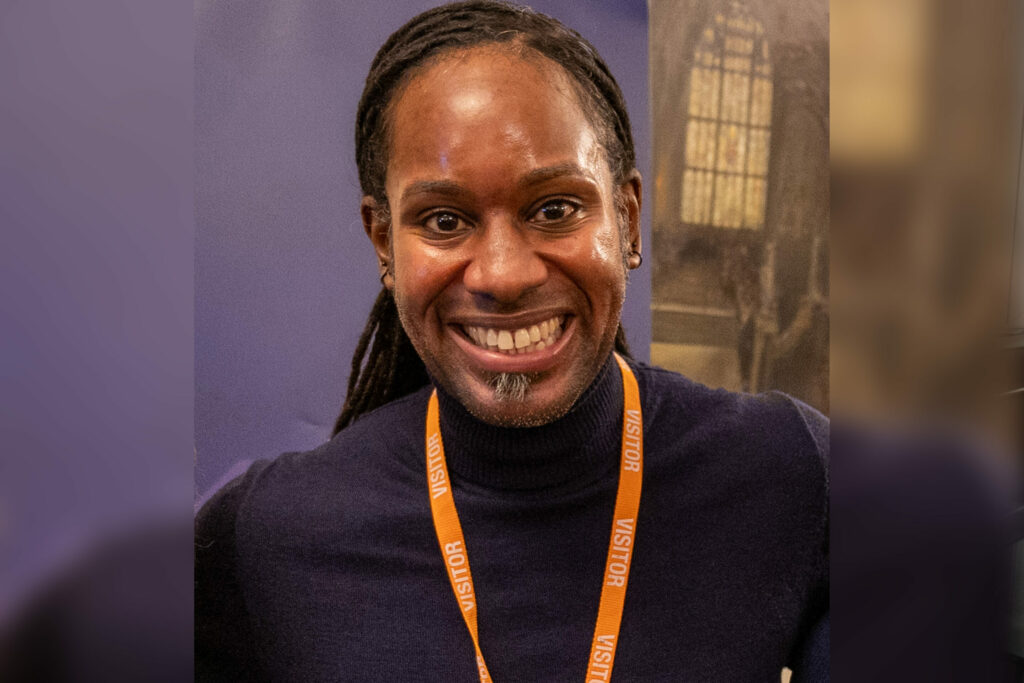
Jason Arday in 2024. Credit: Wikimedia Commons
Ghent University had previously announced its intention to hold such a debate. According to the chancellor, this takes time and has not yet been concluded, partly due to the holiday period.
One possible change is that, from now on, candidates will be explicitly made aware of the code of ethics in the job advertisement and asked to sign up to it before they take up their post.
"This means actually drawing people’s attention to it in the job advertisements and asking them to sign up to the code of ethics before we recruit them," says De Sutter.
In the case of Cofnas’s recruitment, she explains, such prior endorsement could not legally be imposed. "That is something we can look into," she says.
Furthermore, the chancellor does not limit the discussion to the code of ethics. She also says that, in general, the university "perhaps needs to look even more closely" at who it hires. In doing so, she is proposing both a specific amendment to the recruitment conditions and a broader review of the selection procedures.
Meanwhile, no further details have been provided regarding the factors the university analysed when deciding to take disciplinary action against Cofnas.
De Sutter rejected criticism that Ghent University is infringing upon academic freedom with the disciplinary procedure against Cofnas.
"I support academic freedom 100%," she said. For De Sutter, those who claim that Ghent University (UGent) is restricting academic freedom through the disciplinary process against Cofnas are not familiar with the specific case file.

Credit: Nathan Cofnas
Ghent University suspended Cofnas preventively on 20 August, pending a preliminary disciplinary investigation.
Cofnas, who has been accused of peddling widely-discredited scientific racism, joined Ghent University as a postdoctoral researcher earlier this year. Before that, he was affiliated with the University of Cambridge.
The American, who calls himself a 'race realist', levelled sharp criticism at the British sociologist of education and Cambridge professor Jason Arday, whom he accused of plagiarism
Arday subsequently came under intense media scrutiny, particularly from the British right-wing media. On 5 August, Cambridge announced an investigation into his academic qualifications and honorary positions. Arday resigned that same day.
On 14 August, the 41-year-old Arday was found dead in a flat in Battersea, London.
Related News
- Ghent University suspends Nathan Cofnas following sudden death of professor Arday
- Ghent University reviews statements by Nathan Cofnas following sudden death of professor Arday
- Ghent University under fire for appointing US philosopher with ties to 'scientific racism'
- Over 2,000 sign petition against university appointment of American philosopher
- Ghent University denies restricting academic freedom in suspending Cofnas
