
Tighter visa and travel regulations under US President Donald Trump's administration have caused fewer international students to cross the Atlantic to pursue higher education in the United States. However, one country has been an exception to this trend – Belgium.
There has been a 5% decrease in the number of international students studying in the US in August 2026 compared with the same period the prior year, according to data from the US Student and Exchange Visitor Information System. Belgium, however, saw a 3.1% increase in students going to the US for studies during that period.
Elisabeth Bloxam, Director of Programs at the Fulbright Commission in Brussels, an organisation that supports master's and doctoral students in Belgium who want to study in the United States, said that students are drawn to the US for a range of reasons.
"I have seen students who are set on going to a place that is the absolute best for what they want to study or research, which in some cases, is a US university,” she said. “But there are also students who already know a little bit about the US education system and think it might be a better fit for them.”
Currently, 946 Belgian students are studying at institutions in the United States. However, Erica Lutes, Executive Director of Fulbright Belgium, said many students interested in studying there do not always know about opportunities available beyond America’s most famous universities.
"When I ask students if they know some American schools, usually they'll say prestigious institutions like UCLA, Harvard, etc," she explained. "But when I ask if they’ve ever heard of universities like Duke, which would be extremely well-known to an American audience, nobody usually does unless it’s for sports reasons."
"So I like to tell them that if you dig deeper, you’ll find many institutions that cater to your interests beyond just your academic studies," said Lutes.
Both directors say the flexibility of the US higher education system is another factor they have seen attracts Belgian students. At the undergraduate level, students can often take courses across multiple fields before deciding on a major, rather than committing to a single area of study immediately after secondary school.
“I think some students are really drawn by the idea that you can start studying in the US without having declared your major,” Bloxam said. “You can start taking courses in a variety of different fields and then decide a little bit later what it is exactly you want to do.”
The biggest challenge for Belgian students studying in the US may not be their studies. Instead, it might be figuring out how to handle everyday life when home is over 7,000 kilometres away.
“There's a stereotype in Belgium that students go home every weekend and that you can hear them dragging their suitcases full of laundry down the cobblestone streets,” Bloxam said. “Obviously, that's not the case if you're an international student."
"I think that ties into a lot of students' fear of how they will navigate very normal things like laundry, or more serious things like when health problems arise," she said. "However, support systems are in place for our students for that very reason."
Late night studies and ice cream sandwiches
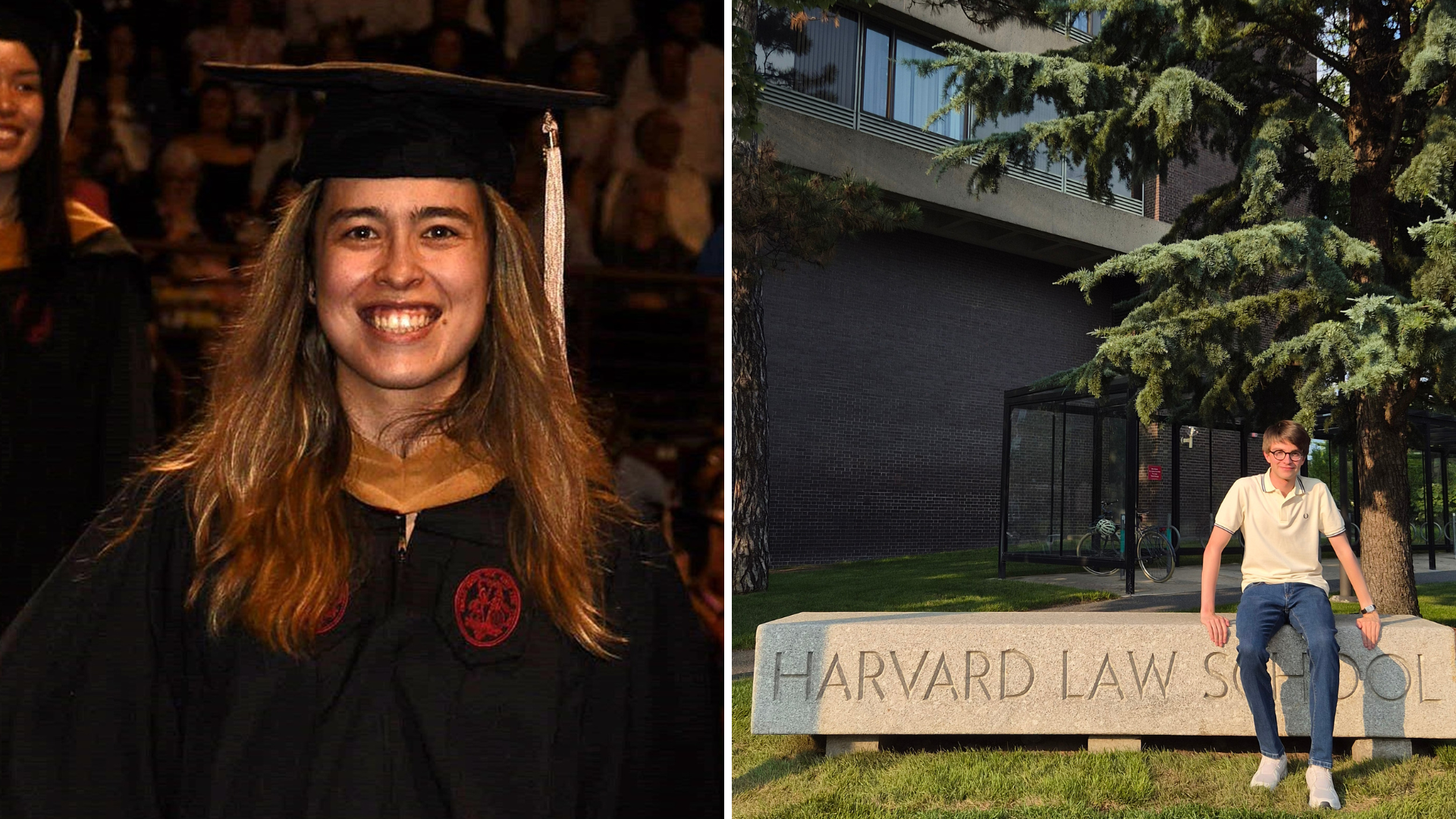
For Arthur Morland, his journey to study law at Harvard began in the rural Ardennes.
Morland first completed his bachelor’s degree at UCLouvain Saint-Louis Brussels, graduating first in a class of 433 students. He then completed a master’s degree at Université Libre de Bruxelles, again finishing first, this time in a class of 538 students.
Then, on 10 August of this year, he arrived in the US to begin a year of study in Harvard’s LL.M. program, fully funded by a scholarship from Fulbright Belgium.
“It’s a cultural shock, but also a legal shock,” Morland said. “In Belgium, we are a civil law jurisdiction, and in the US it's a common law jurisdiction, so that changes a lot of things.”
For Morland, one of the most rewarding parts of his experience so far has been the community he’s built with roughly 180 other LL.M. students who come from 65 different countries around the world.
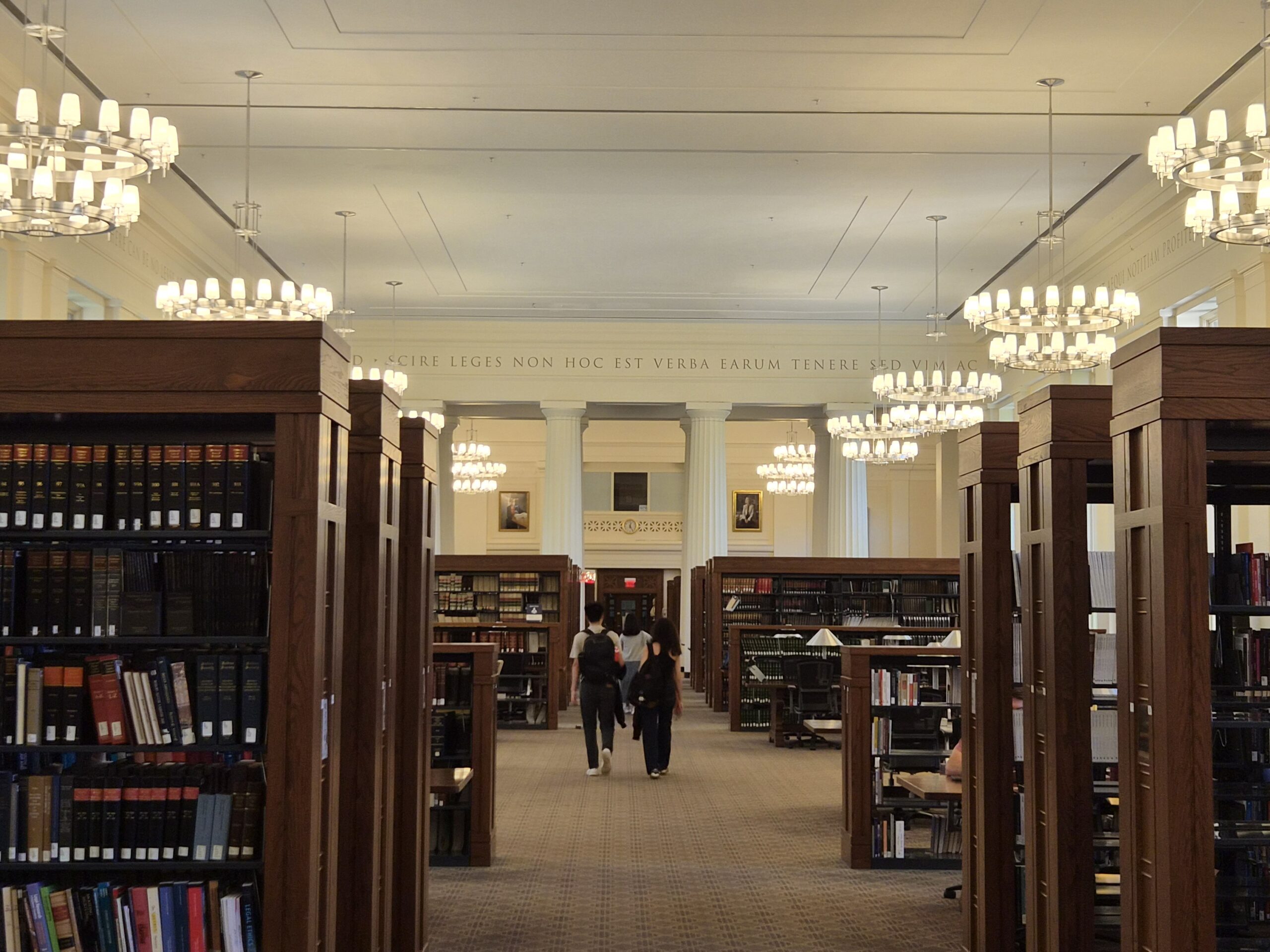
One of Harvard's 28 libraries. Credit: Arthur Morland
“I really feel like this is going to be a lifetime community,” he said. “I’ve learned to cherish when it’s 02:00 on Sunday night and I’m doing my readings in the library because there are so many people I know there. That's not something you really do or see in Belgium.”
Through a matching programme with a Boston family, Morland had the opportunity to have a ‘stereotypical’ American dinner. For dessert, he was able to try something that seemed like a crazy concept to him at first – an ice cream sandwich.
“It was good, but I feel like that ice cream sandwich really epitomises the American food experience,” he joked. “I feel like I have already gained so many kilos.”

The ice cream sandwiches Arthur ate. Credit: Arthur Morland
Growing up, Morland claims he didn’t really know what being a lawyer meant. He became attracted to the career because it allowed him to express himself, contribute to society and combine different ways of thinking.
While he doesn’t know exactly what his future will entail, Morland would love to eventually become a chief legal officer or even a CEO because, he says, he loves helping build things.
In his perfect world, that ambition would become a family project. His twin brother is starting a PhD in aerospace engineering at Stanford, and Morland would love to eventually co-own a business with him.
“I would be in charge of the legal business side and he would be in charge of the technical side,” Morland explained. “So that's why my focus in terms of courses at Harvard is mostly business.”
Morland stressed that his path to Harvard was not "built around a single formula". He strongly emphasised that Belgian students interested in studying in the US, or internationally in general, should not lose time comparing themselves with other candidates.
“There is really not a single recipe to get admitted,” he said. “That's why you should never compare yourself to others. Because first of all, we don't really know what they're looking for, so the key thing would be to stay true to who you are and to be genuine.”
From hidden fees to Tennessee caves
Tanja Impens had watched the United States through movies, media and its influence on Belgium for most of her life. Then, last August, she had the opportunity to live the “American experience” for a year.
“I wanted to go study in the US because I had not been to the US before,” Impens said. “The United States is a really interesting place. So much of our media is about the United States and, since the US is a world power, so many of its decisions influence Belgium.”
Impens earned a master’s degree in international business, with a focus on global strategy, through the Darla Moore School of Business at the University of South Carolina. While she enjoyed her studies, she quickly realised that there were not many familiar signs of home at her new college.
During her entire year in the US, she encountered only one other Belgian.
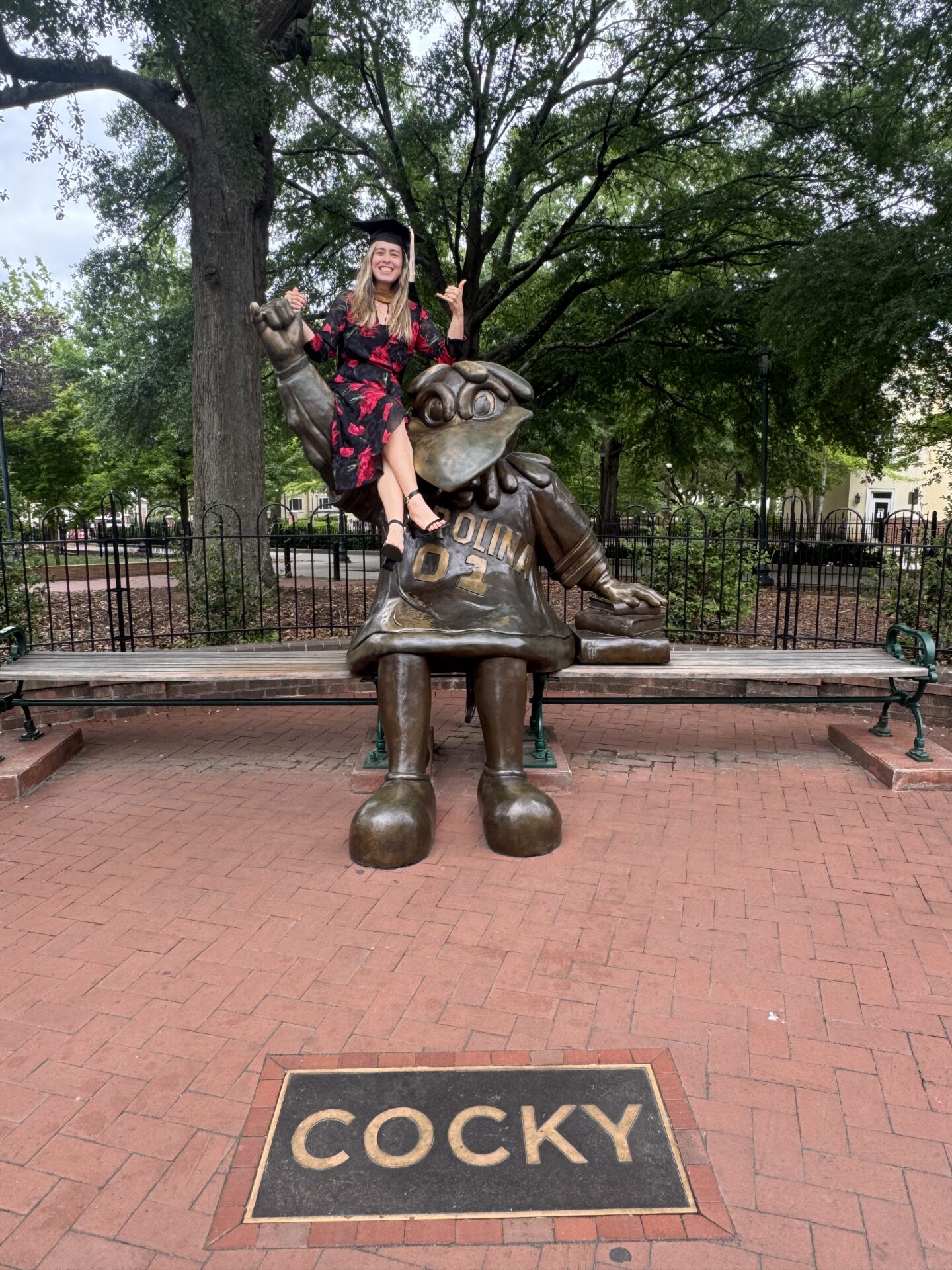
Tanja poses with a statue of the University of South Carolina's mascot, Cocky. Credit: Tanja Impens
“There were some moments that made me realise, ‘Oh, damn, I guess I am the only Belgian here,’” she said. “But on the other side of that, there were a lot of moments where I just completely forget about it. It was just kind of like ‘how much am I in my head?’”
Still, she said the people around her made an effort to help her feel integrated.
“You're still moving to a different country,” Impens said. “It's a really different culture, but that doesn't mean that people aren't trying.”
Studying at an American university in the Southeastern Conference gives students a glance into one of the country’s biggest sports cultures. For Impens, that initial culture shock turned into plenty of fun experiences.
“I went to sporting events for basketball, volleyball and soccer to earn points so I could then attend a football game,” she explained. “The football game I went to was just a really really cool thing to see.”
Americans' reliance on cars was a big adjustment for Impens. She could no longer walk or take public transportation to most places, so she relied on friends or Uber to get around.
“That aspect was also something I just needed to get used to,” she said. “I'm very self-reliant, so if I just needed to go somewhere in Belgium, I’d either walk, drive myself or take public transportation. In South Carolina I couldn’t do that.”
She also encountered a less glamorous side of American life: hidden fees. For example, Impens quickly learned she would have to pay for a subscription service to pay her gas and electricity bills.
“I remember asking, ‘Why in the world am I paying to be able to pay my bills?” she recalled. “That was just one occurrence, but over the year, there were many times that I suddenly saw so many hidden fees that made me go, ‘What is happening?”
Impens describes herself as an active person, so she joined a mountaineering club to stay active while she was in South Carolina. During one of her trips, Impens recalls sleeping in a Tennessee cave.
“There's so much beautiful nature in America,” she said. “Some of my favorite memories from my year in the US were when I hiked with my friends.”
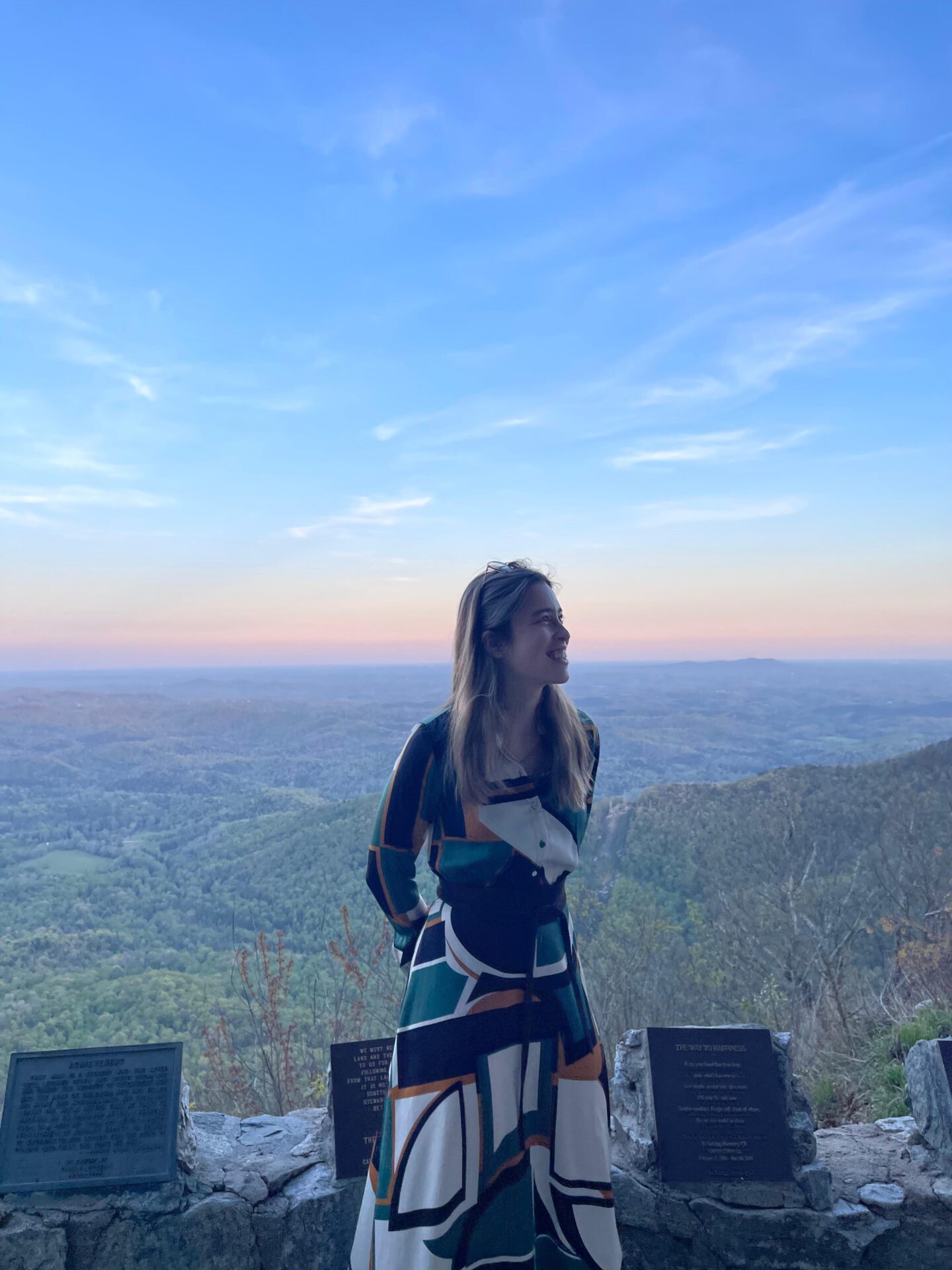
Tanja poses with a scenic background at an American park. Credit: Tanja Impens
For Belgian students considering making a similar journey, Impens' advice is straightforward.
“Going abroad will always be challenging because you already put yourself in a different situation,” she said. “But, you should go for it because the experience you’ll get from it is immensely valuable.”
After graduating, Impens returned to Belgium and has since started working in strategic consulting. While she doesn’t see herself moving permanently to the US, joking that she prefers Europe's walkability and lifestyle, she would like to return eventually so she can explore more of the country's national parks.
Belgian students interested in learning more about studying in the US are encouraged to attend EducationUSA's ‘Brussels College Night’ on 23 September at the International School of Brussels in Watermael-Boitsfort.
Nearly 20 representatives from US colleges and universities will be in attendance to meet interested students and their parents. The event will primarily target students in their final two years of secondary school who are considering a bachelor’s degree in the US. However, representatives from Fulbright Belgium will also be there to discuss opportunities for Belgian students wanting to pursue master’s and doctoral degrees in the US.
“Every year we are able to show students that there are US universities that send representatives specifically to meet them in Belgium, and I think that does say something,” Bloxam said. “These university representatives recognise the high quality of the education here, and the promise that our students would bring to their universities.”
