
Today, 18 September marks International Equal Pay Day, a day dedicated to the principle of 'equal pay for work of equal value'. According to the United Nations, women globally earn around 20% less than men, while progress in closing the gap remains slow.
The concept goes beyond people performing exactly the same job: equal pay for work of equal value also applies to different jobs considered comparable according to factors such as skills, responsibility, effort and working conditions.
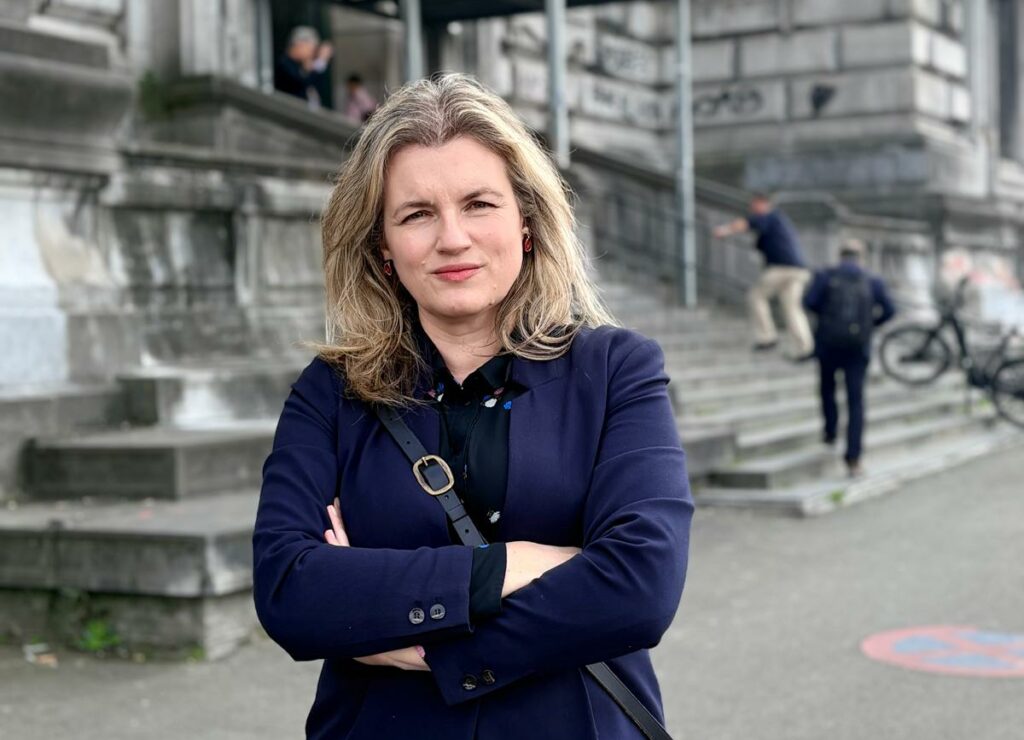
For Maya Doneva, a Bulgarian woman of 41, the issue became personal after she was appointed Secretary General of a European-level organisation. She moved to Brussels with her husband and three children for what she believed would be an important professional opportunity.
“I always had this mindset: yes, of course, I’m a woman, but nobody can put any barriers in front of me because it’s up to me to prove myself. If I study hard and work hard, there’s no way I can be discriminated against because I’m a woman,” she told The Brussels Times.
'I thought hard work would be enough'
At first, she questioned the salary she had been offered but eventually trusted the organisation’s explanations. Three months later, while working on the organisation’s budget, she discovered by chance that she was being paid less than her male predecessor had been for exactly the same position.
"I realised there was a difference. My salary was almost 30% lower than my predecessor’s," she said.
As the remuneration was divided between different contracts and payment systems, the disparity was not immediately obvious. Doneva brought the figures to the organisation’s management and governing body, together with a salary benchmarking report for the Brussels market.
“The benchmarking report was very clear: my salary was so low that I wasn’t even in the category of CEO or Secretary General. I was below the minimum salary that someone in that position should receive in any company," she said.
Eventually, Doneva's salary was increased – but not to the level of her predecessor. To get the increase, she repeatedly had to raise the issue during meetings with the governing body for several months.
“It was humiliating because I had to bring it up every time we had an executive committee meeting," she said. "Every time, they would say, ‘Next time.’”
The experience was particularly difficult because of the nature of the organisation itself. “I literally had to go to conferences and speak to people about equal pay and how important working conditions are for people in the social sector, while I was experiencing this myself.”
A salary gap with personal consequences
The situation also had consequences outside the workplace. Doneva was under considerable financial and personal pressure after moving to Belgium with her family, while her husband initially did not have a job.
“We were living off our savings,” she said. The prolonged stress eventually affected her health.
Her salary was eventually adjusted again. But shortly afterwards, following a board meeting in which she had presented the organisation’s work and received a standing ovation, Doneva was asked to leave the room.
A lawyer then joined the meeting and she was told she was being dismissed with immediate effect. “I had to leave the office, hand over my laptop and I was not even allowed to say goodbye to my team. I just had to leave.”
Doneva challenged the dismissal legally. She said the case has cost her around €28,000 over four years and is still ongoing. The organisation, she said, eventually cited a “loss of trust” as the reason for her dismissal.
From personal experience to women’s rights advocacy
The experience also changed the direction of her work. Doneva later became an adviser to the European Women’s Lobby (EWL), the largest umbrella organisation of women’s associations in the EU, which works to promote women’s rights and gender equality.
Today, the gender pay gap is one of the issues she continues to discuss. “Many women do not know that they are working in a situation where there is a gender pay gap,” she says, pointing to new European rules on pay transparency.
The UN identifies several factors behind the persistent gap, including occupational segregation, unequal care responsibilities and discrimination.
The International Labour Organization (ILO) also highlights the importance of pay transparency, objective job evaluation, social dialogue and policies supporting a better balance between work and care.
Speaking out against unequal pay
For Doneva, awareness also starts with women being willing to question what they are being paid.
“When I speak to women, a lot of the conversations are difficult. There is no way to make it easy because it’s not just a professional situation. There is a lot of humiliation and a lot of things you have to fight through when it comes to gender discrimination.”
Her final message is simple: “I want to encourage women to speak the truth, even if their voice shakes, and to stand their ground, because nobody else will do it for them.”
