
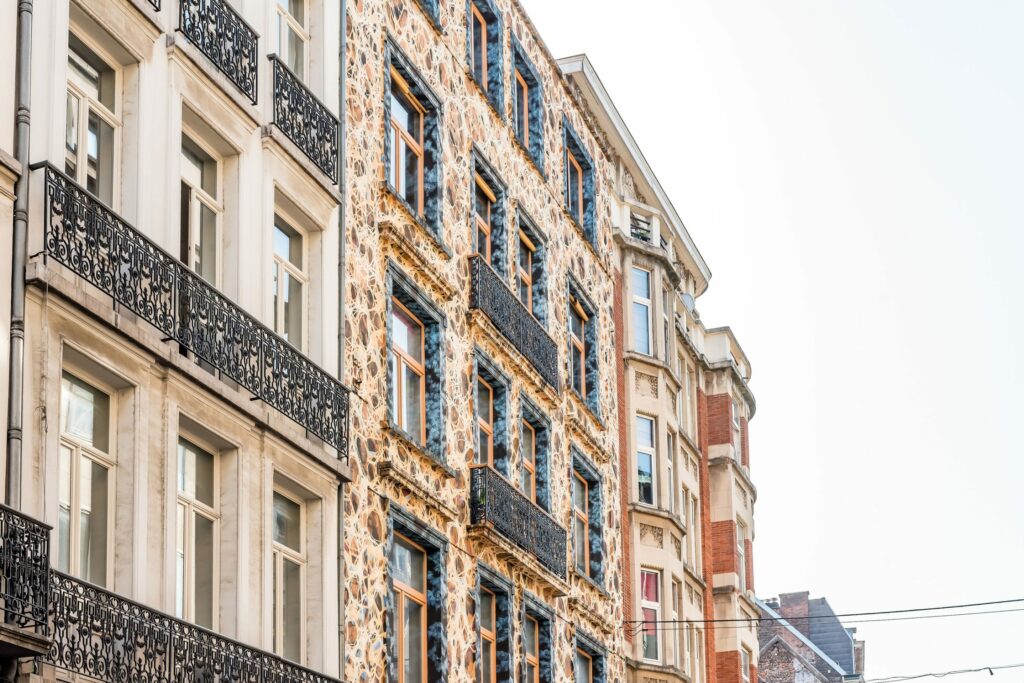
Houses and apartments in the Belgian capital are spending more time on the market, and sellers are cutting prices more often. High interest rates, costly renovations and safety concerns are pushing buyers and investors to look elsewhere.
Selling a home in Brussels now takes longer than it did a year and a half ago, a survey by real estate data platform SmartBlock found. The survey analysed more than 34.000 listings published since January 2025.
"I fear this is a break in the trend," Simon Lenaerts, manager at estate agency DeWaele in Brussels, told The Brussels Times.
Houses are hit the hardest. The share sold within 60 days fell from 47.9% at the start of last year to 33.1% this year. For apartments, the share dropped from 50.2% to 37.3% last year. This year, it recovered slightly, to 43%.
Sellers are also more willing to lower their asking price. The share of apartments with at least one price cut rose from 26.3% to 33.9% last year. For houses, it went from 27.7% to 34.6%. This year, roughly one in three homes sees at least one price reduction.
Lenaerts does not believe this is a temporary cooling. He recognises the picture from his own work.
Rates, taxes and renovations
Buyers are more cautious, and high interest rates are a major reason for that, according to Lenaerts.
“Interest rates help determine purchasing power. The higher they are, the less capital buyers can borrow, which leads to monthly payments that are too high in relation to their income," he said. "As real estate agents, we clearly see that people have a smaller budget, or that they decide they can't bear the burden of buying yet."
Taxes add to the pressure. While property transfer tax in Brussels stayed at 12.5% last year, it fell to 3% in Flanders, and to 2% in Wallonia.
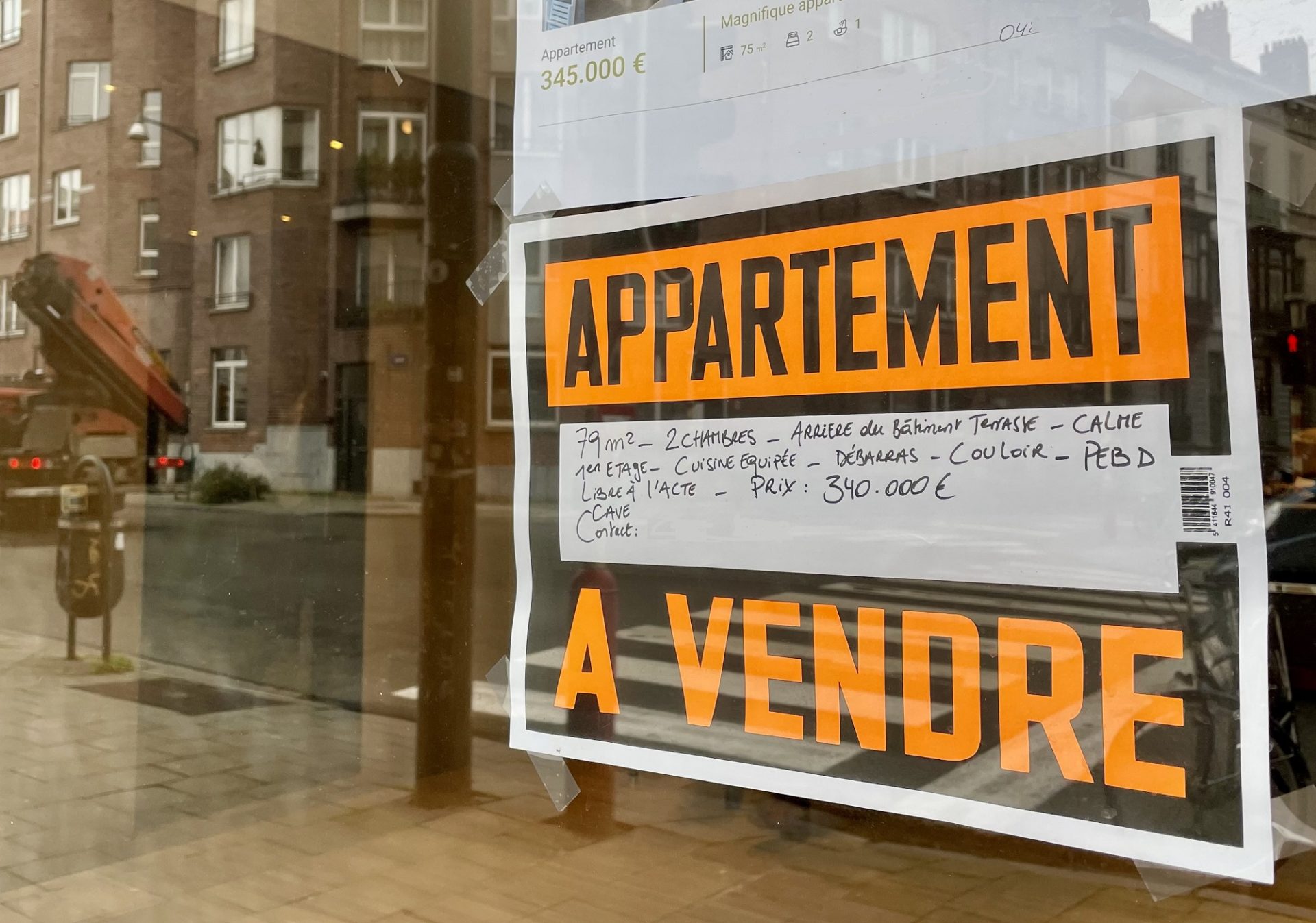
A sign detailing a property that is up for rent. Photo by Helen Lyons/The Brussels Times
However, Brussels does offer an exemption on the first €200,000 for purchases up to €600,000, and according to Lenaerts, apartments in lower price ranges remain attractive to buyers who have their minds set on the capital.
Renovation costs are another stumbling block. "Brussels has a relatively old housing stock," said Lenaerts. "Buyers therefore fear the cost of making such homes energy efficient."
That is especially true for large apartment buildings and townhouses, where energy renovations are often more complex and expensive.
Flanders or Wallonia?
For investors, it is not only the cost of buying that matters, according to Lenaerts. He pointed mainly to rental rules, which he said have been made strongly in favour of tenants in Brussels.
He cited the ban on evicting tenants who fail to pay rent during the winter months, even when a justice of the peace court has ordered it. There are also rent reference prices: landlords who charge above them risk a tenant taking the case to a commission to challenge the rent.
"Investors are saying: maybe we should invest in Flanders or Wallonia rather than Brussels," Lenaerts said. He sees a clear shift in the number of investors bypassing Brussels.
Safety and image
In recent months and even years, the Belgian capital has also made many headlines for drug violence and shootings, including around Brussels-Midi station and Porte de Hal.
In the first seven months of 2026, the federal police recorded 57 shootings across the 19 municipalities of the Brussels-Capital Region, The Brussels Times reported in August.
If the shootings continue at the same rate in the second half of the year, Brussels is set to break a tragic record: in 2025, police recorded 101 shootings, resulting in eight deaths and 43 injuries.
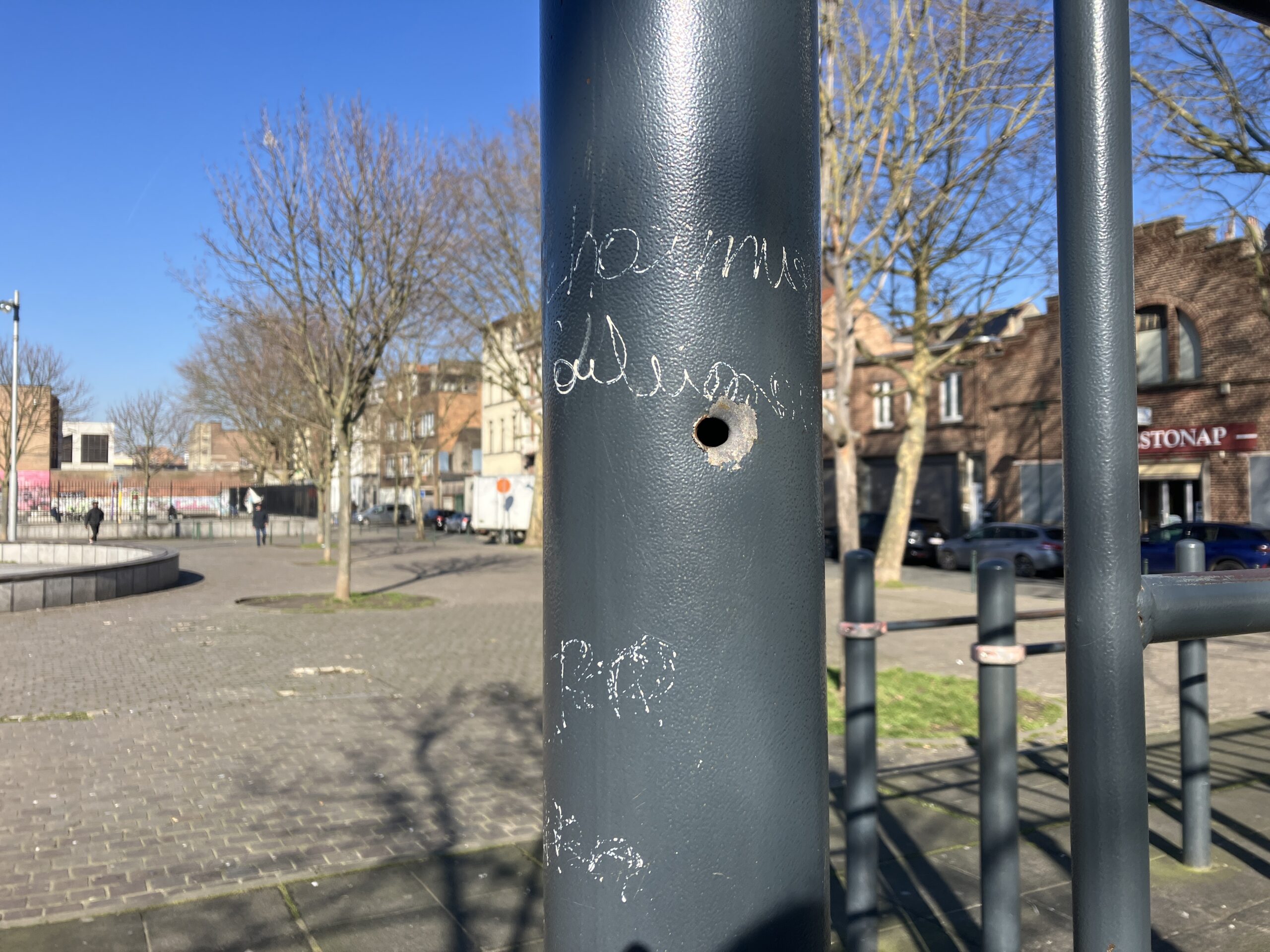
A bullet hole in a climbing frame for children on the square in Anderlecht. Credit: The Brussels Times
This poor reputation is now weighing on the property market. “We are noticing that previously up-and-coming neighbourhoods, such as Clemenceau and certain sectors of Anderlecht, are rapidly losing their appeal," Lenaerts said.
An increasing number of residents are trying to leave these areas by putting their houses or apartments on sale. "However, there are few prospective buyers who want to take over these properties. As a result of this dropping demand, real estate prices in these zones are under severe pressure, which sometimes leads to sharp price cuts."
Political climate
What is needed to get the Brussels property market moving again? For Lenaerts, the key is a more stable political climate that makes Brussels once again attractive to buyers and investors.
This, he said, means striking a balance where landlords and tenants are protected, and without landlord returns being capped by rent reference prices. He also suggests looking at how other regions support first-time buyers, for example through a tax allowance.
On what the slowdown means for the wider property market, Lenaerts said the sector simply has to adapt to a new reality after years of an overheated market.
“We are shifting from a seller’s market to a buyer’s market. Previously, if you were selling property, you could choose from multiple interested buyers. This caused prices to skyrocket," he said. "That trend has now cooled. Sellers need to be more patient, manage their expectations, and realise that the market has changed from the exceptionally favourable conditions of the past few years.”
Despite the current headwinds, Lenaerts said he remains positive about the Brussels market in the longer term.
"Brussels remains a unique and highly diverse capital with a constant need for housing," he explained. "The current market correction also creates opportunities: buyers have more choice, there is more room for negotiation, and correctly priced, qualitative properties still find their buyers."
