
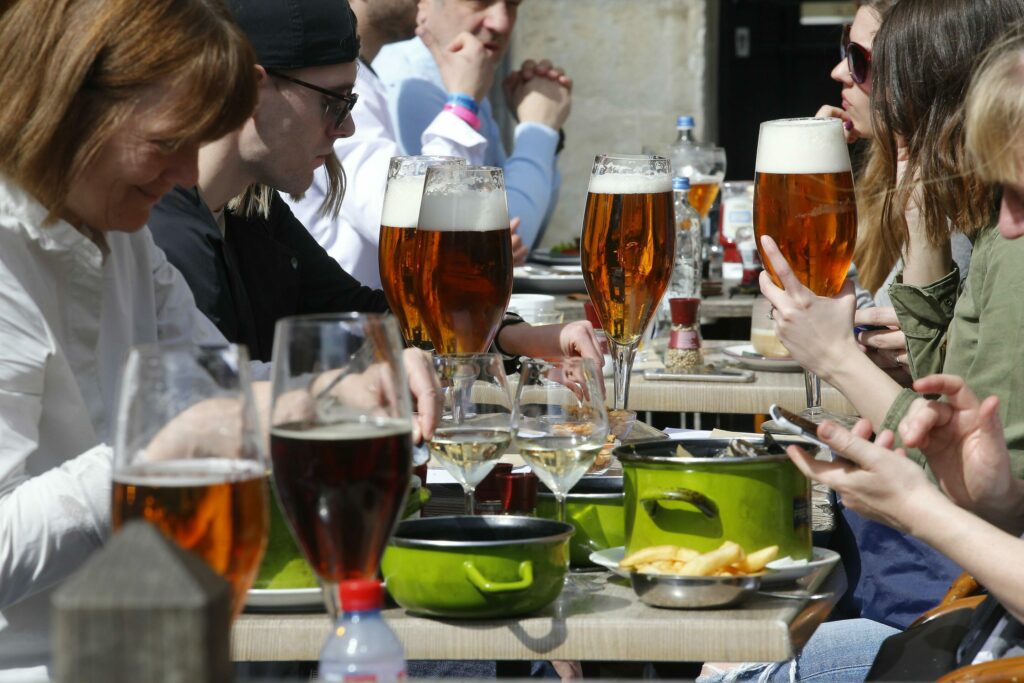
With beer being such a big part of Belgian culture, it should come as no surprise that the decision to change the mandatory health warning on alcohol publicity from “alcohol abuse harms your health” to “alcohol harms your health" caused a huge stir in the country.
At the end of summer, the federal government announced that it would remove the word “abuse” from the required health warning on alcohol products, changing it to “alcohol harms your health." In response, the Belgian Brewers Association published an open letter protesting the decision and claiming this would further the disappearance of Belgian beer culture.
Why was this decision so controversial?
“We are not the only country with a beer culture," Sofie Van Rafelghem, a Belgian beer sommelier, told The Brussels Times. "But we do have a centuries old beer culture with very unique elements: the many family breweries, beer festivals, initiatives around beer, workshops, specialised beer bars…"
She stressed that the beer culture is very much alive in Belgium. "Beer is not just a drink, but an experience. And that is a big part of obtaining the UNESCO recognition as the first and, for now, only country in the world."
The evolution of beer as part of the Belgian experience
“La bière est en Belgique la veritable, la seule boisson nationale” (“Beer is the only true national drink in Belgium”), said a slogan at the 1880 national exposition – the ancestor of the world expositions.
For the first time, just 50 years after the birth of the nation, beer was marketed as a crucial part of the Belgian identity. While its people had been brewing and drinking beer long before Belgium was officially recognised as a country, in 1880, beer was promoted for the very first time as part of its culture.
This association of beer with national identity became stronger each following world expo leading up to World War II.
In 1905, the Liège expo promoted it as what united Flanders and Wallonia. The 1910 expo in Brussels reserved an entire "section de la brasserie" in the biggest Belgian pavilion and built a monument dedicated to the country’s brewers. The 1930 Antwerp expo boasted a separate pavilion dedicated to Belgian brewers and a 25 meters high "beer tower."
After World War II, globalisation entered the game. The reaction was even more appreciation – and promotion – for local specialties. Beer festivals, local beer museums, specialised events and cafés popped up all around the country, culminating in 1986 being declared the “Year of beer."
Beer had officially gone from a product to an inextricable part of the Belgian culture and identity – something that was rewarded by UNESCO's recognition as Intangible Heritage.
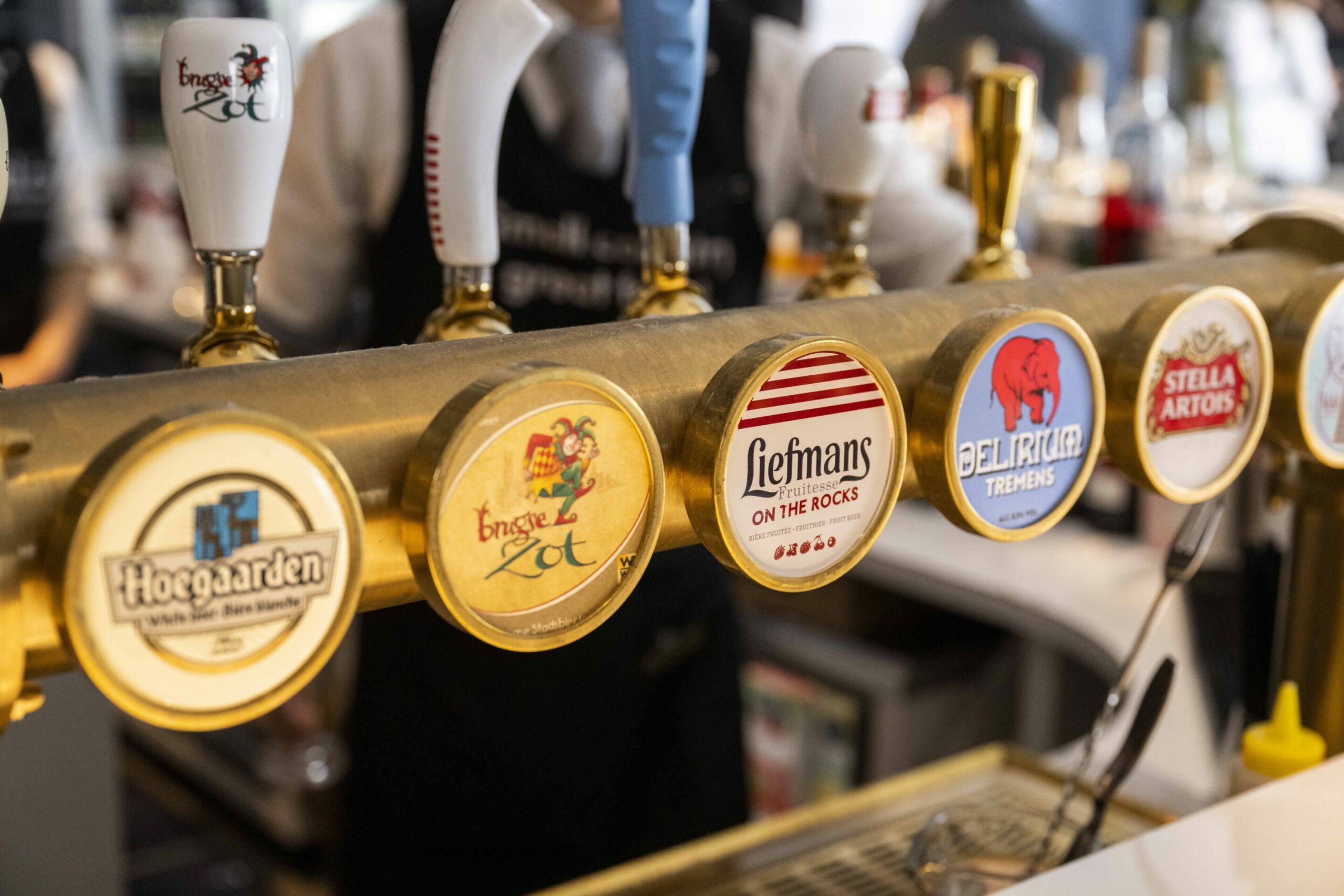
Belgian beers pictured during the lunch at the Belgian pavilion during a royal visit to the Expo 2025 Osaka, Kansai, Japan, Monday 09 June 2025. Credit: Belga
A condition for being recognised as living heritage, however, is being able to change with the times. Belgium had to prove that it was aware of the dangers attached to alcohol consumption. And that is what sparked debates such as the one in August.
"The use of the word 'abuse' in the previous health warning was too open to interpretation," Katleen Peleman, director of the Flemish Centre of Expertise on Alcohol and other Drugs (VAD), told The Brussels Times.
“This decision is part of the federal coalition agreement and it is one we support. Alcohol is harmful, even if there is no addiction or abuse, and clear communication is part of good prevention," she said.
Many regular alcohol consumers, according to Peleman, think they have got their intake under control and know what they are doing. In other words, they do not see themselves as part of the targeted audience when they read the word "abuse": they are not abusing.
"However, science has shown that alcohol is harmful for the body, the mind and your future health," she said. "It is important to us that everyone who drinks alcohol, even a few glasses, realises this."
Peleman stated that the Belgian Brewers Federation is making too much out of the decision. “A lot has been said in that letter that has been blown out of proportion. No one is forbidding anything, you can still promote alcohol, you just need to add an honest warning.”
With a society that has become more careful about alcohol consumption and pub attendance going down since the Covid-19 pandemic – a consequence of both the closing down of bars and of stricter rules regarding drinking and driving – the industry has been under pressure.
"It is possible that that’s what this is about: an industry that is scared that its earnings are threatened," she said.
In danger of dying out?
Is the proud Belgian beer culture in danger of extinction, as the open letter claims?
While it is true that pubs and the so-called “bruine cafés” (the traditional pubs that are part of this culture) are less frequented and closing, that doesn’t mean the industry can’t adapt. Just like there is a wide variety of different beers in Belgium, the industry is also working on developing low alcohol or alcohol free beers. There is more choice and the quality has drastically improved compared to just a few years ago.
“There is tension between public health and the promotion of beer as a national heritage in our government," Peleman said. “It is very important to be responsible and not only take the economic factor into account, but also public health."
While she stressed that she does not think Belgium's beer culture is disappearing at all, she added that, "at a certain point, we do need to decide what is most important: culture or health."
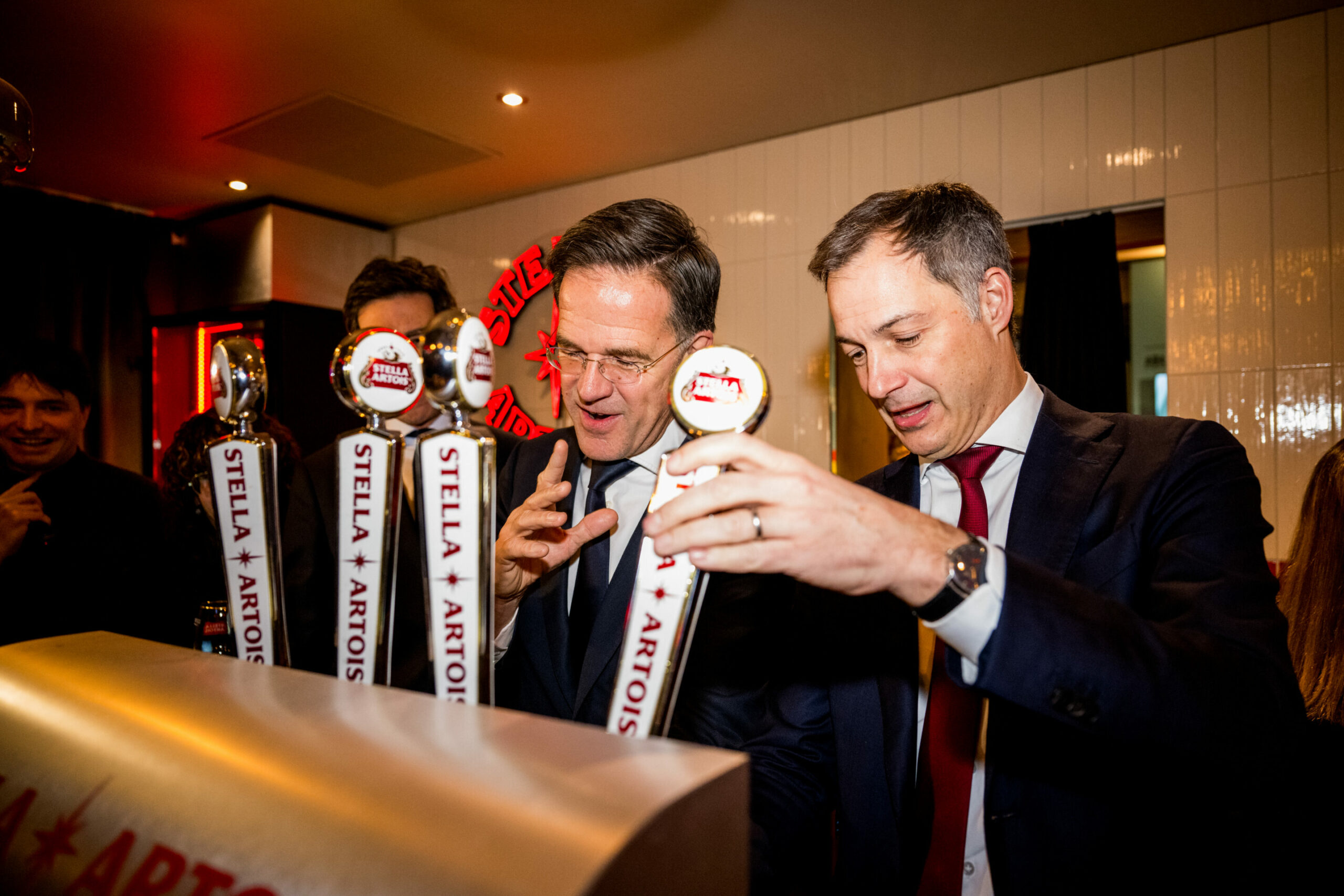
NATO Secretary General Mark Rutte and former Belgian Prime Minister Alexander De Croo drinking beer together the 2025 World Economic Forum Annual Meeting in Davos, Switzerland. Credit: Belga/Jasper Jacobs
Even though beer sommelier Vanrafelghem is all for responsible consumption, she does not completely agree.
“I understand the fear of beer culture disappearing: beer is not consumed as much as it used to be. However, I don’t think we need to be afraid of an extinction any time soon."
A warning label can be positive, Vanrafelghem said, but she is still not convinced the impact will be limited. “This won’t stop with the advertisement on tv, radio and print. I believe every aspect of our beer culture will be impacted in the future."
"Let’s be clear: I am not against health warnings. However, I feel like all nuance is lost here, even though it’s perfectly OK to enjoy a beer responsibly as part of a balanced lifestyle. Is drinking too much bad for you? Absolutely, but so is consuming ultra processed food or not exercising," she said. "I will certainly not feel bad for enjoying a beer.”
Vanrafelghem also pointed to the economical aspect of the matter: “Will imported alcohol be held to the same regulations? Because if not, that’s is unfair competition.”
According to Peleman, however, these fears are unnecessary. “The health warning will only be mandatory for publicity, not labels, and we are talking about all advertisements here: Belgian and foreign brands will have to comply.”
