
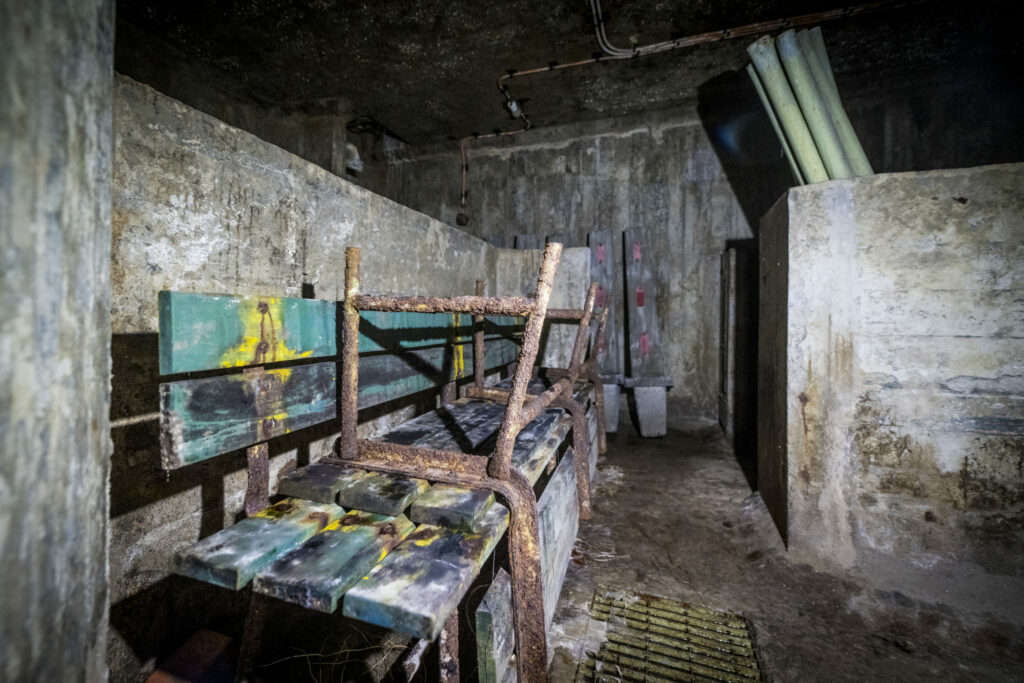
Eight World War II bunkers have been converted into winter shelters for bats in Sint-Katelijne-Waver and Bonheiden, in the Rivierenland region.
Regional Landscape Rivierenland, a partnership of local authorities and nature organisations working, had the former military structures adapted to provide the animals with a safe place to hibernate. With thick concrete walls and cool interiors, the bunkers are well suited as winter roosts for species including brown long-eared bats, Daubenton’s bats and whiskered bats.
“During hibernation, bats live on their fat reserves,” said An-Katrien Cuypers, species specialist at Regional Landscape Rivierenland. “Rest, humidity and a stable temperature are crucial. With a few targeted measures, we can turn the bunkers into safe winter shelters.”
Related News
- Why Cambodia built a statue to a Belgian-trained rat
- Brussels residents fed up with decade-long battle against urban rodeos
- Rats are thriving in Brussels. Can the city stop feeding them?
Nature and Landscape Care, a social enterprise within Natuurpunt, carried out the work on behalf of Regional Landscape Rivierenland. It installed adapted doors and shutters and added extra hiding places inside the bunkers.
Where needed, openings were sealed to prevent draughts, while water barrels were placed inside to help maintain humidity levels.
The bunkers are part of the Functional Ecological Network of Antwerp province, which links nature reserves and green areas. The project received financial support from the Agency for Nature and Forests and Antwerp province.
The project covers four bunkers in Sint-Katelijne-Waver and four in Bonheiden. All are part of the historic KW Line, a defensive line built shortly before the Second World War between Koningshooikt, in Lier, and Wavre, in Sint-Katelijne-Waver
