
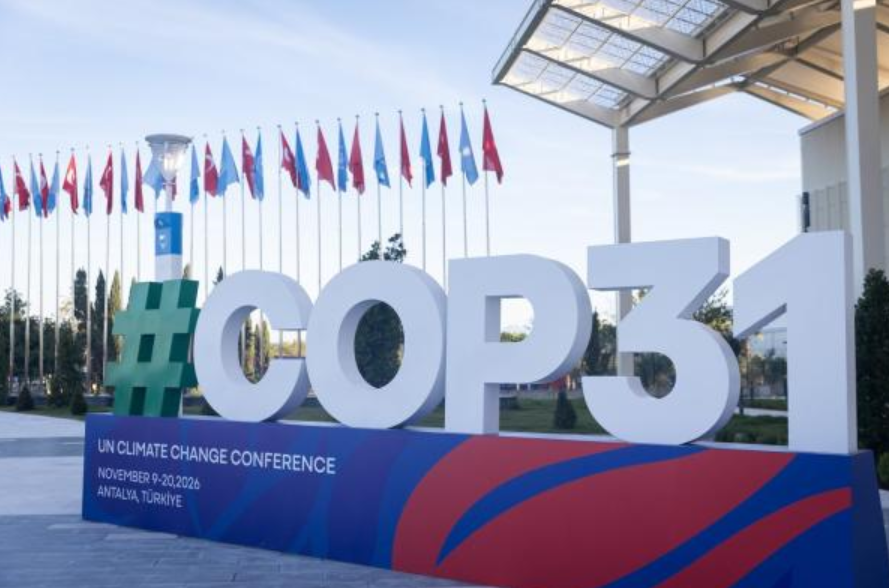
As the climate change summit in Antalya ended on Sunday without any agreement, EU’s recent decision to postpone the application of methane rules on the import of crude oil, natural gas and coal cast a shadow over its own position on the need to transitioning away as soon as possible from fossil fuels.
As previously reported, the exports of plastic waste from EU countries to Turkey raised concerns about environmental pollution during the summit. The issue was linked to the Zero Waste Initiative which was mentioned as a voluntary action in the draft overarching declaration (cover decision) which was not adopted because of the lack of consensus. Another issue was methane emissions.
Midway during COP31, the Council and the European Parliament reached a provisional agreement on targeted amendments to the EU methane regulation. The co-legislators modified the Commission’s proposal from October and agreed that additional time is needed for third countries, member states, producers, importers, operators and traders to comply fully with the regulation.
“We achieved a pragmatic balance on the methane regulation, addressing the pressures in the energy market while maintaining the EU’s leadership in reducing methane emissions,” Darragh O’Brien, Ireland’s Climate Minister, commented. He added that the agreement demonstrates the EU’s commitment to cut methane emissions while shielding citizens from high energy prices.
The entry into force of two sets of rules were postponed. The rules for monitoring, reporting and verification obligations for fossil fuels importers will apply from 1 January 2029 instead of the original date 1 January 2027 (the Commission proposed to a delay by one year). The methane-intensity reporting for importers and EU producers will apply from 5 August 2030 (instead of 5 August 2028).
The monitoring rules provide the verified data needed to cut methane emissions. The methane-intensity caps are necessary to enforce the emission cuts. A methane-intensity standard is a performance benchmark that sets a maximum legal limit on how much methane can leak or be vented into the atmosphere per unit of fossil fuels produced.
The benchmark will force foreign exporters to actively fix leaks and stop routine venting or flaring to keep access to the EU market. There is no doubt about the disastrous impact of methane on global warming. The Commission stated that methane is second only to carbon dioxide (CO₂) in its overall contribution to climate change and is responsible for approximately a third of current warming.
The amount of methane in the atmosphere globally has risen sharply over the last decade. The Intergovernmental Panel on Climate Change found that that deep reductions in anthropogenic methane emissions are needed by 2030 to limit global warming to 1,5 °C.
The Commission described the decision to postpone the methane regulation as a compromise decision. It pointed out that the postponement does not mean that the market operators can stop implementing the regulation. The methane regulation continues to be implemented, a Commission spokesperson explained.
“It's a very, very important regulation. The decision gives the operators some extra time to start implementing it. It preserves the overall ambition, integrity, and the scope of the methane regulation.”
The postponement of the rules will mainly benefit fossil fuel importers and foreign producers as most of EU’s supply of fossil fuels is imported. They will get extra time to comply with the new obligations. In fact, the implementing and delegated acts required to enforce the methane regulation have not yet been finalized or adopted by the Commission.
Methane emissions until enforcement
It is unclear how much of the methane emissions would have been reduced if the regulation had been implemented in time without the delays. The regulation does not set a legally binding emission-reduction cap in tons. The largest emission reductions are expected to happen in third countries that export fossil fuels to the EU.
Depending on the intensity threshold, up to an estimated 30% reduction in global methane emissions across the oil and gas sector could be achieved if imported fossil fuels had to meet the new EU rules. The regulation is also expected to lead to significant cuts in methane emissions in EU’s domestic energy sector.
However, agriculture which accounts for over half of methane emissions in the EU, is excluded. The major contributor to climate change in agriculture is the methane produced by farmed animals, mainly cows and sheep, as they digest their food (enteric fermentation). Nor is this source of emissions included in the Global Methane Initiative to which the EU is committed.
Methane intensity rates in the energy sector vary by type of fossil fuel and exporting country to the EU. Crude oil has the highest total footprint. It accounts for roughly two-thirds of the total upstream methane emissions tied to EU oil and gas imports, largely due to routine venting and incomplete flaring of associated gas at oil wells.
The estimated methane-intensity varies from very low in Norway to low in the Middle East, moderate-to high in the US, and high or very high in Russia and other fossil fuels producing countries.
What will the postponement mean for global and EU methane emissions if the majority of operators will delay the implementation of the rules? Asked if the Commission had carried out an impact assessment, the Commission spokesperson replied that the proposal made last month did not include an impact assessment.
“Why? Because we are not changing the ambition, the substance or the policy objective of the regulation. We are also not introducing any new requirements to the Member States or operators.”
Although energy-sector methane emissions were an important topic COP31, the last draft text for the cover decision) published on Thursday evening last week only recognized methane reductions as voluntary actions and did not explicitely mention the Global Methane Pledge. The pledge was launched in 2021 at COP26 in Glasgow by the US (Biden administration) and the European Commission.
It aims at cutting global methane emissions by at least 30% below 2020 levels by 2030. Methane is described a “short-term climate forcer”. While it remains in the atmosphere for a shorter period of time and is emitted in smaller quantities than CO2, its ability to trap heat in the atmosphere is several times greater.
Blame game without names
Asked at the Commission’s press conference on Tuesday about the EU's responsibility for the collapse of COP31, a spokesperson replied that the Commission could not accept an outcome that failed to address the ‘implementation gap’.
“We had an extremely experienced team on the ground to negotiate. They pushed hard for an outcome. But without a better text on the table and prospect of getting one, the EU had to make the choice to walk away at some point. The EU is responsible for 6% of global emissions. Therefore, for us it was important to bring the countries that are responsible for the 94% of global emissions on board.”
The Commission refused to enter a blame game. The closest it came in blaming anyone was in the joint statement, following the collapse on Sunday, by the EU lead negotiators, Ireland’s climate minister O'Brien (on behalf o the Irish EU Presidency) and European climate commissioner Hoekstra: “We cannot allow the COP process to be hijacked by the self-interest of the few at the expense of the many.“
Indirectly they were referring to the fossil-producing countries (Saudi Arabia, Russia and the Gulf countries) and the major emitters (China, India etc.) that opposed including anything about fossil fuels in the text. With some of these countries, besides Russia, the EU maintains close trade relations.
Their statement echoed UN Secretary-General António Guterres. “I am deeply disappointed that COP31 has ended without consensus on an overarching outcome,” he said. “I share the very profound frustration of all those who expected governments to rise to the moment the climate crisis demands.”
“There may be no consensus in the negotiating room. There is no ambiguity in the science. Temperatures keep shattering records. Climate extremes keep intensifying. Emissions remain far too high. And every delay makes our task harder and more costly.
The world is now poised to exceed the globally-agreed limit of a 1.5-degree temperature rise. The window to keep that overshoot as short and shallow as possible is rapidly closing. The take-home message from COP31 is clear: the world must do much more to confront the climate crisis – and it must do it now.
The continued addiction to coal, oil and gas is fueling climate chaos, exposing economies to price shocks, and undermining energy security. We can’t put out the fire while pouring fuel on it. Yet powerful fossil fuel interests continue to … distorting the science, delaying policy, blocking action, and piling up huge profits while people everywhere pay the price.”
