
Good afternoon!
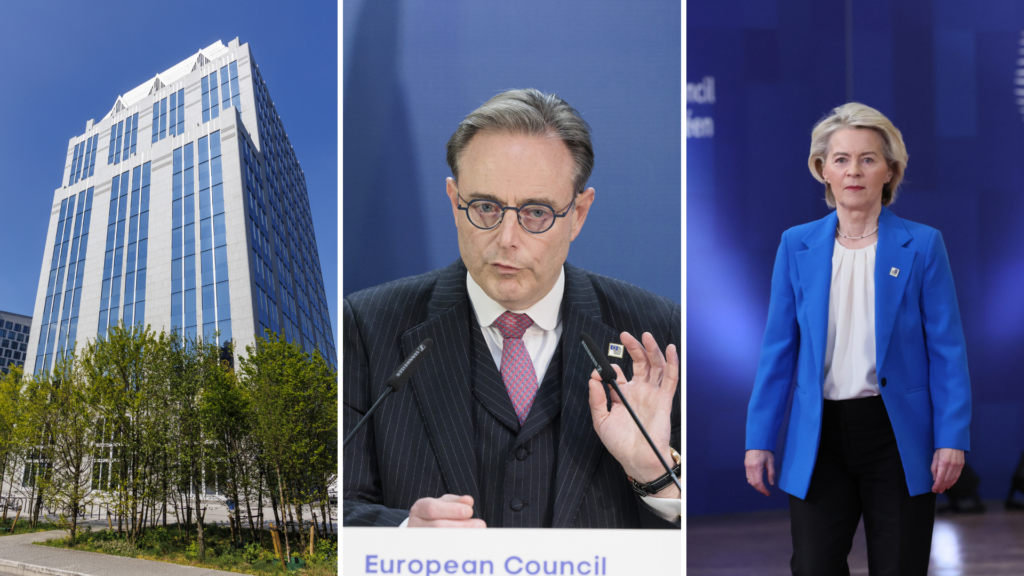
So the dust has settled - for now - on the most consequential week for the EU in many a year, and as the political year draws to a close, it's time to reflect on how the former mayor of Antwerp became a a global power player in the space of just a few short months.
The whole Russian frozen assets saga, which projected Belgium's Prime Minister Bart De Wever (N-VA) reluctantly into the limelight, did not happen overnight. Indeed, De Wever was not even in power when the initial rumblings of unease about the Euroclear plan began way back in 2022.
When it came to a head earlier this year, however, De Wever was in charge of a newly formed coalition government, and if anyone had been watching, he had already proven his single-mindedness and determination to take tough decisions in the face of opposition, in the way he managed the government formation and its governing priorities.
Indeed, there are several ingredients that made BDW the right man at the right time. As an avowed Flemish nationalist, the fact that he has fought on behalf of a smaller faction against a larger entity all his political life is one. Compare this to Belgium and the EU.
Second, the PM is a student of history, with particular passions for classical history, ancient Rome, and WWII. History informs the present, so what better history to aid De Wever in shaping his understanding than what the great powers did to help the reconstruction of Europe following the wanton destruction of the war?
Thirdly, and perhaps less obvious, is the fact that there used to be substantially more of Bart Albert Liliane de Wever than there is today. He has undergone a weight loss transformation through a rigorous diet on the advice of his doctor. Keeping the weight off for all these years requires not insignificant reservoirs of willpower and self-discipline.
So it was that when Belgium came under intense pressure - some might call it bullying - from the EU, the country's Prime Minister stood firm. He was the right man at the right time in the right place. As time went on, he was also able to make the case more strongly and more convincingly. The key - he increasingly had backing from major EU players, including Italy.
His demands about security backing if Russia came after Belgium were also endorsed by none other than the head of the European Central Bank, Christine Lagarde.
More importantly, he also had backing from the US, and even more importantly, the EU Euroclear plan was framed as foolhardy at best, setting a dangerous precedent in the eyes of the Trump administration.
The Brussels Times has learned that in the days running up to and during the crunch EU summit last week, the US, in the shape of new Ambassador to Belgium Bill White and his economics team, was in very close, constant contact with senior Euroclear officials.
Ambassador White told The Brussels Times this week, " This criticism of Euroclear is both unfair and inaccurate. Disruption of this critically important central bank flow of funds would have absolutely catastrophic consequences." He even went as far as to suggest the criticism "of Euroclear and Belgium has had a reputational and defamatory result to the trusted institution."
Other students of the EU have praised the way De Wever changed the norm when it comes to these types of EU deals. Guntram Wolff of the think tank Breugel said the fact that the EU was able to push through a decision on new debt without unanimity for the first time was "a huge deal" and may signify a new way forward. Likewise, professor of EU law Alberto Alemanno called the EU-backed borrowing with selective participation in collective liability "unprecedented".
Perhaps less helpfully for De Wever, amongst those international politicians praising his efforts, was Victor Orbán, calling his push back a "heroic stand".
Of course many have suggested that the US too has it's own reasons for wanting a different outcome than freeing up Russian frozen assets, but other big players were also acting behind the scenes in a less public effort to move away from Ursula von der Leyen's plan 'A' to a more palatable plan 'B' - none more so it turns out than President Macron of France.
He will appreciate, maybe even enjoy, the praise he is currently getting internationally, especially from newfound allies, with whom Belgium has many important joint challenges and priorities and whom he needs cooperation and support from to fix some serious internal issues. Endorsements such as this from US Ambassador White will help in that:" Bart de Wever is a very principled, strong, sensible and extremely talented leader. He is fighting for his country and its financial security...and I am proud of him for not being bullied here."
Maybe even more important to De Wever, though, is the praise he has garnered inside Belgium, and not just from the usual suspects.
“Great work, Bart,” Belgium’s Defence Minister Theo Francken, who’s from the same party, the Flemish nationalist N-VA, as De Wever. “(You’ve) taught the EU a democratic lesson. It was about time.”
“Good result for Ukraine and Belgium, good work from BDW,” Frédéric De Gucht, president of the Flemish liberal Open VLD, an opposition party, said. “A solidarity Europe against a Russian aggressor.”
Even the french-speaking media in the form of Le Soir praised the Flemish PM; "Hats off to him! ... Bart De Wever has proven himself to be an exceptional statesman on three levels: he narrowly defeated the far right in the elections, he has helped the small country of Belgium regain its long-lost significance on the European stage, and he is enabling the EU to demonstrate its unity (with 24 members) and a decision-making ability that has been sorely lacking to date."
The irony is, that for a brief moment in history, this Flemish separatist son of a Flemish Militant Order member, who refuses to publicly say 'Vive la Belgique' ("Long live Belgium," in French) has unified the country of which he is Prime Minister more than any in recent memory, and has given his citizens a sense of pride in their nation previously only felt during football tournaments and song contests.
The huge question for the little mouse, though, is, will the EU's big beasts take this shellacking lying down, with humility and self-reflection, or is there going to be a nasty sting in the tail for Prime Minister De Wever and Belgium? Will they feel humiliated and want revenge? Because one thing in politics and history is sure: the higher you rise, the harder you fall.
Just ask Bart De Wever, scholar of the Roman Empire and Nazi Germany.
Have a good holiday period wherever you are, and keep reading The Brussels Times - we value your support!
Belgium in Brief is a free daily roundup of the top stories to get you through your coffee break conversations. To receive it straight to your inbox every day, sign up below:
1. The Spanish tourists who came to Brussels and never left
"Most people in the world dream of living in New York, Paris, Dubai, Shanghai...they don't dream of living in Brussels. But when you get here, you get hooked." Read more.
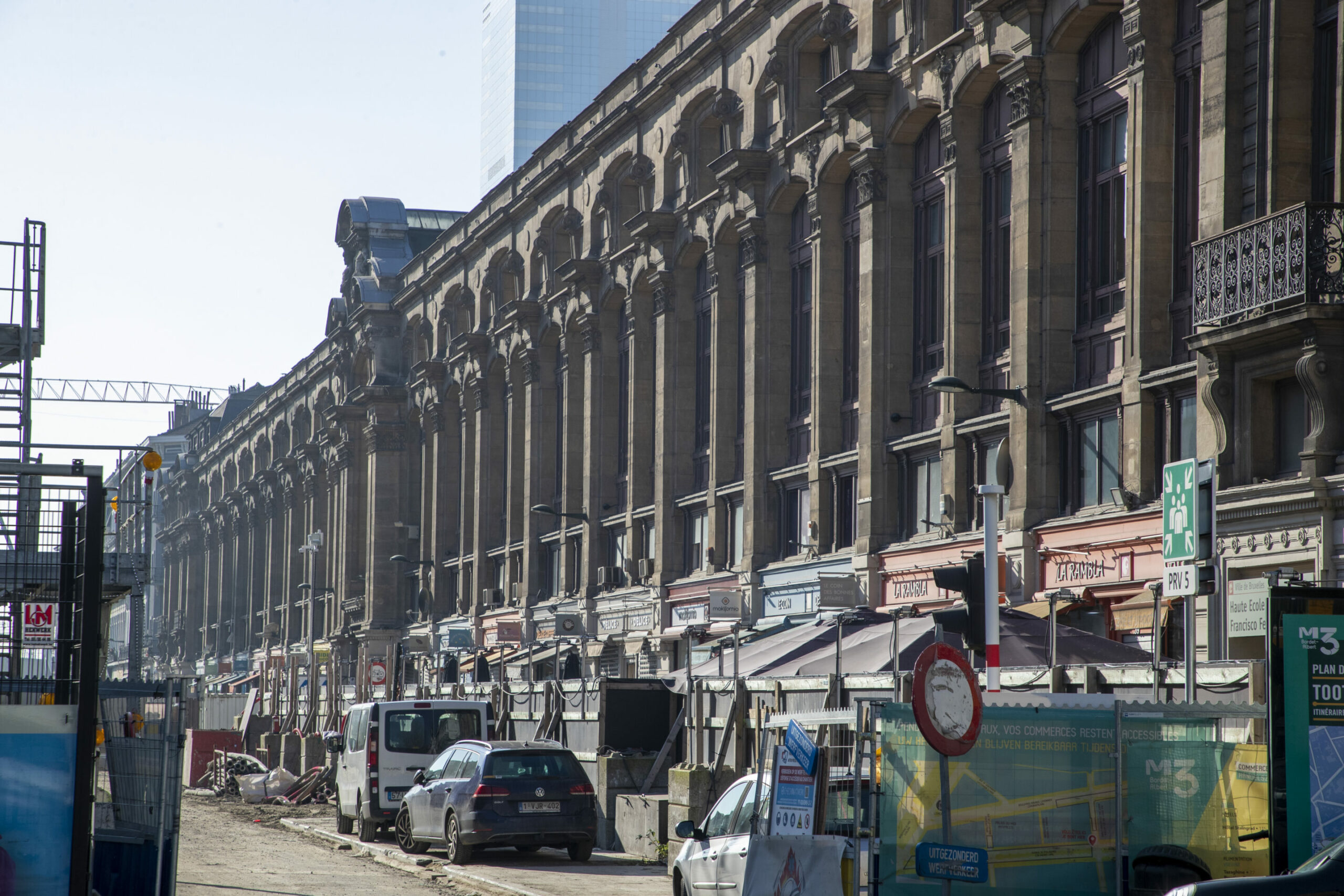
2. Metro Line 3: Looking back at Brussels’ derailed flagship project
Whether the region chooses to press on or finally draw a line under the project will be one of the most consequential political decisions of the coming year. Read more.
3. Flemish Education Minister calls in police after students send threats over school holiday plans
"I don't want to dramatise things," Demir said, "but threats against me, or my family, are unacceptable. That's where I draw the line. Those young people deserve a visit from the police." Read more.
4. ‘I could only wait until they’d had enough’: 24-year-old beaten after winter event near Antwerp
He has since filed a complaint against unknown attackers and believes those responsible could be identified through CCTV footage from the Winter Village. Read more.
5. Christmas lights, candles: How to avoid common festive fire hazards
"Our teams are heavily mobilised during the holidays" Read more.
6. Will Brussels get a White Christmas this year?
According to forecasters, the chances are very slim, but a surprise might arrive for New Year. Read more.
7. Belgium presents new anti-drone air defence system
The new measures follow incidents in October and November when drones were spotted flying over Belgian military sites. Read more.
