
Earlier this April, officers of the Kenya Wildlife Service (KWS), an armed force tasked with protecting the country's iconic creatures, arrested two 19-year-old Belgians. Today, they were ordered to pay a fine of €6,800 or face prison. The culprits are part of a growing underground trend of ant poaching.
Lornoy David and Lodewijckx Seppe pleaded guilty to illegal possession and trafficking of live wildlife at a court hearing on 15 April. More than 5,000 smuggled rare ants were intended to be shipped to exotic online pet markets in Europe and Asia. Their enclosures comprised 2,244 test tubes and syringes containing cotton wool – environments that would keep the insects alive for weeks. The insects were valued at nearly one million Kenyan shillings (around €6,800).
The two Belgian teenagers expressed their regret to the press and were adamant that they weren't in Kenya to break any laws. But by accident and stupidity, they did.
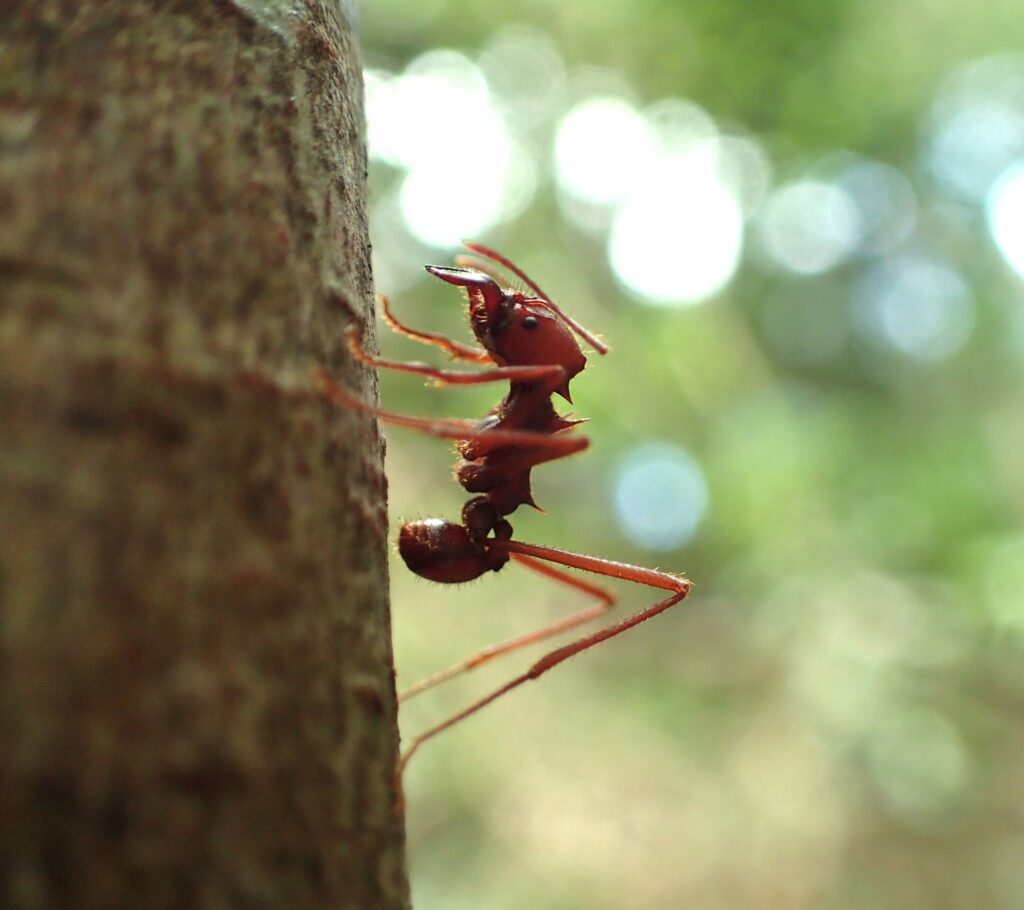
Among the 5,000 insects were Messor cephalotes, a large ant species sought after by collectors.
A global network
In the shadowy corridors of global wildlife trafficking, elephants, pangolins, and parrots dominate the conversation. But this new underground trend is far less conspicuous and quietly expanding – one that rarely makes headlines yet operates across continents with minimal oversight.
Not just any ants. These rare, often tropical species are valued for their peculiar behaviours, intimidating size, or striking appearance. They are trapped, traded, and shipped (often illegally) from rainforests and savannahs to living rooms and terrariums across Europe, North America, and Asia. In most cases, the practice takes place far from the gaze of regulators, slipping through the 'cracks' of international conservation frameworks.
"It's not new," says a myrmecologist (ant hobbyist) I interviewed, speaking on condition of anonymity due to the sensitivity of the topic. "This started well before the internet. However, once forums came around in the early 2000s and social media exploded in the 2010s, it morphed into something else – a marketplace. Then a traffic network."
From niche hobby to global market
What began as an obscure pursuit for amateur entomologists has turned into a sprawling, loosely regulated global subculture. Fuelled by Instagram accounts, Facebook groups and encrypted WhatsApp threads, the so-called ant-keeping community has attracted a new generation of hobbyists, particularly teenagers and young adults in Europe, China, and the United States.
Their collections go far beyond local garden ants. They seek exotic species: the honeypot ant, whose workers swell into living food storage tanks; vibrant Camponotus with iridescent sheens; massive Dinoponera, one of the largest ants on Earth.
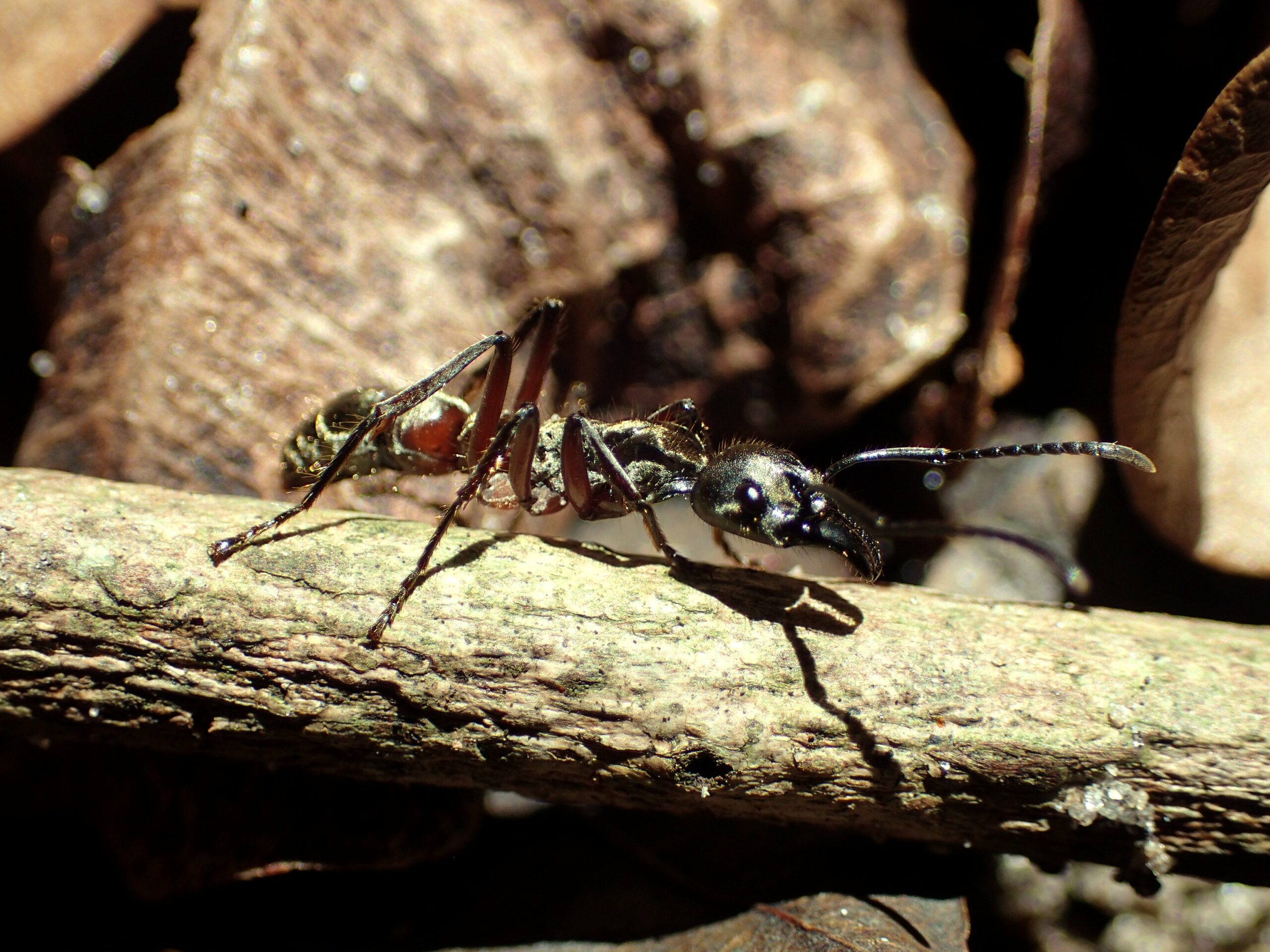
Picture of Neoponera villosa, an exotic ant sought after in the exotic ant market. Credit: Quentin Willot.
"People are fascinated by ants that look weird, do something special, or are just massive," explains Quentin Willot, a biologist who studies ants at UNamur. "It’s the same impulse that drives people to buy venomous snakes or rare orchids."
But the supply chain feeding this fascination is far murkier than most enthusiasts realise.
A hidden global supply chain
A vast and often illicit network lies beneath the surface of sleek websites and social media accounts. Collectors across Kenya, Australia, South America and Southeast Asia harvest wild ants – sometimes in the thousands – and ship them via regular postal services to customers in Europe and North America.
"Ant queens can survive weeks in simple plastic tubes with some moist cotton," Willot says. "They’re incredibly resilient. And customs don't check enough parcels to catch them. Most go through undetected."
Legally importing ants into the European Union requires an export permit from the source country and an EU import certificate, including a veterinary inspection. In reality, these requirements are frequently ignored or circumvented. Some sellers try to play by the rules. Most don’t bother. There’s no real enforcement either way.
Willot estimates that each major European country now has two to four full-time ant traders, supported by a much larger network of informal resellers, couriers, and so-called grossistes – wholesalers who operate largely out of sight.
"You cut off one head, seven more grow back," Willot shrugs. "This trade is decentralised. No kingpins. Just dozens – hundreds – of micro-entrepreneurs."
A legal grey zone
One significant obstacle to regulation is the lack of legal clarity. Unlike charismatic mammals or endangered birds, most ants do not appear on international conservation lists. The Convention on International Trade in Endangered Species (CITES) rarely covers insects, and the IUCN Red List barely scratches the surface of known ant species.
"There are 17,000 described ant species – and probably just as many undiscovered," Willot says." Unless the insect is protected, you can pretty much export and import freely, as long as you tick the right boxes. There’s a massive legal vacuum."
Even seemingly legal breeding operations pose risks. If released or if they escape, imported species can become invasive and ecologically disastrous. Tropical fire ants and leafcutter ants, in particular, are known to devastate native ecosystems when introduced.
And the people don’t realise the danger. Some species are incredibly aggressive and highly adaptable. "We’ve already seen irresponsible releases that could have long-term ecological consequences," Willot adds. It's a biodiversity leakage on a global scale. And nobody's watching.
Cultural fascination
The trade also mirrors global inequalities. While exotic ant-keeping has become something of a subcultural phenomenon in Germany, France, the UK and China, in many parts of Africa or the Middle East, it is mainly limited to commercial exploitation.
"You don’t see kids in Morocco collecting ants for fun," Willot says. "But you see people in Europe buying them, and people in Africa selling them. It reflects broader economic imbalances."
Indeed, many traffickers begin not as criminals, but as curious hobbyists. Once they discover the profit potential – selling a queen ant for €50, €100, sometimes more – they transition into commercial activity. Few know they are participating in what is, at best, a legal grey area and, at worst, an ecological threat.
But could authorities do more? In theory, yes. Education campaigns, positive lists (species explicitly permitted for trade), or stricter import inspections could slow the spread. But experts say enforcement remains unrealistic.
"Customs officers aren’t trained to identify ants," Willot notes. "Even scientists struggle. You can’t just create an 'ant police'. It’s not feasible."
In Wallonia, positive lists exist for vertebrates – mammals, reptiles, birds – but do not extend to insects. Even promising systems stop short of covering the insect world. With thousands of parcels crossing borders daily, the chances of intercepting a few plastic tubes full of ants are slim.
An ethical blind spot
Some traders and breeders insist they operate ethically, sourcing from captive colonies, avoiding endangered species, and minimising ecological impact. But Willot remains sceptical.
"They say: blame deforestation, not us. But they’re part of the same system. It’s all connected." He adds. The cumulative impact is real. What seems like a harmless purchase to a teenager in Berlin or Boston is, in aggregate, a global industry extracting thousands – perhaps millions –of ants from the wild.
These traders don’t see themselves as traffickers. They see passion, curiosity, even conservation – a specimen collected here, a trade arranged there – nothing criminal in their eyes. But taken together, they form a decentralised octopus network, draining fragile habitats and fuelling a market few admit exists. The real danger isn’t malice. It’s denial. A legal denial that is reshaping the natural world without ever meaning to.
