
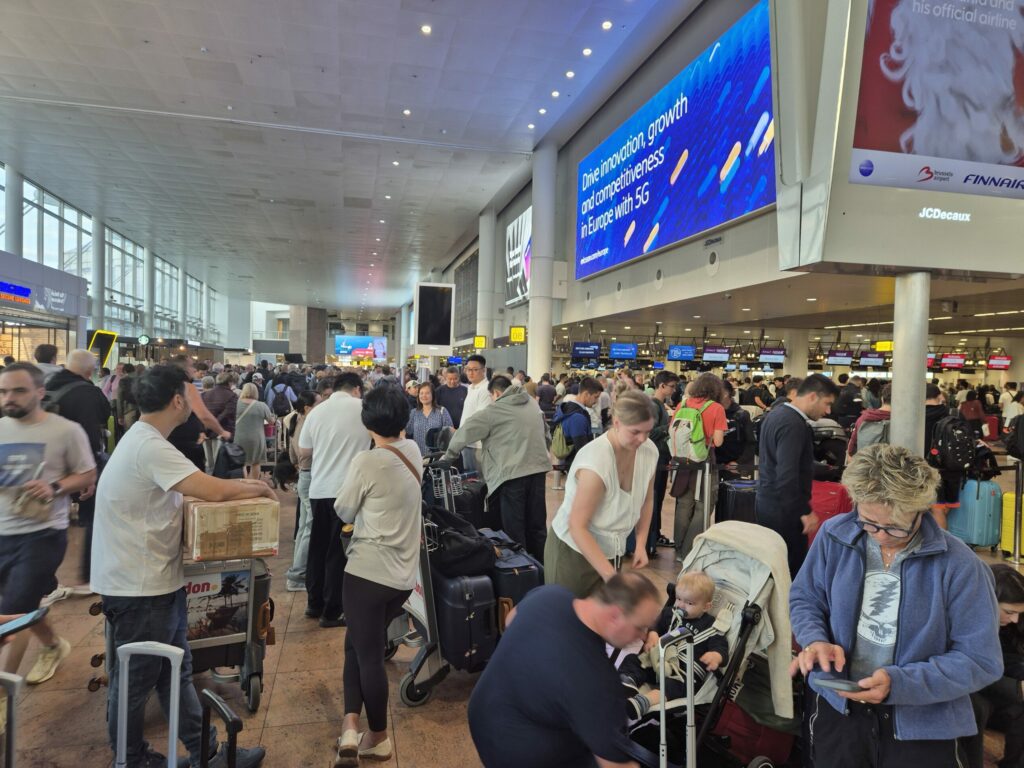
The disruptions at Brussels Airport caused by a cyberattack will continue throughout Monday and Tuesday, a spokesperson for the airport has confirmed.
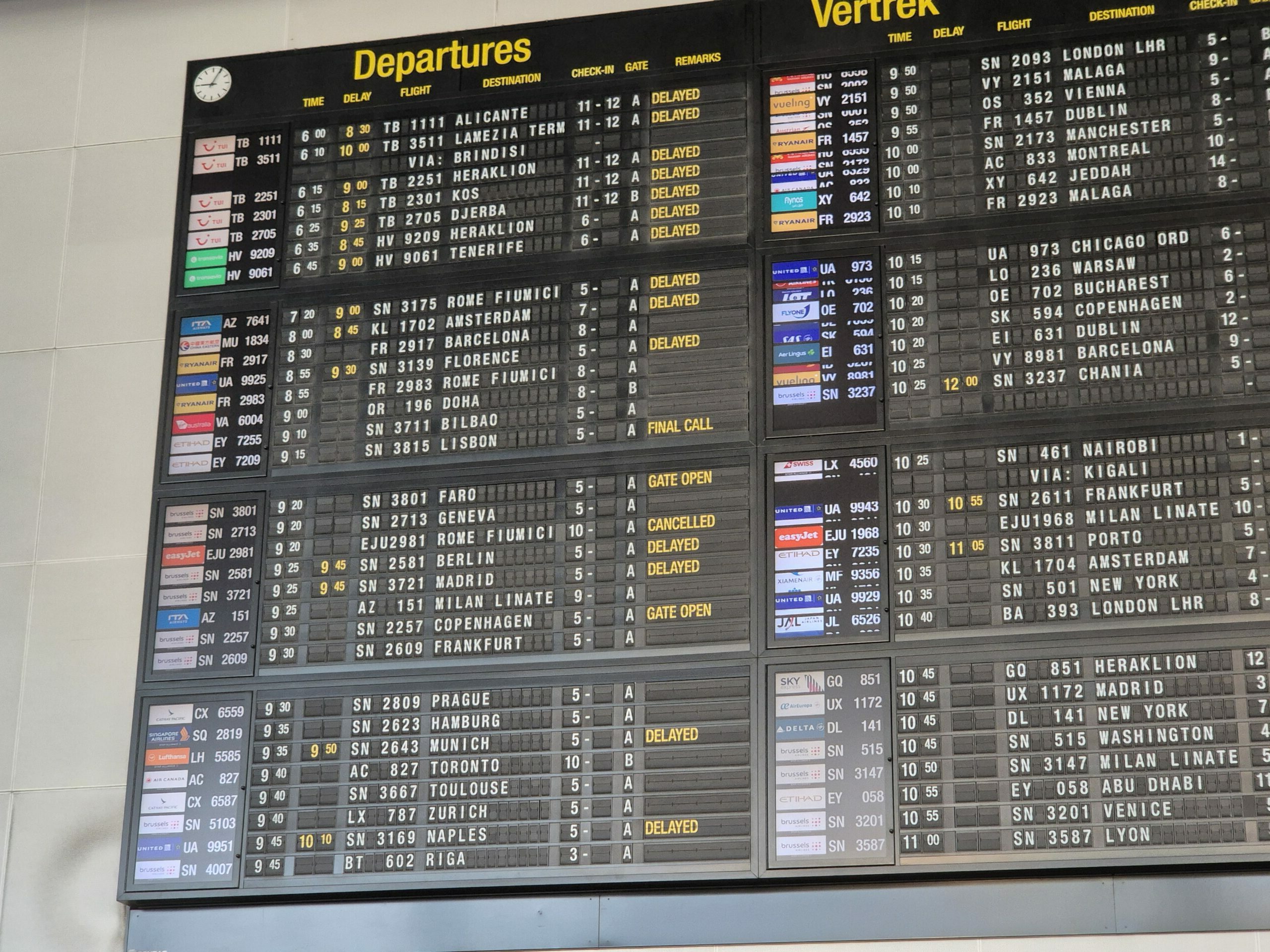
Of the 276 departures that were scheduled, 40 have been cancelled and nine others are experiencing delays. The disruption is expected to continue on Tuesday; Brussels Airport announced that approximately one in ten flights will still be cancelled.
Like several other European airports, Brussels Airport has been experiencing technical problems with its check-in and boarding systems since Friday evening, due to a cyberattack at external service provider Collins Aerospace.
"The service provider is actively working on the issue and trying to resolve the problem as quickly as possible. At the moment, it is still unclear when the issue will be resolved," Brussels Airport said.
The issue comes at a particularly unfortunate time for EU leaders travelling to a meeting of the UN General Assembly in New York this week.
'Arrive on time'
Travellers are asked to check the status of their flight in advance and only come to the airport if their flight is confirmed. If it is going ahead, Brussels Airlines advises passengers to check in at home beforehand.
"Unlike the airport's systems, the airlines' own systems were not affected by the cyberattack. Therefore, those who check in themselves will experience minimal disruption," a spokesperson said.
Over the weekend, many passengers have been checking in manually, using handwritten boarding passes – which is a much slower process, leading to large delays.
For flights within the Schengen zone, passengers are advised to arrive two hours in advance. For non-Schengen destinations, passengers should arrive three hours in advance. "Arrive on time and continue to monitor the information channels for updates," the spokesperson said.
Brussels Airport was hit by a cyber attack on Friday. Credit: Belga/Joris Smets
On Monday, the airport is not expecting major disruptions, and the vast majority of flights are expected to operate. Of the 277 departing flights, 40 have been cancelled, and of the 277 arriving flights, 23 have been cancelled.
"Check-in will continue to be done alternatively on Monday: with pen and paper, as well as laptops and iPads," airport spokesperson Ihsane Chioua Lekhli told Belga News Agency. "Online check-in is also available, and passengers can print their own baggage labels at kiosks."
The cancelled flights were mainly to major European hubs such as London, Munich and Frankfurt. Brussels Airlines flies to these destinations several times a day, meaning it can offer passengers alternative flights more quickly.
Most flights still operational
Over the weekend, the number of cancellations – and especially delays – was significant. On Saturday, 25 of the 234 scheduled departures and 13 arrivals were cancelled. On Sunday, authorities asked airlines to cancel half of their scheduled flights; ultimately, 50 of the 257 departures and 35 arrivals were cancelled.
According to Brussels Airport, thanks to the staggered flight schedules, planned delays, additional staff, and the continued functionality of online check-in and self-bag drop, 85% of departing flights were still operational over the weekend.
Meanwhile, Charleroi Airport did not experience any disruptions due to the cyberattack, a spokesperson confirmed to The Brussels Times. "No flights were rerouted to us. We saw a high number of passengers over the past few days, but it was all planned."
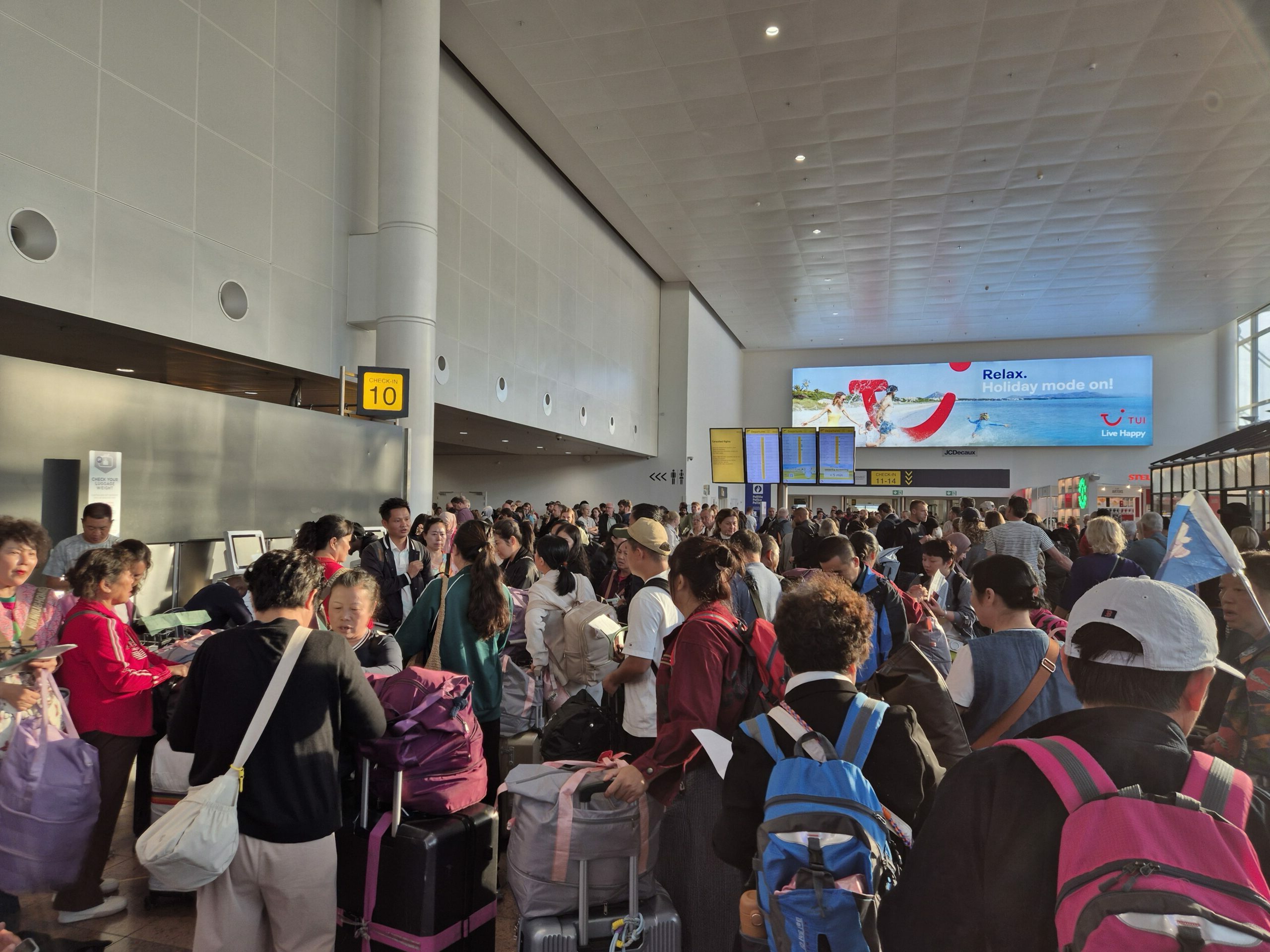
People pictured waiting at the check-in of Brussels Airport on Saturday after a cyber attack, 20 September 2025 in Brussels. Credit: Belga/Joris Smets
There is currently no indication of when Collins Aerospace will be able to restore the systems. The American company builds systems that allow passengers to check in or board their planes at numerous airports worldwide.
The nature of the cyberattack is not yet known. RTX, the parent company of Collins Aerospace, spoke of a "cyber-related disruption" in a statement to Reuters. On Monday, the European Union Agency for Cybersecurity (ENISA) confirmed that the attack involved ransomware, which involves blocking systems by encrypting their content. The hackers typically demand a ransom to release the systems.
London's Heathrow Airport and Berlin Brandenburg Airport also experienced similar problems. However, Brussels Airport appears to be experiencing more disruption than other European airports.
Passenger rights: refunds and assistance
Consumer protection organisation Testachats reminded travellers that passengers whose flights are cancelled due to the cyberattack are entitled to a free alternative solution or a full refund of their ticket.
However, airlines are not obliged to pay financial compensation, as the cancellations are considered the result of force majeure.
Passengers whose flights are delayed are entitled to assistance from their airline, such as the provision of refreshments. If an overnight stay is required, the airline must cover hotel accommodation costs.
