
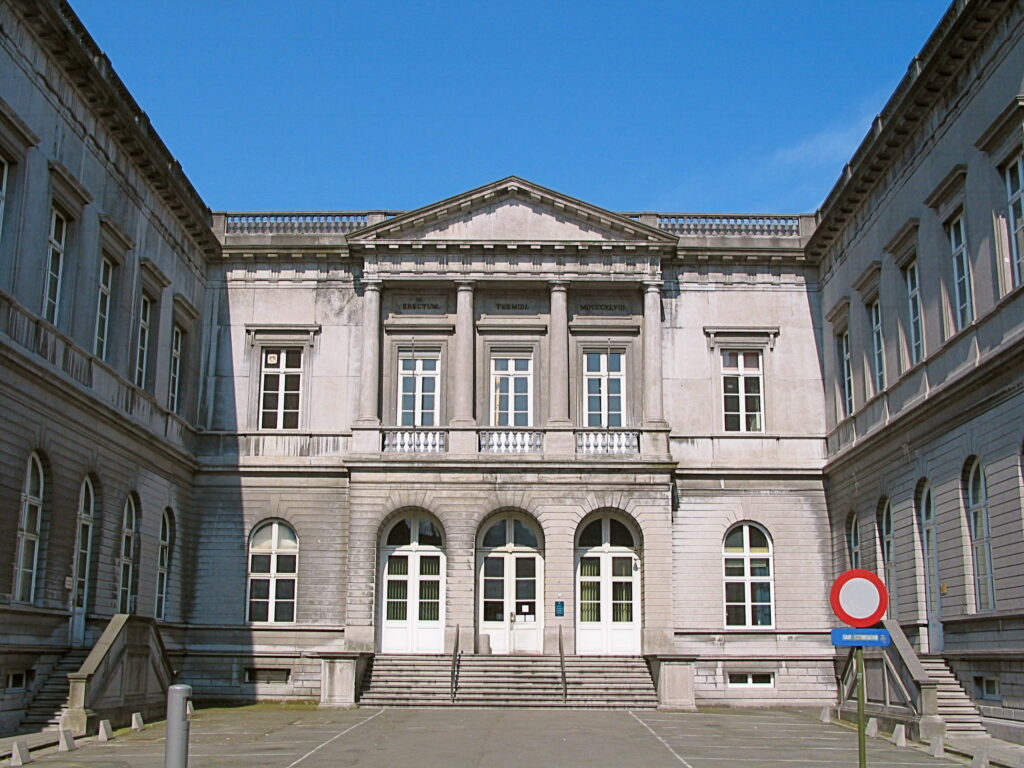
An 82-year-old woman appeared in court yesterday accused of abducting children in Guatemala and putting them up for adoption in Belgium without the consent of their biological parents.
The accused – referred to only as Michèle B. – is the former chair of Belgian non-profit organisation Hacer Puente. Between 1985 and 1992, Hacer Puente arranged the adoption of over 150 children from the Latin American country by Belgian couples.
It is alleged that in at least some of these cases, the biological parents did not voluntarily give up their children. Adoptive parents in Belgium were reportedly led to believe that the children were orphans.
According to Belga News Agency, a court in Mons heard yesterday that a presiding judge will decide on 29 October whether Michèle B. will stand trial for the kidnapping of 14 children, forgery, and criminal association.
The story of Dolores Preat
The road to justice has been long for the families affected by the scandal, which first came to light over a decade ago.
In 2009, Brussels resident Dolores Preat, who had been adopted by a Belgian family in 1984 at the age of five, began searching for her biological mother.
Preat’s adoption papers recorded her birth mother’s name as Rosario Colop Chim, from Zunil, a village in southwestern Guatemala.
When Preat visited Zunil in 2011, she discovered Colop Chim no longer lived there, but did manage to find the woman’s sister, who claimed Colop Chim had never had a daughter.
While she was in the village, Preat was told the story of a little girl who had been kidnapped from the village in 1984. Praet was introduced to the child’s family and DNA tests confirmed that she was in fact related to them. Rather than having been legally put up for adoption as she had long believed, Preat had been the victim of abduction.
‘Baby brokers’
After a judicial investigation in Guatemala, Colop Chim, then 56, was sentenced to 15 years in prison in 2014 for acting as a so-called 'jaladora', or 'baby broker' - someone who, on behalf of others, searches for babies for adoption, with or without the knowledge and consent of the biological parents.
In Guatemala, which was ravaged by a bloody civil war between 1960 and 1996 that claimed the lives of some 200,000 citizens, some 40,000 babies were adopted internationally between the latter half of the 1960s and 2008, prompting a lawyer involved in such adoptions to remark in 2016: "Some countries exported bananas, we exported babies".
From 1977 to 2008, it was the only country in the world where the adoption process was fully privatised, although the first stories of abuse and abducted children emerged as early as the mid-1980s.
The scandal that shook Belgium
Preat's story resonated in the Belgian press, prompting other people who came from Guatemala as children to come forward with their own stories of forced adoption.
Some shocking cases were uncovered. In the case of Coline Fanon - born Mariela Sindy Rodriguez in 1986 - her biological mother had taken her to the hospital shortly after birth because she had a high fever. Two days later, the mother was told that the baby had died, when in fact the child had been transferred to another hospital, after which she was adopted by a Belgian couple.
Almost all such adoptions were organised by Hacer Puente, founded in 1985 by Michèle B. and her husband Odon B., who died at the end of 2018.
The couple had themselves adopted a child from Guatemala in 1977, and are believed to have organised around 150 adoptions from Guatemala by Belgian couples between 1985 and 1992.
They often collaborated with the now-deceased Ofelia Rosal de Gamas, sister-in-law of Oscar Humberto Mejía Victores, who was dictator of Guatemala from 1983 to 1986. Rosal de Gamas was accused of being a ‘jaladora’ in her own country in both 1982 and 1987.
In early 2019, the federal prosecutor's office took over the investigation and handed it over to the human trafficking unit of the Brussels federal judicial police. That investigation was completed a few months ago and the federal prosecutor's office is now responsible for prosecuting Michèle B.
The case was brought before the council chamber in Mons in the spring, but was then postponed after requests for additional investigation. Michèle B. herself has always maintained that she had not committed any crime.
