
More Belgian professionals are creating one-person companies to dodge taxes, a trend the government now plans to curb.
To avoid paying tax, some Belgian professionals resort to so-called "management companies", a technical term that essentially means a one-person business. At its head is a sole shareholder who is also the company's director.
Initially, the term referred to companies that managed or advised operational businesses in areas such as consultancy, financial support or administrative management.
"Typically, you'll have a company with employees carrying out an activity, and its directors or shareholders manage that entity through their own management company," Baptistin Alaime of Tuerlinckx Tax Lawyers tells The Brussels Times.
The technique, he says, has mainly been used to pay senior executives, notably because it allows them to avoid employer social contributions.
The term "management company" has no official legal status. "It's jargon used by legal technicians," Alaime adds. "It's not a distinct company form, and it has no formal recognition."
'Legalised tax fraud'
Over time, the concept has broadened to include self-employed professionals who, after years of working as sole traders, have switched to company status, mainly for tax efficiency. But this practice has now drawn the attention of Belgium's Federal Government, which says it is time to tighten the rules.
Finance Minister Vincent Van Peteghem (CD&V) has warned that the growing use of these one-person firms is sometimes "abusive" and deprives the State of much-needed revenue. His coalition partner, Health and Social Affairs Minister Frank Vandenbroucke (Vooruit), has gone further, describing them as "a form of tax evasion, legalised tax fraud."
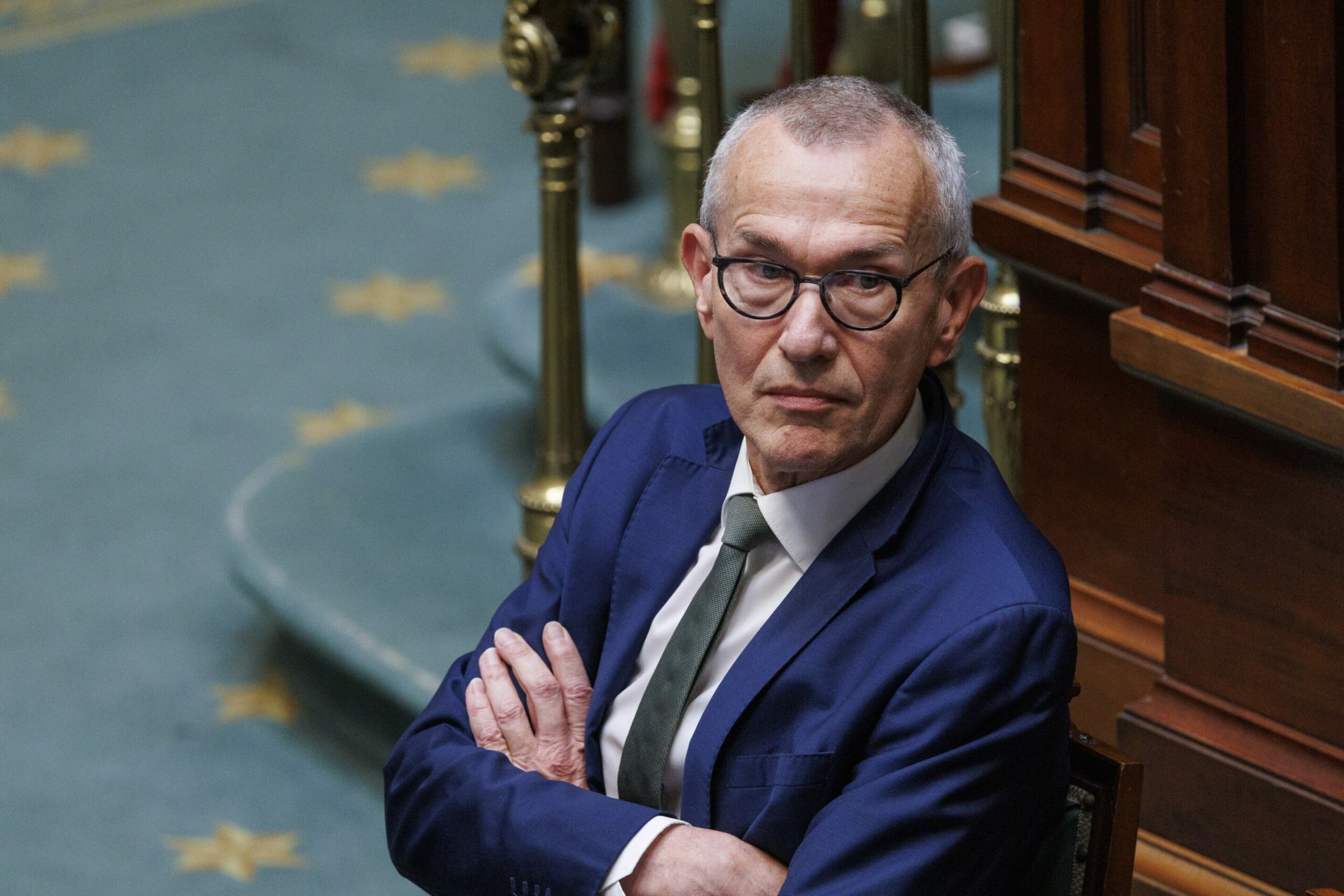
Deputy Prime Minister and Minister of Public Health and Social Affairs Frank Vandenbroucke pictured during a plenary session of the Chamber at the Federal Parliament, in Brussels. Credit: Belga/ Nicolas Maeterlinck
"In legal terms, there's no abuse," Alaime explains. "It simply means someone carries out their work through a company rather than as an individual, which is fully allowed. And not only for tax reasons. Many do it to limit personal risk to their company's assets, rather than their private wealth."
The government's real concern, Alaime says, is the shift in tax regime: "People move from personal income tax, where rates quickly reach 50%, to corporate tax and dividends, taxed around 32–36% in total. That's what the ministers call 'abusive'."
So what's on the table? For now, just two minor adjustments.
First, the minimum salary a company director must pay themselves to qualify for Belgium's lower 20% corporate tax rate would rise from €45,000 to €50,000. Miss that threshold, and profits are taxed at the full 25%. "That's a difference of only €5,000 on the first €100,000 of profit," Alaime notes. "So it's not revolutionary."
Second, the government plans to cap benefits in kind, such as cars, stock options, and similar perks, at 20% of total remuneration. "That might complicate things a bit," says Alaime, "but in practice, most management-company owners don't exceed that limit anyway."
'Every euro they take now is a euro I can't reinvest'
For Antoine, a Brussels entrepreneur running a small sales-prospecting firm, the government's narrative feels detached from the day-to-day grind of trying to stay solvent. "I feel deprived of my freedom," he says.
"The State looks for quick fixes," he adds. "Cash is tight, so it grabs cash. But every euro it takes now is a euro I can't reinvest to grow."
As a director of a small company, Antoine often delays paying himself a salary to keep cash in the business. Yet he still owes quarterly social contributions upfront, long before profits are confirmed. "They reconcile years later, but I need that money now to make payroll or buy tools."
He says even corporate tax hits hard on thin margins: "On €10,000 profit, €2,000 in tax is a laptop I can't buy, a junior I can't hire."
Rising costs push him to outsource work abroad: "Belgian clients push back on prices, so I send some design work to Poland. They do a great job, but that's VAT not paid here."
He admits that some business owners stretch the rules – "buying sofas through the company, 'team-building' holidays" – but insists most play fair.
"Tighten against abuse, fine. But blanket pressure catches the rest of us trying to stay legal," he says. "The government wants quick revenue, but it stifles the very people creating value. Give us three years' breathing space, less tax now, more growth later."
