
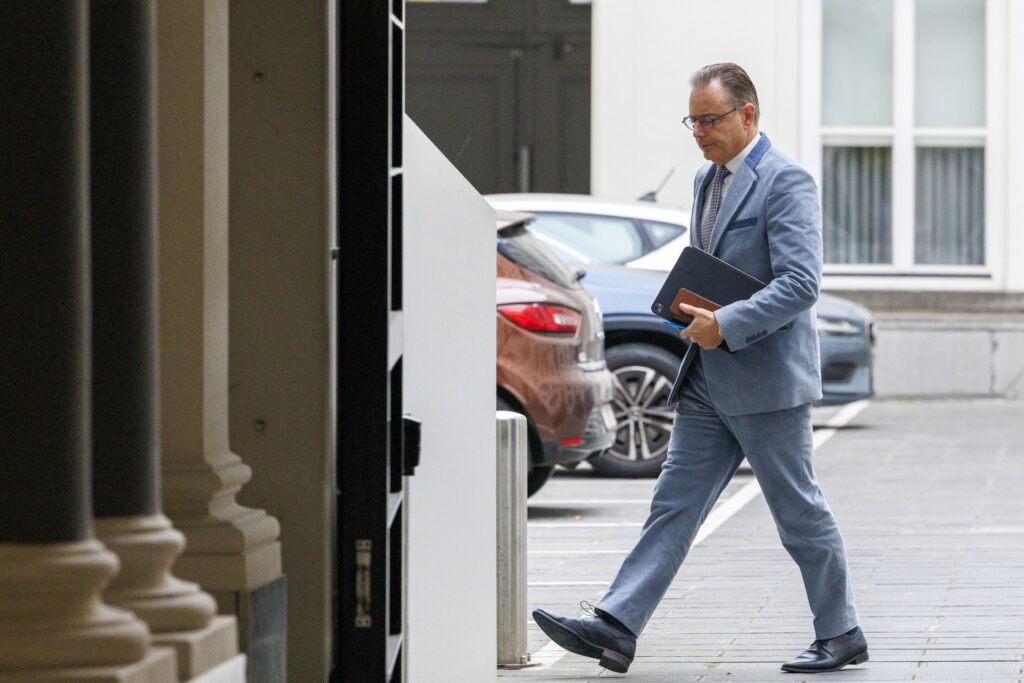
Belgian Prime Minister Bart De Wever is meeting senior European Commission officials today in an effort to break the deadlock over frozen Russian state assets.
According to reports the funds would be used to finance a €140 billion reparations loan for Ukraine.
The high-stakes meeting follows months of stalled negotiations and mounting pressure from Brussels, Washington and Kyiv to unlock the billions sitting in Belgium’s own financial system, mainly within Euroclear, the Brussels-based securities depository that has become the world’s largest holder of frozen Russian central bank reserves.
Belgium’s reluctance
So far, Belgium has refused to back the Commission’s proposal, warning that the legal and financial burden would fall disproportionately on Brussels. If Moscow’s lawyers challenged the move in court and won, or if sanctions were overturned, Belgium could be left holding the bill.
De Wever, who inherited the issue after taking office, has been blunt about his conditions: no deal without stronger EU-wide guarantees. “The fattest chicken is in Belgium,” he told fellow leaders at last month’s European Council, “but there are other chickens around.”
What Belgium wants
It's understood De Wever wants three key safeguards.
First, he is pushing for an ironclad mechanism to prevent a single EU country, such as Hungary or Slovakia, from vetoing sanctions renewals, which could legally force Euroclear to release the frozen funds.
Second, Belgium wants shared financial responsibility. If Russia sues or demands repayment, De Wever insists that all EU countries share the risk, either through national guarantees or through the EU’s multi-annual budget.
Finally, Belgium is calling for more transparency from other G7 countries about the whereabouts of the rest of the €300 billion in Russian state assets frozen since 2022.
The Euroclear paradox
Euroclear is a Brussels-based financial institution that serves as one of the world’s largest central securities depositories. It plays a crucial but largely invisible role in global finance by holding and settling transactions in bonds, equities and other securities for banks and governments.
Euroclear is also the only Western institution to regularly publish detailed reports on Russia’s immobilised funds, including how much interest they generate. That transparency, however, has made Belgium uniquely exposed.
Elsewhere, secrecy is king. France, Germany, Japan and the United States have refused to disclose how much Russian money is held within their jurisdictions. Switzerland has confirmed about €8 billion, while Luxembourg initially cited €10–20 billion before later revising the figure down to under €10,000.
A political and legal balancing act
Behind the technical discussions lies a geopolitical dilemma. Redirecting Russia’s frozen reserves to help Ukraine would mark a precedent-setting move in international finance. But if mismanaged, it could also erode global trust in Western markets, a risk Belgium cannot ignore as Euroclear’s host.
Related News
- 'I'm just little Belgium,' says De Wever as he thwarts plans to unlock frozen Russian assets
- De Wever sets out strict conditions for the use of frozen Russian assets
- Belgium will be held accountable if Russian frozen assets are seized, says Russia
- 'Europeans are the only ones who have a say' French President Macron on frozen Russian assets
- Lawyer accuses Belgian state of conflict of interest over frozen Russian assets
