
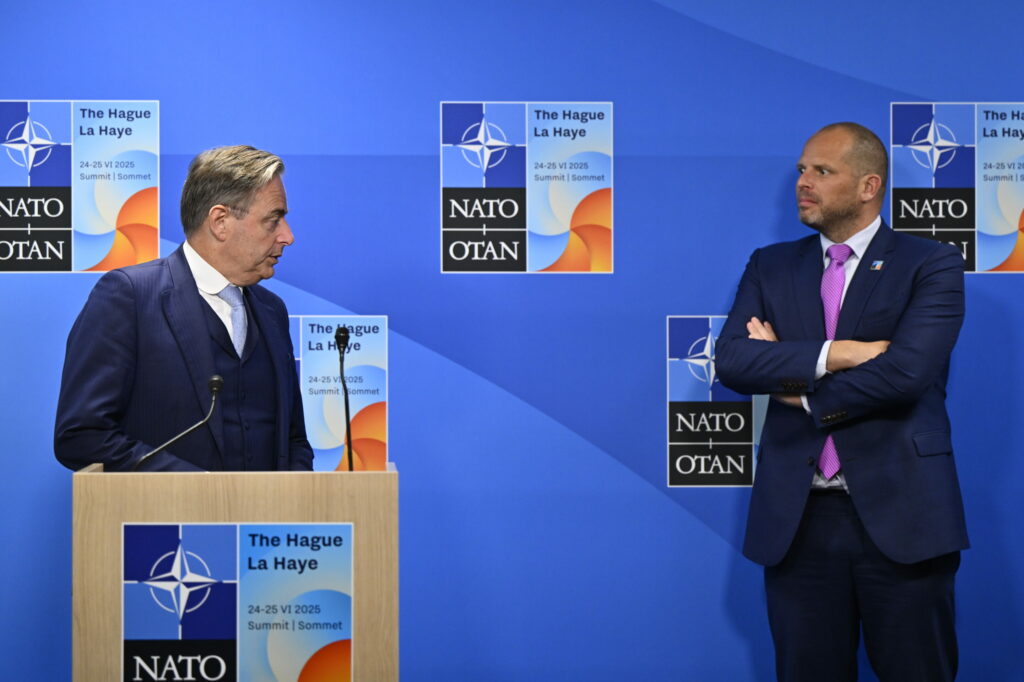
Belgium is officially joining the NATO Strategic Communications Centre of Excellence (NATO StratCom COE), a centre of expertise for strategic communications in Riga, Latvia.
"It is crucial that Belgium can count on the best expertise, resources, and partners to distinguish fact from manipulation and to communicate strategically," said Defence Minister Theo Francken (N-VA) on Monday during an official visit to Riga.
The accession comes as hybrid threats are emerging more frequently, from cyberattacks to organised disinformation campaigns. With this accession, Belgium aims to strengthen its role within the NATO alliance and actively contribute to the further development of modern strategic communication tools, the statement said.
"The battle for security today is not only being fought on the ground, but also in the information domain," said Francken. "It is crucial that Belgium can count on the best expertise, resources, and partners to distinguish fact from manipulation and to communicate strategically. Joining the NATO StratCom COE is a logical step towards increasing our resilience."
'Protecting our society'
StratCom COE is a NATO-recognised organisation but is not part of its command structure. It has been operational since 2014 and was initially established by Latvia, Estonia, Germany, Italy, Lithuania, Poland, and the United Kingdom.
Nine other countries have since joined, and four others have begun the accession process. Belgium is now joining.
The centre of expertise provides research, analysis, training, and advice on strategic communication, perception management, and the information environment.
Artificial intelligence is playing an increasingly important role in this, both to detect disinformation and to develop effective communication strategies.
According to Francken, recent incidents demonstrate the sophistication and targeted nature of contemporary hybrid threats. For example, after drone sightings over Belgium, misleading foreign media reports quickly emerged, he said.
"These events demonstrate that we must further develop our expertise in strategic communication, including AI-driven analysis, to proactively protect our society."
