
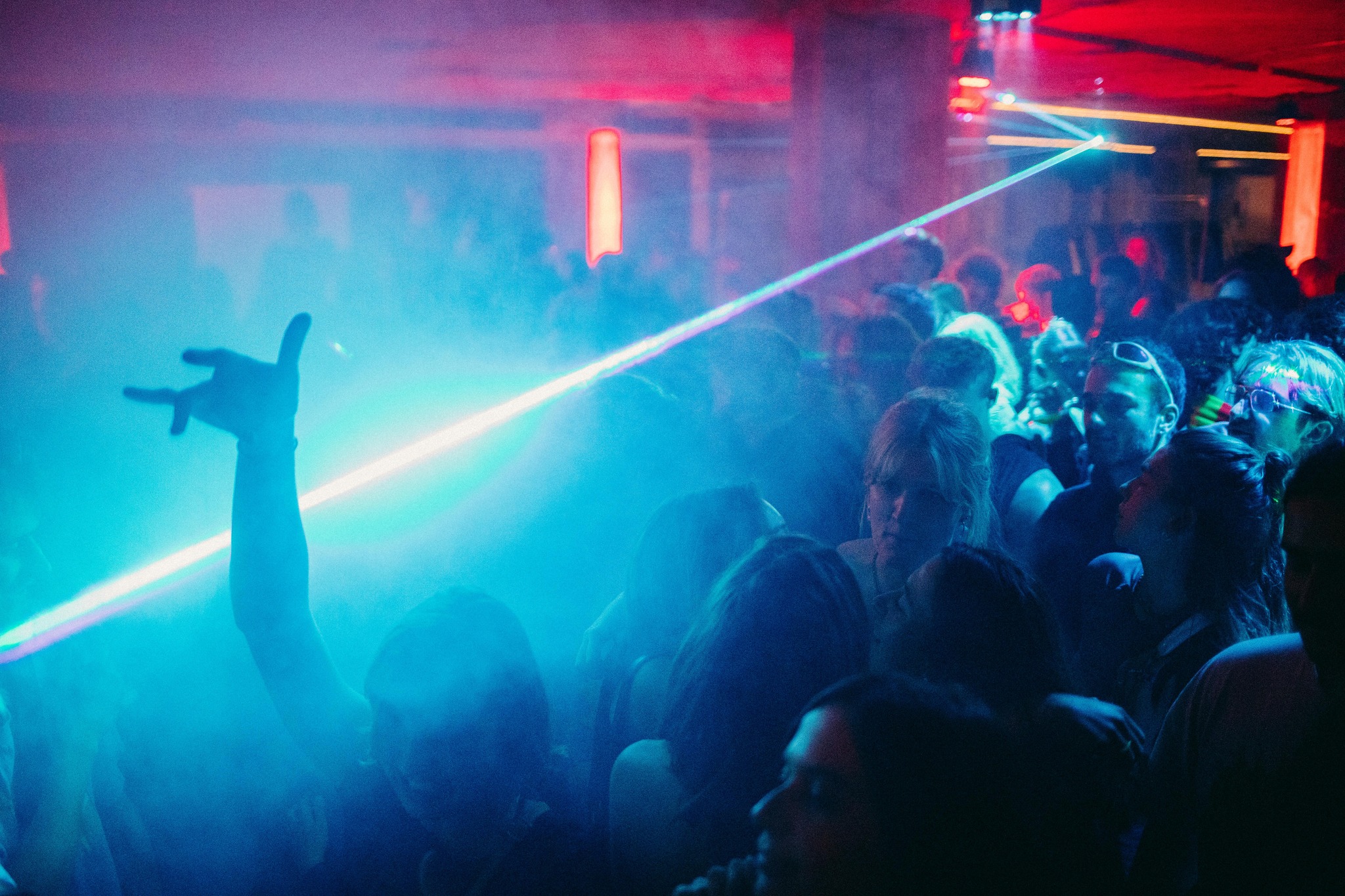
For over three years, Brussels nightclub Reset found a home inside a freezing, disused bank – welcoming thousands of happy clubbers. Yet last month, it closed down, citing a "brutal and political economic climate" in the city.
Reset joined the likes of Bonnefoi, Spirito, Reset and La Cabane, who have all announced plans to bring down the curtains on their clubs. Madame Moustache, another iconic Brussels space, announced this week that the venue's "closure is imminent".
In recent months, the nightlife sector has been rocked by the shutdown of some of its most loved nightclubs. It has been driven by a combination of public funding cuts, real estate pressures, stringent regulations and a decrease in society’s purchasing power.
As public money dries up due to the changes in the political tides in the Belgian capital, there is a bleak outlook for the future of the vibrant Brussels nightlife scene.
'Shaken up'
"I think we're going to take a big hit," Dorian Meeùs, founder of Reset and artistic director of the non-profit Arty Farty, tells The Brussels Times. His organisation is the force behind Abrupt Festival, as well as the Reset Atelier, a cultural space for artists.
"We're all really shaken up and very, very worried because I think there's a structural collapse in Brussels that doesn't just affect nightlife, but is a part of it," he explains.
Reset was opened insisde a disused bank owned by the City of Brussels, who had bought it to open a new future police station for the local police zone. Until then, it released a public tender for a cultural project to occupy the space.
Reset was initially given a two-year lease by the municipality in 2021; however, it was successively extended, and if it had not run into financial difficulties, it could have stayed inside the building until the end of 2027.
But the public funding dried up. At the start of the year, the new City of Brussels municipal council announced that there would be a near 100% cut in public funding for the project, which had just been extended.
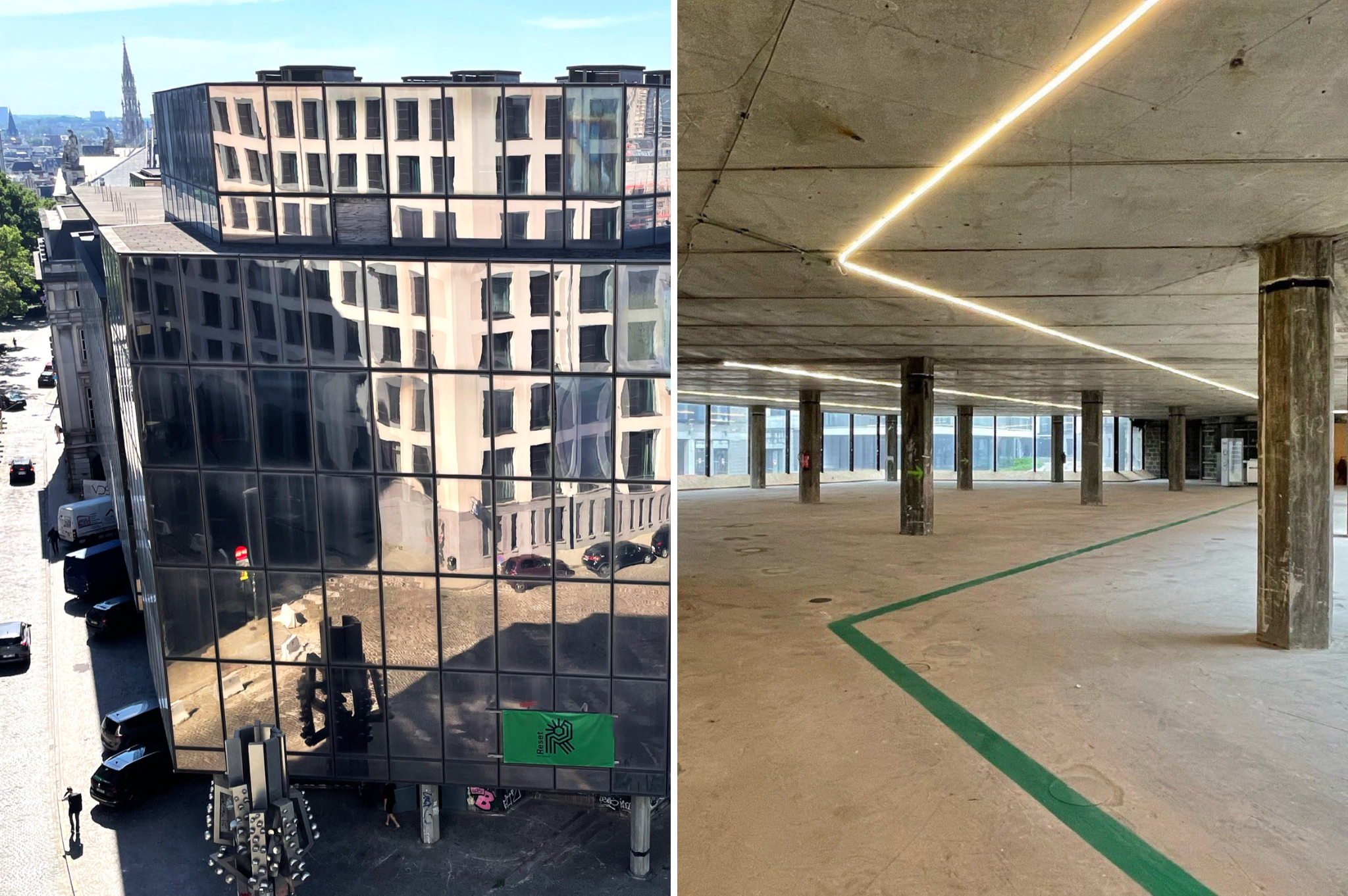
The Reset building, inside a former bank and possible future police station. Credit: Arty Farty
Cultural cuts
"Since the very beginning of the year, our economic model wasn't possible anymore," Meeùs explains.
The venue was not just used for alternative electronic club nights, Reset also hosted debates, exhibitions, fairs and concerts – often free or with low prices to keep it as inclusive as possible.
"We could have stayed for much longer inside that building, but now it's going to be sadly empty – right in the middle of the City of Brussels, where so many cultural actors are looking for spaces."
The Brussels nightlife sector was already struggling due to the economic and political conditions in Brussels, where decreasing purchasing power is affecting ticket sales.
"In addition to that, we now either have no government, or we have governments for whom culture or art are not a priority," he continues.
While he knows public fund cuts come from the well-advertised budgetary issues in Brussels, Meeùs says we are now in a situation where cultural actors are struggling to convince right-wing politicians in power to support their activities.
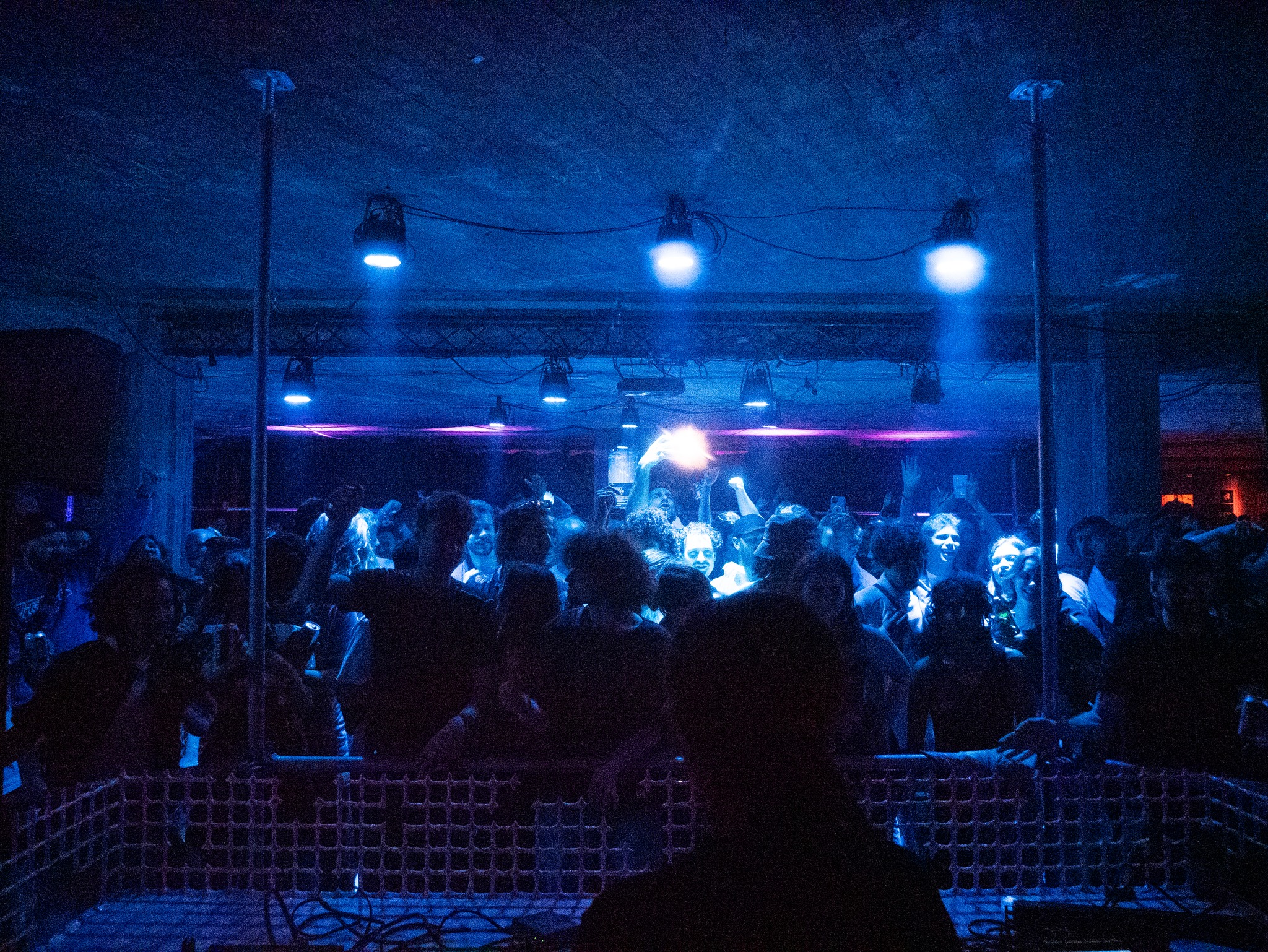
Reset nightclub. Credit: Reset / Facebook
In concrete terms, these funding cuts led to maintenance issues for the temporary space. The irony, of course, is that the funding cuts came from their landlords, the City of Brussels.
Despite having won a public tender to manage the space before it was turned into a police station, the club was largely left to fix infrastructure problems in the building.
This included issues with the electricity, which affected the club's light system, wooden doors expanding due to the humidity and rain to the point that they struggled to close them.
"It's not up to us to repair plumbing, electricity; it's up to the owners to manage it," Meeùs says. "If you are renting a flat, you will ask the owner if there is no more electricity, no more water, and so on. They should do the same, but they were not able anymore."
'Risk of more closures'
Situations like Reset's are being felt across the city, as many of these problems are being faced by other nightclub operators.
Organisations like Brussels by Night, which lobby for better public recognition and support for the nightlife scene, are sounding the alarm.
"Brussels is clearly facing a nightlife crisis," Morgan Logé, a project manager at the Brussels by Night non-profit, tells The Brussels Times. "What we are seeing today is the result of several structural issues converging at the same time."
"If nothing changes, there is absolutely a risk of more closures. While Fuse, C12, Umi, and Mirano managed to invest heavily in compliance and community work – no venue is immune."

DJ Rush performing at Fuse. Credit: Fuse / Five Oh
She explains that, while the nightlife sector experienced a strong post-Covid rebound, the negative signs quickly emerged: increasing political pressure, stricter regulations, rising operational costs and recurring issues with neighbours.
A lack of strategic vision remains an issue for the sector. Unlike Berlin, Amsterdam or Barcelona, Brussels lacks stable political conditions and a long-term strategy for nightlife.
"Other cities have dedicated funds, or clearly defined nightlife zones, Brussels remains fragmented between multiple levels of power – municipal, regional, community and federal," Logé explains.
Real estate & culture
Back in 2023, the Brussels Region recognised the city’s nightlife sector as intangible cultural heritage. However, this has not really brought any concrete protections – the recent closures being evidence of this.
Ongoing real estate pressures are also taking their toll on nightclub operations, via rising rents, property speculation and sound disputes with neighbours.
"Brussels allows residential developments to expand into historically mixed or nightlife-heavy areas," Logé continues. "This leads to absurd situations: an individual can move in next to a club that has existed for 40 years, and trigger procedures that force it to close or drastically limit its activity."
This was the case with the temporary closure of the iconic nightclub Fuse, after a neighbour moved in next door and issued a sound complaint.
Despite the regional heritage recognition, the heart of the problem is the true cultural value of the nightlife sector, and the public funding that comes with it.
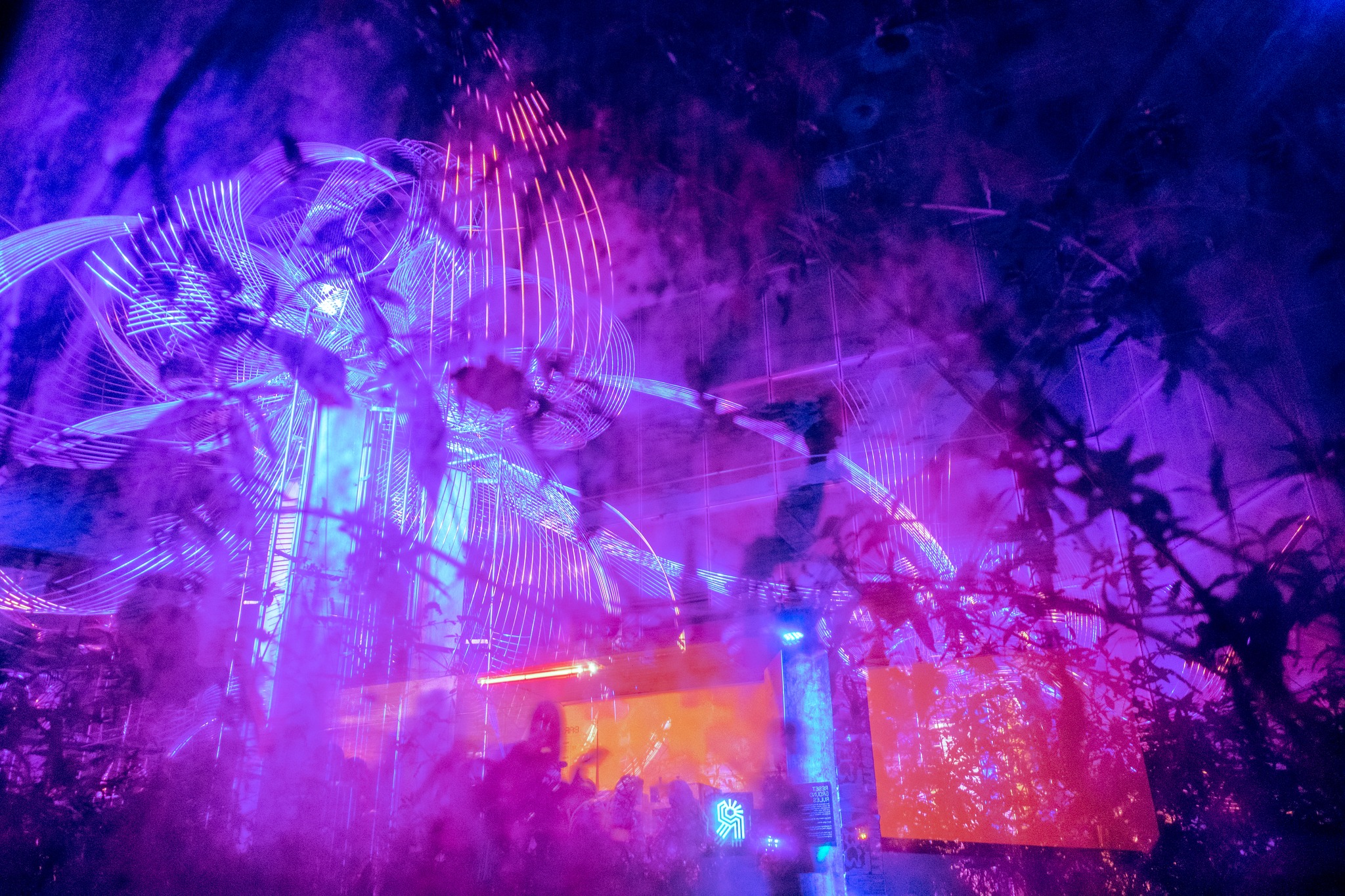
Now closed, Reset club. Credit: Antoine Grenez / Reset
"Museums, theatres, and concert venues - many of which operate privately - receive public support because they are recognised as cultural actors. Nightlife deserves the same consideration," Logé stresses.
While some argue that the public money should not fund private businesses like nightclubs, Brussels by Night rejects this on cultural grounds.
While clubs may be private structures, they serve a public cultural function: they host local emerging artists, support communities, develop scenes, and contribute to harm reduction and public safety, according to Logé.
Indeed, supporting a nightclub means propping up the entire ecosystem around it – bringing wide-ranging economic benefits. It can also play into the city’s international image, which is greatly boosted by a reputation for a strong alternative nightlife scene.
"Brussels heavily uses its nightlife identity to promote itself internationally – yet the venues lack structural support. We’re convinced that once solid data is presented, it will show that nightlife is not a 'cost' to the city, but one of its strongest economic engines."
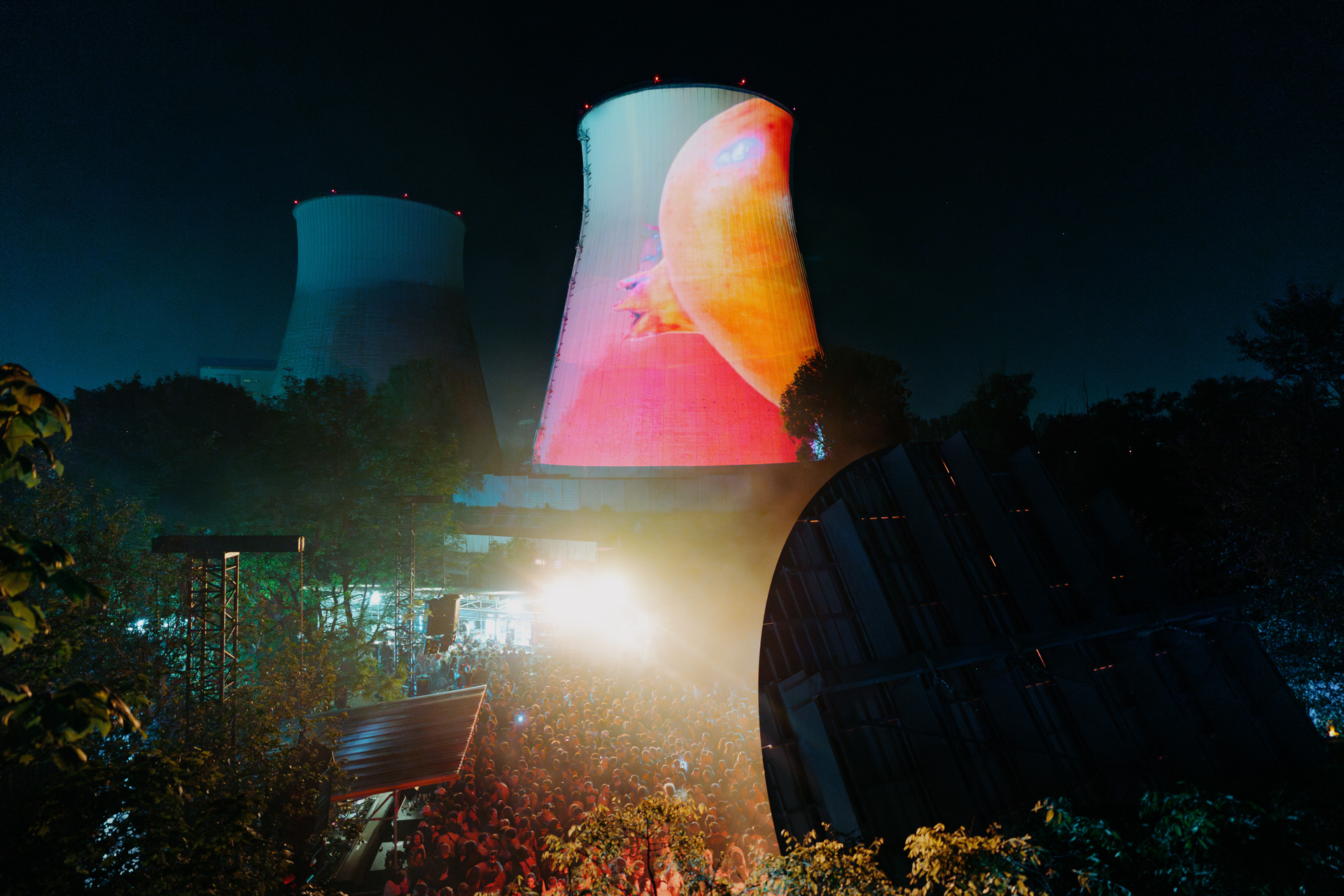
Horst festival at the Asiat park. Credit: Illias Teirlinck / Horst
The organisation is also collecting data on the economic contribution the nightlife sector makes to the Belgian capital.
"Nightlife generates thousands of jobs – from technicians to bartenders, security staff, artists, PR teams and more. It drives hospitality, transport, tourism and the city’s international image. We already know nightlife is the 4th reason for tourists and companies to come to Brussels."
However, Brussels by Night explains that there are other challenges to the clubbing scene, such as a "change of habits" among under-25s who are now reportedly clubbing less than previous age groups.
It is being particularly felt among those who grew up during the Covid-19 pandemic, with some preferring occasional festival outings instead of regular club nights. The shift to social media culture has also had an effect, where going out is "more curated and less spontaneous".
This is transforming the music industry, partly driven by "social media platforms now pushing artists to constantly ‘produce content’ – sometimes at the expense of artistic development," Logé says.
Future of the future?
So, what does the future hold for the Brussels nightlife scene? For Reset's Meeùs, nightclub operators will now enter into "survival mode". He also says that "we must forget about public subsidies for a while."
To overcome the issue, he advises cultural actors to seek out the bigger cultural players who have guaranteed public funding, like Bozar, Kanal Pompidou, or even Horst festival.
After over a decade in the scene, Meeùs will now take a step back from it to focus on other projects, such as organising events in the private sector, such as fashion shows. He is determined, however, to return to the nightlife scene in four or five years, and holds hope for the future.
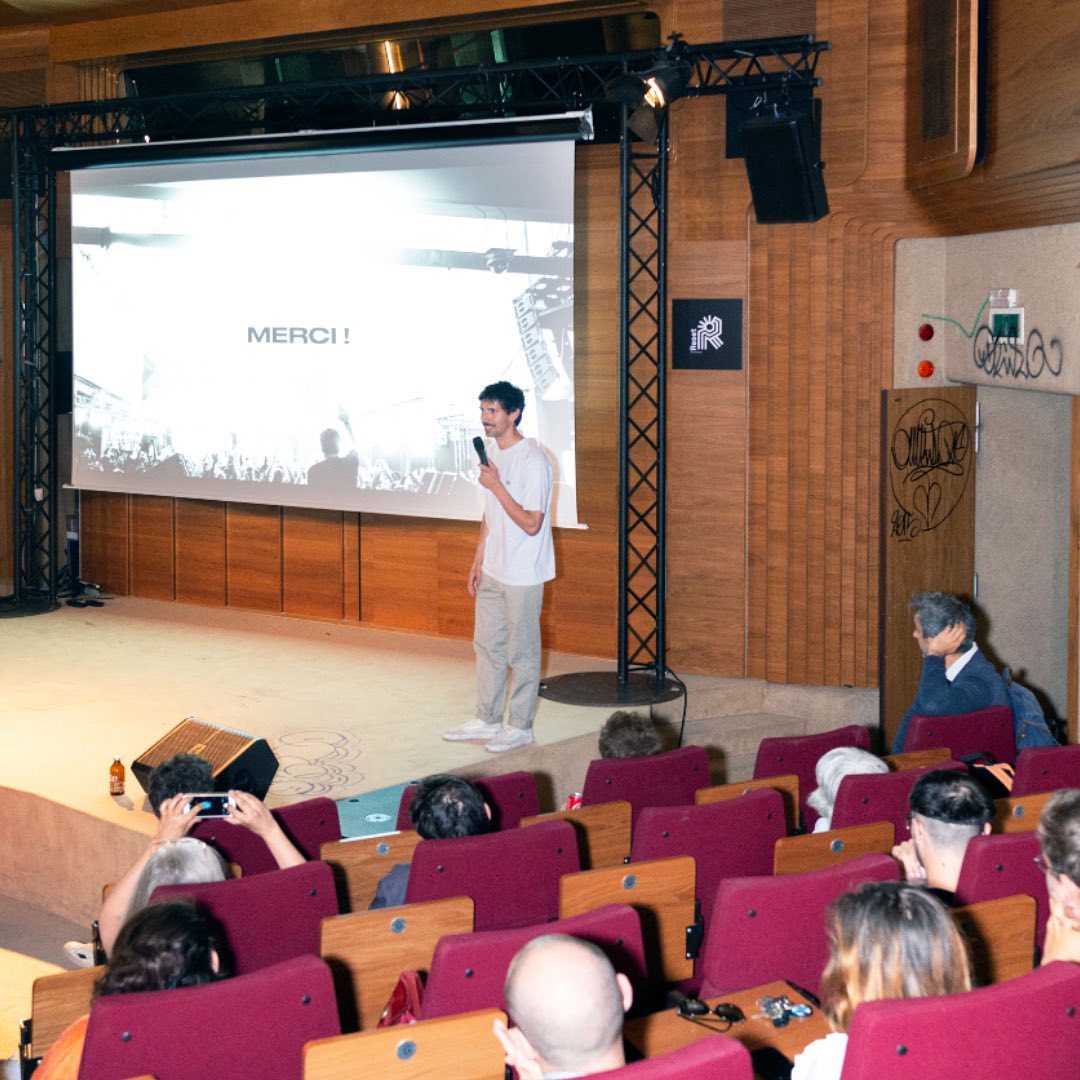
Dorian Meeùs, founder of Reset club, speaking during an event. Credit: Arty Farty
"There will always be an alternative and underground scene in Brussels, even without a budget," he stresses. "The public will always support it, but we can no longer occupy spaces that impose too many costs."
"But above all, we must not lose hope and continue political and institutional lobbying," Meeùs says.
"We must go and turn to private sponsors, to the patrons – rich people who are ready to help art and culture. We must go and occupy empty spaces. "
