
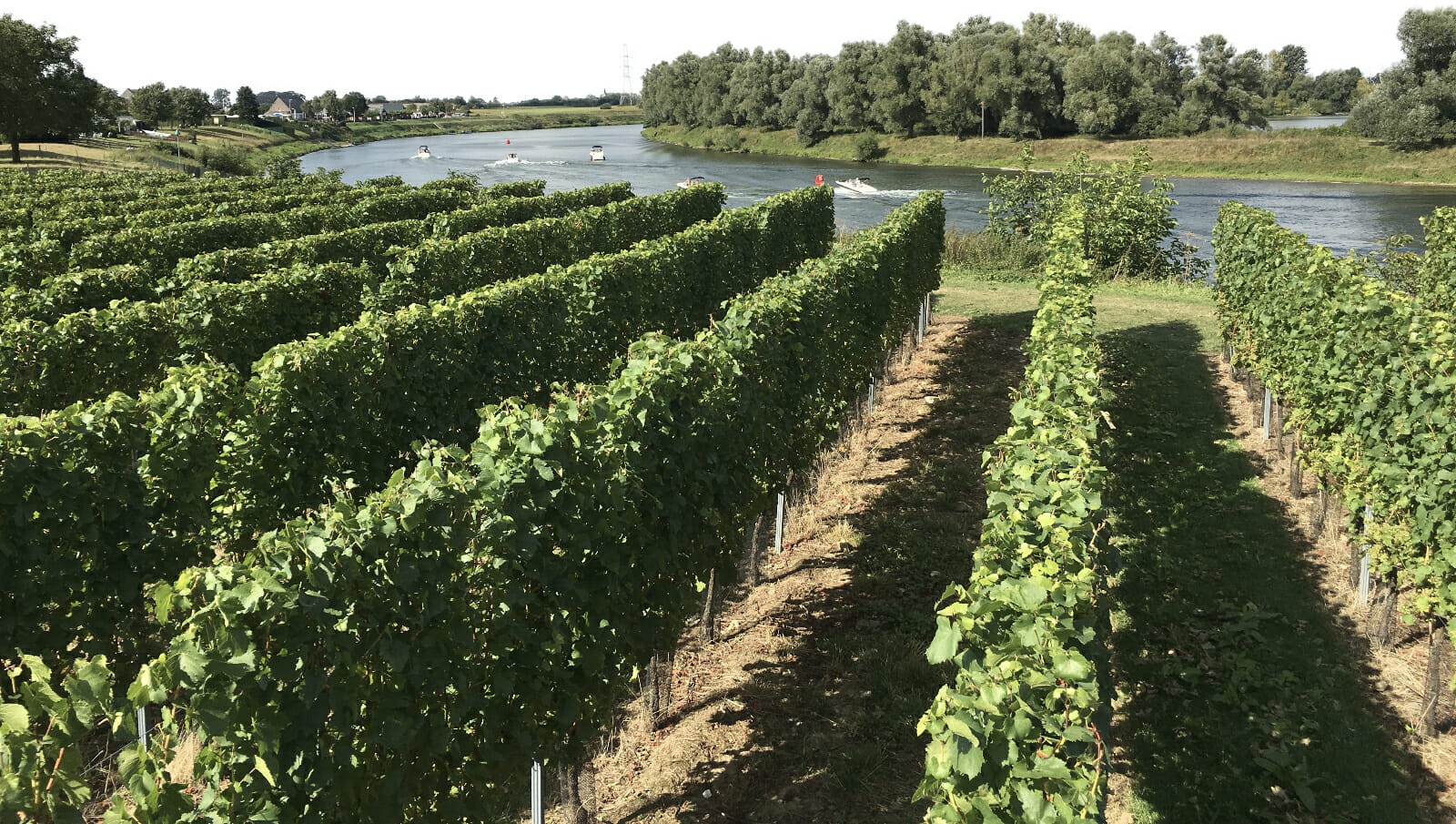
When people think about vineyards, they picture rolling plains in the south of France or rows of vines against Italian hillsides.
Belgium is better known for beer and bureaucracy than bold vintages. Until recently, wine would have been seen as an eccentric passion. The skies are grey, the rains are frequent, and the sun – when it does appear – is treated like a visiting dignitary.
Yet among the apple orchards and the cow pastures, a quiet revolution has been taking place. Belgian wine has not just arrived; it’s growing up.
Over the past two decades, vineyards have crept into unexpected corners of the country – from the chalky slopes of Limburg to the loamy fields of Wallonia – challenging assumptions about what Belgian soil can yield.
Once dismissed as a novelty, Belgian bottles are now appearing on the menus of Michelin-starred restaurants, collecting international prizes, and even earning front-page recognition in France’s most prestigious wine magazines.
“Fifteen years ago, people came here to discover Belgian wine,” Karel Henckens tells The Brussels Times. He is owner of the Aldeneyck wine domain in Maaseik, a small town in the Meuse valley in Flemish Limburg, near the Dutch border. “Now they come to discover the newest vintage. That has been an unimaginable game changer.”
Henckens speaks from experience. He grew up in a family of fruit farmers, surrounded by apples and pears, until curiosity – and a streak of defiance – led him to plant vines instead. “They thought I was crazy,” he recalls.
“That growing wine would never work in Belgium.” Two decades later, Aldeneyck’s Rieslings and Pinot Noirs have won dozens of awards, their crisp acidity and mineral elegance proving that Belgian terroir has more to offer than scepticism.
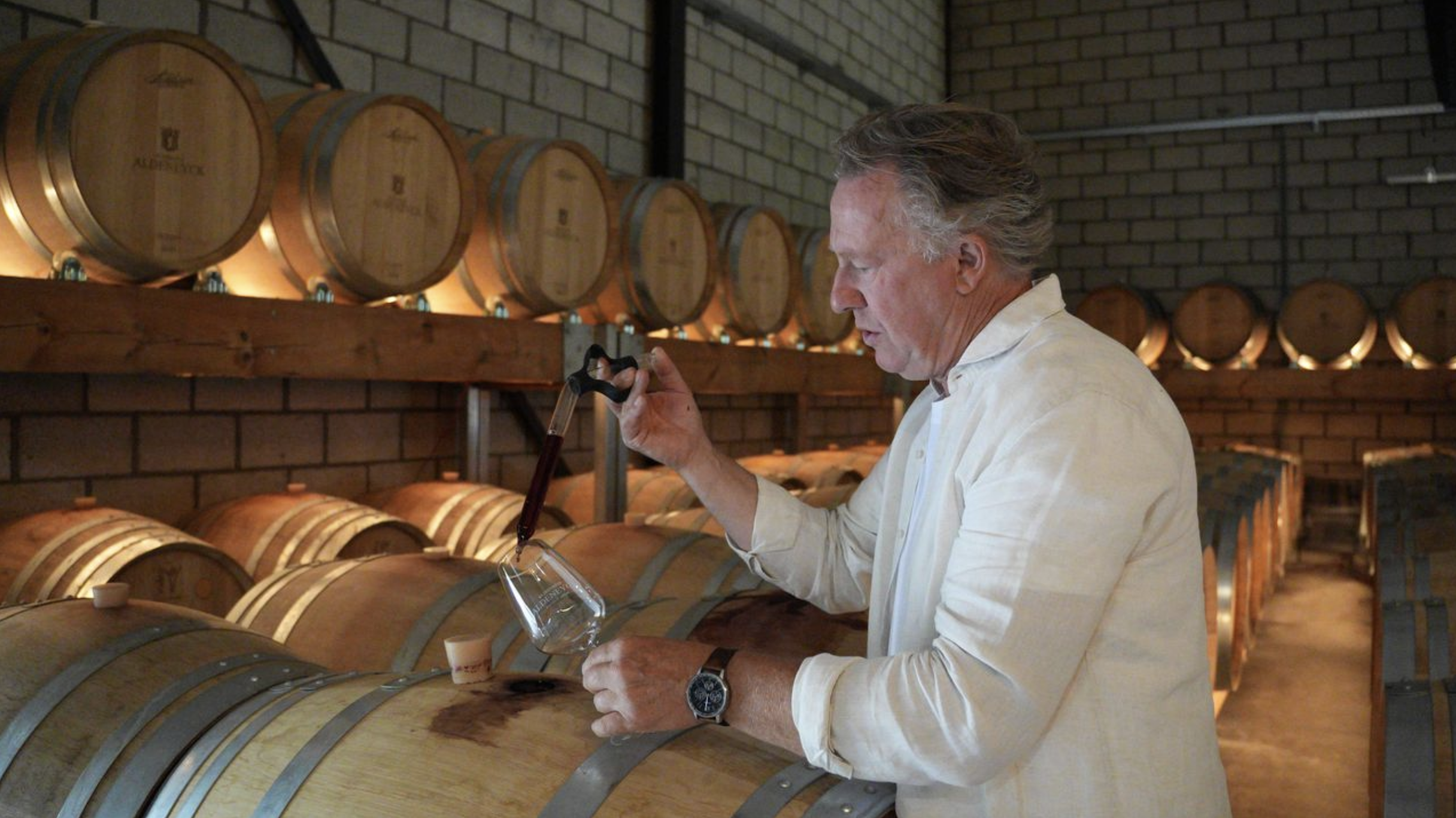
Karel Henckens, owner of the Aldeneyck wine domain in Maaseik. Credit: The Brussels Times/Dries Mockers
Still, 2024 tested every winegrower’s nerve. Across Belgium, night frosts struck in late April, followed by weeks of relentless rain. Buds withered, vines flooded and mould spread. “I guess I can’t blame them,” Henckens jokes. “I don’t like having wet feet either.”
Belgium’s Economy Ministry says wine production dropped by 64% in 2024 – the steepest fall since 2017 – with one in five growers losing almost their entire harvest. Across the country, production sank to around 1.2 million litres, a sobering figure after two “exceptional” years in 2022 and 2023.
And yet, curiously, the grapes that did survive were excellent. “The less we harvest, the better the quality,” Henckens explains. “A vine that normally feeds 30 bunches and now only has 15 develops more sugars, more flavour. Still, I would have absolutely preferred my barrels to be full.”
Aldeneyck’s 12 hectares, close to the River Meuse, are usually spared the worst of the frost. The area – technically the driest in the Benelux – paradoxically suffered too much rain in 2024. But amid the soggy misery came good news: the Aldeneyck Riesling Purnot 2023 won the Gault&Millau Belgian Wine Award and five of the domain’s bottles were listed in this year’s guide.
From drizzle to distinction
Belgian winemakers are used to such contradictions. For decades, viticulture here seemed a noble folly – a hobby for optimists who ignored the climate. But the last 15 years have brought a quiet revolution. Between 2006 and today, total vineyard area has expanded steadily, from just a few dozen hectares to nearly 1,000 hectares in 2024 – double the area of 2020.
“Belgian wine is no longer a niche, even if we will likely always remain one of the smaller players,” says Henckens. “Here, more vines are still being planted. Belgian wines are hot."
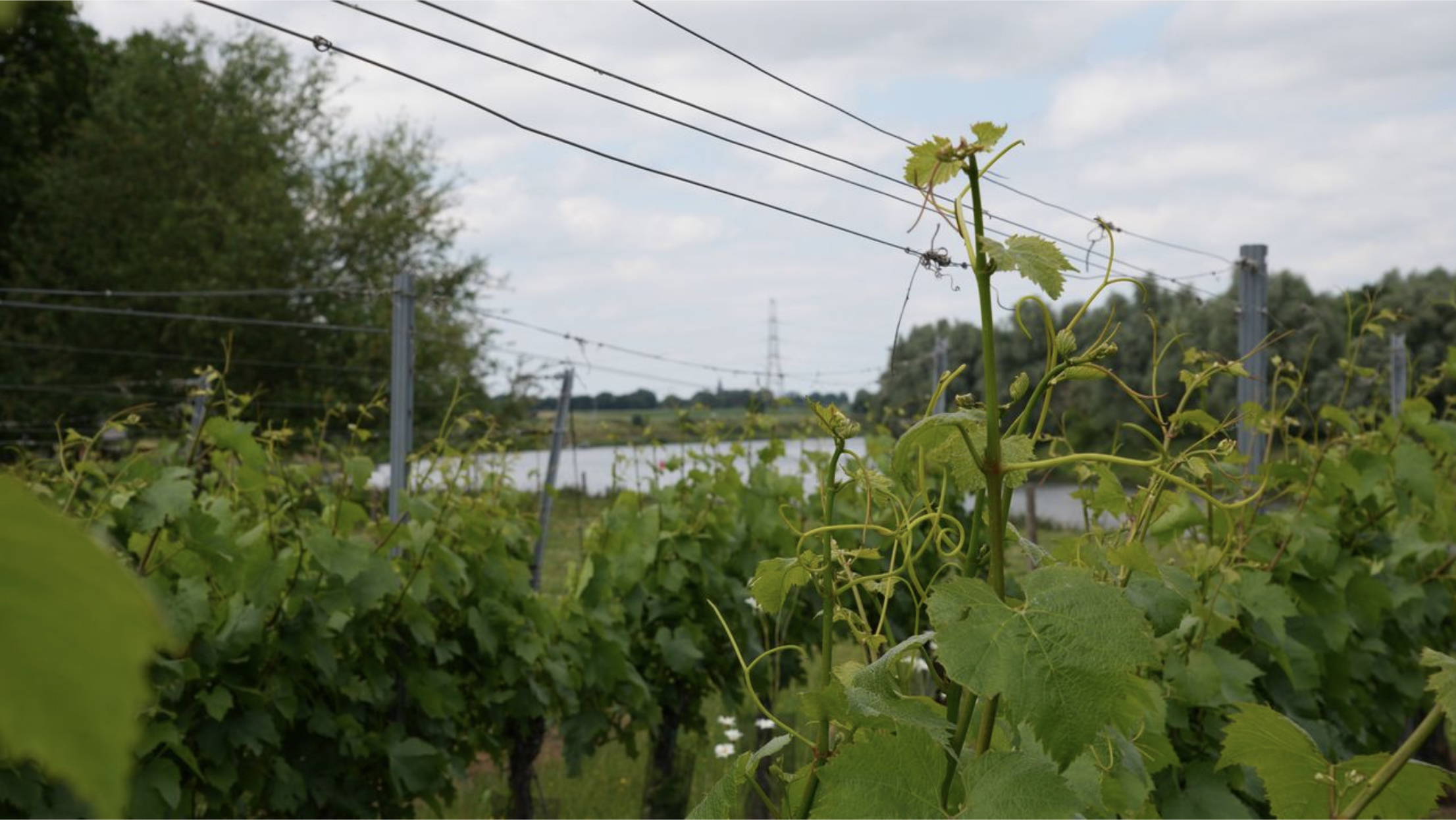
Vine from Aldeneyck wine domain in Maaseik. Credit: The Brussels Times/Dries Mockers
That resilience was not built on luck alone. Modern Belgian winemakers tend to be engineers, scientists or former brewers – pragmatic experimenters who understand their microclimates with forensic precision. Where southern vintners chase shade, Belgians chase sunlight. Frost sensors, canopy nets and disease-resistant hybrids have become essential tools in their survival kit.
Lodewijk Waes, who runs a vineyard near Ghent and chairs the Belgian Winegrowers’ Association, admits that 2024 was “disastrous.” He lost 30% of his crop. But he also believes adversity has toughened the sector. “We are a resilient industry,” he tells The Brussels Times says. “We are still young, but we’re showing we can survive unfavourable years.”
This might be a perverse effect of global warming: wine grapes need a lot of warmth to ripen optimally. Because the average temperature in Belgium has been slightly warmer in recent years, the country has just reached the optimal level – but not for all grapes. The country has become perfect for sparkling and white wines, good for 53% and 36% of total wine production in Belgium, respectively.
“It is still a bit too cold for a rosé or red wine,” he admits. “These grapes need much more sunlight to produce sufficient sugars. But for the ‘cool climate wines,’ we are making a name for ourselves.”
Still, he refuses to count his grapes before they’re picked. “It is always a bit of a nervous wait. As long as you have not harvested, something can always go wrong. Hailstorms or mould cannot always be predicted, but they can undo an entire year's work.”
This cautious optimism defines Belgian viticulture. “I think we will have at least as good a harvest as in 2023, and we might even surpass it,” Waes adds. “We just need to convince our fellow countrymen to drink our own wine.”
Novelty factor
What was once a curiosity has become a bona fide industry. The number of Belgian winegrowers rises every year; more than 400 producers now cultivate grapes across Flanders, Wallonia and even the outskirts of Brussels. Nearly 1,000 hectares of vineyards are planted – still minuscule compared to Bordeaux’s 120,000 hectares, but growing fast.
By contrast, Bordeaux is pulling up 20,000 hectares due to a crisis of oversupply.
Belgium already produces around one million bottles of sparkling wine annually – still a drop compared to the 20 million bottles of cava Belgians consume each year.
The challenge now is visibility. For centuries, people associated Belgian drinks with beer, but the novelty of wine is attracting curiosity. Wine tourism is quietly taking root, with tasting rooms from West Flanders to the Meuse valley welcoming visitors who once scoffed at the idea of Belgian vineyards.
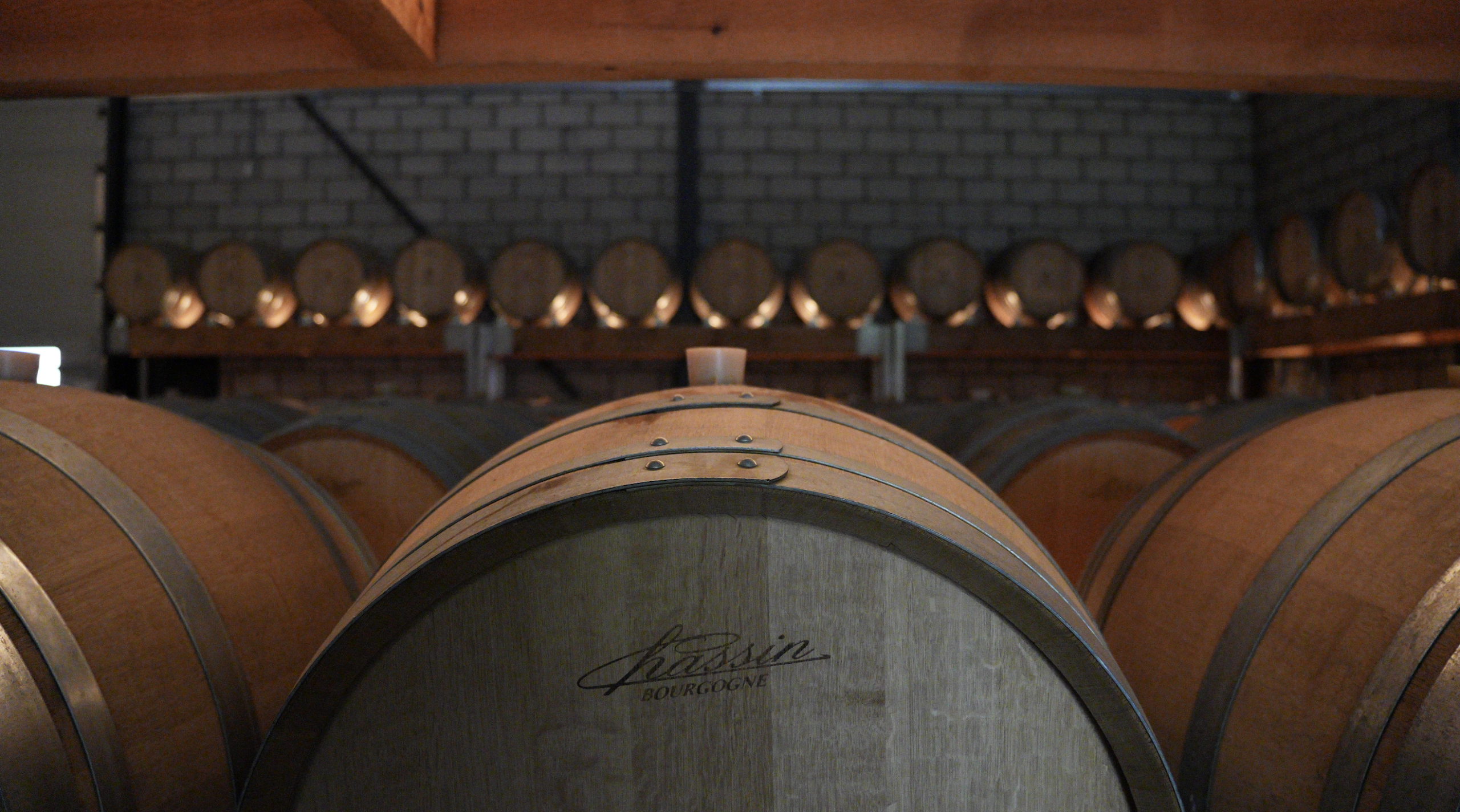
Credit: The Brussels Times/Dries Mockers
In traditional wine regions, growers have been experimenting for hundreds of years, trying to figure out what works there and what does not, explains Henckens. For him, Belgium should not try to copy other countries’ success formulas. Instead, the country’s wine industry should figure out what makes Belgian wine unique.
“A Pinot Noir has been around for 500 years,” he says. “That wheel has already been invented. I do not need to do that again.” Instead, he focuses on the nuances of the soil and terroir that are present in his plot of land. "It is my job to bring that to a successful conclusion and show people, 'Look, this is the flavour we can create here.' But within that, everything is possible."
Crossing borders
The international wine world has noticed. In May, the venerable La Revue du Vin de France featured a Belgian bottle on its cover for the first time in its history, under the headline: “Belgium: The Birth of a Wine Nation.” For a French publication steeped in viticultural hierarchy, it was the ultimate nod of respect.
Aldeneyck’s role in that story is uniquely symbolic. The estate straddles the frontier with the Netherlands, and in 2017, the European Commission approved Maasvallei Limburg as the first-ever cross-border PDO – a Protected Designation of Origin that recognises shared terroir across national lines.

Picking black grapes
“Man-made borders mean nothing to grapevines,” Henckens says. “Our stony, gravelly soils don’t stop at the frontier. The PDO simply confirmed what nature already knew.” The appellation runs along a narrow strip beside the Meuse River, from Lanaken in Belgium to Roermond in the Netherlands. “We were the first – and so far, still the only real one,” he adds proudly.
There is, technically, another cross-border wine region in the United States, where Oregon’s Willamette Valley dips into Washington State. “But that’s within one country,” Henckens grins. “So it doesn’t really count. It’s just us.”
The Maasvallei recognition has elevated Belgium’s standing abroad, reinforcing its self-image as a country that thrives in cooperation and compromise. For Henckens, the symbolism runs deep: “Our appellation is about identity. It shows that Belgium’s strength is not in size but in partnership – and persistence.”
Wet feet, dry humour
Belgium’s wine awakening has forced a deeper question: what makes a Belgian wine Belgian? Unlike traditional wine countries, where techniques have been honed over centuries, Belgian growers are still writing their playbook.
Where France prizes grandeur and Italy romance, Belgian winemakers favour understatement. Their wines, too, tend to avoid extremes. “The Germans make wine that’s a bit rigid – like the Germans themselves,” Henckens jokes. “The French, also true to how they are known as people, play around with it a bit more: they use more wood, more mulch, more inter-fermentation.”
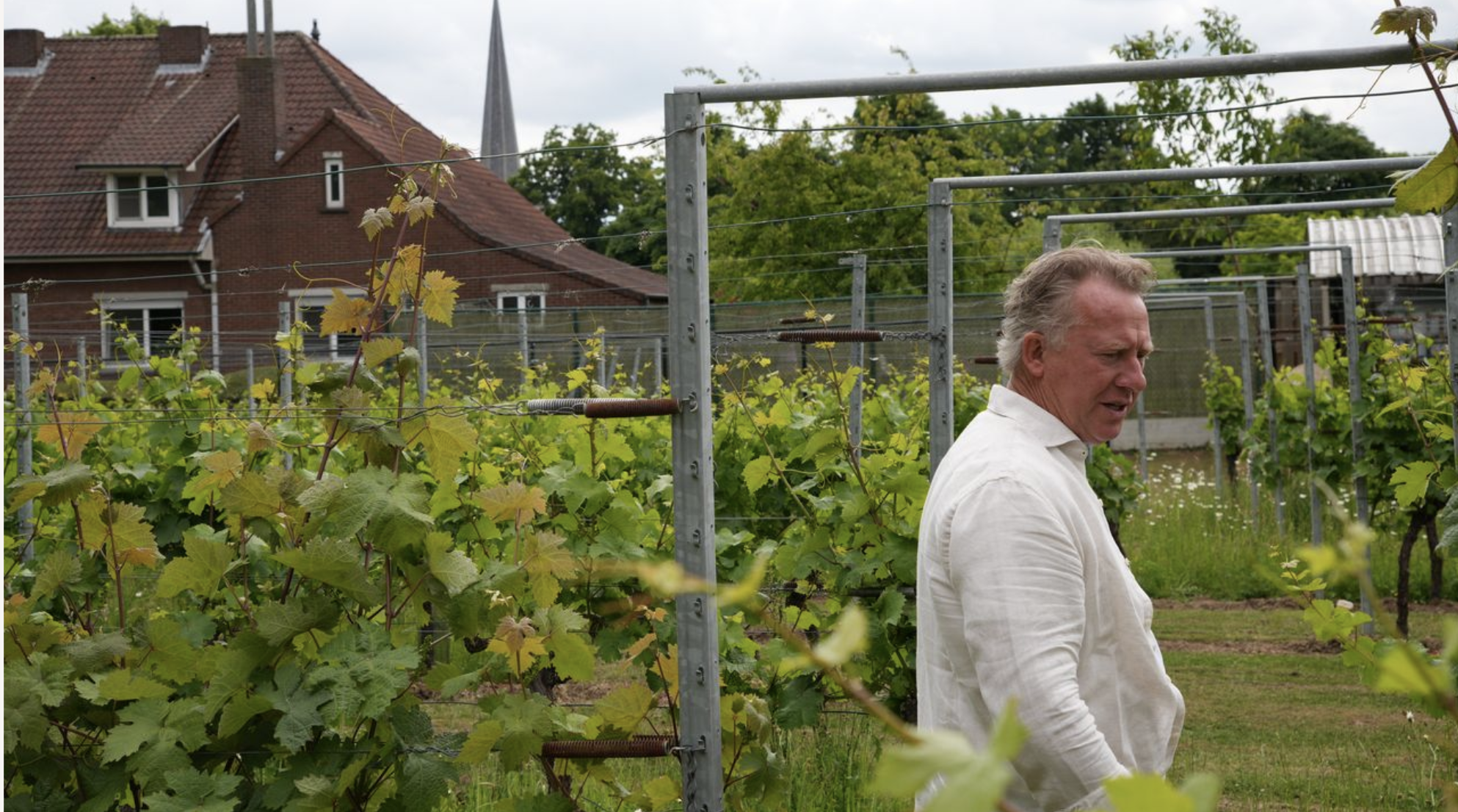
Karel Henckens, owner of the Aldeneyck wine domain in Maaseik. Credit: The Brussels Times/Dries Mockers
In a sense, Belgian wine reflects the country’s culture: built on compromise. Balance may be Belgium’s defining note – in its wines, its climate, its politics, even its personality. "In Belgium, we take from others what is important for us,” Henckens says. “It is a bit of a compromise between the two, a balance. Nothing too outrageous. That is the kind of wine we are known for.”
Henckens insists that imitation is the enemy. “People often rely on comparison, but a Chardonnay from here is different from one that comes from Burgundy, its birthplace. And it should be. Do I strive to make the same thing? No. I don't want to be a copycat," he stresses. "I am proud of my region. This is our style, and that is what I offer to people."
That attitude is paying off. At international competitions, Belgian wines now competing credibly. Export interest is growing too.
For all the excitement, no one expects Belgium to become the next Burgundy. Its vineyards remain small, its climate unpredictable, its production artisanal. But that may be exactly what makes it interesting.
Back in Maaseik, Karel Henckens, the man who swapped apples for Riesling. admires his rain-soaked vines. The drizzle, it seems, has finally found its sparkle. "It is so good to see,” he says. “The more, the merrier.”
