
The Spanish government last week announced it would approve a decree to regularise 500,000 undocumented migrants and asylum seekers, countering anti-migration policies and rhetoric across the continent. Will Brussels follow in Madrid's footsteps?
The socialist-led coalition government decree will come into effect in April and legalise the status of half a million undocumented asylum seekers and migrants in Spain. To be eligible, applicants must have lived in Spain for at least five months – or have sought international protection – before 31 December 2025, and will have to prove they do not have a criminal record.
"This is a historic day for our country," said Elma Saiz, Spain's minister of inclusion, social security and migration, last week. "We are reinforcing a migratory model based on human rights, on integration and on coexistence that's compatible with both economic growth and social cohesion."
In an era of tightened borders and increasing hostility towards migrants, Pedro Sánchez's government has set itself apart from other European nations and right-wing governments. But his approach isn't as revolutionary as it may seem.
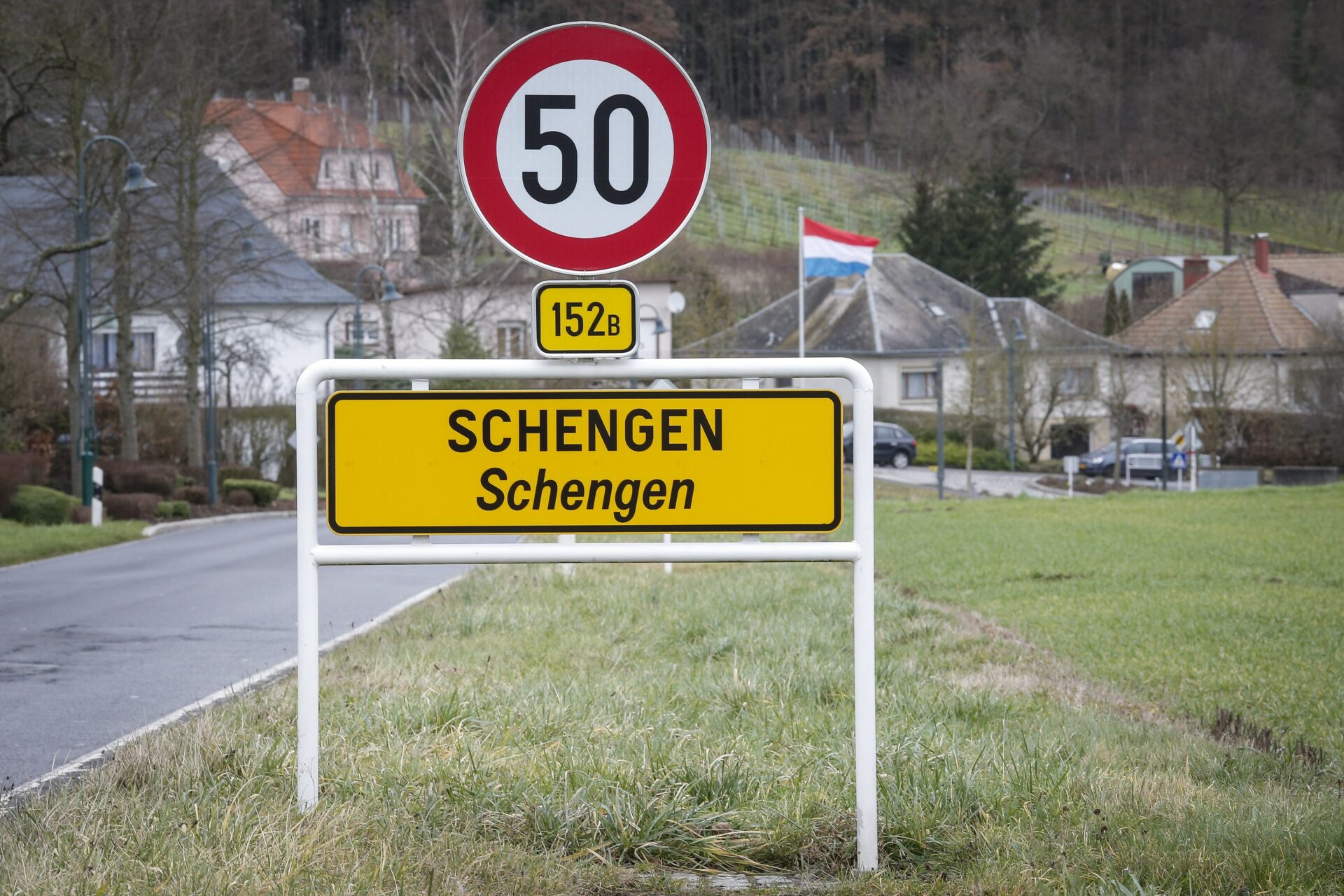
In the early days of Schengen and open borders, governments commonly used mass regularisations to strengthen their economies. Between 1996 and 2008, 43 regularisation programmes were implemented across 17 EU Member States.
"This is a tool that Southern Europe, in particular, used to use. And it was actually really effective," Amanda Klekowski von Koppenfels, a researcher on migration at the University of Kent, told The Brussels Times.
"People came in, and then every so often, they would have a regularisation programme, which said, if you're working and helping our economy, then we will give you the legal right to stay."
Credit: Belga
Spain has long struggled with high rates of unemployment. But last week, the level dipped below 10% for the first time since the 2008 financial crisis. This coincided with the regularisation announcement, which also aims to curb unemployment and fill major gaps in the labour market.
"We need migrants for labour across Europe, the UK and the US because our populations are ageing and shrinking," the researcher said. "Regularising them means they have workplace protections and they are now paying taxes. It does not solve the systemic issues, but it definitely helps those individuals and the economy."
Will Belgium open its borders?
Belgium is one of the few countries that has ongoing regularisation procedures for those who have family or are working here, and can show they are settled in the country.
This structural mechanism ensures no one is left behind, as is often the case with a one-off, like in Spain, where people must apply within a certain timeframe, according to Thomas Huddleston, a migration expert at the University of Liège.
The country has also previously organised major regularisations, such as when 40,000 people obtained legal status after a programme was launched in January 2000. However, given the current government coalition with Flemish right-wing Prime Minister Bart De Wever (N-VA) at the helm, it is unlikely that another will happen anytime soon, Klekowski von Koppenfels says.
Related News
- 'We're not savages, we're human and American', says Bad Bunny at the Grammys
- Belgian far-right calls for ICE-style immigration force in Belgium
- Seven times more expensive: becoming Belgian costs €1,000 from now
Huddleston also points to the trend in De Wever's migration policies since taking office (exactly a year ago today, on 3 February 2025).
The 'Easter Agreement' in April last year, for instance, set the Belgian citizenship fee to €1,000 – one of the most expensive in the world. "This is one of the best ways to discourage hard-working, middle-class, saving immigrants from naturalising, and the statistics show that."
Moreover, Huddleston says that requirements for family reunification are such that half of working Belgians would not be able to live with their spouse and their children, because they, as Belgians, wouldn't make enough money to meet these requirements. "So there's a big push for all types of immigrants to be economically self-sufficient, but that isn't necessarily a guarantee that you want them to participate [in society]."
The backbone of society
As a result of such policies from right-wing parties, Klekowski von Koppenfels notes that public opinion of a major one-off regularisation, such as Spain's, is generally negative.
"We reduce migrants to people who are problematic. Then, when a regularisation happens, the broader public's mind leaps to 'why are you giving regular status to those problematic people?' But that's really not the case," she explained.
"You are regularising people who are working in agriculture, caring for elderly people, working in households and construction. These are all jobs that, without them, the world does not work. As opposed to being problematic, they are actually the backbone of society."
Huddleston likens European anti-migration rhetoric to that of the United States. "It's like the Trumpification in America, where you're actually turning against all of the workers that the United States needs to have a functioning economy. I worry that, nowadays, we are trying to maintain this 'fortress Europe', but it's fantasy."
In this "time of hysteria", he says, in which so many governments are being ruled by the most right-wing government ever, the future of migration policies therefore remains nebulous.
